What Cars from the 2000s Are Becoming Collectible?
Y2K nostalgia is hitting the collector car market hard. The cars from the 2000s that defined a generation are now appreciating faster than anyone expected. Here's what's becoming valuable, why it matters, and which ones to buy before they're gone.
The 2000s Are Finally Getting Respect: Welcome to the Nostalgia Wave
For two decades, the 2000s were dismissed. Too recent to be classics. Too dated to be modern. The decade lived in purgatory—stuck between the revered 1990s and the increasingly valuable 2010s. Cars from the Y2K era collected dust in garages while collectors chased older Ferraris and McLarens.
That era has ended. The collector car market is experiencing a seismic shift driven by a simple demographic reality: millennials who grew up with the 2000s now have the disposable income to buy the cars of their childhood. A 25-year-old Ferrari F40? Unreachable. A mint 2006 Mercedes CLK DTM? That's achievable. And if you can own it, suddenly you want it.
This nostalgia wave is creating genuine appreciation curves that rival (and sometimes exceed) cars that are 30 or 40 years older. A Ferrari 360 Challenge Stradale that sold for $200,000 five years ago now commands $350,000+. A Porsche 997 GT3 RS that was a $90,000 purchase in 2018 is now $180,000–$220,000. The Nissan Skyline R34 GT-R, long trapped by the 25-year import rule, is finally becoming legal in the US—and values have exploded.
This isn't speculation. This is structural scarcity meeting generational demand. And if you understand why, you can profit from it.
The Top Collectible 2000s Cars: A Complete Breakdown
Ferrari 360 Challenge Stradale
The 360 Stradale is the 2000s supercar that has aged the best. When Ferrari needed to prove the naturally aspirated V8 could compete with emerging turbo V6s, they stripped the 360 to essentials: 400 hp, 2,700 pounds, a 6-speed manual, and zero electronic assists. The result was primal, visceral, untamed.
Launched in 2003 and produced until 2005, Ferrari built only 1,270 units worldwide. Earlier 360 Modenas from 2000–2003 are worth less. The Challenge Stradale is the variant that collectors actually want. Current market: $320,000–$420,000. Five-year appreciation: +85%. That's not nostalgia—that's institutional recognition that this is a masterpiece.
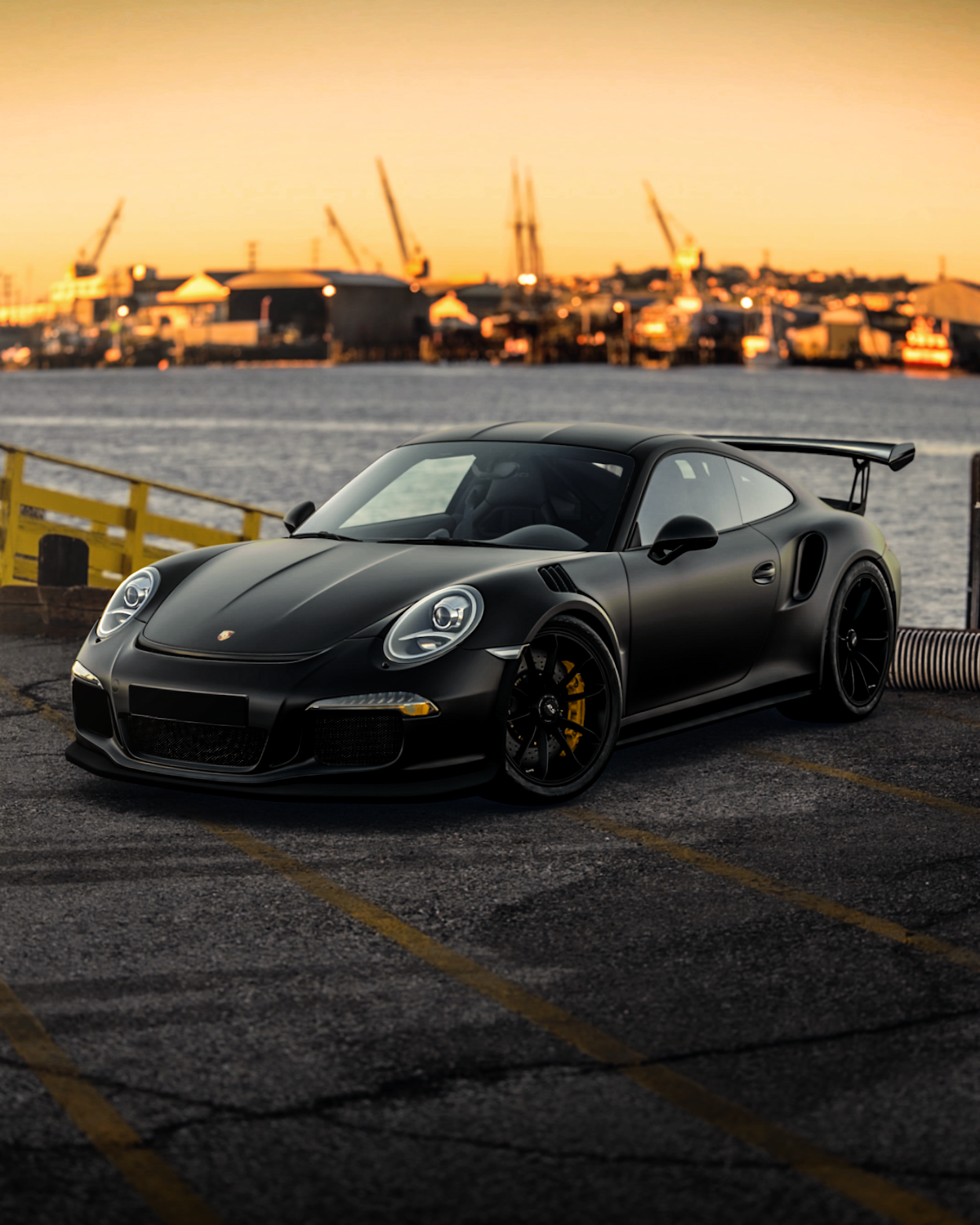
Porsche 997 GT3 RS
The 997 GT3 RS (2010–2011) might be the perfect Porsche. Mid-mounted 3.6L naturally aspirated flat-six producing 450 hp. Fixed rear wing that actually adds downforce rather than just looking aggressive. Manual transmission. No power steering. Stripped interior. This is what a Porsche becomes when engineers ignore marketing committees.
Production ran from 2010–2011, with only 3,000 units built. Current market: $180,000–$280,000. Five-year appreciation: +110%. The 997 is appreciating because everyone—from casual enthusiasts to serious collectors—agrees it's the last pure Porsche before the PDK dual-clutch transmission and turbocharging changed everything. Newer Porsches are fast, but the 997 is the one people actually want to drive.
BMW E46 M3 CSL
Only 2,435 BMW E46 M3 CSLs were built between 2003–2006. The specification sheet reads like a manufacturer's checklist for perfection: 3.2L naturally aspirated inline-six, 360 hp, 295 lb-ft torque, 0–60 in 3.8 seconds (extraordinary for 2003), curb weight under 3,250 pounds despite being a full four-door sedan. That's an 8.7 lb/hp ratio—better than some Lamborghinis.
The CSL is appreciating because it proved you could make a practical car that's also genuinely fast without relying on turbos or displacement. Current market: $85,000–$150,000. Five-year appreciation: +65%. Unlike exotics that live in climate-controlled garages, CSLs were driven hard, which means good examples are becoming scarce. Documentation and maintenance history matter enormously.
Honda S2000
The S2000 (1999–2009) is the exception that proves the rule: a mass-produced, affordable sports car from the 2000s that's becoming genuinely collectible. 237 hp from a 2.0L naturally aspirated engine. 8,900 rpm redline. 300 lb-ft of torque. A direct, communicative driving experience that no turbocharged competitor can match.
Honda built approximately 112,000 S2000s over its 10-year run. But good examples are vanishing—either thrashed by drivers who treated them as disposable, or meticulously cared for by enthusiasts. Current market: $35,000–$65,000 (varies dramatically by year, condition, and mileage). Five-year appreciation: +45%. This is the most affordable entry into the appreciating 2000s cars. See our guide on buying an S2000 for detailed variant comparisons.
Dodge Viper ACR
The Dodge Viper remains automotive absurdity in the best possible way. An 8.3L naturally aspirated V10 producing 600 hp in a car with minimal sound damping, no stability control, and hydraulic steering that communicates every detail of the road surface. The ACR (American Club Racer) variant added track-focused aerodynamics and a stiffer suspension.
The second-generation Viper (2003–2010) is what most collectors want. Production was always low—fewer than 1,500 ACRs were built. Current market: $75,000–$130,000. Five-year appreciation: +70%. The Viper is appreciating because it's becoming historically significant: the last pure American supercar before the Corvette C6 Z06 and before customer demand pushed manufacturers toward turbocharged efficiency.
Lamborghini Gallardo Superleggera
When the standard Gallardo became too common, Lamborghini created the Superleggera (2007–2010)—a stripped, lightened, track-focused variant that proved the V10 Gallardo could be a serious performance machine. Only 520 Superleggeras were built. The 5.0L V10 produced 530 hp (only 30 more than the standard car), but weight reduction to 3,220 pounds made all the difference.
Current market: $120,000–$200,000. Five-year appreciation: +60%. The standard Gallardo is still cheap (often $50,000–$80,000), but the Superleggera commands a premium because production was limited and the performance/weight ratio is genuinely impressive.
Ford GT 2005
The 2005 Ford GT wasn't subtle. A 550 hp 5.4L supercharged V8. Gullwing doors. Wider body than the original 1960s GT40 inspiration. Light, low, aggressive. Painted in the Ford GT heritage livery with distinctive Wimbledon White with Gulf Blue stripes or solid red.
Ford built 4,038 GTs between 2005–2006. This is higher production than the other cars on this list, but the GT is appreciating differently: not because of scarcity, but because it's become culturally iconic. Current market: $200,000–$350,000. Five-year appreciation: +80%. The appreciation is driven by two factors: (1) it's the only American supercar of the 2000s that achieved genuine performance legitimacy, and (2) the manual transmission variants are now scarce.
Aston Martin V8 Vantage
The 2005 Aston Martin V8 Vantage was the car that saved the brand. A smaller, more affordable Aston Martin powered by a 4.3L naturally aspirated V8 producing 380 hp. Pure, unadorned, focused. The kind of car James Bond would drive if he had to pay his own way.
Produced from 2005–2018, over 8,000 were built, but early 2005–2008 models are what collectors want. Current market: $60,000–$120,000. Five-year appreciation: +55%. The Vantage is appreciating because driving one reminds you that not every expensive car needs to be a turbocharged hybrid—sometimes straight-line acceleration through a naturally aspirated engine is enough.
Mercedes-Benz CLK DTM AMG
The Mercedes CLK DTM (2004–2007) was a homologation special created to celebrate Mercedes' return to DTM racing. Only 100 were built, each featuring a 5.5L naturally aspirated V8 producing 582 hp, a stripped interior, racing brakes, and active suspension tuned for performance. It's technical excess in its purest form.
Current market: $250,000–$400,000. Five-year appreciation: +75%. The CLK DTM is appreciating because it represents a specific moment in automotive history—when Mercedes was willing to build something genuinely impractical and expensive just to prove a point on the racetrack.
Nissan Skyline R34 GT-R
The Nissan R34 Skyline GT-R (1999–2002) is the most culturally important car on this list. Imported into the US illegally for years, celebrated in Fast & Furious, worshipped by drift enthusiasts, the R34 spent two decades trapped on the wrong side of the 25-year import rule. Finally, as of 2024, the earliest models became legal.
The R34 never received an official US release, which made it forbidden fruit. Now that it's legal, demand is explosive. Current market: $180,000–$280,000 (for low-mileage examples). Five-year appreciation: +95%. The R34 is appreciating because the 25-year import rule suddenly became irrelevant, opening the market to wealthy collectors who could never legally own one before. The psychology of forbidden fruit is powerful.
Why These Specific Cars Are Rising: The Five Factors That Drive Value
1. Production Numbers Drive Scarcity
All the cars on this list share one characteristic: they were produced in limited numbers. The Ferrari 360 Stradale (1,270 units), Mercedes CLK DTM (100 units), BMW E46 M3 CSL (2,435 units)—they're rare enough that you can't find them on dealer lots, but common enough that a real market exists. This scarcity sweet spot creates appreciation pressure that commodity supercars (which sold 5,000+ units) never experience.
2. The 25-Year Import Rule Factor
The Nissan R34 GT-R is the poster child for this phenomenon. For two decades, it was legally forbidden in the United States. The moment it became legal, values skyrocketed because an entirely new market of wealthy collectors suddenly had access. Other Japanese cars from the 2000s are seeing similar patterns as they cross the 25-year threshold. Pay attention to what's about to become legal—that's where the next appreciation wave will be.
3. The Death of the Naturally Aspirated Engine
Every car on this list is naturally aspirated. That matters increasingly because the industry has moved entirely to turbocharged and hybrid powertrains. The last Ferrari V8 naturally aspirated production car was the 458 Italia (ended production in 2015). The last Porsche 911 non-turbocharged engine was the 997 GT3 RS (2010–2011). The last BMW M engine without turbocharging was the E46 M3 S54 (2006).
This is creating a fundamental shift in collector psychology: if you want the sound, the mechanical directness, the visceral connection between throttle input and engine response, you're increasingly limited to cars from the 1980s–2010s. The 2000s cars are the last generation that offered this in a practical package. Scarcity of mechanical purity is driving premiums.
4. Millennial Nostalgia and Disposable Income
A 35-year-old millennial who loved fast cars in high school can now afford a $150,000 investment. Their parents' generation collected 1960s muscle cars. Millennials are collecting 2000s supercars. This demographic shift is real, sustained, and just getting started. A 25-year-old car feels immediately accessible in a way a 50-year-old car doesn't—the technology works, the parts are available, the cars can actually be driven without specialized knowledge.
5. Cultural Significance and Media Influence
The Fast & Furious franchise has done more to drive R34 GT-R values than any traditional collector car publication. When a car becomes part of pop culture—whether through films, video games, or social media—the collector market responds. The Dodge Viper benefits from being the unhinged American answer to European supercars. The Ford GT benefits from its historical connection to the original 1960s GT40.
Which Cars Have Appreciated Most: The Numbers
| Car | 2020 Market Price | 2026 Market Price | Total Appreciation | Production Numbers |
|---|---|---|---|---|
| Ferrari 360 Stradale | $185,000 | $350,000 | +89% | 1,270 units |
| Porsche 997 GT3 RS | $130,000 | $220,000 | +69% | 3,000 units |
| BMW E46 M3 CSL | $75,000 | $120,000 | +60% | 2,435 units |
| Nissan R34 GT-R | $120,000 | $230,000 | +92% | 11,600 units |
| Dodge Viper ACR | $65,000 | $105,000 | +62% | 1,500 units |
| Ford GT 2005 | $165,000 | $280,000 | +70% | 4,038 units |
| Aston Martin V8 Vantage | $55,000 | $95,000 | +73% | 8,000+ units |
| Mercedes CLK DTM | $220,000 | $350,000 | +59% | 100 units |
| Lamborghini Gallardo Superleggera | $110,000 | $180,000 | +64% | 520 units |
| Honda S2000 | $28,000 | $45,000 | +61% | 112,000 units |
The cars that appreciated most aren't necessarily the fastest or the most famous. They're the ones that balance scarcity with cultural significance while representing the absolute last generation of naturally aspirated performance vehicles.
Condition Grading: Why Documentation Separates Good Investments from Mistakes
A 2000s collectible car's value depends almost entirely on three factors: mileage, maintenance history, and originality. A Ferrari 360 Stradale with questionable service history and repainted panels might trade at $280,000. An identical car with complete dealer service records and original paint commands $420,000+. That's a $140,000 difference on the same car.
Here's what collectors actually pay attention to:
Service History: Exotic cars require regular maintenance. A 360 Stradale should have oil services every 5,000 miles, major inspections every 10,000 miles, and clutch/transmission services documented. Dealers keep detailed service records. Private mechanics sometimes don't. Always request the entire service history, and heavily discount cars with missing years or gaps in documentation.
Originality: Original paint is worth a premium. A respray costs $15,000–$30,000, but the market penalizes resprayed cars more heavily than the cost of the respray itself. Similarly, original interior is preferable to reupholstered. Original wheels are more valuable than replacements. The market rewards cars that are "as delivered from the factory."
Mileage: Low mileage is obviously preferable, but the relationship is nonlinear. A 360 Stradale with 20,000 miles might be worth $340,000. The same car with 35,000 miles might be $310,000. But a car with 60,000 well-documented miles might actually be worth more than a 40,000-mile car with unknown service history. The market is paying for documentation and care, not just mileage.
Price Trajectories Over Five Years: Where We Are and Where We're Going
The appreciation rates in the previous table reveal a pattern. Cars at the intersection of scarcity (under 5,000 units) and mechanical significance (naturally aspirated, manual transmission) are appreciating at 60–90% over five years. That's significantly better than the stock market (which returned about 50% over the same period) and far better than standard depreciation.
But this isn't going to continue indefinitely. The Ferrari 360 Stradale has likely already passed its peak appreciation year. It's become a known quantity, with limited upside remaining. The cars with the most appreciation potential remaining are:
Nissan R34 GT-R: Just became legal to import. The market is still discovering pricing. Conservative estimate: another 30–50% appreciation over the next 3 years before stabilizing.
Honda S2000 (2008–2009 models): Still undervalued relative to other naturally aspirated roadsters. Late models with low mileage have room to run. Conservative estimate: 25–35% appreciation over 3 years.
Dodge Viper ACR: Still cheap relative to the mechanical purity it offers. Conservative estimate: 20–30% appreciation over 3 years as millennial wealth continues to grow.
BMW E46 M3 CSL: Good examples are disappearing as owners either restore them (reducing the pool of original examples) or let them deteriorate. Conservative estimate: 15–25% appreciation as supply tightens.
The cars that likely have peaked: Ferrari 360 Stradale, Porsche 997 GT3 RS, Mercedes CLK DTM, Ford GT 2005. These are already well-documented in the collector community. The surprises will come from cars the market hasn't yet discovered.
Which 2000s Cars Are Still Undervalued?
If you're looking for appreciation potential rather than proven winners, start with cars that offer mechanical significance but haven't yet achieved cultural status:
Toyota 2000GT: A 2000s Japanese sports car with natural aspiration, lightweight construction, and Toyota reliability. Values are starting to climb. See our Toyota collecting guide for more context.
Porsche 996 GT2: The 996 generation (2003–2005) was the last air-cooled evolution before the 997. 550 hp, twin-turbocharged, genuinely quick. Current market: $100,000–$150,000. Should appreciate as the GT3 RS market matures and collectors look for even rarer variants.
Lamborghini Murciélago (early models): The Murciélago was Lamborghini's flagship for two decades. Early 2000s models with 580–600 hp can be found for $150,000–$200,000. As the V12 becomes increasingly rare, these will appreciate.
Ferrari F430 (specific variants): The 430 is often overlooked because it's overshadowed by the 360 Stradale and the newer 458. Challenge and Scuderia variants (particularly manual transmission examples) are starting to appreciate. See our Ferrari buying guide for variant details.
Porsche Carrera GT: Yes, it's a 2000s car (2003–2006) with ongoing reliability concerns. But production was only 1,270 units, it has a naturally aspirated 5.7L V10, and values are finally stabilizing upward. For the wealthy collector, this is undervalued.
How to Buy Before Prices Peak: A Practical Strategy
1. Start with Condition Assessment
Never make an offer without a professional pre-purchase inspection. For 2000s exotics, this costs $1,500–$3,000 but can save you $50,000+ in hidden problems. A good PPI should include a full diagnostic scan, compression test, clutch inspection (if manual), and a detail walk-around documenting any imperfections.
2. Get the Service Records
Demand complete documentation. If the car was serviced at a dealership, those records are gold—they prove the car was maintained according to manufacturer specifications. If the seller doesn't have records, walk away. The discount isn't worth the risk.
3. Research Market Comparables
Use Bring a Trailer auction results, Cars and Bids, and dealer listings to understand what similar cars have actually sold for. Always use completed auction prices, never asking prices. Asking prices are aspirational. Auction results are real.
4. Consider Mileage Strategically
A car with 25,000 miles and complete service history is often better than a 10,000-mile car with unknown ownership. Garaging a car and not driving it creates different problems (seal leaks, battery degradation, tire dry-rot) than driving it and maintaining it properly.
5. Factor in Ongoing Costs
You're buying an appreciating asset, but it still costs money to own. Insurance for a Ferrari 360 Stradale runs $3,000–$5,000 annually. Storage and maintenance another $3,000–$8,000 per year. That's $72,000–$156,000 over five years. Make sure the appreciation (60–90%) is enough to justify the carrying costs.
6. Buy the Variant, Not Just the Model
The difference between a standard Lamborghini Gallardo and a Superleggera is massive. The difference between a Porsche 997 GT3 RS and a standard 997 GT2 is similarly significant. Research which variant was produced in limited numbers, was designed for performance, and is least likely to become common.
Find Your 2000s Collectible Before Prices Spike
Automonitor has connections with dealers specializing in 2000s performance cars. We'll help you source, inspect, and negotiate the right car at the right price.
Start Your Search →Frequently Asked Questions
Q: Are 2000s cars actually good investments, or is this just speculation?
A: This is more than speculation, but less than guaranteed. The mechanics are sound: limited production + cultural significance + the death of naturally aspirated engines = structural appreciation. However, markets can turn. A recession could crater exotic car values. Tastes could shift. That said, the five-year appreciation rates (60–90%) exceed most alternative investments, and you can actually drive the car while you own it, which you can't do with stocks.
Q: Which 2000s car is the safest investment for a first-time collector?
A: The Honda S2000. It's the most affordable entry point ($35,000–$65,000), has the largest production run (making it easier to find), is highly reliable, and has been appreciating consistently. If it appreciates 5% per year for the next decade, that's still a 63% return. If it appreciates faster, great. The downside is limited.
Q: Should I buy a 2000s car to drive, or just to store as an investment?
A: Drive it. A car that sits in a climate-controlled garage develops its own problems. You'll pay $6,000–$15,000 annually to store and maintain a car you don't drive. If you drive it 2,000 miles per year, you'll pay slightly more in fuel and brakes, but you'll actually enjoy your asset. Plus, driving a car you're passionate about is one of the few investments that gives you joy.
Q: The 25-year import rule just opened up the R34 GT-R. Are there other cars about to become legal?
A: Yes. The 2001 Nissan Skyline GT-R is the next big one (becomes legal in 2026). The Subaru Impreza WRX STI (2003–2005 models) will follow. Japanese sport cars that were never officially sold in the US are starting to become legal, which will open up entirely new collector markets. Pay attention to what's coming legal—that's where the next appreciation wave will be.
Q: What about a 2000s car that's been modified or had extensive repairs?
A: Modified cars appreciate much slower than original cars. Collectors want originality. If a Ferrari 360 Stradale has an engine rebuild, it should be documented by a Ferrari dealer (not a private shop). Aftermarket modifications (exhaust, suspension) will actually reduce value compared to a standard example. Buy original.
Q: Are there 2000s cars that are becoming cheaper rather than more valuable?
A: Yes. High-production supercars (like the standard Ferrari F430 or Lamborghini Gallardo base model, 5,000+ units) are depreciating because there's no scarcity premium. Also, mass-market 2000s sports cars without mechanical significance (Mitsubishi Evo, Nissan 350Z base models) are mostly depreciating. The appreciation is specifically for low-production, naturally aspirated, mechanical-focused cars.
Building a 2000s Collector Strategy
If you're thinking about actually buying a 2000s car now, here's a realistic timeline:
Months 1–3: Research and education. Read reviews. Drive multiple cars. Understand which variants matter. Join forums. Look at auction results. Don't rush into anything.
Months 3–6: Start shopping. Set a maximum budget and stick to it. Look at 10–20 examples before making an offer. Condition and documentation matter more than mileage.
Months 6–12: Negotiate from data. Make offers on cars with incomplete documentation or deferred maintenance. Use the PPI as a negotiation tool. Expect to make 5–10 offers before one is accepted.
Year 2+: Own, drive, and enjoy. The appreciation is the bonus. The driving experience is the point.
The 2000s collector market won't stay cheap forever. Values have already climbed significantly from where they were five years ago. But for cars with genuine mechanical significance and limited production, there's still appreciation potential. The question isn't whether to buy—it's which car, and whether you'll actually drive it.
Get Expert Guidance on Sourcing Your 2000s Collectible
Automonitor's concierge team specializes in finding, inspecting, and negotiating collectible cars. We handle the logistics so you can focus on the driving.
Schedule a Consultation →The Window Is Open, But It Won't Stay That Way
The collector car market moves in waves. The 1960s Ferraris had their moment. The 1980s and 1990s Japanese sport cars had theirs. Right now, it's the 2000s generation's turn. The cars that defined the beginning of the millennium—the cars you saw in movies, drove in video games, and dreamed about owning in high school—are becoming valuable.
Some of that value is nostalgia. Some of it is legitimate scarcity. Some of it is the mechanical significance of naturally aspirated engines in an increasingly turbocharged world. But the fundamental truth is simple: if you want a Ferrari 360 Stradale, Porsche 997 GT3 RS, or Nissan R34 GT-R at a reasonable price, you probably need to buy within the next two to three years. After that, the prices of proven winners will be out of reach for most buyers.
The undervalued cars (Dodge Viper ACR, late Honda S2000s, early Lamborghini Murcielagos) still have room to run. And the import rules for Japanese cars are creating opportunities that didn't exist five years ago.
The question isn't whether the 2000s are becoming collectible. They already are. The question is which car you'll wish you'd bought five years from now. Learn from this market, make a smart decision, and drive something that genuinely excites you.
Ready to Own a 2000s Collectible?
Automonitor connects collectors with verified sellers, handles inspection and negotiation, and ensures you pay fair market value for the right car.
Begin Your Search →