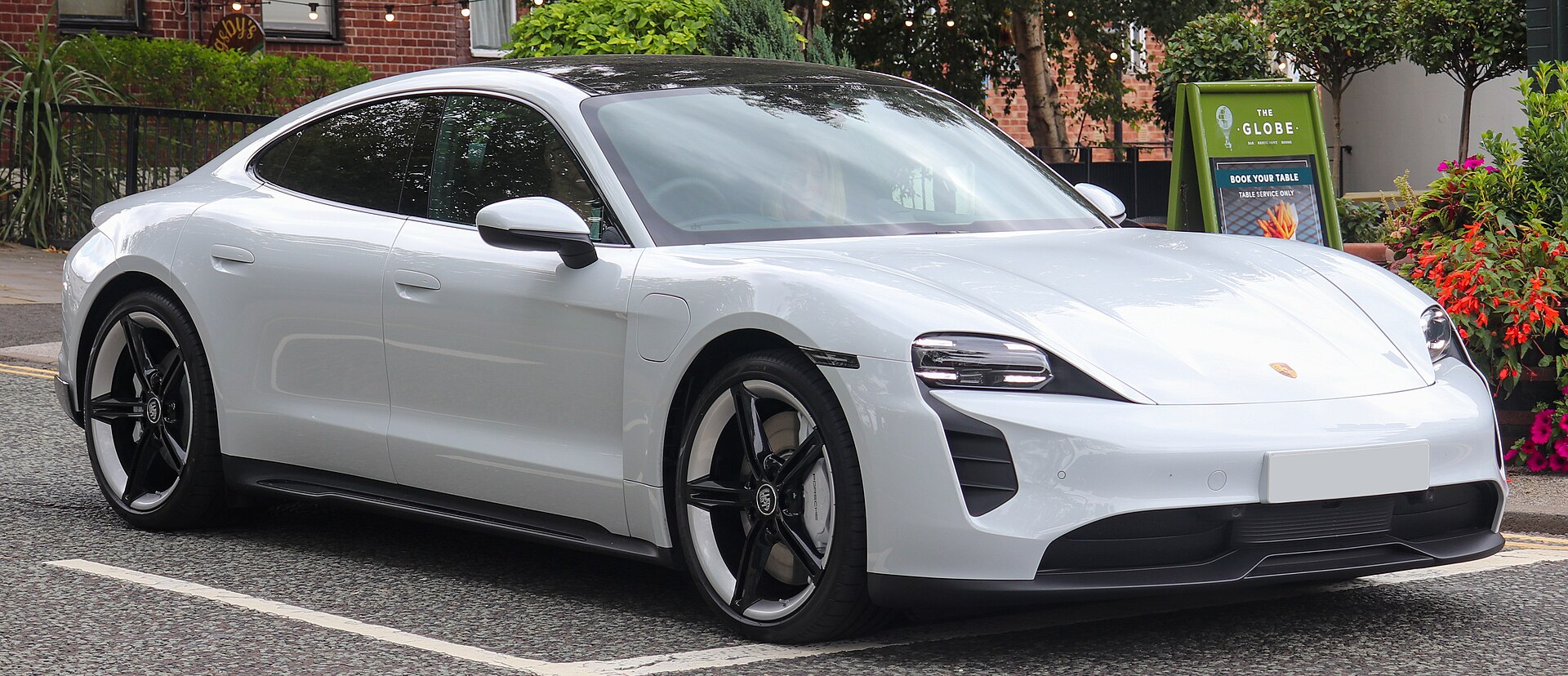
Should I Buy a New or Used Porsche Taycan Turbo?
With used Taycans selling for less than half their original MSRP, here's how to decide between new and used — and which model years to target.
The Unusual Opportunity: Why Porsche's Depreciation Is Creating Deals
Few automotive segments have experienced the dramatic depreciation that the Porsche Taycan Turbo has suffered since its 2019 launch. A 2021 Taycan Turbo that cost $160,000+ when new now sells for $70,000–$90,000 in the used market. That's a 55% loss in value over four years — among the steepest depreciation curves in the luxury EV segment.
For first owners, this is devastating. For second owners, it's an opportunity that rarely presents itself in the EV world. You're getting access to a vehicle that combines Porsche engineering, genuine performance, and four-figure monthly depreciation curves that have already been absorbed by the previous owner.
But this situation is more nuanced than simply "buy used and save money." The Taycan market has matured. Battery technology improved significantly between model years. Range ratings jumped from 215 miles (2020–2022 models) to 280 miles (2024+). The transmission shifted from two-speed to three-speed. Charging speeds evolved. Warranty coverage matters enormously in the EV world.
The question isn't whether to buy new or used — it's which version of "used" to buy, whether the remaining warranty justifies the used discount, and whether the range differences matter enough to affect your ownership experience. Let's break it down.
New 2025 Porsche Taycan Turbo: The Baseline
A brand-new 2025 Porsche Taycan Turbo starts at $161,500 MSRP, though real-world dealer pricing typically adds $5,000–$15,000 in options and destination charges. So you're looking at $165,000–$175,000 to drive home a new example.
Here's what you're getting at that price point:
- Range: 280 miles EPA-rated on the 93-kWh battery (vs. 201–215 for 2020–2022 models). This is a massive difference in real-world confidence.
- Charging Speed: 350-kW DC charging capability (adds roughly 50% charge in 20 minutes). Older models cap out at 270 kW.
- Performance: 670 horsepower, 0–60 in 3.1 seconds, 161 mph top speed.
- Three-Speed Transmission: Replaces the two-speed on older models, offering smoother acceleration and better highway efficiency.
- Updated Infotainment: Porsche's latest software, navigation, and smartphone integration. OTA (over-the-air) updates keep the car current.
- Warranty: 4-year/50,000-mile bumper-to-bumper. 8-year/100,000-mile battery warranty with degradation coverage down to 70%.
- Estimated Depreciation: Based on market trends, expect roughly 35–40% value loss over 4 years. By 2029, you're looking at roughly $100,000–$110,000 resale value.
For buyers who value the latest technology, maximum range, and the peace of mind that comes with a full factory warranty, the new Taycan Turbo is the straightforward choice. You'll pay a premium, but that premium buys certainty.
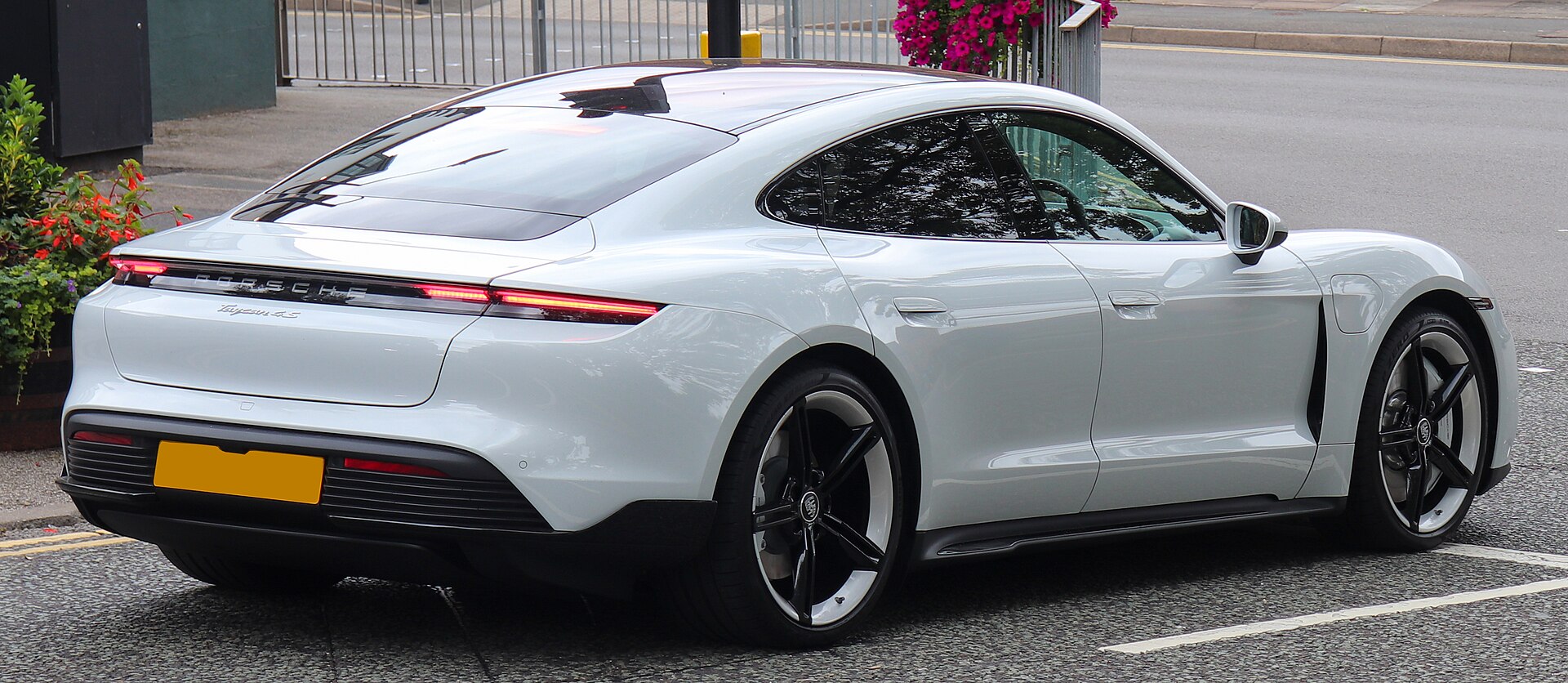
Used 2024 Porsche Taycan Turbo: The Sweet Spot
This is the best-value segment of the Taycan market in early 2026. A 2024 Taycan Turbo — basically identical to the 2025 in terms of range, charging speed, and transmission — is selling for $120,000–$145,000. You're saving $20,000–$35,000 off the new price while getting nearly all the modern features.
Key advantages of 2024 models:
- 280-mile range: Same as 2025. No compromise on usable distance.
- 350-kW charging: Identical to new models.
- Three-speed transmission: You get the mechanical improvements without the new-car premium.
- Warranty: Most 2024 models still have 2–3 years of the factory warranty remaining, plus the battery warranty still has significant coverage. Porsche Approved CPO (Certified Pre-Owned) programs extend coverage for additional peace of mind.
- Depreciation curve behind you: The 2024 has already absorbed 25–30% of its value loss. A 2024 bought at $130,000 will likely depreciate to $90,000–$95,000 over the next 3 years. That's 27% versus the 35–40% depreciation you'll see on a new 2025.
If you're budget-conscious and want maximum range with modern features, the used 2024 Taycan Turbo is the logical choice. You're not sacrificing functionality for savings — you're just skipping the new-car premium.
Used 2020–2022 Porsche Taycan Turbo: The Range Compromise
The original Taycan generation hits the used market at significantly lower prices: $65,000–$110,000 depending on mileage and condition. A low-mileage 2021 with service records might ask $90,000–$100,000. A higher-mileage 2020 could be found for $65,000–$75,000.
But here's the tradeoff you need to understand: these cars have 201–215 miles of EPA range. Not the 280 miles of the 2024+. The difference isn't merely numerical — it fundamentally changes the ownership experience.
- Real-world range: In cold weather or highway driving, a 2021 with 201 miles EPA will deliver 140–160 actual miles of usable range. A 2024 with 280 miles will deliver 200–220 miles in the same conditions. That's a 40–60-mile gap.
- Charging speed: Older models max out at 270 kW DC charging (vs. 350 kW on 2024+). That translates to 15–20 minutes longer on a fast charger.
- Two-speed transmission: The older transmission is mechanically sound but feels less refined than the three-speed option on newer models.
- Battery health: Porsche's battery warranty covers degradation below 70% capacity. Real-world data shows 2020–2022 models averaging 92–95% health at 3–4 years of age. The cells are proven, but they're older technology.
- Warranty: These models typically have 6–24 months of factory coverage remaining, depending on purchase date and mileage. The battery warranty (8-year/100K-mile) still applies and still has substantial time remaining.
- OTA Updates: Porsche's over-the-air update system does help older cars, adding features and refinements. But hardware differences (charging speed, battery size, transmission type) cannot be retrofitted.
The 2020–2022 generation makes sense if you have a reliable charging infrastructure (Level 2 at home, DC fast chargers nearby) and your average driving is under 200 miles per day. If you're regularly doing 250+ mile road trips, the range gap becomes uncomfortable.

Battery Health and Degradation: What to Monitor
In the EV world, battery health is everything. Fortunately, the Taycan's battery is proving to be among the most stable in the segment.
Porsche covers battery degradation below 70% capacity through the 8-year/100,000-mile warranty period. Independent testing of 2020–2022 models shows they're holding 92–95% capacity after 3–4 years. That's excellent. Compare that to the Tesla Model S, which sometimes shows 85–90% at the same age, or early Teslas that suffered 10%+ degradation in the first year.
When buying a used Taycan, here's what to check:
- Request a battery report: Porsche service centers can generate a detailed battery health report. Insist on this before purchase. A healthy 2021 should show 92%+ capacity.
- Independent testing: Porsche-certified workshops can run Bavarian Diagnostic Software (BDS) to confirm battery state-of-health independently. Cost: $200–$400. Worth every cent.
- Charging curve analysis: Ask the seller whether the car charges to 100% in the same timeframe it did when new. Significant changes suggest degradation.
- Real-world range reports: For 2020–2022 models, ask whether the car still achieves the stated 201–215 mile range under normal driving. If a 2021 is only delivering 160 miles, degradation has occurred.
Battery health matters far more than mileage on an EV. A well-maintained 2021 Taycan with 40,000 miles could be healthier than a low-mileage 2020 with mysterious gaps in service history.
Total Cost of Ownership: New vs. Used Side-by-Side
Here's where the real math happens. Purchase price is just one line item. Let's compare the true 4-year cost of ownership across different scenarios:
| Category | New 2025 ($170K) | Used 2024 ($130K) | Used 2022 ($95K) | Used 2020 ($70K) |
|---|---|---|---|---|
| Purchase Price | $170,000 | $130,000 | $95,000 | $70,000 |
| 4-Year Depreciation (35-40%) | -$60,000 | -$35,000 | -$20,000 | -$12,000 |
| Insurance (annual avg $1,200) | $4,800 | $4,800 | $4,400 | $4,000 |
| Charging (annual 12K miles) | $900 | $900 | $900 | $900 |
| Maintenance (new car minimal) | $2,000 | $2,500 | $4,000 | $4,500 |
| Tires (40K miles, $1,600 set) | $1,600 | $1,600 | $1,600 | $1,600 |
| Registration/Taxes (EV incentives) | $800 | $800 | $800 | $800 |
| Total 4-Year Cost | $120,000 | $105,100 | $86,700 | $67,300 |
| Cost Per Mile (12K/yr) | $0.72 | $0.63 | $0.52 | $0.40 |
Here's what jumps out: the used 2024 is the efficiency sweet spot. You're saving roughly $15,000 over four years compared to buying new, without sacrificing range or technology. The used 2022 saves even more, but only if the 201-mile range meets your actual needs. The used 2020 is cheapest overall, but warranty coverage is thinner, and range anxiety is real.

Why Warranty Coverage Matters More for EVs
In an internal combustion car, the warranty is nice to have. In an EV, warranty is essential. Battery replacement costs $15,000–$25,000 out of pocket. Motor repairs run $5,000–$10,000. Inverter issues can hit $8,000+.
Porsche's warranty structure on the Taycan is excellent:
New 2025: 4-year/50K bumper-to-bumper. 8-year/100K battery warranty with 70% capacity guarantee.
Used 2024: Remaining factory warranty (typically 2–3 years) transfers to second owner. Add Porsche's Approved CPO program (5-year/unlimited-mile), and you're essentially back to factory coverage. The CPO inspection certifies battery health.
Used 2020–2022: Factory warranty is nearly expired on most examples. The 8-year battery warranty still applies, but you'll likely be outside bumper-to-bumper coverage. Here's where Porsche Approved CPO becomes crucial. The 2-year extension costs roughly $2,000–$3,500 but provides peace of mind.
The warranty gap is typically the $10,000–$20,000 hidden cost of buying older used EVs. Factor this in before choosing the cheapest 2020 you can find.
Range and Charging: Does It Actually Matter?
The gap between a 2021 (201 miles) and a 2024 (280 miles) feels abstract until you live with it. On paper, it's 79 miles. In real-world driving, it's much more significant.
Scenario 1: Urban buyer with home charging
You have Level 2 charging at home. Your daily driving is 60 miles. Either the 2021 or 2024 is overkill — you're charging overnight and driving away with a full battery every day. In this case, the 2021's range isn't a limitation. Buy used, save the money.
Scenario 2: Suburban buyer without home charging
You rely on public charging. You take 200-mile road trips occasionally. The 2021 with 201 miles of EPA range becomes uncomfortable. In real-world conditions (highway speeds, winter weather), you're looking at 140–160 miles of actual range. That's a problem if you need to drive 200 miles without a 2-hour fast-charge stop. The 2024 with 280 miles (200–220 real miles) solves this problem. The range difference justifies the $30,000–$40,000 price premium.
Scenario 3: Serious road-tripper
You frequently drive 300+ miles in a day. You're relying on DC fast charging. The 2024's 350-kW capability adds 50 miles of range in 20 minutes. The 2021's 270-kW charging is measurably slower. Over a 1,000-mile road trip, this difference translates into 30–45 minutes of additional waiting time. If you're doing this regularly, the newer technology saves real time and real stress.
Be honest about your actual driving patterns before deciding. Many buyers convince themselves they need range they'll never use, and overpay accordingly.
Porsche Approved CPO: Worth the Premium?
Porsche's Certified Pre-Owned program adds a 5-year/unlimited-mile warranty extension on top of remaining factory coverage. Cost: typically $2,500–$3,500 depending on vehicle age and mileage.
Is it worth it? Yes. Here's why:
- Battery testing: CPO certification requires an official battery health diagnostic. You get proof of condition, not a seller's promise.
- Multi-point inspection: 111-point inspection covers everything from suspension to HVAC to the high-voltage system. Issues are documented and corrected.
- Extended warranty: Battery coverage extends to the 5-year mark (covering degradation below 70%). Major components are covered. This is insurance against finding an $15,000 problem six months after purchase.
- Resale value: A CPO-certified Taycan will be easier to resell. The next buyer knows the battery was officially tested and the warranty was extended. Expect to recover 70–80% of the CPO cost through better resale value.
For used 2020–2022 models especially, Porsche Approved CPO is nearly essential. For 2024 models with substantial factory warranty remaining, it's less critical but still valuable.
The Lease Alternative: Avoiding Depreciation Entirely
Leasing a Porsche Taycan Turbo is surprisingly competitive: $1,500–$1,800/month for a new 2025, depending on lease structure and location. Over three years and 45,000 miles, that's $54,000–$64,800 total.
Compare that to buying:
- New 2025 at $170,000, depreciated to $105,000 after 3 years = $65,000 depreciation loss
- Plus insurance ($1,200/year = $3,600)
- Plus maintenance ($2,000 over 3 years)
- Total: $70,600
Leasing puts you at $54,000–$64,800. Buying puts you at roughly $70,600. The lease is cheaper, and you avoid all depreciation risk.
The downside: you're limited to 15,000 miles/year (excess mileage charges apply). And at the end of the lease, you own nothing.
If you drive less than 12,000 miles annually, leasing is likely the economically superior choice. If you drive more, or you want to own the asset long-term, buying used (2024 model preferred) is the way to go.
Check Battery Health Before You Buy
Automonitor can arrange a complete diagnostic on any Taycan to certify battery state-of-health and uncover hidden issues before you commit. Don't skip this step.
Schedule a Pre-Purchase Inspection →The Technology Gap: What Can Be Updated and What Can't
One of the arguments for buying new is getting the latest software and features. It's true that older Taycans benefit from Porsche's OTA update system — the car receives improvements over time, new features, and bug fixes.
But there's a hard limit. OTA updates can improve software. They cannot change hardware.
- Can be updated via OTA: Navigation maps, cabin lighting behavior, drive mode tuning, convenience features.
- Cannot be updated: Charging speed (hardware limitation), battery capacity (hardware limitation), transmission type (hardware limitation), infotainment screen resolution, camera quality.
The practical implication: a 2021 Taycan bought in 2026 will never charge as fast as a 2024. It will never have the 280-mile range. It will always have the smaller battery. OTA updates can't bridge this gap.
If charging speed and range are important to your use case, buying a newer model (2024+) is necessary, not just nice to have.
The Decision Matrix: New vs. Used Based on Your Situation
Buy New 2025 if:
- You want maximum range (280 miles) and are okay with the $170K price tag
- You want the latest features and a full factory warranty period
- You plan to keep the car for 5+ years and want the depreciation depreciation curve to be as favorable as possible
- You want peace of mind and don't want to inherit anyone else's problems
Buy Used 2024 if:
- You want 280-mile range and modern charging capability at a $30K–$40K discount
- You're willing to accept 2–3 years of remaining factory warranty
- You plan to keep the car 3–4 years and want the best cost-per-mile equation
- You want Porsche Approved CPO coverage for extended peace of mind
Buy Used 2020–2022 if:
- You have home charging and rarely drive more than 150 miles in a day
- You're budget-constrained and accept the lower range as a tradeoff
- You plan to keep the car 5+ years and want the absolute lowest entry cost
- You're comfortable with battery diagnostics and are willing to pay for Porsche Approved CPO coverage
Lease instead of buying if:
- You drive fewer than 12,000 miles annually
- You want to avoid depreciation risk and the burden of major repair costs
- You want to drive a new car every 3 years with the latest technology
- The $1,500–$1,800/month lease payment is comfortably within your budget
The Smart Purchase Process: Steps That Protect You
Step 1: Define your budget and range requirement. Don't let the cheapest used model seduce you if it doesn't meet your real driving needs. A $70K car that forces you to rent a ICE vehicle for road trips isn't as cheap as it appears.
Step 2: Prioritize 2024 or 2025 models. The range and charging speed differences are substantial and justify the higher price. Moving down to 2020–2022 should be a deliberate choice, not a default.
Step 3: Demand battery diagnostics before purchase. This is non-negotiable. Arrange an independent inspection with a Porsche-certified shop. Cost: $300–$400. Peace of mind: priceless. A healthy 2021 should show 92%+ capacity. Anything below 90% is a red flag.
Step 4: Check service history religiously. EVs with documented full-service records are worth a significant premium. A well-maintained 2021 with 40,000 miles and full records is preferable to a low-mileage 2020 with unknown maintenance history.
Step 5: Negotiate from data. Use Kelley Blue Book and actual sales comps (not asking prices) to establish fair value. Factor in any remaining warranty, CPO certification costs, and required maintenance into your offer.
Step 6: Get pre-purchase inspection financing sorted. Exotic EV lenders like JJ Best Banc understand the Taycan market. Expect 20–30% down and rates between 5–8% depending on the vehicle age and your credit. Lock this in before making an offer.
The Final Verdict
The Porsche Taycan Turbo is an exceptional car that has become surprisingly attainable as a used purchase. The depreciation that devastated first owners has created genuine opportunity for second owners.
If you can afford a new 2025 at $170,000 without financial strain, the full warranty period and maximum range justify the price. You'll own a piece of Porsche history with peace of mind built in.
If you're budget-conscious, a used 2024 Taycan Turbo is the obvious sweet spot. You're saving $30,000–$40,000, getting the same range and charging capability as new, and still enjoying substantial warranty coverage. This is the best value in the segment.
If you're willing to accept reduced range, a 2020–2022 model offers impressive value — but only if you've honestly assessed your driving patterns and battery health becomes a focus point before purchase.
And if you drive fewer than 12,000 miles annually, leasing eliminates depreciation risk and keeps you in the latest technology. It's cheaper than buying in most scenarios.
The key is being honest about your actual usage, understanding what you're gaining (or losing) between model years, and refusing to compromise on pre-purchase battery diagnostics. Do this right, and you'll be in the perfect Taycan for your situation and budget. Do it wrong, and you could inherit someone else's $15,000 battery problem.
Automonitor can help you navigate this decision — we track Taycan inventory, monitor depreciation trends, arrange inspections, and help secure favorable financing on used or new models. Let us handle the complexity so you can focus on driving.
Ready to Find Your Taycan Turbo?
Automonitor connects you with certified EV specialists, handles battery diagnostics, and provides real market data so you can buy with total confidence.
Start Your Search →