Should I Buy a New or Used Koenigsegg Jesko? The Definitive Answer
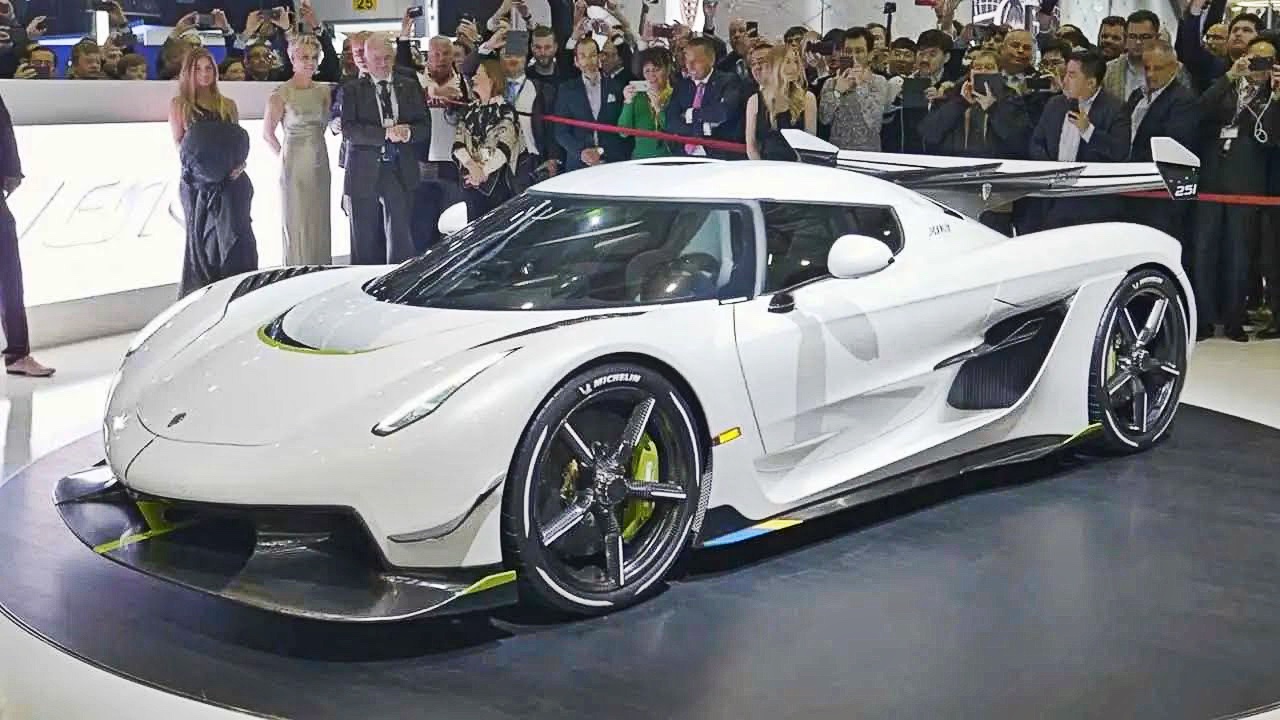
With only 125 planned, the Koenigsegg Jesko represents one of the rarest hypercars ever built. But the path to ownership splits sharply: secure a new allocation at $3M MSRP, or hunt the secondary market at $4M-$6M+. Here's everything you need to decide between them.
The Choice Ahead: Allocation vs. Secondary Market Reality
If you're seriously considering a Koenigsegg Jesko, you're already thinking at a different scale than most car buyers. This is not a car you buy on impulse. It's a car you plan for, negotiate for, and in many cases, wait years to receive. The fundamental decision you face isn't whether the Jesko is worth buying — for those with the financial capability, it demonstrably is. The decision is whether to pursue a new allocation or hunt the secondary market where existing examples change hands at substantial premiums.
This distinction matters enormously, because it shapes your entire ownership experience, timeline, financial outcome, and relationship with the brand. At Automonitor, we've helped ultra-high-net-worth individuals navigate both paths, and the right choice depends entirely on your situation, patience, and investment thesis.
Let's break down the reality on both sides of this decision.
New Allocation Reality: Rarity That Makes Supply Constraints Look Abundant
Koenigsegg announced a production run of 125 Jesko units. As of early 2026, the vast majority of those build slots are already spoken for. Koenigsegg maintains a waiting list managed by the company and its authorized dealers, and new allocations are extremely limited. When they do become available, they typically go to existing customers or through the brand's established network.
If you want a new Jesko with a specific configuration of your choosing, you're looking at a multi-year process. The factory operates on a build schedule that extends years into the future. You don't walk into a Koenigsegg showroom and pick one off the lot. You negotiate a build slot, work with the factory team to configure your specific example, and then wait. The current timeline for a new allocation typically runs 3-5 years from order confirmation to delivery — sometimes longer depending on the complexity of your specification and the factory's production schedule.
The MSRP sits at approximately $3 million, though Koenigsegg historically charges premium prices for certain factory options. This is before taxes, shipping, and the "ghost package" of factory customization features that can add substantial cost. The final delivered price for a fully customized new Jesko can easily exceed $3.2-$3.5 million once these elements are factored in.
The advantages of a new allocation are genuine and significant. You control the specification completely. You choose the paint, interior materials, aero package, and performance orientation. You get the full factory warranty covering powertrain and electronics. You develop a direct relationship with Koenigsegg's customer service team, which becomes valuable for future maintenance, parts availability, and potential service campaigns. And psychologically, you own the first iteration of a configuration that no one else has ever specified, which carries its own prestige within the ultra-luxury community.
The Secondary Market: Where Scarcity Becomes Premium Pricing
For those who can't wait 3-5 years or don't have an established relationship with Koenigsegg through previous purchases, the secondary market is the only path. And here's where the economics become fascinating.
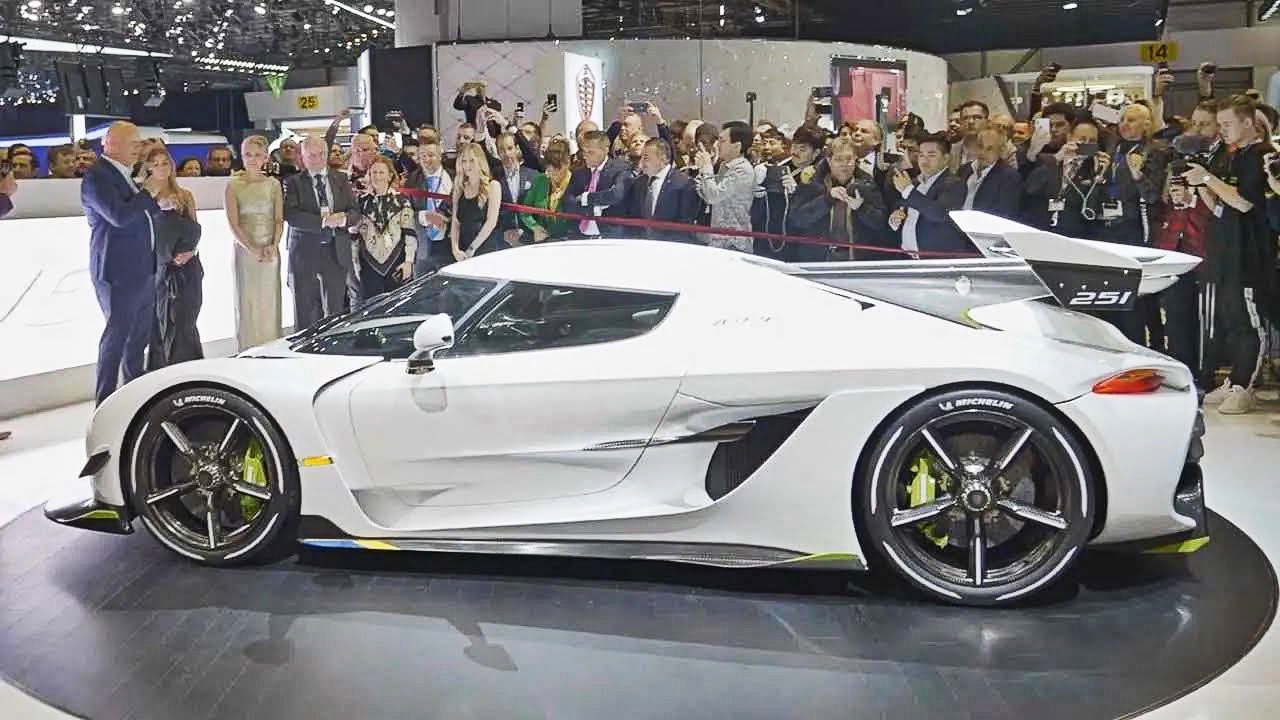
Because production is fixed at 125 units and demand far exceeds supply, used Jeskos trade at substantial premiums above MSRP. Current market pricing for examples delivered in 2023-2025 ranges from $4 million to $6+ million depending on configuration, mileage, and market conditions. Some exceptionally rare specifications — particularly Jeskos with low mileage, unusual paint finishes, or performance-oriented setups — have sold for $7 million or more at private treaty sales.
The delay between production announcement and actual delivery means that early examples are now entering the secondary market, creating an unusual dynamic: the first cars delivered are commanding the highest prices because there are so few examples in existence. Rarity, after all, is measured not in units produced but in units available for sale at any given moment.
Immediate delivery is the defining advantage of the secondary market. You purchase an existing example and take possession within weeks, sometimes days. You see exactly what configuration you're getting — no surprises, no delays. You also avoid the wait, which matters psychologically if you're already at the financial level where owning a Jesko makes sense. For ultra-wealthy individuals, the premium price ($1-3 million above MSRP) is often worth the gratification of immediate ownership.
The 1,600hp Twin-Turbo V8: Pure Engineering Rebellion
Whether you buy new or used, you're getting one of the most technically ambitious powerplants ever fitted to a production car. The Jesko's twin-turbocharged 5.0-liter V8 produces 1,600 horsepower on gasoline and 1,280 horsepower on E85 ethanol fuel (though the primary power figure quoted is the 1,600 hp gasoline figure). This represents an absurd power density — roughly 320 hp per liter, compared to 150 hp per liter in a Lamborghini Huracan.
The engine architecture is bespoke to Koenigsegg. It uses flat-plane crankshaft design, high-revving capability to 8,500 rpm, and a sophisticated biofuel compatibility system that allows the engine to run cleanly on E85 with minimal emissions. The turbocharging system uses variable geometry turbines, meaning the turbine geometry changes under boost to optimize response and efficiency across the entire power band.
Performance figures are legitimately extraordinary. 0-60 mph in approximately 2.4-2.8 seconds (depending on launch conditions), with a theoretical top speed exceeding 330 mph. The acceleration is not incremental — it's linear, relentless, and violent. At full throttle, the Jesko generates 1.7g in acceleration, which is beyond the threshold of what the human body can tolerate without specialized training. It's a hypercar engine in the truest sense of the term: purposeful, extreme, and uncompromising.
The Jesko's power output is not about practicality. It's about engineering possibility. Koenigsegg built this engine to prove it could be done, and in doing so, created one of the greatest powerplants in automotive history.
The Revolutionary LST Gearbox: Single-Clutch Perfection
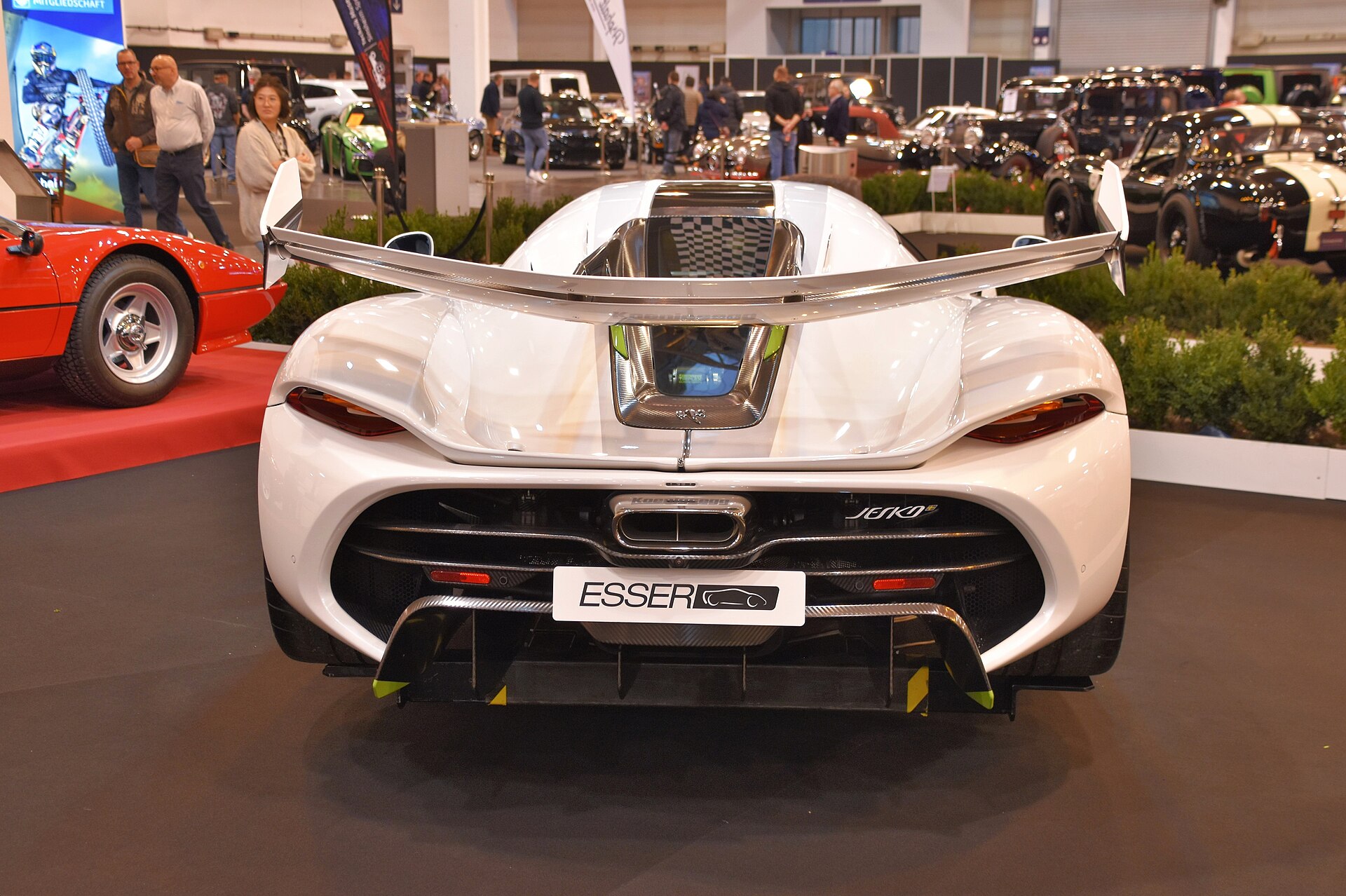
The transmission might be even more significant than the engine. Koenigsegg's proprietary LST (Light Speed Transmission) is a single-clutch system that shifts with the speed and directness of a DCT but without the inherent complexity. Unlike traditional dual-clutch transmissions that use two separate clutches, the LST uses a unique design that allows simultaneous gear selection and engagement — functionally delivering dual-clutch performance from a simpler architecture.
The practical result: shifts occur in under 50 milliseconds, with no power interruption. The Jesko maintains constant turbo boost throughout gear changes, meaning acceleration feels entirely linear. There's no moment of hesitation, no feeling of gears changing. You press the throttle and 1,600 horsepower launches you forward in an unbroken thrust.
For reliability purposes, the LST's simplicity compared to conventional DCTs is significant. There are fewer clutches, fewer hydraulic circuits, fewer failure points. Multiple owners of earlier Koenigseggs with LST variants report remarkable durability. This transmission has proven itself across high-performance driving, track days, and aggressive launches without the wear-related issues that plague dual-clutch systems at extreme power levels.
This matters whether you're buying new or used. A new Jesko comes with Koenigsegg's factory warranty covering the LST. A used Jesko's transmission performance is directly observable in test drives — you can feel whether shifts are crisp and responsive, and the maintenance records will show if any service work has been performed.
New Allocation Advantages: The Factory Experience
Beyond specification control, a new Jesko provides advantages that used buyers cannot replicate:
Comprehensive Factory Warranty
The factory covers the powertrain and all electronics for a substantial period. This warranty is transferable to the first subsequent owner in most markets, which actually increases resale value for you when you eventually sell.
Direct Manufacturer Relationship
Koenigsegg is small enough (approximately 150 employees) that new customers develop direct relationships with the factory team. The company assigns customer service specialists who handle your build, delivery, and ongoing support. This level of access and attention is impossible in the secondary market.
Customization at the Factory Level
The factory customization program for Koenigsegg is extraordinary. While all Jeskos are custom-ordered, the depth of personalization available at the point of order is remarkable. You can specify custom paint colors, interior materials sourced globally, performance packages optimized to your driving style, and even bespoke aerodynamic configurations. By the time your car arrives, it's not just custom — it's personalized in ways that reflect your specific tastes and driving intentions.
Participation in the Build Process
Some new Koenigsegg customers are invited to visit the factory during their car's final assembly. This is an experience that money cannot buy after the fact. Watching your hypercar take its final form, understanding every detail of its engineering, and being present for its first startup — this transcends the typical car-buying experience.

Used Advantages: Pragmatism Meets Investment Theory
The secondary market path has its own compelling advantages:
Immediate Gratification
You want a Jesko in 2026? You can own one in a matter of weeks. The financial premium is substantial, but if your net worth allows, the psychological benefit of immediate possession is significant.
Proven Specification
You know exactly what you're getting. You drive the car before purchase. You see every detail of its configuration. You review service history and mileage. There's no uncertainty about delivery timeline, no surprises when the car finally arrives.
Known Appreciation Trajectory
The earliest Jeskos are now establishing their market precedent. When you buy a car that's already sold in the market, you have price discovery. You know what other examples are commanding. You can negotiate based on comparable data. With new allocations, you're making a speculative bet on future market values — used examples give you visibility into what that market actually is.
Potential Asset Appreciation
This is the subtle but important advantage. If you purchase a used Jesko for $5 million today, and production reaches its final 125 units in the coming years, the rarity floor for all Jeskos is fixed. Total supply is known. All examples will eventually be in the secondary market. This creates a potential scenario where the car appreciates or at least holds value remarkably well, because you're essentially buying a fractional interest in an extremely exclusive asset class with no future increase in supply.
Ownership Reality: Maintenance Costs and the Specialist Service Network
Whether new or used, you need to understand the ongoing costs of Jesko ownership. This is not a car you can maintain at your local Lamborghini dealership. The Jesko requires factory-trained technicians at Koenigsegg-authorized service centers. As of 2026, there are extremely limited locations globally capable of major service work on Jeskos. This concentration creates logistical challenges.
Annual maintenance costs run $15,000-$30,000+ depending on mileage and driving intensity. This includes scheduled services, fluid changes, brake inspection, tire replacement, and any consumables. The cost of replacement parts is extraordinary. A set of factory carbon-ceramic brakes exceeds $50,000. Tire replacement for the specialized Michelin Pilot Sport tires runs $8,000-$12,000 per set. Engine oil service with Koenigsegg-specified synthetic formulations costs $3,000-$5,000 per service.
Major service intervals are roughly 10,000 miles or annually, whichever comes first. Full transmission service runs $8,000-$12,000. For a car with 1,600 horsepower and the highest performance demands, these costs are not exceptional in percentage terms — they're actually typical for hypercars at this power level.
The advantage of a new car with warranty is obvious: the factory covers most of this during the warranty period. The advantage of a used car is knowledge of its service history. At Automonitor, we always insist on complete service records for any Jesko under consideration. A well-maintained example is far preferable to an unknown-history car, even if it costs slightly more.
Investment Potential and Collectibility: What Future Markets Might Hold
The investment case for the Jesko is genuinely interesting. Consider the historical precedent: the Koenigsegg One:1 was produced in 6 examples and is now worth substantially more than its original $1.6 million MSRP. The CCX, produced in 30 examples, established value that has remained stable or appreciated over time. The CC8S, produced in only 6 units, commands extraordinary prices when it surfaces for sale.
Koenigsegg has a track record of production run completion and then cessation. Once the Jesko reaches 125 units, production stops. This is different from Ferrari or Lamborghini, which continuously update and produce new models. The Jesko will be finite, complete, and closed production.
This creates the conditions for long-term value: finite supply, proven engineering and performance, increasing rarity over time as cars inevitably suffer accidents or deteriorate, and growing historical significance as the hypercar era transitions to electrification.
Will your Jesko appreciate? No guarantee. Markets are unpredictable. But the structural conditions favor value stability at minimum, and appreciation in favorable scenarios. Compare this to a Bugatti Chiron, which was produced in significantly larger numbers (500 units) and depreciates more predictably. Or a Pagani Huayra, which has model updates and revisions. The Jesko's closed production run is one of its most valuable long-term characteristics.
How It Compares: Jesko vs. Pagani Huayra vs. Bugatti Chiron
You're not evaluating the Jesko in a vacuum. Here's how the top three hypercars stack up for someone deciding between new and used options:
| Factor | Koenigsegg Jesko | Pagani Huayra R | Bugatti Chiron |
|---|---|---|---|
| Planned Production | 125 units | Limited unknown | 500+ units |
| New MSRP | ~$3.0M | ~$2.3M | ~$3.0M |
| Used Market Price | $4.0M-$6.5M | $2.5M-$4.0M | $2.8M-$4.2M |
| Engine | 1,600 hp Twin-Turbo V8 | 840 hp NA V12 | 1,500 hp Quad-Turbo W16 |
| 0-60 mph | 2.4-2.8 seconds | 2.8 seconds | 2.4 seconds |
| Transmission | LST Single-Clutch | Manual/DCT | 7-Speed DCT |
| Reliability | Very Good | Mixed | Good |
| Service Cost (Annual) | $15K-$30K+ | $12K-$25K | $20K-$40K |
| Rarity/Scarcity | Maximum | Very High | High |
| Value Retention | Excellent | Very Good | Good |
The Jesko emerges as the rarest option with the highest secondary market pricing and the strongest value-retention case. The Pagani Huayra offers more affordable entry into hypercar ownership and features the romance of a naturally aspirated engine. The Bugatti Chiron provides quad-turbocharged W16 drama but higher service costs and lower future appreciation potential due to the larger production run.
Automonitor's Role: Navigating New Allocations and Secondary Market
The Jesko purchase process is complex enough that professional guidance genuinely matters. At Automonitor, we help ultra-high-net-worth buyers navigate both paths:
For New Allocations: We leverage relationships with Koenigsegg and authorized dealers to secure build slots when they become available. We provide market context for specification choices, advise on which custom options hold value best, manage the ordering process, and ensure transparency around timeline and cost. Our role is ensuring you understand exactly what you're ordering and what the total delivered cost will be.
For Secondary Market: We source Jeskos available for sale globally, conduct independent inspections by Koenigsegg-certified technicians, verify complete service history, handle international logistics if necessary, and negotiate pricing based on comparable sales data. We've developed relationships with sellers, private collections, and specialized exotic brokers who have occasional Jesko inventory.
The reality is that buying a Jesko — whether new or used — is not a straightforward transaction. You're dealing with extreme rarity, substantial pricing, global logistics, and technical complexity. Having experienced advocates who understand the Koenigsegg brand and the hypercar market makes the process dramatically more efficient and increases the probability of obtaining the right car at fair market value.
Ready to Pursue Your Jesko?
Automonitor specializes in ultra-rare hypercar sourcing. Whether you're seeking a new allocation or hunting the secondary market, we handle allocation acquisition, market analysis, inspections, and international logistics.
Start Your Jesko Search →New vs. Used: A Clear-Eyed Decision Framework
So which should you choose? Here's our honest assessment based on different buyer profiles:
Choose New If:
- You have patience and can wait 3-5 years for delivery without frustration
- You want complete specification control and factory customization
- You value the psychological experience of new ownership, factory warranty, and direct manufacturer relationship
- You're willing to accept the speculation risk that current MSRP reflects fair value
- You're committed to long-term ownership and don't need immediate delivery
Choose Used If:
- You want immediate ownership and can absorb the secondary market premium
- You prefer visibility into specification and proven market value rather than speculation
- You believe the secondary market premium is worthwhile for known rarity and appreciation potential
- You want to purchase a car with service history and verified track record
- You're willing to pay a premium for the certainty of existing examples over the speculation of future delivery
For most ultra-high-net-worth buyers we advise, the secondary market is the pragmatic choice. The premium paid above MSRP is recovered through immediate ownership, certainty of specification, and participation in the market-established value. But for those who can afford to wait and want the factory experience, a new allocation is legitimately the superior path despite the timeline.
The Final Recommendation: How Auto Monitor Advises
The Koenigsegg Jesko is worth buying in either configuration. It represents peak internal combustion engineering at the intersection of power, efficiency, and technological ambition. The brand's pedigree, the closed production run, and the machine's sheer performance capability create structural conditions for value retention and long-term appreciation.
The new vs. used decision ultimately comes down to patience and timeline. We've helped buyers acquire Jeskos through both paths, and both have proven successful. The secondary market example provides immediate gratification and participation in market-established pricing. The new allocation offers factory experience, specification control, and the prestige of building a car to your exact vision.
What matters most is making an informed decision based on transparent pricing, realistic timelines, and honest assessment of your own priorities. At Automonitor, we provide that clarity. We source from verified manufacturers, secondary market collectors, and private sales. We conduct independent technical inspections. We provide market data that allows you to understand whether pricing is fair. And we manage the entire process so your involvement is limited to the decisions that matter.
The Jesko is an exceptional car. Make sure it's exceptional for you, in your specific situation, at a price you're comfortable paying.
Find Your Koenigsegg Jesko Today
Automonitor sources new allocations and secondary market Jeskos globally. Let us help you navigate the acquisition process with complete transparency and expert guidance.
Begin Your Search →