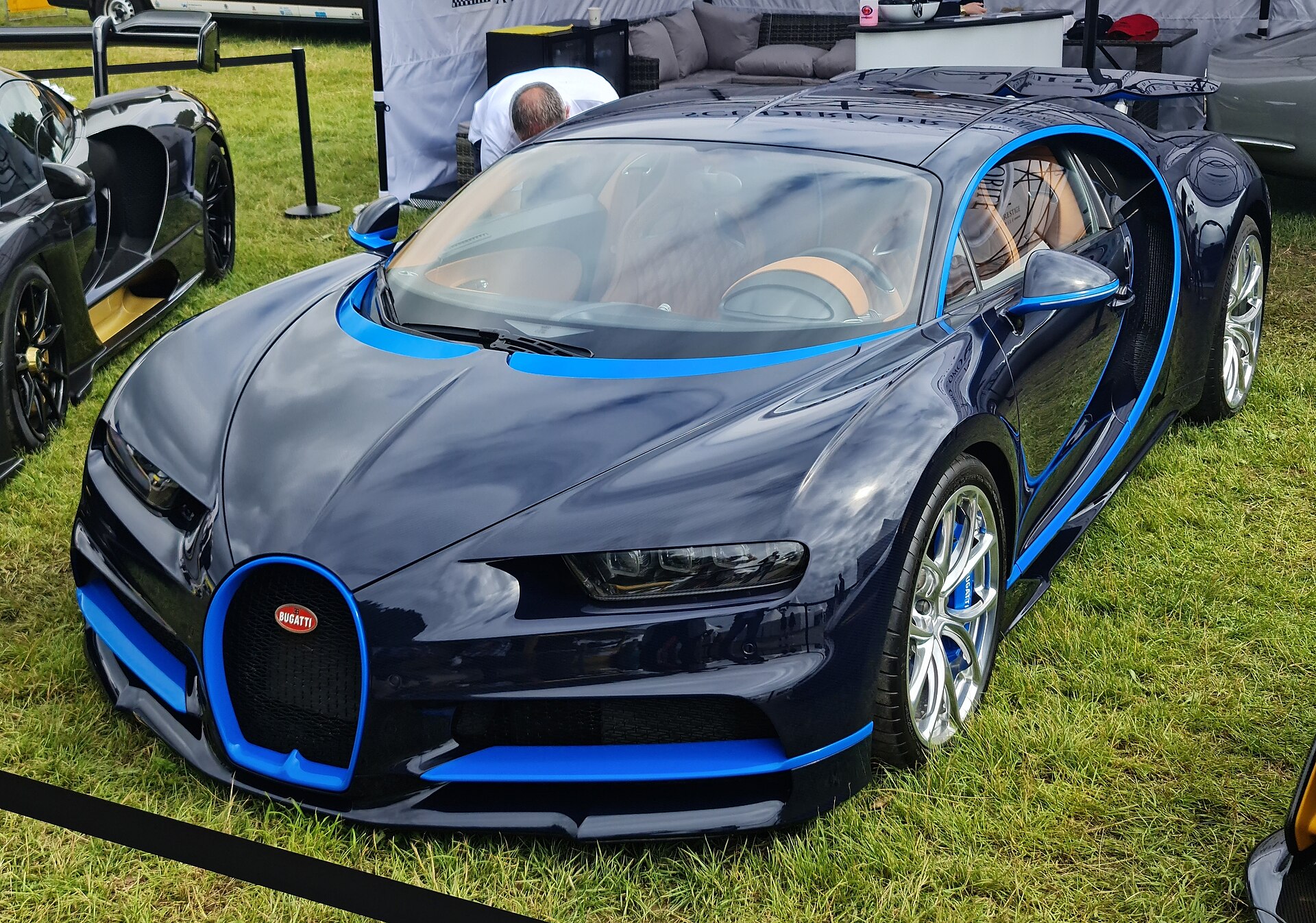
Should I Buy a New or Used Bugatti Chiron?
The Chiron went out of production in 2022 after 500 units sold worldwide. Every single one is pre-owned. The real question isn't new or used — it's which Chiron to buy, what condition matters most, and whether this $3–5 million investment makes sense for you.
The Chiron Today: There Is No "New"
Unlike the Huracan, there's no distinction between buying a new Bugatti Chiron and a used one. Production ended in August 2022 after exactly 500 units built over nine years. Every car on the market today is pre-owned. Some have been driven 10,000 miles. Some have 50 miles. All of them are in the secondary market.
This fundamentally changes the buying calculus. You're not choosing between new or used — you're choosing which of the 500 ever built fits your needs, specification, mileage, and budget. The Chiron's successor, the Tourbillon, launched in 2024 at $3.8 million with a hybrid V16 engine. It doesn't diminish Chiron values because the W16 is irreplaceable. The Tourbillon is faster on paper. The Chiron is more extreme in reality.
So the real question becomes: which Chiron should you buy, and at what mileage tier does the value proposition shift from smart investment to expensive indulgence?
Why Production Ended: The W16 Was Dying Anyway
The Chiron launched in 2016 as the spiritual successor to the Veyron, which revolutionized hypercars through pure, unapologetic power. The W16 engine — 8.0 liters, quad-turbocharged, 16 cylinders arranged in a W configuration — was the most extreme production engine ever built. 1,500 horsepower. 1,180 lb-ft of torque. Top speed limited electronically to 261 mph (the Bolide prototype hit 330 mph).
By 2022, the world changed. Emissions regulations tightened globally. Electrification became mandatory for major manufacturers. Bugatti, owned by Rimac (who builds electric hypercars), recognized that the W16 era was over. Rather than dilute the legacy by building a watered-down hybrid version, they ended Chiron production at 500 units and moved to the Tourbillon hybrid platform.
This scarcity is why Chiron values are holding firm. There will never be another W16 hypercar. The engine is obsolete by regulation. Every remaining Chiron is a time capsule of an era when hypercars were defined by mechanical excess rather than electric efficiency.
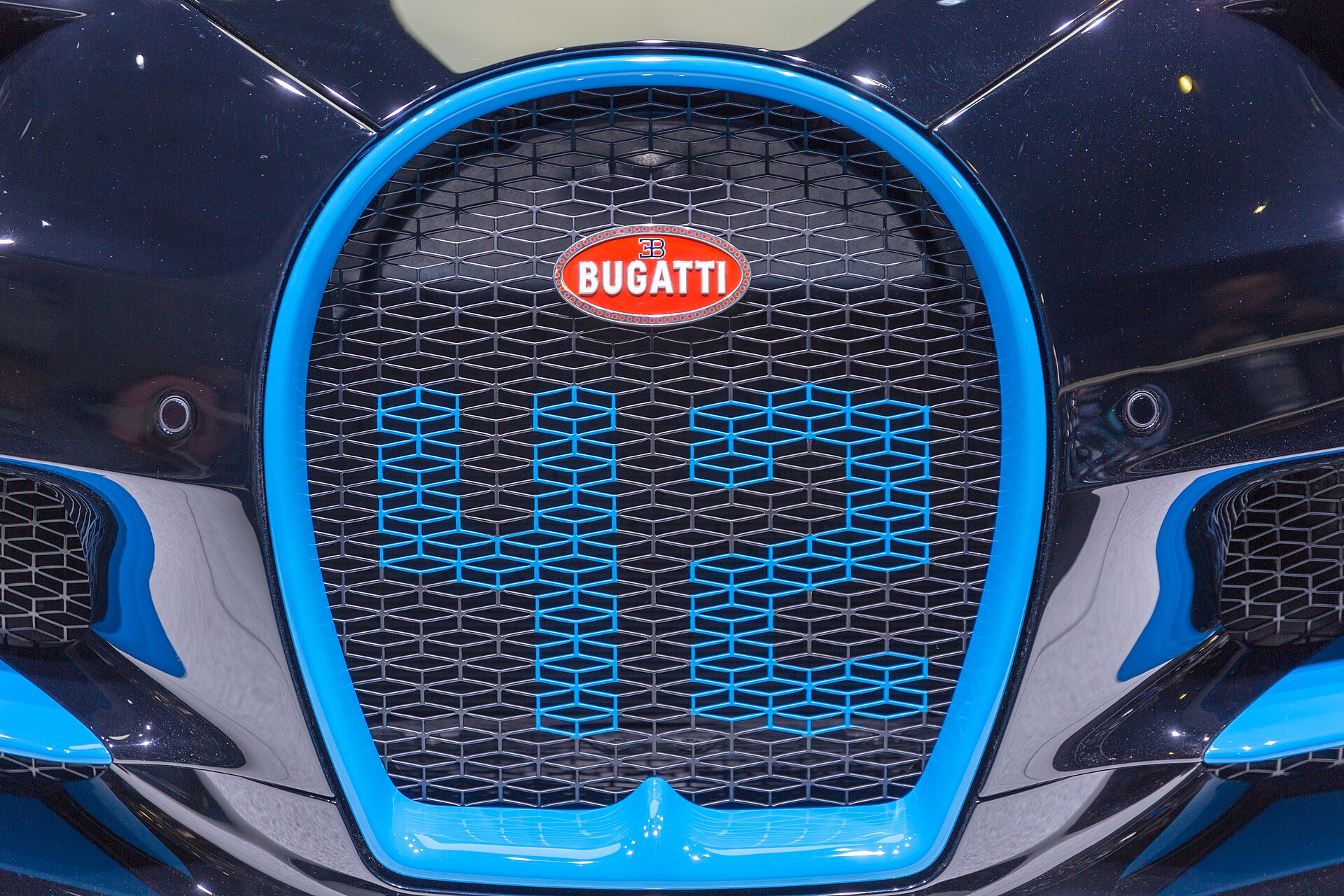
Understanding Chiron Variants: Not All 500 Are the Same
Bugatti offered the Chiron in several distinct variants, each with different powertrains, aero packages, and driving characteristics:
- Chiron Sport: The base model, introduced in 2019 after the standard Chiron sold out. 1,479 hp (down from 1,500 hp in the base model due to emissions updates), lighter, more track-focused. Most common variant.
- Chiron Super Sport: Maximum top speed variant with reduced downforce and streamlined bodywork. Claims 304 mph with fuel efficiency unlocked. Approximately 30 units built.
- Chiron Super Sport 300+: Homologation special for the official 304 mph top speed record. Only 30 units. Extremely rare and highly desirable.
- Chiron Pur Sport: Track-focused variant with maximum downforce, lower ride height, widened track, and lighter construction. 1,479 hp. Approximately 60 units built. Rarest road variant.
- Chiron Bolide (Prototype): Track-only, never street-legal. Do not buy unless you have a dedicated circuit. Prices exceed $5 million.
Every Chiron ever built is a museum piece. The question is whether you want a museum piece that's been driven or one that's been garage-kept.
Mileage Tiers: How Low Is "Low" for a 20-Year Investment?
Unlike normal cars, Chiron mileage tiers operate at completely different valuations. Understand these categories before you start shopping:
| Mileage Category | Miles | Market Price Range | Annual Depreciation | Character |
|---|---|---|---|---|
| Delivery-Mile | Under 100 miles | $4.2M–$5.8M+ | Nearly flat | Still in protective wrapping, first owner never drove it |
| Low-Mile | 100–1,000 miles | $3.8M–$4.8M | 0.5–1%/yr | Driven minimally, excellent condition, pristine records |
| Driven Example | 1,000–5,000 miles | $3.2M–$4.2M | 2–3%/yr | Properly used, full service history, known first owner |
| Higher-Mile | 5,000+ miles | $2.8M–$3.8M | 3–5%/yr | Actively driven, great investment entry, still rare |
The value spread is enormous. A delivery-mile Chiron in a desirable spec (black exterior, red leather, all carbon fiber options) can exceed $5 million at auction. A higher-mileage example with 15,000 miles might be $2.8–3.2 million. Yet both are the exact same car mechanically.
The key insight: provenance and service history matter more than mileage. A 10,000-mile Chiron with a 3,000-mile service history gap is riskier than a 15,000-mile Chiron with complete Bugatti service records showing oil changes every 1,000 miles. Drive vs. garage storage. Records trump odometer.
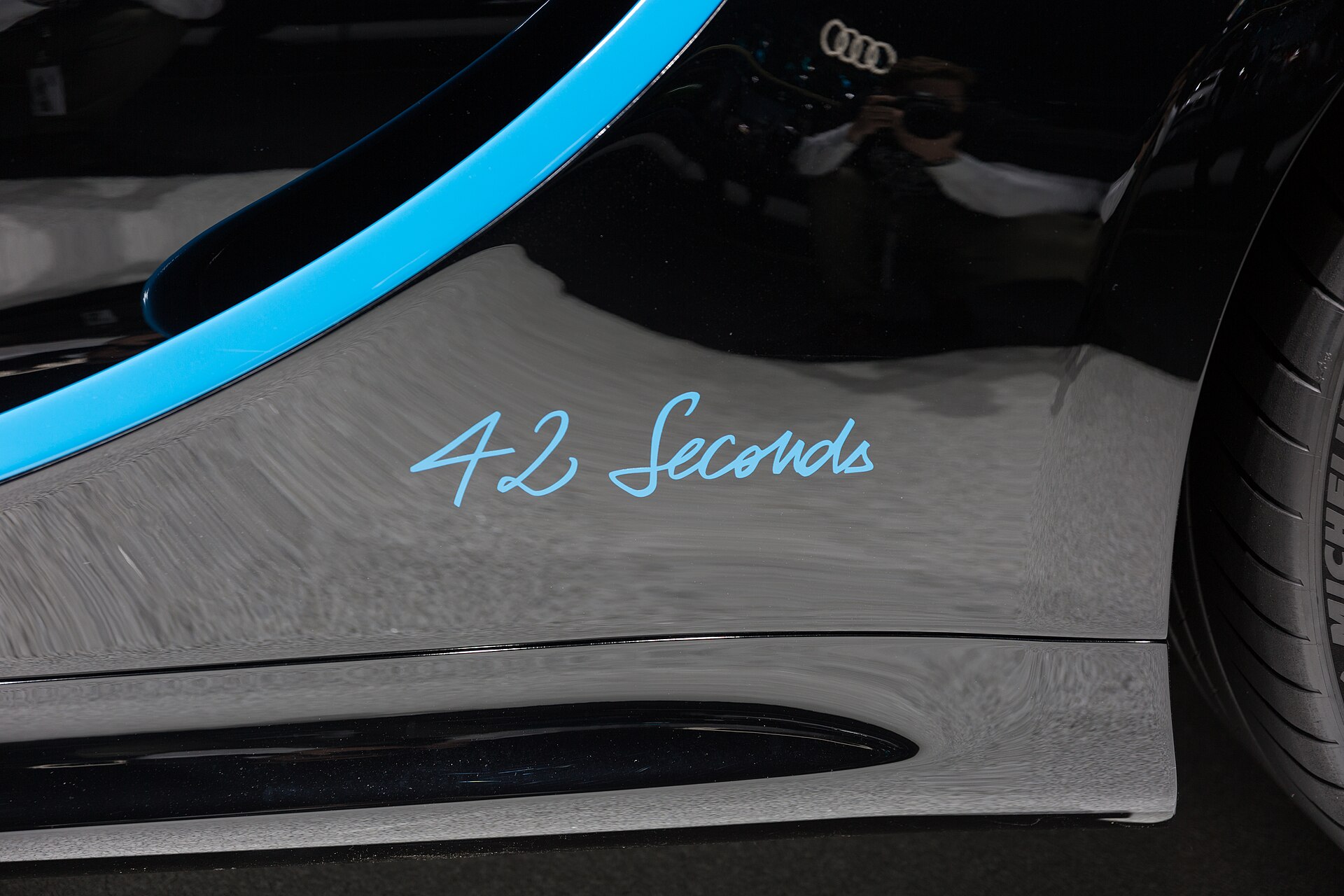
The True Cost of Ownership: Annual Running Expenses That Shock Buyers
The purchase price is the smallest part of Chiron ownership. Here's what a year actually costs:
| Expense Category | Annual Cost | Notes |
|---|---|---|
| Insurance | $40,000–$80,000 | Specialized exotic coverage, limited by carrier acceptance |
| Routine Service | $20,000–$50,000 | Only Bugatti dealers: Greenwich CT, Beverly Hills, Miami (US) |
| Tires (amortized) | $15,000–$25,000 | Michelin Pilot Sport PAX ultra-specialty, only via Bugatti |
| Storage / Climate Control | $6,000–$12,000 | Required year-round, $500–$1,000/month typical |
| Fuel (if driven 5K miles/yr) | $5,000–$8,000 | 6–8 mpg, 91+ octane required |
| Registration & Taxes | $2,000–$5,000 | State-dependent, title transfers vary |
| Total Annual Cost | $88,000–$180,000 | Excludes major repairs / accidents |
That's roughly $7,300–$15,000 per month in running costs alone. On a $3 million purchase, that's nearly 0.5% of the purchase price annually just to keep the car alive and insured. Major services like clutch replacement ($30,000+), transmission work ($60,000+), or engine repair (catastrophic failures can exceed $200,000) are separate line items.
The climate-controlled storage requirement is non-negotiable. Chironss cannot sit outdoors. Tires flat-spot in months without use. Seals degrade. Batteries die. The W16 requires active temperature management to prevent seal leaks in the engine bay.
Service History: Why Documentation Is Worth Millions
Only three Bugatti service centers exist in the United States:
- Greenwich, Connecticut: Bugatti Newport
- Beverly Hills, California: Bugatti Los Angeles
- Miami, Florida: Bugatti Miami
Every service, tire change, fluid flush, and diagnostic must happen at an authorized Bugatti dealer. No independent shops. No specialty mechanics. Bugatti only. This centralization is a feature and a liability. The upside: consistent, expert care. The downside: you're locked into their pricing, availability, and network.
When evaluating a Chiron, request the complete service history. You want to see:
- Oil changes recorded every 1,000 miles or 12 months (whichever comes first)
- Annual inspections with detailed findings
- Any warranty work performed by Bugatti
- Tire rotation logs and replacement records
- Brake system checks and any ceramic pad replacements
- Climate control system tests (critical for preservation)
A Chiron with 10,000 miles but no service records since mile 2,500 is a red flag. The W16 is reliable, but unknown history on a car this extreme requires extensive pre-purchase diagnostics. A Chiron with 15,000 miles and complete Bugatti records is the safer buy.
If service records are incomplete or unavailable, budget $15,000–$25,000 for a comprehensive inspection and catch-up service at a Bugatti dealer before you even take delivery.
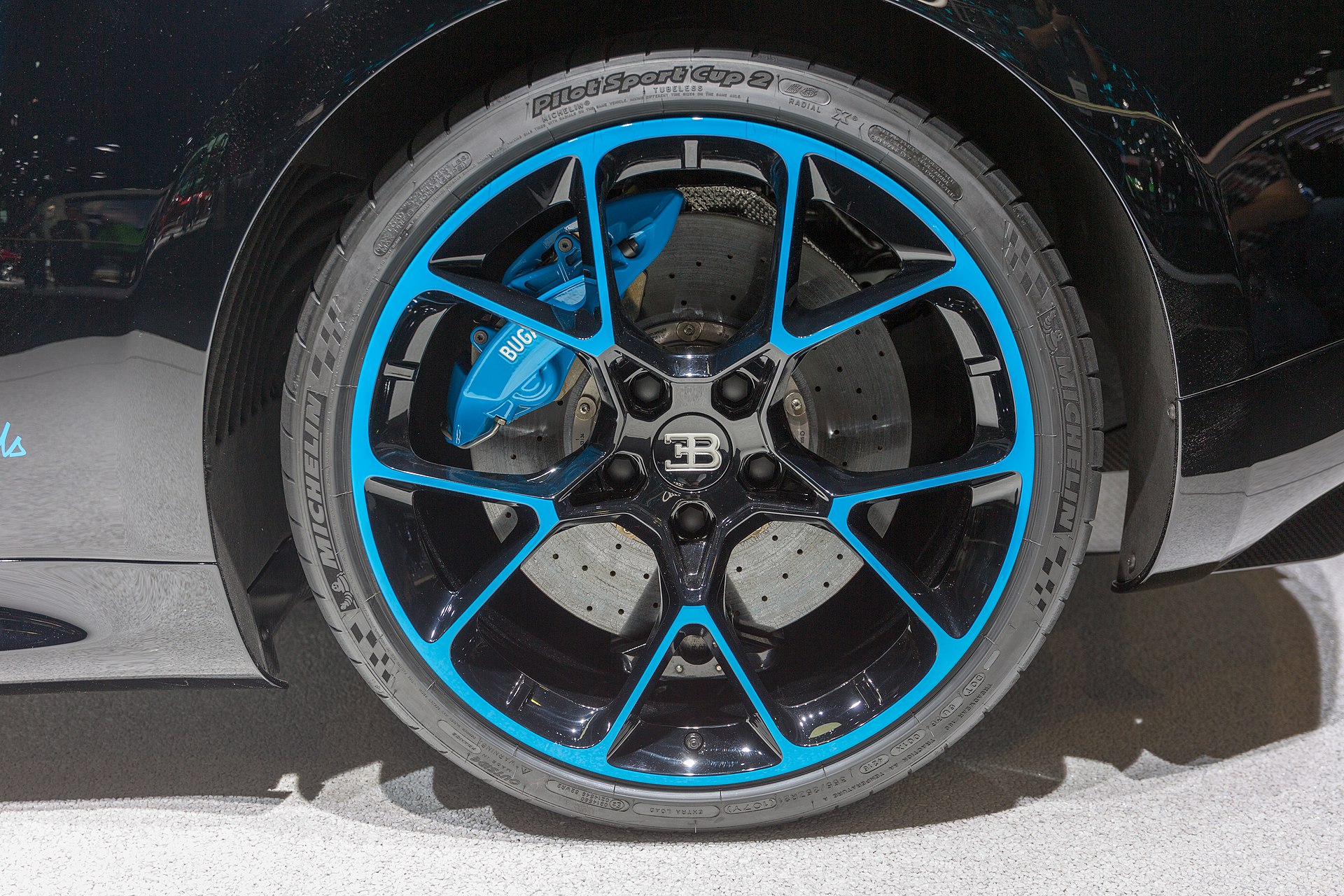
Specification Matters Enormously: Which Options Command Premiums
Bugatti allowed extreme customization. Two Chirons are rarely identical. Specification directly impacts resale value and desirability:
Color Premiums: Nero Scuro (black), Grigio Tungsteno (gray), and Bianco Pearl (white) are common — and therefore lower-value. Exclusive colors like Rosso Magma (red), Blu di Prussa (prussian blue), and Verde Abyss (dark green) command 10–20% premiums. Celebrity-owned Chirons in unique colors sometimes exceed these benchmarks.
Interior Finishes: Standard leather is good. Carbon fiber, alcantara accents, and bespoke leather from exotic hides cost $50K–$200K at purchase but can command disproportionate premiums on resale if the specification is exceptional.
Aero Package: Chiron Sport came with more downforce and wider track than base. Pur Sport has maximum track-focused aero. Super Sport has minimum drag. For road use, Pur Sport specification is most desirable to collectors. For investment holding, Super Sport 300+ is rarest and most valuable.
Factory Options: Carbon ceramic brakes, extended carbon fiber packages, bespoke wheel designs, and custom leather all increase value. Conversely, a base-spec Chiron Sport in neutral color with minimal options will depreciate faster.
Market Dynamics: Why Chiron Values Are Stable (And May Appreciate)
Bugatti Chirons are appreciating slowly. Between 2022–2026, prices have remained stable to slightly upward for low-mileage examples. Here's why:
Fixed Supply: Only 500 units exist. Period. Bugatti will never build another W16. Each year, some Chirons are wrecked, abandoned, or permanently removed from circulation. Supply actually decreases.
Increasing Demand: Hypercar collectors recognize that the W16 is the last of its kind. As regulations tighten globally, naturally aspirated and turbocharged engines fade. The Chiron becomes the final mechanical statement from a hypercar manufacturer.
Wealth Concentration: Only ultra-high-net-worth buyers can afford Chirons. The buyer pool is tiny but deep. A billionaire buying a $3 million car isn't price-sensitive — they're buying a legacy asset. This creates a floor under values.
The Tourbillon Doesn't Compete: The successor is a hybrid V16 with electric motors. It's faster. It's more efficient. It's also fundamentally different. Enthusiasts want the pure W16 experience. Collectors want the last mechanical extreme. The Tourbillon doesn't cannibalize Chiron demand; it validates its historical significance.
Conservative estimate: Chiron values will hold flat to slightly appreciate over the next 5–10 years. Aggressive estimate: delivery-mile examples in exceptional specs could appreciate 2–3% annually as the car becomes more historically significant and the supply shrinks through accidents and attrition.
Which Chiron Variant Should You Buy?
Best Value: Chiron Sport ($2.8M–$3.8M)
The most common variant, yet still extraordinary. All the legendary W16 performance with slightly less extreme aerodynamics than the Pur Sport. Best for: buyers who want peak Chiron experience without maximum rarity tax.
Best for Track: Chiron Pur Sport ($3.2M–$4.2M)
Maximum downforce, lower ride height, 1,479 hp, exclusive track-focused suspension. Only 60 ever built. Best for: serious drivers who will actually push the car on circuits or closed courses. Read our complete Chiron year-by-year guide for detailed variants and years.
Best Investment: Chiron Super Sport 300+ ($4.5M–$5.8M)
Homologation special for the 304 mph record. Only 30 units. Nearly unobtainable. This is the ultimate Chiron. Every example is documented as a historical car. Best for: collectors seeking the pinnacle of W16 engineering and absolute rarity.
How to Buy a Chiron: The Correct Process
Buying a $3–5 million hypercar requires a different approach than buying a used Huracan. Here's the Automonitor method:
Step 1: Define your budget conservatively. Include purchase price plus 3 years of running costs ($264,000–$540,000). If that stretches your finances, the Chiron isn't appropriate right now. This car demands financial comfort, not constraint.
Step 2: Choose your variant and mileage tier. Do you want a delivery-mile investment, a low-mileage driver, or an actively used example? This decision determines your search parameters and price range.
Step 3: Source from reputable dealers or auction houses. Reputable sources: RM Sotheby's (Chiron sales regularly exceed estimates), DuPont Registry, authorized Bugatti dealers, and private sales from documented first owners. Avoid unknown private sellers, damaged vehicles with missing history, or Chirons without factory documentation.
Step 4: Commission a comprehensive pre-delivery inspection. This isn't optional. Hire a specialist familiar with W16 engines, multi-clutch transmissions, and quad-turbo systems. Bugatti dealers often provide pre-sale inspections for a fee ($8,000–$15,000). It's worth every dollar.
Step 5: Verify complete ownership history and documentation. You need: original purchase receipt, complete service records, warranty documentation, maintenance logs, accident history (if any), title history showing all previous owners, and any factory recalls or technical service bulletins issued.
Step 6: Secure specialized financing. Exotic lenders like JJ Best Banc finance Chirons, typically at 20–25% down, rates between 7–12%, terms up to 10 years. Rates vary based on vehicle age, mileage, and your credit profile. Get pre-approved before you start shopping.
Step 7: Arrange white-glove delivery and initial service. When your Chiron arrives, schedule immediate service at a Bugatti dealer to ensure everything is operating correctly. Budget $5,000–$10,000 for this inspection and any minor adjustments.
Celebrity and Provenance Premiums: Who Owned It Matters
Certain Chirons command premiums based on ownership history. A Chiron previously owned by a famous athlete, actor, or documented collector often sells for 10–25% more than an identical car with private owner history. Examples:
- Floyd Mayweather's Chirons have sold at auction with 15–20% premiums
- Limited-run collaborations (Hermès interior packages, artist collaborations) command significant premiums
- Cars featured in major publications or documentaries gain collectibility points
However, celebrity history comes with baggage. Some buyers overpaid for the bragging rights and the car's actual mechanical condition suffered from irregular maintenance. Always prioritize service records over owner prestige.
Ready to Find Your Chiron?
Automonitor specializes in hypercar transactions above $2 million. We verify provenance, commission expert inspections, and handle all logistics so you can focus on the investment decision.
Explore Chiron Inventory →When You Should NOT Buy a Chiron
You're buying purely for investment. While values are stable, Chirons don't generate cash flow. Storage costs, insurance, and maintenance eat into appreciation. Only buy if you intend to drive and enjoy it sometimes.
You can't afford the running costs. If $88,000–$180,000 per year feels tight, the Chiron will cause financial stress. Unexpected repairs can spike costs dramatically. Only buy if this annual spending is genuinely comfortable.
You need maximum daily usability. The Chiron is not a practical car. Ground clearance is 3.8 inches. Visibility is poor. Fuel consumption is abysmal. Parking anywhere but private garages is stressful. If you need a car you'll drive regularly to events or dinners, consider a Rolls-Royce Cullinan instead — it's faster in practical traffic.
Service history is incomplete. Never buy a Chiron without full documentation. An unknown maintenance gap on a $4 million car is unacceptable risk. Walk away.
The car has been in an accident. Frame damage on a Chiron is nearly impossible to repair properly. Any accident history should result in a 30–50% price reduction minimum, and honestly, you should still avoid it.
The Future: Will Chiron Values Hold or Appreciate?
Long-term outlook for Chiron values is positive. Here's why:
The W16 era is over. No manufacturer will replicate this engine configuration — the engineering, the sound, the visceral experience. In 50 years, a 2020s Chiron will be viewed the same way we view 1960s Ferrari 275s or 1980s Porsche 959s: as the mechanical pinnacle of their era.
Supply is fixed. Every crash, every sale, every Chiron transferred reduces global inventory. Attrition is working in your favor as a buyer.
Electrification is inevitable. As gasoline supercars become rare, the demand for the last mechanical hypercars increases. The Chiron will become a museum piece you can drive — and those cars appreciate.
Conservative projection: Chiron values hold flat to appreciate 1–2% annually over the next 10 years. In 2035, a $3 million Chiron purchased today could be worth $3.3–3.6 million, assuming normal maintenance and documentation.
Chiron vs. the Competition: How It Stacks Against Other Hypercars
Only three production hypercars compete directly with the Chiron: the Pagani Huayra, the Koenigsegg, and now the Bugatti Tourbillon. Here's how they compare:
| Category | Chiron | Pagani Huayra | Koenigsegg Jesko | Tourbillon |
|---|---|---|---|---|
| Engine | 8.0L W16 Turbo | 6.0L Twin-Turbo V12 | 5.0L Twin-Turbo V8 | 8.3L V16 Hybrid |
| Horsepower | 1,500 hp | 798 hp | 1,600 hp | 1,800 hp |
| 0–60 mph | 2.4 seconds | 2.8 seconds | 2.6 seconds | 2.0 seconds |
| Used Market (avg) | $3.2M–$4.5M | $2.1M–$3.2M | $2.8M–$3.8M | $3.8M (new only) |
| Production Units | 500 | 226 | ~100 (est) | TBD (ongoing) |
| Sound Quality | Unmatched W16 note | Excellent V12 howl | High-pitch V8 | Electric whine + V16 |
| Value Retention | Flat to +2%/yr | Stable | Positive +2–3%/yr | TBD (no data yet) |
| Rarity | Final W16 | Limited production | Ultra-exclusive | Continuation |
The Chiron is the most powerful naturally aspirated+ engine you can buy (quad-turbocharged, but still mechanical extremity). The Koenigsegg is faster. The Tourbillon is faster still. But the Chiron is the loudest, the most historically significant, and the one that feels most like driving mechanical art.
The Final Verdict
Should you buy a Bugatti Chiron? Only if all of these apply:
- You can afford the $3–5 million purchase price without stretching your finances
- You're comfortable with $88,000–$180,000 annual running costs
- You want to drive it occasionally, not just store it
- You understand that it's a rare, extraordinary machine with limited practicality
- You've secured financing and insurance pre-approval
- You can access one of the three authorized US Bugatti service centers
If you meet these criteria, a Chiron is worth buying. Buy the lowest-mileage example you can afford in a desirable specification with complete service records. The variant (Sport, Pur Sport, Super Sport) matters less than the documentation and condition. A well-maintained, driven Chiron with 15,000 miles is better than a garage-kept example with unknown history at 5,000 miles.
The Chiron isn't a financial investment — it's a lifestyle asset. You're buying the privilege of owning the last true mechanical hypercar, the final W16 ever built, and a car that will be historically significant in 30 years. Do it right, and you'll recover most of your money while enjoying the drive of a lifetime.
If you need guidance navigating the Chiron market, Automonitor handles hypercar transactions above $2 million. We verify provenance, commission expert inspections, and manage the entire process so you can confidently acquire the right Chiron.
Get Expert Guidance on Your Chiron Purchase
Automonitor specializes in ultra-luxury and hypercar acquisitions. We handle due diligence, inspections, financing, and logistics for six and seven-figure transactions.
Start Your Search →