
Should I Buy a New or Used Audi R8?
The Audi R8 production ended in 2023, which means every R8 on the market today is used. This changes everything. Instead of choosing between new and used, you're navigating generations, service histories, warranty options, and which R8 represents the best value and reliability. Here's everything you need to know.
The New vs. Used Reality: The R8 Is Already Used
Let's start with the truth: Audi discontinued the R8 after the 2023 model year. That means there is no "new" R8 anymore. Every R8 you can buy in 2026 is used. This is actually liberating, because it reframes the entire conversation. You're not comparing new versus used depreciation — you're choosing which generation, which generation's technology, and which warranty option makes the most sense for your budget and lifestyle.
The R8 has been in production since 2006, but for practical purposes, modern buyers should focus on two generations: the second generation (2016–2023) and the first generation (2008–2015). The first generation is now a classic collector car with appreciating value. The second generation is your sweet spot for reliability, technology, and value.
We've helped hundreds of R8 buyers at Automonitor navigate this decision. The biggest advantage we see from purchasing a late-model R8 (2022–2023) isn't that it's "like new" — it's that it may still have remaining factory warranty coverage, and the factory servicing is fully documented. If you can stretch your budget to a nearly-new R8, the peace of mind is worth it.
R8 Generations Explained: Classic vs. Modern
Understanding which R8 generation you're looking at is critical. Each generation has different engines, reliability profiles, and ownership costs.
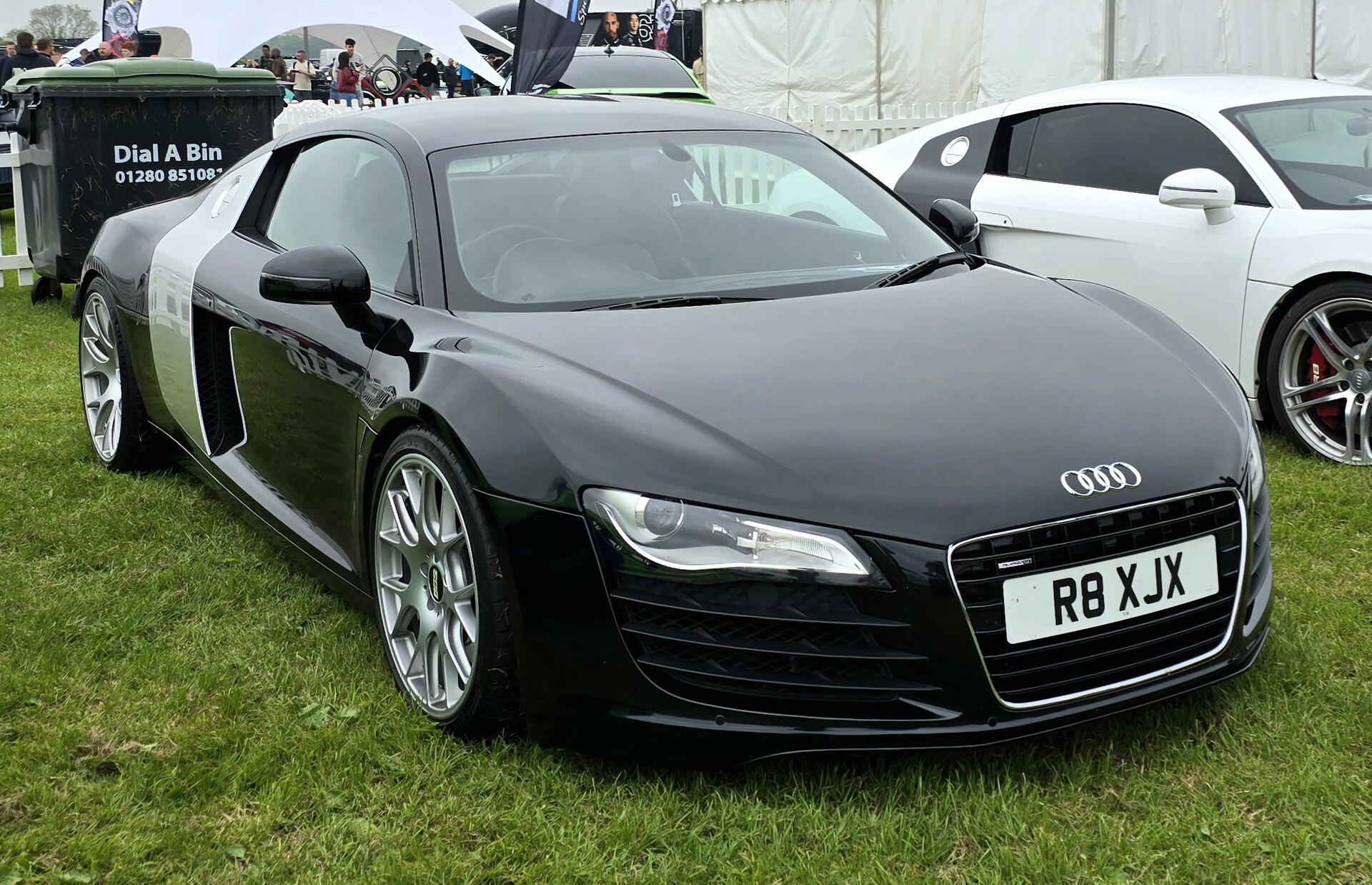
First Generation: R8 V10 (2008–2015) — The Collector's Classic
The original R8 is now shifting from "used sports car" to "investment classic." Early models run the 5.2L naturally aspirated V10 (before the engine went to the Lamborghini Huracan). Later models (2012+) got a revised 5.2L V10 Plus version with 550 hp and improved reliability.
First-gen characteristics: carbon fiber interior options, gated manual transmission on manual-equipped models, R-tronic single-clutch semi-automatic on automatics. The chassis is shared with the Lamborghini Gallardo, which means parts availability is good, but it's an older platform by modern standards.
Price range: $55,000–$130,000 depending on year, mileage, and condition. A 2014 R8 V10 Plus with low miles can fetch $110,000+.
Reliability notes: The V10 engine is bulletproof if maintained. Common issues: R-tronic clutch wear (expensive repair, $6,000–$8,000), timing chain guides can develop noise, carbon buildup on valves. Always get a pre-purchase inspection by an Audi specialist.
Second Generation: R8 V10 (2016–2023) — The Modern Supercar
Audi completely redesigned the R8 for 2016, moving to a new platform shared with the Lamborghini Huracán. The second generation brought wider availability of the V10 engine, modern infotainment, adaptive magnetic ride suspension (on performance models), and dramatically improved reliability.
All second-gen R8s use the 5.2L naturally aspirated V10. Early models (2016–2018) produced 540 hp. Mid-cycle refresh (2019) bumped power to 562 hp and added the optional OLED digital dashboard. Final editions (2022–2023) were essentially last-call variants celebrating the end of production.
Price range: $130,000–$200,000+ for low-mileage examples. A 2022 R8 with under 5,000 miles can command $180,000–$200,000. A 2019 R8 with 15,000 miles typically trades in the $140,000–$160,000 range.
Reliability: Exceptional. Second-gen R8 owners report 20,000–40,000+ miles with zero major issues. The engine is nearly bulletproof. Known issues are rare and usually cosmetic or electrical.
The R8 Price Tiers: Where to Find Value
| Generation & Year | Typical Price Range | Annual Mileage Avg | Warranty Status | Best For |
|---|---|---|---|---|
| Nearly-New (2022–2023) | $160K–$200K | Under 5K miles | Factory warranty likely remaining | Peace of mind buyers |
| Second-Gen Sweet Spot (2019–2021) | $130K–$160K | 12K–20K miles | Audi CPO available | Best balance |
| Second-Gen Value (2016–2018) | $100K–$135K | 20K–35K miles | Extended warranty recommended | Budget-conscious buyers |
| First-Gen Plus (2013–2015) | $85K–$130K | 30K–50K miles | Out of warranty | Collectors/enthusiasts |
| First-Gen Entry (2008–2012) | $55K–$85K | 50K+ miles | Out of warranty | Project cars/hobbyists |
Warranty Options: Factory, CPO, and Third-Party
Since you're buying used, warranty coverage is critical. Here are your options:
Audi Certified Plus (CPO)
Audi's CPO program extends coverage up to 100,000 miles total with 6-year transferable warranty from original in-service date. Catch: not all R8s are eligible. The vehicle must have under 50,000 miles and come from an Audi dealer.
Availability is limited — many used R8s are sold by independent dealers or private sellers who don't have CPO eligibility. When available, CPO coverage adds $4,000–$8,000 to the purchase price but provides genuine peace of mind. For a 2019–2021 second-gen R8, CPO is worth the premium if the price difference is reasonable.
Factory Warranty (Nearly-New Models)
Any 2022–2023 R8 purchased before the end of the model year will have remaining factory warranty. Audi's standard warranty is 4 years/50,000 miles. You can calculate remaining coverage based on current mileage. A 2023 R8 with 2,000 miles still has roughly 3+ years remaining — valuable coverage that third-party plans can't match.
Third-Party Extended Warranties
Providers like Endurance and CARCHEX offer extended warranties on cars up to 15 years old and 150,000 miles. These typically run $1,500–$4,000 for comprehensive powertrain coverage and can cover the V10 engine, transmission, and electrical systems.
Third-party warranties are a good safety net for 2016–2019 R8s that are out of CPO range. They're not as comprehensive as Audi warranty, but they cover catastrophic failures. Choose a plan that explicitly covers the dual-clutch transmission.
Real Ownership Costs: What You'll Actually Pay
The R8's price tag is just the beginning. Here's what ownership really costs annually:
| Expense Category | Annual Cost | Notes |
|---|---|---|
| Insurance | $3,000–$5,500 | Varies by age, location, driving record, coverage level |
| Routine Maintenance (Audi Dealer) | $2,000–$3,500 | Oil changes, fluid service, inspections — every 10K miles |
| Fuel | $2,500–$4,000 | 12–15 mpg combined; 91+ octane required |
| Tires (amortized) | $1,200–$2,000 | Performance tires every 15K–20K miles |
| Ceramic Brakes (amortized) | $1,500–$2,500 | Major service: $8,000–$12,000 when needed (rarely before 50K miles) |
| Registration & Taxes | $800–$2,000 | State-dependent; exotic car surcharges |
| Total Annual | $11,000–$19,500 | Does not include depreciation or unexpected repairs |
That's roughly $900–$1,600 per month in running costs. If you drive the R8 only 5,000–8,000 miles annually (typical for supercar owners), your actual fuel and maintenance costs will be on the lower end. If you're putting 15,000+ miles yearly, budget toward the higher range.
The ceramic brake system is the most expensive surprise. Unlike traditional brake pads that cost $1,500–$2,500, R8 ceramic brake pads and rotors can run $8,000–$12,000 when replacement is needed. However, ceramic brakes last far longer — most owners don't need replacement until 40,000–50,000 miles. Verify brake pad depth and rotor condition during your pre-purchase inspection.
Reliability by Generation: What Breaks and When
Second Generation (2016–2023) — Genuinely Reliable
The modern R8 is one of the most reliable supercars ever built. The V10 engine is shared with the Lamborghini Huracán and benefits from decades of Audi's naturally aspirated engine development. Common findings from owner forums:
- Engine: Essentially bulletproof. Timing chain guides are robust on second-gen models. Oil consumption is normal (minimal). No major engine failures reported in forums or service data.
- Transmission: The 7-speed dual-clutch transmission is very reliable on second-gen. Early examples (2016) very rarely show clutch issues. No significant transmission failures reported.
- Suspension: The magnetic ride suspension is complex but reliable. Occasional software glitches that resolve with dealer updates. No common mechanical failures.
- Electrical: Very few electrical gremlins. The infotainment system is reliable. OLED dashboards (2019+) have been solid.
- Known issues (rare): Some 2016–2017 models reported minor wind noise. A few cases of carbon buildup at very high mileage, but unconfirmed. Door handle mechanisms (very rare).
First Generation (2008–2015) — Good With Caveats
The original R8 is mechanically sound but shows its age. The shared Gallardo platform is reliable, but first-gen examples often have higher mileage and more wear.
- V10 Engine: Highly reliable. Timing chain guides can develop noise over time (around 60,000–80,000 miles). This requires specialist inspection but is not catastrophic — many high-mileage first-gens run fine.
- R-tronic Transmission: This is the weak point. The single-clutch semi-automatic can develop shuddering and jerking, particularly in low-speed driving. Clutch replacement is $6,000–$8,000. Always test-drive and feel for transmission smoothness.
- Manual Transmission: The 6-speed manual is very robust and preferred by enthusiasts. No significant failure modes.
- Suspension: Air suspension components can develop leaks (seals degrade with age). Not expensive but requires specialist attention. Mechanical suspension is more reliable.
- Carbon Buildup: With first-gen models approaching 100,000+ miles, carbon buildup on intake valves becomes more common. Requires professional cleaning ($1,500–$2,500) but is preventative maintenance, not an emergency repair.
Bottom line: if you're buying a first-gen, insist on full service history at an Audi specialist. Avoid high-mileage R-tronic models unless the transmission has been professionally serviced recently.
Key Buying Considerations: What to Check
Mileage and Service History
Ideal annual mileage for an R8 is under 5,000–8,000 miles per year (typical supercar usage). A 2019 R8 with 18,000 miles represents 3 years of very moderate use. A 2019 R8 with 50,000 miles likely represents heavy daily use, and you should expect higher wear.
Service history matters far more than current mileage. An R8 with 40,000 miles and complete Audi dealer service records is safer than a 20,000-mile R8 with no documented service history. Always request full service records. Use Bring a Trailer's R8 listing history to cross-reference asking prices against completed sales.
Ceramic Brake Condition
Check brake pad thickness and rotor condition. Ceramic brakes should be inspected with calipers to measure thickness. Pads under 3mm are approaching replacement. Rotors should show no significant wear or cracking. Request documentation of recent brake service or plan for $8,000+ brake work in your budget.
Magnetic Ride Suspension (if equipped)
The optional adaptive magnetic ride suspension on Performance models is a complex system but very reliable. Have a specialist scan the system and test-drive with it engaged. Any warning lights related to suspension should be red flags.
Engine Condition and Carbon Buildup
Request a full service history including oil analysis reports if available. For first-gen models above 60,000 miles, ask if carbon cleaning has been performed. Have a diagnostic scan performed to check for any stored codes related to the engine or fuel system.
Transmission Service
Dual-clutch transmission fluid should be inspected and potentially flushed as part of purchase negotiations. On R-tronic first-gen models, transmission service history is critical. Always test-drive at low speeds and feel for any hesitation, shuddering, or jerking.
Schedule a Certified Pre-Purchase Inspection
Automonitor connects you with Audi R8 specialists who know exactly what to look for. Don't skip this step — a $600 inspection can save you $15,000 in hidden problems.
Find an Inspector →R8 vs. The Competition: How It Compares
| Category | R8 V10 (2nd Gen) | Lamborghini Huracán | Porsche 911 Turbo S | McLaren 720S |
|---|---|---|---|---|
| Engine | 5.2L NA V10 | 5.2L NA V10 | 3.7L Twin-Turbo Flat-6 | 4.0L Twin-Turbo V8 |
| Horsepower | 562 hp | 630 hp | 640 hp | 710 hp |
| 0–60 mph | 3.2s | 2.8s | 2.6s | 2.7s |
| Used Market Price (2020) | $130K–$160K | $155K–$190K | $145K–$175K | $140K–$180K |
| Annual Maintenance | $2K–$3.5K | $3K–$5K | $2K–$4K | $3K–$6K |
| Insurance | $3K–$5.5K | $4K–$8.5K | $3K–$5K | $4K–$7K |
| Reliability | Excellent | Very Good | Excellent | Good |
| Daily Drivability | Moderate (tight cabin) | Moderate (aggressive stance) | Excellent | Moderate (low ground clearance) |
The R8's biggest advantage is value. It's typically $15,000–$25,000 cheaper than comparable Huracáns on the used market, with lower maintenance and insurance costs. The Porsche 911 Turbo S is more practical for daily driving. The Lamborghini Huracán offers more drama and performance but higher running costs. The McLaren 720S is the purist's choice but has steeper depreciation and higher maintenance.
If you want the V10 engine, supercar badge, and best total cost of ownership, the R8 is the smart choice. See our guides on whether the R8 is worth buying and the best year to buy an R8 for deeper comparisons.
Which R8 Should You Buy? The Practical Recommendation
Best Value: 2016–2018 Second Generation ($100K–$135K)
If you want modern R8 reliability at the lowest entry price, 2016–2018 models deliver. You get the V10 engine, modern infotainment, AWD chassis, and the Lamborghini-derived platform. Annual running costs are lower than earlier generations. Plan for third-party extended warranty coverage if available.
Best Balance: 2019–2021 Second Generation ($130K–$160K)
This is our pick for most buyers. These models have the revised 562 hp engine, the mid-cycle OLED dashboard refresh, proven reliability with 15,000–25,000 real-world miles of history, and Audi CPO eligibility. The price premium over 2016–2018 models is worth it for the peace of mind and longer remaining warranty.
Nearly-New: 2022–2023 Second Generation ($160K–$200K)
These final-edition R8s are essentially new cars with 1,000–5,000 miles. You may still have remaining factory warranty (3–4 years remaining). This is your best option if you value peace of mind and want to avoid surprises. The price premium is high, but you're getting a car that will need minimal service for years.
Collector/Project: 2013–2015 First Generation ($85K–$130K)
If you're an enthusiast or collector, the first-gen R8 V10 Plus is entering collector territory. Values are appreciating, and the gated manual versions are increasingly desirable. This is not a practical choice for first-time supercar buyers — expect higher maintenance costs and potential transmission issues on automatic models. But if you love the original design, the value proposition is improving.
The Smart Way to Buy an R8: Steps to Success
Step 1: Define your budget holistically. Include the purchase price plus 24 months of running costs ($22,000–$39,000). If that total stretches your finances beyond comfortable, wait or consider a less expensive generation.
Step 2: Decide on generation and warranty. Second-gen? First-gen? Factory warranty remaining? CPO eligible? Extended warranty? Make these decisions upfront — they drive your search parameters.
Step 3: Search broadly across platforms. Check Bring a Trailer, Audi dealer inventory, independent exotic dealers, and Automonitor's network. Compare asking prices against recent sold prices, not just asking prices.
Step 4: Get a pre-purchase inspection. Non-negotiable. Hire an Audi R8 specialist (not a general Audi technician) to inspect the engine, transmission, brakes, suspension, and electrical systems. This costs $600–$1,000 and can save you $10,000+ in hidden problems.
Step 5: Inspect service records carefully. Request complete service history. Verify that major service intervals were met. Flag any gap in service history — missed maintenance is a red flag.
Step 6: Negotiate from data. Use Automonitor's market data and completed Bring a Trailer auction results to establish the fair market value. Deduct the cost of deferred maintenance (brake service, transmission flush, etc.) from the asking price.
Step 7: Secure financing and insurance quotes. Exotic car lenders like JJ Best Banc specialize in R8 financing. Get insurance quotes before purchase — R8 insurance ranges $3,000–$5,500 annually depending on coverage and location. Read our complete R8 pricing guide for financing and insurance details.
When an R8 Is NOT the Right Choice
We'll be honest: the R8 isn't right for everyone. Consider alternatives if:
You need a daily driver. The R8 has minimal ground clearance, tight cabin space, and poor visibility. It's a weekend car, not a commuter. If you need a high-performance car that works every day, the Porsche 911 Turbo S is more practical.
You're stretching financially. If the purchase requires depleting savings or taking high-interest debt, the R8 isn't worth it. Supercar ownership should be comfortable, not stressful.
You want guaranteed investment returns. While R8 values are stable, they're not appreciating like classic cars. The R8 is depreciating slowly, but maintenance and insurance eat into any "investment" gains. Buy it to drive and enjoy, not to flip.
You haven't driven one. Test-drive before you buy. Some buyers find the cabin cramped, the transmission jerky at low speeds, or the lack of power steering feel unsatisfying. Discover these opinions before you sign paperwork.
You're considering a high-mileage first-gen R-tronic. Unless it's dramatically discounted and you have a specialist relationship, avoid 50,000+ mile first-gen automatic R8s. The transmission risk is real.
The Final Verdict
The question "Should I buy a new or used Audi R8?" simplifies to "Which used R8 should I buy?" Because production has ended, your focus shifts from new versus used to which generation, which year, which warranty option, and which specific example delivers the best value.
Our recommendation: buy the newest second-generation R8 you can afford (ideally 2019–2023), with complete service history, under 25,000 miles, and either remaining factory warranty or eligible for Audi CPO or extended third-party warranty. Budget $140,000–$160,000 for the purchase and $22,000–$39,000 for 24 months of ownership.
The second-gen R8 is one of the best value supercars available. It offers V10 engagement, Audi engineering reliability, reasonable running costs, and a design that hasn't aged a day. If you can afford both the purchase price and the running costs comfortably, the R8 deserves serious consideration.
Ready to start your search? Automonitor handles sourcing, inspection, financing, and logistics. We'll get you in the right R8 at the right price — guaranteed.
Find Your Perfect Audi R8
Automonitor sources directly from verified dealers and private sellers, handles pre-purchase inspections, and provides market pricing data so you can buy with confidence.
Start Your Search →