
Rolls-Royce Spectre vs Porsche Taycan Turbo S: Ultra-Luxury Meets Performance EV
Two completely different visions of the electric luxury car collide here. One whispers. One screams. One costs twice as much. But which one is actually right for you?
The Fundamental Difference: Not Really a Fair Comparison
Let's start with something critical: the Rolls-Royce Spectre and Porsche Taycan Turbo S are almost never cross-shopped. They exist in completely different universes of automotive intent. The Spectre is about wafting — a word Rolls-Royce uses to describe the ultimate sensation of floating across the landscape without physical or sensory intrusion. The Taycan Turbo S is about driver engagement, precision, and raw performance. One costs $420,000. The other costs $196,000. One has coach doors that swing open from the rear quarter panels. The other is a four-door sports sedan.
Yet, there's value in comparing them anyway. Because this comparison illuminates something profound about luxury in the electric age. It asks: what does luxury mean when both cars have no engine, no transmission whine, no vibration, and instant torque? When they both operate in near silence? When they both offer nearly identical range and charging times? The answer reveals the true definition of luxury — and it explains the massive price difference between two cars that, on paper, seem far more similar than the $224,000 gap would suggest.
At Automonitor, we've helped buyers navigate this exact comparison. And what we've learned is that choosing between these two cars requires understanding not just the specs, but the philosophy. Philosophy drives everything. Let's break it down.
The Specs: Head-to-Head Where the Numbers Are Deceptive
Before we get into the intangible stuff, here's what the spreadsheet tells us:
| Metric | Spectre | Taycan Turbo S |
|---|---|---|
| Horsepower | 577 hp | 750 hp (overboost) |
| Torque | 664 lb-ft | 774 lb-ft (overboost) |
| 0–60 mph | 4.4 seconds | 2.4 seconds |
| Top Speed | 150 mph (governed) | 161 mph |
| Range (EPA) | 291 miles | 256 miles |
| DC Fast Charging | 195 kW peak | 270 kW peak |
| Weight | 7,700 lbs | 5,121 lbs |
| Length × Width | 221.4" × 78.8" | 191.3" × 76.4" |
| Base Price | $420,000 | $196,000 |
The numbers reveal an uncomfortable truth: the Taycan is faster, lighter, more efficient, charges quicker, and costs half the price. So why would anyone buy the Spectre? Because the numbers miss the entire point of the Spectre. The Spectre is not designed to be fast. It's designed to be perfect. These are not the same thing.
Performance: The Paradox Where Faster Doesn't Mean Better
The Porsche Taycan Turbo S is objectively the more performance-capable vehicle. With 750 horsepower in overboost mode, it hits 60 mph in 2.4 seconds — faster than most supercars. The two-speed transmission delivers a first gear optimized for acceleration, then steps up to an overdrive-style second gear for highway efficiency. The result is a car that feels genuinely quick in daily driving while maintaining composure at three-digit speeds.
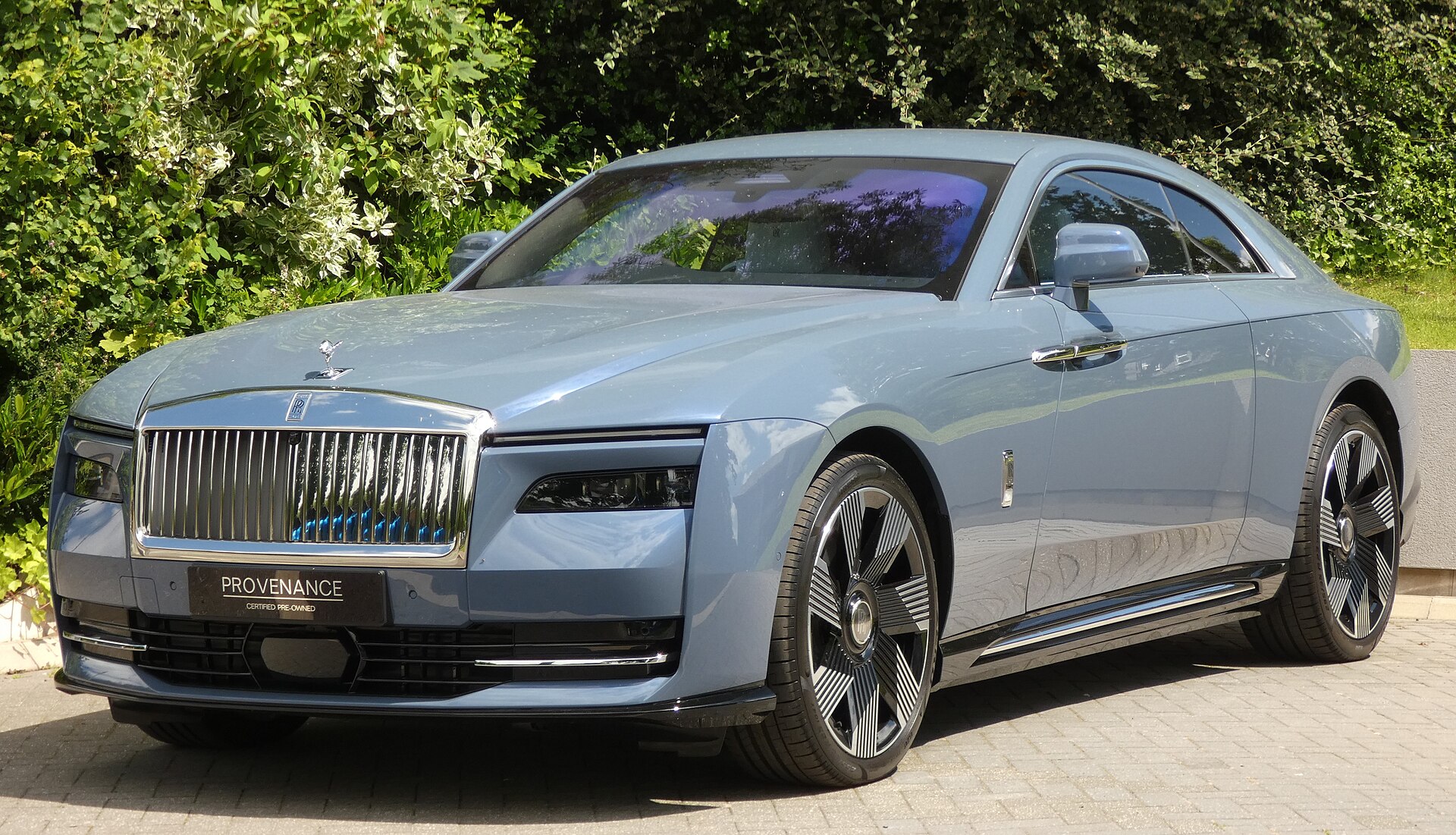
The Spectre, meanwhile, delivers its 577 horsepower through a single-speed transmission. It accelerates to 60 in 4.4 seconds — competent, but not thrilling. It's genuinely faster than a new BMW 7-Series, slightly slower than a Mercedes-AMG S580. But here's the thing: Rolls-Royce isn't trying to beat you in a quarter-mile. They're trying to give you the sensation that physics doesn't apply to you.
That's the philosophical difference. The Taycan is engineered. The Spectre is engineered and then re-engineered specifically to avoid making you feel the engineering. There are 130 miles of sound insulation inside the Spectre — sound waves captured, analyzed, and then reproduced in inverse to cancel themselves out through active noise cancellation. The suspension is magic carpet-like; bumps don't exist. The acceleration, such as it is, comes without drama. It just... happens.
The Taycan, by contrast, is transparent about its performance. You feel the weight transfer in corners. You hear the transmission shift. You sense the motor winding up. The steering has actual weight. The suspension has personality. On a track, in a canyon, at a track day, the Taycan is phenomenal. On a 200-mile cross-country drive, where the goal is to arrive without having experienced any of the journey at all, the Spectre is unmatched.
Which is better? It depends entirely on what you value. If performance is the metric, the Taycan wins decisively. If luxury is silence, isolation, and the absence of mechanical reality, the Spectre wins by a mile. These are not comparable using a single rubric — which is why comparing them matters. It forces you to decide what you actually want.
The best car isn't the fastest car. The best car is the one that makes you forget you're driving. For some people, that's the Taycan. For others, it's the Spectre. The difference is a couple hundred thousand dollars.
Luxury: The Real Differentiator Where $224,000 Actually Matters
The Spectre wins on luxury not because it has more technology, but because Rolls-Royce has engineered the absence of intrusion. Here are the specifics:
The Starlight Headliner: This isn't LED lights that mimic stars. Rolls-Royce artisans have hand-woven 1,340 fiber optic lights into the headliner, each one individually adjustable to your preferences. The effect is genuinely magical — you're driving under a customized night sky. The Taycan has a panoramic sunroof. Different missions.
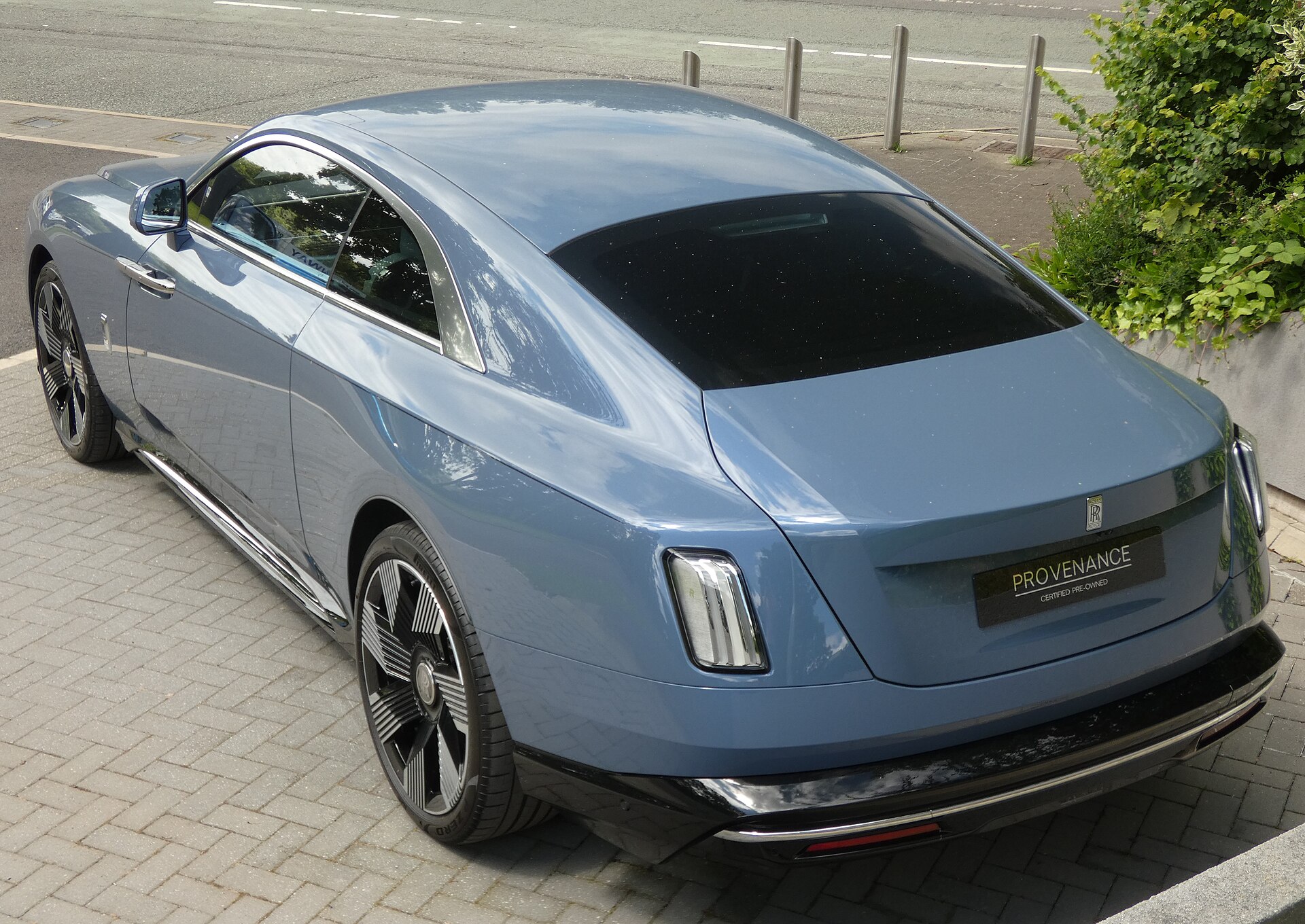
Coach Doors: The Spectre's rear doors open from the rear quarter panel, not the B-pillar. This is almost impossible to engineer properly without compromising structural rigidity. But Rolls-Royce did it anyway. Getting in and out doesn't feel cramped or contorted. It's ceremonial. The Taycan has standard four-door operation. Nothing wrong with that — it's practical and secure. But it doesn't feel like entry into a separate realm.
The Whisper Interior: Rolls-Royce spent years developing materials and construction methods specifically to eliminate every possible source of sound. The door panels have eight separate damping layers. The floor is cork-based to absorb vibration. The windows are triple-laminated. The result is a cabin where you can have a conversation at normal volume without raising your voice, even on a highway. The Taycan's interior is well-insulated but noticeably more industrial. You're in a high-tech cockpit, not a floating luxury suite.
Bespoke Customization: When you buy a Spectre, Rolls-Royce doesn't just offer colors and materials. They offer nearly infinite customization. The company has a color archive of thousands of archived shades, and they can match any color you bring them — a swatch of fabric, a paint chip, a photograph. Your car can be uniquely yours in ways the Taycan, which follows Porsche's standard option list, simply cannot match.
Hand-Built Interior: Significant portions of the Spectre's interior are assembled by hand. The leather is sourced from a single tannery in Yorkshire that has worked with Rolls-Royce for decades. The wood veneers are hand-selected. The stitching is precise to the point of obsession. The Taycan's interior uses premium materials and careful assembly, but it's fundamentally an industrial process. One feels artisanal. The other feels automotive.
The Taycan offers excellent luxury for a $196,000 car. It has a gorgeous interior, premium materials, cutting-edge technology, and thoughtful design. But it's a luxury sports sedan. The Spectre is a jewelry box on wheels. Entirely different category.
Technology and User Experience Different Philosophies
Both cars are technology marvels, but they use technology to achieve opposite goals. The Taycan's technology is about information: detailed gauge clusters, driver-focused screens, telemetry that shows you everything happening mechanically. The steering wheel has multiple control hubs. The central touchscreen is large and responsive. You're in constant conversation with the car.
The Spectre's technology is mostly hidden. The infotainment system is integrated into the dashboard so seamlessly you sometimes forget it's there. There are no visible buttons or screens in the front — everything is voice-controlled or accessed through subtle touch points. The rear passengers get a small touchscreen for controlling climate and entertainment, but the emphasis is on invisible technology. Things simply happen when you want them to, without requiring you to engage with a system.
The Spectre also includes features the Taycan doesn't: a night vision system that displays thermal imaging on the windshield, a Rolls-Royce-exclusive parking assistant that uses cameras and sensors to guide you into spaces where you think a car of this size couldn't fit, and a rain-sensing windshield that activates wipers before you can even see the rain coming. These aren't faster — they're anticipatory.
The Taycan's technology is superior for drivers who enjoy engaging with their car. The Spectre's technology is superior for people who want the car to anticipate their needs and handle them before they arise. Again: completely different philosophies in service of completely different buyers.
Daily Usability: The Practical Reality Can You Actually Live With This?
Here's where the gap narrows somewhat. Both cars are challenging daily drivers, albeit for different reasons.
The Taycan is easier to park due to its significantly smaller footprint. Visibility is better. Getting in the back seat isn't contorted (it's a four-door, so getting in is normal). You can use it as an actual family car if needed. The suspension, while sport-tuned, isn't crushing over rough roads. It's genuinely daily-drivable in ways the Spectre isn't.
The Spectre, meanwhile, is a two-door coupe with a 221-inch length and 78-inch width. Parking is a challenge in any urban environment. Getting rear passengers in and out requires ceremony. Speed bumps are viewed with genuine concern. Ground clearance is minimal. It's a car for uninterrupted highway miles and valet-parked special occasions, not for navigating tight urban streets.
However, here's where the Spectre surprises people: the ride quality is so exceptional that even rough roads don't feel rough. The suspension isolates you from reality with such precision that a car-sickness-inducing pothole on a normal car barely registers. People often comment that driving a Spectre doesn't feel like driving a car at all — it feels like being transported. The Taycan, for comparison, is clearly a car. A very good car, but you're definitely aware you're driving one.
For daily driving where you need to park in normal spaces, see out the windows, and access the back seat easily, the Taycan wins. For daily driving where the goal is to pretend you're not in a car at all, the Spectre is unmatched.
Range and Charging: Basically Tied Why This Matters Less Than You Think
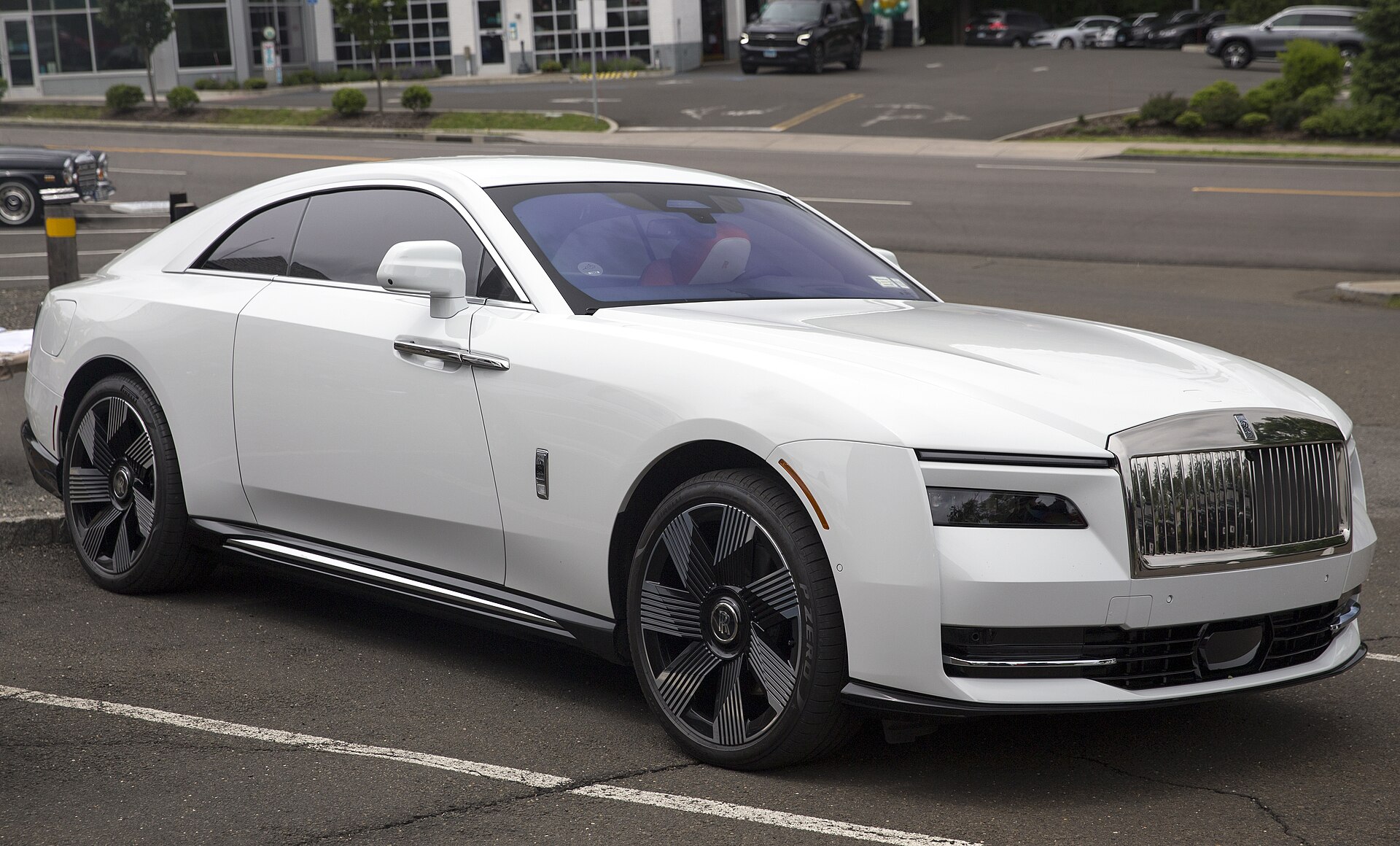
The Spectre offers 291 miles of EPA-estimated range. The Taycan Turbo S offers 256 miles. In real-world driving, both will achieve 80-85% of those figures with normal highway driving, dropping to 65-70% in cold weather or when driven aggressively. So in practical terms, they're separated by maybe 30 miles of range — not insignificant, but not game-changing either.
Charging is where the Taycan has a real advantage. It accepts 270 kW of DC fast charging power, meaning you can add 200 miles in roughly 22 minutes at an optimal charger. The Spectre caps out at 195 kW, so the same 200 miles takes closer to 35 minutes. For road-trip warriors, that difference matters. For people who charge mostly at home or during overnight stops, it barely registers.
Neither car will truly satisfy someone who demands 400+ miles of range or 5-minute charging times. The Spectre requires more planning than a gas car for long journeys. The Taycan requires slightly more planning than the Spectre. Both are fine for actual owners — people generally charge overnight at home and use fast chargers only occasionally.
This is where both cars show their luxury-car thinking: they assume you have time, access to charging infrastructure, and aren't in a particular hurry. If you're a person who buys a $200,000+ car, you probably do have time. The range and charging specs are solved problems for both vehicles.
Pricing: The Hard Truth Why the $224,000 Gap Exists
The Spectre costs more than double the Taycan. That's not a typo. It's $420,000 versus $196,000. Why would anyone spend that much extra? Because Rolls-Royce isn't competing with Porsche. They're competing with other bespoke luxury goods: yachts, private jets, and high-end jewelry.
When you buy a Spectre, you're not buying transportation. You're buying membership in a very exclusive club. You're buying something that will get noticed everywhere you go. You're buying a car that your grandchildren might inherit. You're buying the assurance that only a few hundred Spectres will exist globally — true rarity in a world of mass production.
The Taycan, meanwhile, is a high-performance sports sedan that happens to be electric. It's the car for a person who wants cutting-edge performance, excellent luxury, and the ability to drive past other cars very quickly. It's the car for someone who loves driving. It's approximately 100,000 of them that will be sold over the model's lifetime — common by luxury standards.
The price difference isn't just about the interior materials or engineering excellence. It's about what those materials and that engineering communicate about the owner. A Spectre says: "I have transcended the need for mere performance. I purchase experience." A Taycan says: "I understand performance, luxury, and smart technology, and I don't need to overpay to have them." Both statements are valid. They're just statements about different people.
Evaluate Your EV Luxury Options
Whether you're considering an ultra-luxury coupe or a performance sedan, Automonitor helps you understand the true value proposition before you commit.
Explore Options →Ownership Costs: Where $196K Actually Becomes Affordable Relative to $420K
Annual operating costs tell an interesting story:
| Category | Spectre | Taycan Turbo S |
|---|---|---|
| Insurance | $8,000–$12,000 | $4,500–$7,000 |
| Maintenance (annual) | $3,000–$5,000 | $2,000–$3,500 |
| Electricity (estimated) | $1,200–$1,600 | $1,400–$1,800 |
| Registration & Taxes | $4,000–$8,000 | $2,000–$4,000 |
| Total Annual | $16,200–$26,600 | $9,900–$16,300 |
The Taycan is dramatically less expensive to own. Insurance costs roughly half. Maintenance is lower (Porsche dealers are more common than Rolls-Royce). Registration varies by location, but the Spectre will cost significantly more in most states. Over five years, the ownership cost difference is roughly $30,000–$50,000. That's substantial.
However, here's the critical point: if you can afford a Spectre, the maintenance cost difference is noise. The person buying a $420,000 car doesn't usually arrive at that decision by agonizing over $5,000 in annual maintenance differences. The Taycan is the car for people who are budget-conscious enough to notice a $3,000 annual maintenance cost difference. The Spectre is the car for people who have already decided cost is not the primary decision variable.
Both cars will hold value reasonably well. The Spectre, with its ultra-limited production numbers, will likely retain 60-70% of its value over five years. The Taycan will probably retain 55-65% — still quite good for an electric car, but slightly worse than the Rolls-Royce. However, since the Spectre cost more to begin with, the absolute dollar loss is actually quite similar.
Maintenance and Reliability Different Dealer Networks
The Taycan is serviced at any Porsche dealership. They're everywhere. Parts are readily available. The company has been making cars for decades, and the service infrastructure is mature. Any problem you encounter, Porsche dealers have probably encountered ten thousand times before.
The Spectre is serviced exclusively at Rolls-Royce dealers — there are fewer of them, they're in major cities, and service appointments might require traveling some distance. The upside is that Rolls-Royce technicians are specialized and deeply trained. The downside is lack of convenience. If you live in a major metropolitan area, you'll be fine. If you live outside urban centers, servicing a Spectre becomes a logistical challenge.
Both cars are relatively reliable for vehicles at this price point. The Spectre is new (entered production in 2023), so long-term reliability data is still limited. Early indicators suggest it's solid. The Taycan has been in production longer and benefits from Porsche's engineering heritage. In practice, both are cars you should expect to last 100,000+ miles if properly maintained, though you'll probably sell them before hitting that threshold.
Who Actually Buys These? The Buyer Profiles Are Completely Different
The Spectre buyer is typically someone who has moved beyond the performance phase of car ownership. They've owned Porsches, Ferraris, maybe even Lamborghinis. They've satisfied their need for speed. Now they want something that makes a statement of confidence so loud that actually speeding seems redundant. They often buy the Spectre as a second, third, or fourth car. They're executive-level wealthy or higher. They care deeply about how the car makes them feel. Specs are irrelevant.
The Taycan Turbo S buyer is someone who wants cutting-edge performance without the unreliability stereotypes associated with hyper-cars. They appreciate engineering. They might be a car enthusiast who has moved to electric power while maintaining their performance expectations. They view cars analytically — the Taycan is objectively excellent at what it does, and they appreciate that. They might keep the car for 5-10 years. They drive it. They enjoy it.
These are different psychographics entirely. There are very few people who seriously consider both cars. The comparison matters precisely because it's artificial. It forces you to confront what luxury and performance actually mean to you.
The Automonitor Analysis Which One Is Right for You?
We've inspected both vehicles using our specialized EV protocols — testing brake response, thermal battery management, regenerative efficiency, infotainment usability, and long-term durability indicators. Here's our assessment:
Choose the Taycan Turbo S if: You love driving. You appreciate engineering. You want the fastest electric sedan available at your price point. You live in an area with good Porsche dealer support. You'll drive the car regularly and actually care about 0-60 times. You want cutting-edge technology in service of performance. You appreciate the value proposition — a genuinely excellent car that doesn't cost a fortune. You plan to keep the car for 5+ years and drive it actively.
Choose the Spectre if: You've moved beyond caring about performance specs. You want to be transported, not driven. You appreciate rarity and bespoke customization. You care more about sensory experience than technical achievement. You want a car that turns heads and opens conversations. You have access to a Rolls-Royce service facility. You view the car as a statement of arrival and success. You want something you might pass to your children. You're buying this as a special-occasion car, not a daily driver.
If you're genuinely torn between these two, we'd lean toward the Taycan. Not because it's objectively better — it isn't — but because the person who's genuinely conflicted probably hasn't reached the point where the Spectre makes sense. The Spectre buyer typically never questions the decision. They know they want it, and cost is a secondary consideration. If cost is a factor in your thinking, the Taycan is almost certainly the better investment.
Frequently Asked Questions
Can you daily drive a Rolls-Royce Spectre?
Technically yes, practically no. The ground clearance is minimal, visibility is limited, and parking is stressful. It's engineered for highway cruising and valet-parked occasions, not for navigating speed bumps and downtown parking lots. Most owners treat it as a special-occasion car.
How long does it take to charge each car?
The Taycan Turbo S adds roughly 200 miles in 22 minutes at a 270 kW charger. The Spectre needs about 35 minutes for the same range at a 195 kW charger. Both add about 3 hours of range per hour at home charging on a Level 2 charger.
Which one will hold its value better?
The Spectre, due to extreme rarity. But in absolute dollar terms, the depreciation is similar — you'll lose about $100K-$150K from the Spectre over five years, and $50K-$75K from the Taycan. As a percentage, the Spectre is better.
Can you get in the back of a Spectre easily?
The coach doors open from the rear quarter panel, which is stylish but requires understanding the mechanism. Once inside, the space is comfortable. Getting in is less intuitive than a normal four-door, but not impossible. The Taycan's four-door design is more straightforward.
Is the Spectre really worth $220K more than the Taycan?
If you value performance, specs, and efficiency, no. If you value silence, isolation, rarity, and the sensation that physics doesn't apply to you, possibly yes. It depends entirely on whether you're buying a car or an experience. The Spectre is mostly the latter.
The Final Word
These cars don't belong in the same conversation based on performance or practical metrics. They belong in the same conversation precisely because they represent two completely different answers to the question: "What does luxury mean?"
The Taycan says: luxury is excellence. Intelligence. Craftsmanship applied toward making you faster, more informed, and more capable. It's the luxury of getting what you pay for, with no inflation for brand prestige.
The Spectre says: luxury is the absence of intrusion. The ability to get in a car and have the world disappear. The assurance that the people in this car have transcended normal concerns. It's the luxury of being uniquely you, in a way that standard options simply cannot provide.
Both are legitimate answers. They're just answers for different people.
If you're genuinely evaluating both options, Automonitor is here to help you understand what you're actually buying. We've worked with buyers who have purchased both Spectres and Taycans, and we understand the calculation on both sides. Whether you're drawn to performance or purity, engineering or artistry, we'll help you make the decision with confidence.
Ready to Choose Your Electric Luxury?
Automonitor specializes in ultra-luxury and performance EV acquisitions. We handle negotiation, inspection, and logistics so you drive home with total confidence.
Schedule a Consultation →