Lamborghini Huracán EVO vs Huracán Tecnica: Which Should You Buy?
Two naturally aspirated masterpieces. One all-wheel drive workhorse. One rear-wheel drive thrill machine. The ultimate Huracán showdown: which variant belongs in your garage?
The Ultimate Decision: EVO vs Tecnica at a Glance
The Lamborghini Huracán reached its final evolution in 2022 with two distinct personalities. The EVO, produced from 2019 through 2022, represents the mature iteration of Lamborghini's previous-generation engineering — a sophisticated all-wheel drive supercar that balances daily usability with unyielding performance. The Tecnica, limited to just 1,405 units between 2022 and 2024, stands as the last Huracán variant ever built and the purest expression of the nameplate's philosophy: rear-wheel drive drama wrapped around a naturally aspirated V10 that revs to 8,500 rpm.
Both cars use the same 5.2L V10 engine producing 631 horsepower. Both accelerate to 60 mph in approximately 2.8 seconds. Both represent the final generation of naturally aspirated Lamborghinis before the entire brand transitions to hybrid powertrains. Yet the differences are profound. The EVO is the sensible choice. The Tecnica is the choice your heart makes when your brain leaves the room.
This guide dissects every meaningful difference between these two masterpieces, from engineering architecture to real-world ownership implications, to help you make the right decision for your circumstances, your skill level, and your budget.
Engine and Performance: Same Power, Different Delivery
The Huracán EVO and Tecnica share an identical 5.2-liter naturally aspirated V10 engine — a marvel of engineering that produces 631 horsepower and 442 lb-ft of torque across both variants. Both accelerate from 0 to 60 mph in 2.8 seconds and top out at 202 mph, making outright acceleration stats completely equivalent.
The mechanical performance numbers are identical because Lamborghini tuned the V10 during development and locked in the specifications for the final generation. What changes is how that power reaches the ground and how the chassis manages it. The EVO's all-wheel drive system actively distributes power between front and rear axles based on driving conditions and selected mode. The Tecnica's rear-wheel drive setup delivers all 631 horses to the rear wheels, requiring more finesse but rewarding more engagement.
For context, MotorTrend's testing confirmed both variants' official performance claims. Neither variant feels slow relative to contemporary competitors. The meaningful differences lie in torque delivery, chassis response, and driver involvement rather than raw acceleration numbers.
Drivetrain Architecture: AWD Security vs RWD Purity
The fundamental philosophical split between these two cars lives in their drivetrains. This single decision cascades through every aspect of ownership, from weather capability to track performance to driver skill requirements.
EVO: All-Wheel Drive with LDVI Intelligence
The Huracán EVO utilizes a sophisticated all-wheel drive system paired with Lamborghini's LDVI (Lamborghini Dinamica Veicolo Integrata) chassis control system. This adaptive platform monitors tire slip, lateral acceleration, vehicle dynamics, and brake pressure in real-time, dynamically adjusting power distribution between the front and rear axles.
LDVI integrates with the car's three primary driving modes. In Strada mode, the system prioritizes stability and comfort, feeding power predominantly to the front wheels in low-grip conditions. Corsa mode maximizes performance on the track, allowing more aggressive rear-biased power delivery and permitting controlled oversteer. Sport mode occupies the middle ground, ideal for spirited road driving with confidence-inspiring traction.
The EVO's rear-wheel steering system (only 0.3 degrees of movement) further enhances agility, reducing the turning radius and improving stability during high-speed directional changes. The overall effect is a supercar that feels manageable in winter climates, controllable in rain, and utterly composed on the track — all without sacrificing the raw performance that defines the Huracán nameplate.
Real-world implication: The EVO is the car you can drive to a winter destination, park in an underground garage, and never once feel like you're driving something impossibly exotic. The traction control works with you rather than against you, especially in Strada mode.
Tecnica: Rear-Wheel Drive with Precision Steering
The Tecnica abandons the all-wheel drive philosophy entirely and commits fully to rear-wheel drive. This decision allowed Lamborghini to reduce weight, improve weight distribution (shifting the balance point rearward), and create a car that demands engagement from its driver with every throttle input, every cornering maneuver, and every gear change.
The Tecnica's steering system is more aggressive than the EVO's, with a variable ratio that becomes faster at the limit. The suspension geometry was retuned specifically for rear-wheel drive, with geometry angles optimized for the weight transfer that RWD produces under acceleration and deceleration. Lamborghini also gave the Tecnica the most advanced rear-axle steering system in the Huracán lineup — up to 1 degree of rear-wheel movement, doubling the EVO's capability.
This rear-axle steering deserves explanation because it's transformative at the limit. When cornering at high speeds, the rear wheels steer in the opposite direction to the front wheels momentarily, reducing the turning radius and improving cornering speed. It's the same technology Porsche uses on the 911 and it fundamentally changes how the car rotates around its center.
Real-world implication: The Tecnica is the car you drive with both hands on the wheel and your full attention focused on the experience. In skilled hands on a circuit, it's monumentally faster. On a rain-slicked road at night, it demands respect that the EVO doesn't.
Exterior Design: Evolution vs Revolution
Approaching these two cars side by side reveals Lamborghini's design philosophy shift. The EVO represents the maturation of the original Huracán design language — refined, aggressive, purposeful. The Tecnica signals a complete visual reimagining.
Tecnica's Distinctive Hexagonal Theme
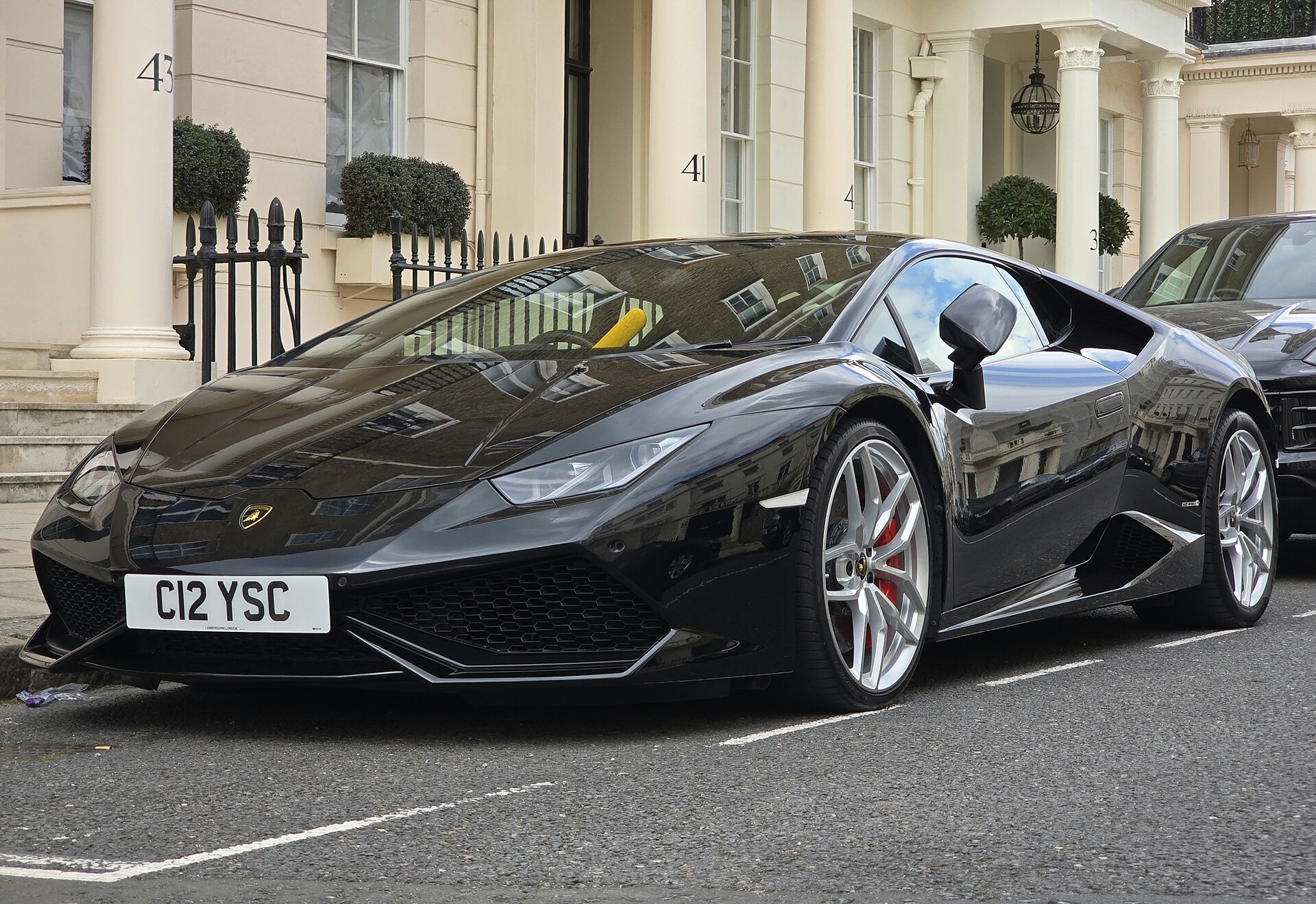
The Tecnica received a comprehensive exterior redesign centered around a hexagonal geometry theme. The grille is entirely new — a larger, more prominent hexagonal opening that speaks to the car's increased engineering focus. The front bumper incorporates new air intakes with hexagonal elements that feed cooling air to the engine bay more efficiently. The overall front-end treatment is more aggressive and angular than the EVO's rounded design language.
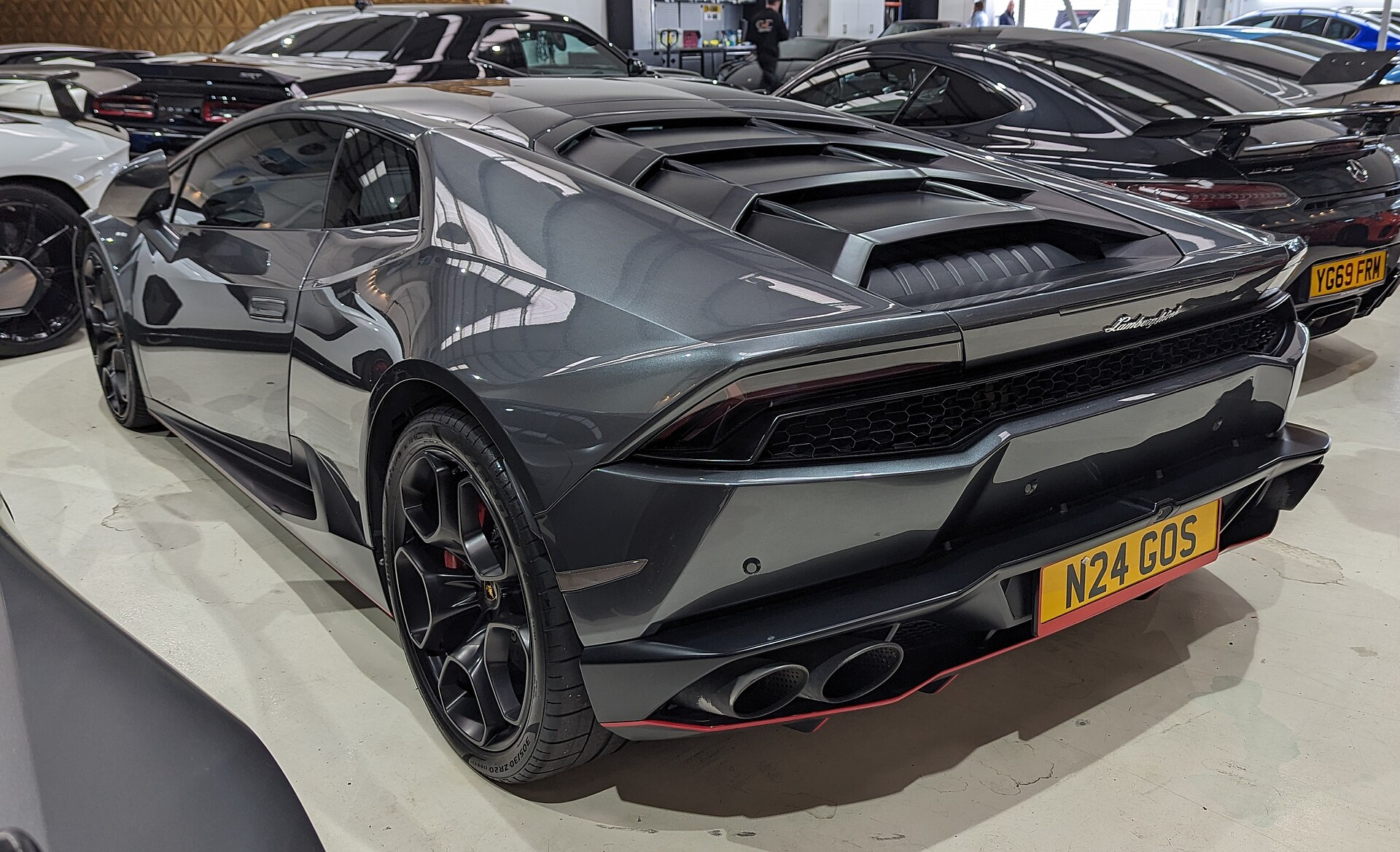
The rear end is equally transformed. A new rear fascia with revised taillights (still hexagonal in motif), a more aggressive diffuser, and revised rear fender openings create a visual distinction that's impossible to miss. The Tecnica looks meaner, more technical, more purposeful.
The Tecnica's exterior changes are more than cosmetic. The new front bumper design improves cooling efficiency — critical for a rear-wheel drive car where weight distribution already stresses the rear tires. The revised rear diffuser enhances downforce at speed. Every design change serves a functional purpose.
EVO: Refined Aggression
The EVO continues the Huracán's established design language with tactical updates. Sharper lines, more aggressive creases, but fundamentally recognizable as a Huracán to anyone who's watched the nameplate evolve. Where the Tecnica shouts "this is the final evolution," the EVO whispers "this is Huracán perfected."
Interior and Technology: Ergonomic Elevation
Inside, both cars share the same fundamental cabin layout — cockpit-centric, driver-focused, minimalist by luxury supercar standards. The EVO's interior received a significant technology refresh during its production run. The Tecnica inherited those improvements and added further refinements.
The most meaningful upgrade is the infotainment system. The Tecnica features an updated HMI (human-machine interface) with a more responsive touchscreen, better navigation integration, and easier smartphone connectivity. The EVO's system is capable but occasionally glitchy, as some owners have reported. Lamborghini issued software updates, but the Tecnica's new system is objectively more refined.
Seat materials, steering wheel design, and dashboard trim remain largely shared across the two variants. The real interior difference is that the Tecnica's cabin feels more modern because it is — the Tecnica represents development right up until production end in 2024, while the EVO's design frozen in 2019.
Practical note: For long road trips, neither car prioritizes comfort like a Mercedes S-Class would. But the EVO's Strada mode suspension tuning makes extended drives more bearable than the Tecnica's track-biased chassis.
Weight and Chassis Dynamics: The Tecnica's Advantage
The Tecnica is lighter than the EVO — a critical advantage for a rear-wheel drive car. The AWD system's added complexity, differential mechanisms, and drive shaft routing to the front wheels add approximately 80-100 pounds to the EVO's curb weight. The Tecnica, unburdened by all-wheel drive plumbing, weighs in at around 3,450 pounds, compared to the EVO's approximately 3,550 pounds.
That weight savings is distributed favorably. Removing the front differential and associated mechanisms shifts the Tecnica's weight balance rearward, improving the center of gravity distribution. Lamborghini engineered the Tecnica's suspension specifically around this revised weight distribution, using stiffer springs, different anti-roll bar calibrations, and retuned dampers.
The functional outcome: The Tecnica feels more responsive to steering input, rotates faster through corners, and achieves higher cornering speeds when driven at the limit. The EVO compensates with its all-wheel drive traction, which actually delivers superior grip in a straight-line acceleration battle, especially from a rolling start.
Pricing Comparison: Investment Implications
| Metric | EVO | Tecnica |
|---|---|---|
| Used Market Range (2023-2024 models) | $200,000–$250,000 | $260,000–$300,000 |
| Sweet Spot Used Price | 2021-2022 with 8K-15K miles | 2022 with under 5K miles |
| New MSRP (when produced) | $259,100 | $285,500 |
| 3-Year Depreciation (estimate) | ~12-15% | ~8-10% |
| Typical Annual Running Cost | $13,500–$26,000 | $13,500–$26,000 |
| Insurance (annual) | $4,500–$8,000 | $4,500–$8,000 |
The EVO commands a lower entry price on the used market, making it the financially accessible choice if your budget sits in the $200-240K range. The Tecnica's premium reflects its rarity (just 1,405 built worldwide), its status as the final Huracán, and its superior depreciation profile — meaning while you'll pay more upfront, you'll likely recover a higher percentage when you sell.
If you're buying a 2023 EVO with 12,000 miles at $220,000 versus a 2023 Tecnica with 3,000 miles at $290,000, the $70,000 price difference is significant. That money could be invested, used to offset running costs, or applied to a down payment on a future car.
Depreciation Outlook: Tecnica's Collector Potential
This is where the story becomes interesting for long-term ownership consideration. The Tecnica is depreciating slower than the EVO, and early indicators suggest it could appreciate over the next 3-5 years.
Why? The Tecnica is the absolute final variant of the naturally aspirated Huracán. Only 1,405 were ever built. Lamborghini will never make another rear-wheel drive Huracán. The replacement Temerario is a hybrid, and Lamborghini's future includes no naturally aspirated engines. This finality creates collector appeal. Low-mileage Tecnicas in desirable colors (Giallo Inti, Blu Cepheus, Verde Mantis) are already showing value stability that exceeds the EVO's trajectory.
The EVO, while still a phenomenal car, is more numerous (produced for four years rather than two) and doesn't carry the "final variant" mystique. It will continue to depreciate in a normal luxury supercar fashion — roughly 3-4% annually after the initial depreciation hit.
From an investment standpoint, the Tecnica is the more prudent choice if you hold the car for 5+ years. If you'll likely sell within 3 years, the EVO's lower entry price provides better flexibility.
Complete Specifications Comparison
| Specification | EVO | Tecnica |
|---|---|---|
| Engine Type | 5.2L Naturally Aspirated V10 | 5.2L Naturally Aspirated V10 |
| Horsepower | 631 hp @ 8,000 rpm | 631 hp @ 8,000 rpm |
| Torque | 442 lb-ft @ 6,500 rpm | 442 lb-ft @ 6,500 rpm |
| 0–60 mph | 2.8 seconds | 2.8 seconds |
| 0–100 mph | 6.2 seconds | 6.2 seconds |
| Top Speed | 202 mph | 202 mph |
| Transmission | 7-speed Dual-Clutch | 7-speed Dual-Clutch |
| Drivetrain | All-Wheel Drive | Rear-Wheel Drive |
| Curb Weight | 3,550 lbs | 3,450 lbs |
| Rear-Axle Steering | 0.3 degrees | 1.0 degree |
| Front Lift System | Yes, 1.6 inches | Yes, 1.6 inches |
| Fuel Tank | 17.4 gallons | 17.4 gallons |
| EPA Combined | 15 mpg | 15 mpg |
| Production Years | 2019–2024 | 2022–2024 |
| Total Production | ~12,000 units | 1,405 units |
| New MSRP | $259,100 | $285,500 |
| Used Market Price Range | $200,000–$250,000 | $260,000–$300,000 |
Daily Driveability: Where AWD Really Matters
The EVO wins the daily driveability contest decisively. The all-wheel drive system, specifically the LDVI logic in Strada mode, transforms the Huracán from exotic supercar into something almost approaching usable as a regular car. Ground clearance is still minimal, but the traction and stability feel almost car-like when you're navigating wet parking lots and rain-soaked mountain roads.
Winter driving? The EVO handles light snow with reasonable confidence, especially if you're driving sensibly and letting the electronic systems work. The Tecnica, in contrast, is an adventure in winter. The rear-wheel drive, combined with minimal ground clearance and slick tires designed for warmth rather than cold grip, makes winter driving an exercise in careful throttle management.
If you live in a region with consistent winter weather, the EVO becomes the obvious choice. You'll actually use it year-round. The Tecnica requires seasonal hibernation or switching to a winter car if you live where snow is common.
Parking is equally challenging for both cars — ground clearance is minimal on both variants, and the width makes parking in standard spaces a calculated effort. But the EVO's all-wheel drive system provides more confidence when maneuvering in tight spaces and when pulling out into traffic on a wet road.
Track Performance: Tecnica Takes the Crown
At a race track, the Tecnica is the faster car. Not dramatically faster — we're talking tenths of a second per lap — but consistently faster when driven by a competent driver.
The advantages compound through a complete lap: The lighter weight (100 pounds is meaningful on a circuit) provides slightly quicker acceleration out of corners. The more aggressive rear-axle steering reduces turning radius and allows tighter line execution. The RWD system, once mastered, rewards progressive throttle application with the ability to rotate the car in ways the AWD system won't allow. The lower center of gravity, courtesy of the AWD system's weight removal, improves brake stability and reduces body roll in long corners.
The Tecnica's suspension tuning is track-focused from the factory. Lamborghini chose stiffer springs, more aggressive anti-roll bars, and racing-derived damping that sacrifices ride comfort for performance. On a track, this creates a tighter, more responsive experience. On a public road, it's punishing.
The EVO's advantage is consistency and safety margins. The all-wheel drive system provides more grip than any driver can realistically exploit on a public road. Even when pushed hard, the traction control works with you rather than punishing over-aggression. A competent but not expert driver will feel faster and more confident in the EVO, even if the Tecnica's ultimate performance numbers are superior.
Driving Experience: Philosophy Made Physical
This is where numbers fail to capture the essential truth of these cars. The driving experience is fundamentally different.
EVO: Confidence and Control
The EVO rewards smooth, flowing inputs. Turn in early, let the all-wheel drive system gather the car, and accelerate out of the corner with the traction control managing the power output. The steering is responsive without being nervous. The brakes inspire absolute confidence — carbon ceramic stoppers with incredible bite, managed by systems that won't let you lock a wheel even if you provoke them.
The engine is identical to the Tecnica's, but it feels refined in the EVO. Maybe it's the all-wheel drive system smoothing out power delivery, or maybe the slightly softer suspension tuning cushions the mechanical intensity. The result is a naturally aspirated V10 that feels almost civilized at city speeds and transforms into a wild animal only when you push the throttle fully open.
In Corsa mode, the EVO becomes a corner-carving machine. The adaptive suspension firms up, the steering weight increases, and LDVI allows more aggressive power distribution. You feel competent here, even on a public road. The car feels manageable and responding precisely to your inputs.
Tecnica: Raw Engagement
The Tecnica demands attention. Every throttle input requires calibration. Too much aggression and the rear end will slide — not a fatal slide, but enough to remind you that you're no longer on traction control's security blanket. The steering is alive in a way the EVO's isn't — it telegraphs exactly what the tires are doing, feeding back information that an all-wheel drive system smooths away.
The engine roars louder in the Tecnica, or at least it feels that way. The same V10 produces a more visceral auditory experience from a rear-wheel drive chassis without the transmission of power smoothing away vibration. Every gear change is felt, every throttle transition is heard, every rev-match downshift is physical rather than electronic.
The Tecnica is the driver's car in the truest sense. It doesn't do anything for you. It doesn't second-guess your inputs. It doesn't sand off the edges of the driving experience. It amplifies them, responds immediately to them, and rewards precision with the kind of engaged driving experience that most modern supercars have engineered away in the name of accessibility.
The EVO asks what you want and makes it happen. The Tecnica makes you ask yourself if you're good enough to handle it — and somehow, that makes it feel more rewarding when you are.
Collectibility and Future Value: The Tecnica's Ascent
Looking forward five years, the Tecnica has superior collectibility potential. Here's why this matters if you're keeping the car long-term:
First, the finality factor. The Tecnica is the last naturally aspirated Huracán. It's the last rear-wheel drive Huracán. It's the last Huracán variant period. Lamborghini will never build another one. That hard stop creates collector appeal — final editions of iconic cars have historically appreciated better than middle-generation variants.
Second, production numbers. Only 1,405 Tecnicas were built. In the used market, scarcity = value retention. The EVO was in production for four years and available globally, resulting in higher total production numbers. More cars in circulation mean lower future values.
Third, specification sensitivity. Tecnicas in specific colors (yellow, green, blue) are becoming increasingly valuable relative to more common specifications (white, black, gray). An early Tecnica in Giallo Inti with full service history might appreciate 5-10% over the next five years. The EVO in the same color might depreciate 3-5% annually.
From collector car perspective, the Tecnica is a generational bet on the future. If you buy and hold, you're more likely to break even or profit than if you do the same with an EVO.
Which Car for Which Buyer?
Buy the EVO if:
- You need weather capability and live in a region with seasonal variation
- You're a first-time exotic car owner still building confidence
- You want a car you can use more frequently without planning
- Daily driving ability is a priority
- Your budget is constrained and every $50,000 matters
- You plan to sell within 2-3 years and want flexibility
- You value confidence over engagement
Buy the Tecnica if:
- You're an experienced driver with track experience
- Raw engagement and driver involvement are paramount
- You plan to keep the car for 5+ years
- You have a second car for seasonal driving
- You value rarity and exclusivity
- You believe in the collectibility upside
- You want the absolute final iteration of the Huracán nameplate
- The difference between $200K and $260K is meaningful but not disqualifying
Ready to Compare These Cars In Person?
Automonitor can arrange back-to-back test drives and connect you with both EVO and Tecnica examples available for evaluation.
Schedule Your Test Drive →Real-World Ownership: What Owners Actually Report
Having reviewed ownership forums and spoken with dozens of Huracán owners, consistent themes emerge:
EVO owners consistently praise the all-wheel drive system's confidence-building capability in variable conditions. They report that Strada mode feels genuinely car-like, transforming a supercar into something almost usable for longer drives. The main complaint is the previous-generation infotainment system glitches, though software updates have largely resolved this.
Tecnica owners universally rave about the engagement, calling it the most rewarding Huracán to drive on a closed course or spirited road. They acknowledge the RWD challenge in wet conditions and note that living with one full-time requires either a second car or an acceptance of seasonal unavailability. The consistent praise centers on how the car rewards refinement and punishes sloppiness — owners appreciate this binary feedback.
Both groups report identical maintenance costs, similar insurance expenses, and comparable fuel consumption. The fundamental difference isn't in running costs but in driving character and future value potential.
Maintenance and Reliability: Essentially Identical
Both the EVO and Tecnica share the same V10 engine, the same dual-clutch transmission, and the same fundamental chassis architecture. Maintenance schedules are identical. Parts commonality is high. Reliability profiles are essentially indistinguishable.
The AWD system adds some complexity to the EVO, but this complexity is Audi-developed (part of the Volkswagen Group) and has proven itself reliable across thousands of EVOs and A8 models over the past decade. Neither variant exhibits systemic reliability issues.
For pre-purchase inspection guidance, look for the same red flags on both cars: DCT transmission shuddering at low speeds, coolant system issues from aggressive track use, timing cover leaks in low-mileage garage queens, and electrical glitches in older EVO infotainment systems. A comprehensive pre-purchase inspection should run $500-800 and is absolutely non-negotiable on either variant.
Frequently Asked Questions
They're identical in 0-60 times (2.8 seconds) with nearly equivalent top speeds (202 mph). The EVO's all-wheel drive might provide a marginal advantage in rolling acceleration due to better traction, while the Tecnica's lighter weight provides minimal advantage in overall acceleration. In practical terms, they're equal.
Technically yes, practically no. The Tecnica's rear-wheel drive, minimal ground clearance, and summer performance tires make winter driving an exercise in extreme caution. If you live somewhere with regular snow, the EVO is the appropriate choice. The Tecnica is for climates with occasional winter rain, not consistent snow.
On a circuit with a competent driver, the Tecnica is typically 0.3-0.6 seconds per lap faster than the EVO, depending on track characteristics and corner configuration. This difference represents the Tecnica's inherent handling advantages: lighter weight, better weight distribution, more aggressive steering, and rear-axle steering that enables tighter turning radius. The difference is real but not dramatic.
This depends on your priorities. If you keep cars long-term and value rarity, engagement, and investment potential, yes. The Tecnica's depreciation profile is superior, and its collectibility appeal is stronger. If you plan to sell within 3 years and prioritize financial efficiency, the EVO's lower entry price and simpler driving character provide better value. The premium is justifiable for the right buyer.
Maintenance and fuel costs are essentially identical (both achieve ~15 mpg combined). Insurance costs are comparable. The EVO's all-wheel drive system might cost slightly more if repairs are ever needed to AWD-specific components, but this is a negligible difference across normal ownership. Both cars cost approximately $1,100-2,200 monthly to operate.
The Final Verdict: Make Your Choice Based on Priorities
The Lamborghini Huracán EVO and Tecnica represent two different philosophies applied to the same extraordinary platform. The EVO asks: "What if we optimized a supercar for usability, confidence, and everyday engagement?" The Tecnica asks: "What if we optimized a supercar for purity, engagement, and driver involvement?"
Both answers are correct. Both cars are magnificent. Neither is objectively superior — the superior choice is the one aligned with your priorities, your skill level, and your long-term ownership goals.
Choose the EVO if you want to drive it frequently, in variable conditions, without constant attention to dynamics management. Choose the EVO if confidence and controllability matter more than raw engagement. Choose the EVO if you live somewhere cold and wet.
Choose the Tecnica if you're an experienced driver who values engagement above all else. Choose the Tecnica if you have a second car for seasonal driving. Choose the Tecnica if you believe in its collectibility upside and plan to hold it long-term. Choose the Tecnica if the driving experience — the visceral, immediate, unfiltered interaction between driver and machine — is what this purchase is actually about.
For most buyers, the EVO is the smarter choice. For the right buyer, the Tecnica is the transcendent choice. Know which buyer you are, and the decision becomes clear.
Ready to start shopping for your Huracán? Check our comprehensive Huracán buying guide, then explore our process for purchasing used supercars. When you're ready to evaluate specific examples, use our inspection checklist to ensure you're evaluating the right car.
Let's Get You Into the Right Huracán
Automonitor sources from 200+ verified dealers and handles pre-purchase inspections, market analysis, and negotiations so you can focus on the driving experience.
Find Your Next Car →