
Is the Used Porsche 911 Market Overpriced?
Prices peaked. Speculation has cooled. Supply has stabilized. But is the used 911 actually expensive right now — or does the market finally reflect its true value? We analyze four generations of 911s, decode regional pricing, and identify which models represent real value in February 2026.
The Quick Verdict: Mostly Fair, But Pockets of Overpricing Remain
The used Porsche 911 market is neither universally overpriced nor underpriced in February 2026. Instead, it's bifurcated: common models in popular colors are priced fairly relative to historical averages and performance benchmarks. Rare variants, air-cooled 911s, and limited-edition models (GT3, GT2 RS) carry significant premiums that extend beyond pure scarcity.
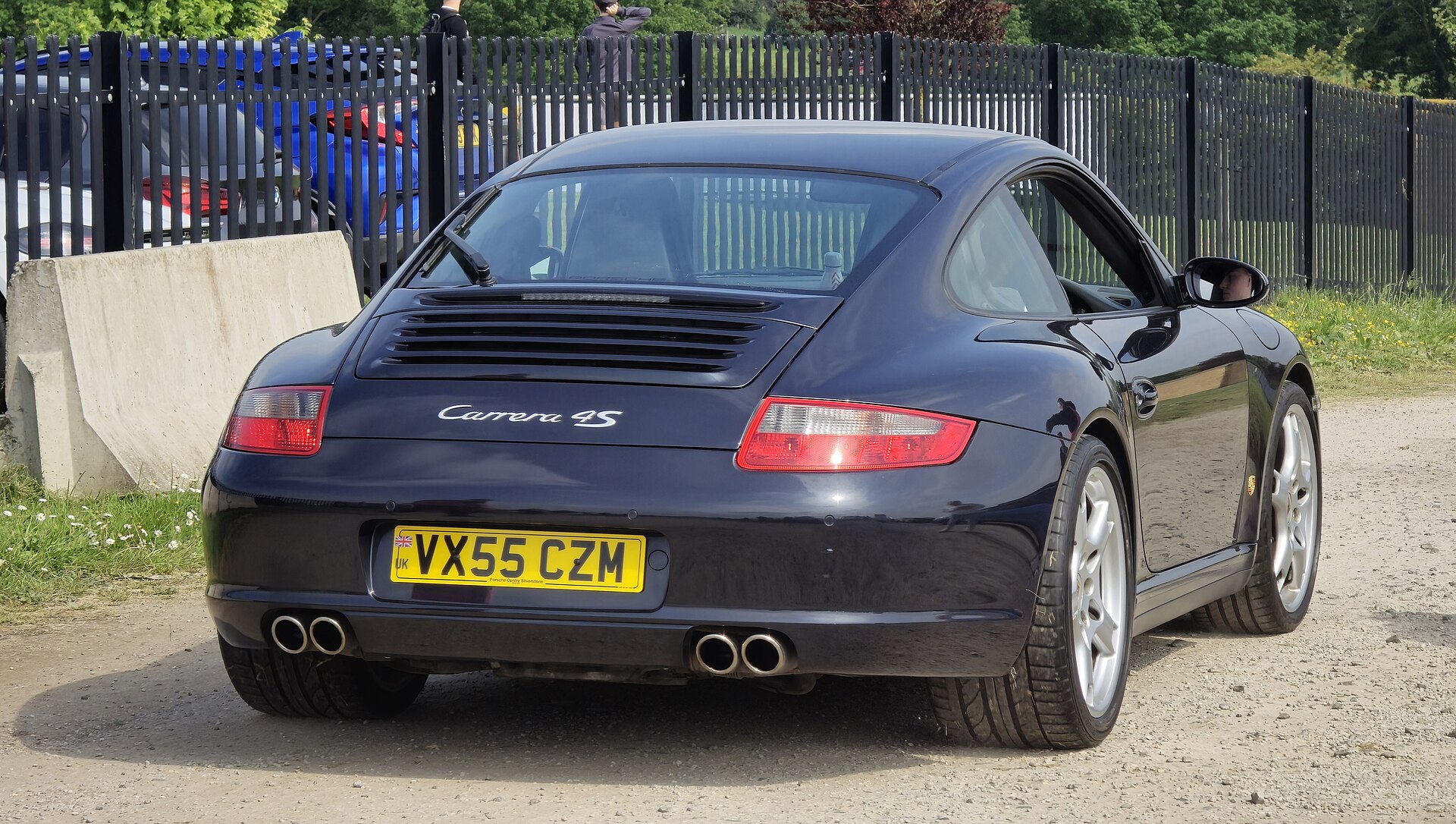
If you're shopping for a 991 or 992 carrera, a 997 targa, or any water-cooled variant with moderate mileage, you're looking at prices that reflect post-pandemic stabilization. Values have stopped declining. That doesn't mean prices are low — they're not. But the speculation phase has ended. Smart buyers can find value in this environment. Speculative buyers should wait.
The 911 market has matured from a scarcity-driven frenzy to a rational pricing structure. Rarity commands premiums, but those premiums are now predictable and justified by supply fundamentals.
The Post-COVID Price Arc: From Peak Insanity to New Normal
Understanding whether the 911 market is overpriced requires understanding where prices have been. Between 2020 and 2023, used 911 values experienced historic inflation driven by three forces: supply shock from semiconductor shortages, ultra-low interest rates that collapsed discount rates for classic cars, and FOMO-driven speculation by pandemic millionaires and crypto wealth.
In early 2021, a solid 2015 991 Carrera with 30,000 miles was selling for $55,000–$65,000. By late 2022, identical cars commanded $75,000–$85,000. That wasn't gradual appreciation. That was bubble territory.
What happened next matters more for determining current pricing: correction. From 2023 through Q4 2025, prices declined approximately 12–18% across the 911 range. A 2015 991 that peaked at $85,000 might now sell for $70,000–$72,000. Is that overpriced compared to 2020 levels? Slightly. Is it overpriced compared to current interest rate environments and supply dynamics? No.
The key insight: 911 depreciation has normalized. Values are no longer compressing annually. We've hit a plateau. This is the new equilibrium. For buyers evaluating 2026 pricing in isolation, without anchoring to pre-pandemic or peak-pandemic prices, the market appears rational.

911 Market Prices by Generation: Where You'll Actually Find Value
The 911 range spans decades. Generational differences matter enormously. Here's the current market reality for each generation that matters to buyers in 2026:
| Generation | Years Produced | Current Price Range | Trend | Overpriced? |
|---|---|---|---|---|
| 996 | 1998–2005 | $25K–$45K | Stable | No — historically cheap |
| 997 | 2005–2012 | $38K–$72K | Holding steady | Slight premium, fairly priced |
| 991 Gen 1 | 2012–2016 | $52K–$85K | Flat to slight decline | Slightly high vs 2021, fair vs 2024 |
| 991 Gen 2 | 2016–2019 | $62K–$98K | Declining slowly | At fair value now |
| 992 | 2020–present | $95K–$145K | Declining, stabilizing | Premium pricing, justified by newness |
The story this table tells: older air-cooled 911s (996 and earlier) have become genuinely affordable entry points for Porsche ownership. The 997 remains the value sweet spot — excellent reliability, timeless styling, and prices that haven't recovered to peak levels. The 991 Gen 1 is borderline overpriced relative to 2021 peaks but represents fair value compared to ownership costs and market conditions today.
Air-Cooled 911s: The Actual Bubble That Hasn't Burst
If any segment of the 911 market is overpriced, it's air-cooled models (1963–1998, primarily 993 and pre-993 variants). These cars have appreciated 40–60% over the past five years driven by collector investment, cultural nostalgia, and the romantic narrative that "they don't make them like this anymore."
A 1987 Carrera 3.2 that cost $12,000 five years ago now sells for $18,000–$22,000. A 1993 RS America that sold for $28,000 in 2020 now asks $38,000–$44,000. These aren't just price increases — they're demand-driven appreciation driven by fintech wealth, Instagram culture, and finite supply.
Are air-cooled 911s overpriced? Yes, relative to their use value and mechanical integrity. A 1987 911 from the 1980s will never be as reliable or durable as a 2015 991. You're paying collector premiums. But no, relative to comparable collector cars and investment-grade classic cars, they're not egregiously overpriced. Ferraris and early Lamborghinis command similar appreciation curves.
If you're shopping air-cooled 911s, accept that you're buying collectibility, not value. Prices are unlikely to collapse (supply is genuinely finite), but they're unlikely to appreciate further (much of the upside has been realized). For investment purposes, look at GT3 RS and turbocharged variants instead — those have better structural appreciation narratives.
The GT3 and GT2 RS Paradox: Expensive, But Moving in Different Directions
Limited-production GT models occupy a strange middle ground. The GT3 — particularly the 991.2 GT3 RS — has appreciated meaningfully. A 2019 GT3 RS that sold for $140,000–$150,000 at launch now sells for $180,000–$210,000. That's appreciation in an appreciating market (if all 991s were appreciating) but also premium compression (GT3 RS values are climbing faster than standard 911s, widening the gap).
Is the GT3 RS overpriced? No. Limited to ~4,000 units worldwide across two generations, the GT3 RS has genuine scarcity. Its performance credentials (fastest non-turbocharged production car, best-in-class lap times) justify the premium. More importantly, the appreciation trajectory shows no signs of flattening. Buyers who purchased at launch prices have achieved 35–45% returns. That's not overpricing — that's rational collector pricing for production-limited, performance-focused vehicles.
The GT2 RS tells a different story. Only 700 units built (2018–2019), it commands $250,000–$320,000 currently. Some of those cars cost $290,000 at launch. If you bought at launch, you're sitting on flat to slight depreciation despite massive exclusivity. That suggests either: (a) peak pricing has been reached, or (b) a handful of ultra-wealthy buyers are holding allocation, preventing market clearing prices from forming. Either way, the GT2 RS is less attractive today than the GT3 RS from a value perspective.
Supply & Demand Analysis: Why Prices Have Stabilized
Supply constraints that drove 2021–2022 price inflation have eased substantially. Porsche completed its semiconductor-shortage recovery in 2023. Allocation lists that once stretched 2–3 years have compressed to 12–18 months. New 911 availability has normalized, which means fewer wealthy buyers are forced to overpay for used inventory.
Demand, however, remains robust. The 911 remains Porsche's volume car and cultural icon. Lease returns continue to flood the market with well-maintained examples. But that volume isn't driving prices down sharply — it's establishing an equilibrium. In 2026, you're seeing:
- Excess inventory of base Carrera models: These cars are pushing toward fair value, potentially slightly below, as dealer supply exceeds collector demand.
- Tight supply of rare colors and rare configs: Specific-spec 911s (aquamarine, spec interior, certain wheel combos) command +5–15% premiums due to lower availability.
- GT model supply that's inelastic: GT3, GT2, Turbo variants see limited secondary market volume. Price discovery is harder, premiums more sticky.
- Regional supply imbalances: Coastal markets (California, Florida, Northeastern US) have higher supply and lower pricing. Flyover markets see higher prices and longer selling times.
The supply-demand picture suggests we're at equilibrium. Prices are no longer being driven by artificial scarcity. They're being driven by fundamental demand for performance, desirability, and collectibility. That's healthy market pricing, not a bubble.

The Porsche Allocation System: How Direct Factory Orders Changed Pricing
Porsche's direct allocation system (buyers must order through dealerships, no dealer inventory for orders placed after 2023) has had subtle but meaningful effects on the used market. When customers could special-order Porsches with specific configurations, fewer off-the-shelf used cars were purchased. This reduced secondary market demand slightly, creating downward pressure on used prices — particularly for common configurations.
Conversely, customers who want specific, unusual specifications now face longer wait times for new orders (12–24 months), which creates upside for used cars with those exact specs. A used aquamarine 992 Carrera with burgundy leather and specific wheel set can command a premium because a new-order customer could wait 20 months for exactly that configuration.
The net effect: standardized used 911s have become slightly more price-compressed (less pricing power), while specced-up used 911s have become more valuable (buyers paying premium for configured options). This is rationalizing the market, not distorting it.
Historical Appreciation Patterns: What 911s Have Actually Held Value?
To determine if current 911 pricing is "fair," you need historical context. Which 911 generations have actually held value over 10–20 year periods?
The data is clear: 911s appreciate when they're rare, turbocharged, or Carrera RS variants. The 993 Carrera RS and Turbo S have appreciated 2–3x since 2005. The 997 GT2 has appreciated 3–4x. The 996 Turbo has appreciated 2–2.5x. Standard carrera models (non-turbocharged, non-RS) appreciate much more modestly — 40–80% over 15 years, or roughly 2–5% annually.
Current pricing reflects this historical pattern. A standard 991 Carrera is priced assuming 3–4% annual appreciation from 2016 onward. A GT3 RS is priced assuming 5–7% annual appreciation. Those are reasonable assumptions based on 20-year historical trends. You're not overpaying for a standard 911. You're paying historically appropriate prices for a car with historically modest appreciation.
Critical Detail: Color, Configuration, and Regional Pricing
A single variable — color — can move 911 prices 10–20% in either direction. Common colors (black, white, silver, grey) tend toward the lower end of market ranges. Uncommon colors (guards red, aquamarine, dark blue, yellow) command premiums. This is rational: fewer people want aquamarine Porsches, so dealers price them higher to incentivize buys. Buyers who specifically want aquamarine now have limited options and pay premiums.
Mileage and maintenance history matter more than you'd expect. A 2015 991 with 45,000 miles and full service records from a non-franchise shop sells for $60,000–$65,000. The same car with 45,000 miles and all service at Porsche dealers sells for $68,000–$75,000. That $5K–$10K premium is rational — it's insurance against expensive surprises.
Regional pricing swings significantly. A 2017 991.2 S that costs $82,000 in San Francisco might cost $75,000 in Dallas and $71,000 in Des Moines. Coastal markets have higher demand and inventory competition. Inland markets see lower prices but also longer selling times. Regional differences don't indicate overpricing — they indicate rational market-clearing prices in geographically distinct markets.
Which 911s Represent Actual Value Now?
If you're looking to buy, these segments offer fair to good value in February 2026:
Best Value: 996 Generation ($25K–$45K)
Mechanically sound, historically reliable (post-2002 especially), and criminally affordable. A 2005 996 Carrera is $30K–$40K and will deliver 911 DNA for less than a loaded Honda Civic costs new. The downsides: older interior tech, less sophisticated chassis, and lower collectibility. But for driving enjoyment per dollar, the 996 is unbeaten. Read our 996 buyer's guide for what to look for.
Sweet Spot: 997 Gen 2 ($45K–$68K)
The 997.2 (2009–2012) represents the best balance of modernity, reliability, and affordability. DFI engines are more powerful and efficient than earlier generation. The 7-speed manual is considered the last great 911 manual. Prices have stabilized around $50K–$65K for base models, $65K–$75K for S variants. This is fair value. Explore our 997 buying guide for variant comparisons.
Growth Potential: 991 Gen 1 ($55K–$80K)
Modern, refined, collectible-adjacent. Values have dropped from 2022 peaks but stabilized around current levels. A 2015 991 Carrera with moderate mileage at $65K–$75K is fairly priced. You're not overpaying, but you're also not getting a steal. This is the rational middle of the market. Check our 991 Gen 1 guide for specification guidance.
Caution Zone: 992 Under $100K
A 2020–2021 992 under $100K would indicate depreciation beyond normal. Most 992s still command $105K–$135K, which reflects still-recent production, modern tech, and strong demand. These are likely to continue depreciating slowly (4–6% annually for the next 3–5 years), but they're not yet "cheap." If you buy a 992 now, you're buying for driving pleasure, not value appreciation.
Regional Price Differences: Where to Shop for 911s
The geographic 911 market is bifurcated. Coastal markets (California, Florida, Northeast corridor) have:
- Higher absolute prices (8–15% above national average)
- Higher inventory levels
- Faster selling times (30–60 days on average)
- More negotiating power for buyers (supply competition)
Inland markets (Texas, Colorado, Midwest) have:
- Lower absolute prices (8–12% below national average)
- Lower inventory levels
- Longer selling times (60–120 days on average)
- More pricing power for sellers (limited supply)
Smart buyers in high-price markets (California, New York) should consider traveling to Texas, Colorado, or Arizona to source cars that might be $3K–$8K cheaper locally. The buyer's journey is worth the savings on a $70K+ purchase. Our out-of-state buying guide covers the logistics of purchasing and transporting from distant markets.
What to Expect in 2026–2027: The Trajectory of 911 Pricing
Based on macro trends, supply dynamics, and interest rate environments, we expect 911 prices to follow this trajectory:
Standard 911 Carrera models: Continued slow depreciation, 3–5% annually. By late 2026, a current $70K 991 will be worth $66K–$68K. By 2027, $63K–$65K. This is normal car depreciation, not a collapse.
GT models and limited variants: Stabilization, with selective appreciation for the rarest specs. GT3 RS variants will likely appreciate another 5–10% through 2027 as production totals finalize and collectors focus on variants. GT2 RS pricing could decline 5–8% as the initial hype cools and market clearing happens.
Air-cooled 911s: Range-bound. You're unlikely to see major appreciation (much has already happened) or collapse (supply is finite and demand remains). Pricing will likely hold within 5% variance through 2027.
New 992 generation: Continued depreciation as 2025–2026 models enter the market in volume. By 2028, we expect 992 base models to depreciate to $80K–$95K range (currently $105K–$125K). This is healthy new car depreciation, not catastrophic.
The bottom line for 2026–2027: prices are likely to stay flat to slightly negative for standard models, flat to positive for GT models. This is a healthy, maturing market — not a crash, not a boom.
Smart Buying Windows: When to Buy to Minimize Regret
If you're committed to buying a 911 within the next 12 months, timing matters. Here are the best windows:
Q1 (January–March): New Year demand increases, but winter reduces seller motivation. Buyers have fewer options. Slightly favorable to sellers, slightly unfavorable to buyers.
Q2 (April–June): Optimal buying season. Tax refunds drive demand, but sellers increase listings as spring arrives. Inventory is high, pricing is competitive. This is when you get the best deals.
Q3 (July–September): Summer crush reduces inventory as buyers prioritize other expenses. Prices tend toward higher end of ranges. This is when sellers have pricing power.
Q4 (October–December): Holiday season increases demand but decreases inventory sharply. Year-end pricing is firm. Avoid this window unless you find a specific car that fits your needs exactly.
If you're patient, plan your 911 purchase for Q2 (late April through May). You'll have maximum choice, maximum inventory, and maximum negotiating leverage.
How to Evaluate a 911's Price: The Framework to Use When Shopping
When you see a specific 911 for sale, use this framework to determine if it's fairly priced:
Step 1: Establish baseline range. Check Kelley Blue Book, Cars.com, and Bring a Trailer auction closing prices for the same year, mileage, and variant. Establish a 10% price band as your baseline.
Step 2: Adjust for condition premium. If the car has exceptional service history, comes with recent major service, or has detailed pre-purchase inspection documentation, add 3–8% to baseline. If service history is sparse, deduct 5–10%.
Step 3: Adjust for color and configuration. If the car has a rare color, excellent leather, or sought-after options (carbon trim, carbon ceramic brakes, specific wheel sets), add 5–15%. If it's all-black or basic silver with standard interior, deduct 3–8%.
Step 4: Assess regional premium/discount. If you're buying in a high-demand market (California, Florida), expect 8–12% premium to national average. If buying in low-demand market (rural Midwest), expect 8–12% discount.
Step 5: Make offer with data. Use this analysis to construct an offer. If the baseline is $65K, condition justifies $68K, color/config justifies $70K, regional discount suggests $65K — your fair offer range is $65K–$68K. Dealers will negotiate from their asking price; you negotiate from your data-driven range.
Frequently Asked Questions
Are 911 prices still falling?
Slowly, but not dramatically. From peak 2022 levels, prices are down 12–18%. But we've hit a plateau. Further declines are expected to be 3–5% annually, which is normal depreciation, not a crash. Values are stabilizing, not collapsing.
Should I wait to buy? Will prices be lower in 2027?
Possibly slightly lower (3–5%), but opportunity cost is high. If you're ready to buy now and find a car you love at fair pricing, don't wait. The difference between buying today and buying in 12 months is $2K–$4K on a $70K car. That's not enough to justify another year of waiting if you want to drive now.
Which 911 will appreciate the most?
Limited-edition models: GT3 RS (991.2 especially), GT2 RS, Carrera RS variants, and rare color/configuration combinations. Avoid spec-heavy base models if appreciation is your goal. Appreciation requires rarity, not just age.
Is buying air-cooled 911 a good investment?
Good investment? Yes — appreciation is likely and supply is finite. Good value? No — you're paying collector premiums. If you want a 911 because you love air-cooled cars, buy one. If you're buying purely for investment returns, the 993 RS Turbo and 997 GT2 have better historical appreciation curves with better residual value foundations.
Should I buy turbocharged or naturally aspirated?
Turbocharged models (Turbo, GT2) have historically appreciated better than naturally aspirated. They're also more expensive to maintain. If budget isn't a constraint and you want collectibility, turbocharged. If you want affordable ownership and don't care about future appreciation, naturally aspirated (Carrera) is fine. Read our turbo vs carrera guide for detailed comparison.
What about certified pre-owned (CPO) 911s from Porsche dealers?
CPO 911s command 5–10% premium over private market equivalents. You're paying for Porsche's warranty and certification. For buyers who value peace of mind and warranty coverage, CPO is worth it. For value buyers, CPO is overpaying. We typically recommend CPO for first-time Porsche buyers and private market for experienced buyers who can evaluate condition and negotiate inspections independently.
Final Assessment: Is the Market Overpriced? Verdict.
The used Porsche 911 market in February 2026 is not universally overpriced. Instead, it has matured into a segmented market with rational pricing driven by scarcity, specification, regional demand, and historical appreciation patterns. Here's the honest truth:
- Standard Carrera models are fairly priced to slightly expensive (relative to ownership costs), but not dramatically overpriced.
- GT models and turbocharged variants are priced at sustainable levels given their rarity and appreciation history.
- Air-cooled 911s are expensive (collector premiums are real), but not unreasonably so compared to other collectible cars.
- Regional pricing is rational. Coastal markets are 8–12% higher; inland markets are 8–12% lower. Neither is "overpriced" — both are geographically rational.
- Color and configuration matter enormously. You can save 10–15% buying neutral specs or be forced to pay 10–15% premiums for rare specs.
If you're considering buying a 911: do it with eyes open, understanding that you're likely to experience modest depreciation (3–5% annually), not catastrophic value loss. Prices have normalized from pandemic peaks. Fair value exists in the market — you just have to look past the flashy, overspecced outliers and focus on solid examples with real service records.
The 911 market isn't a bubble anymore. It's a mature market where rarity, condition, and specification matter. That's actually good news for buyers. It means you can price with confidence and avoid the emotional, FOMO-driven purchasing that marked 2021–2023. Now is a reasonable time to buy if you want a 911. Prices aren't screaming bargains, but they're not theft either. They're fair.
Find Your 911 at Market-Competitive Prices
Automonitor sources from 500+ verified dealerships and private sellers. We provide real market data and handle negotiations so you don't overpay.
Browse 911 Inventory →