Is the Rimac Nevera Worth Buying?
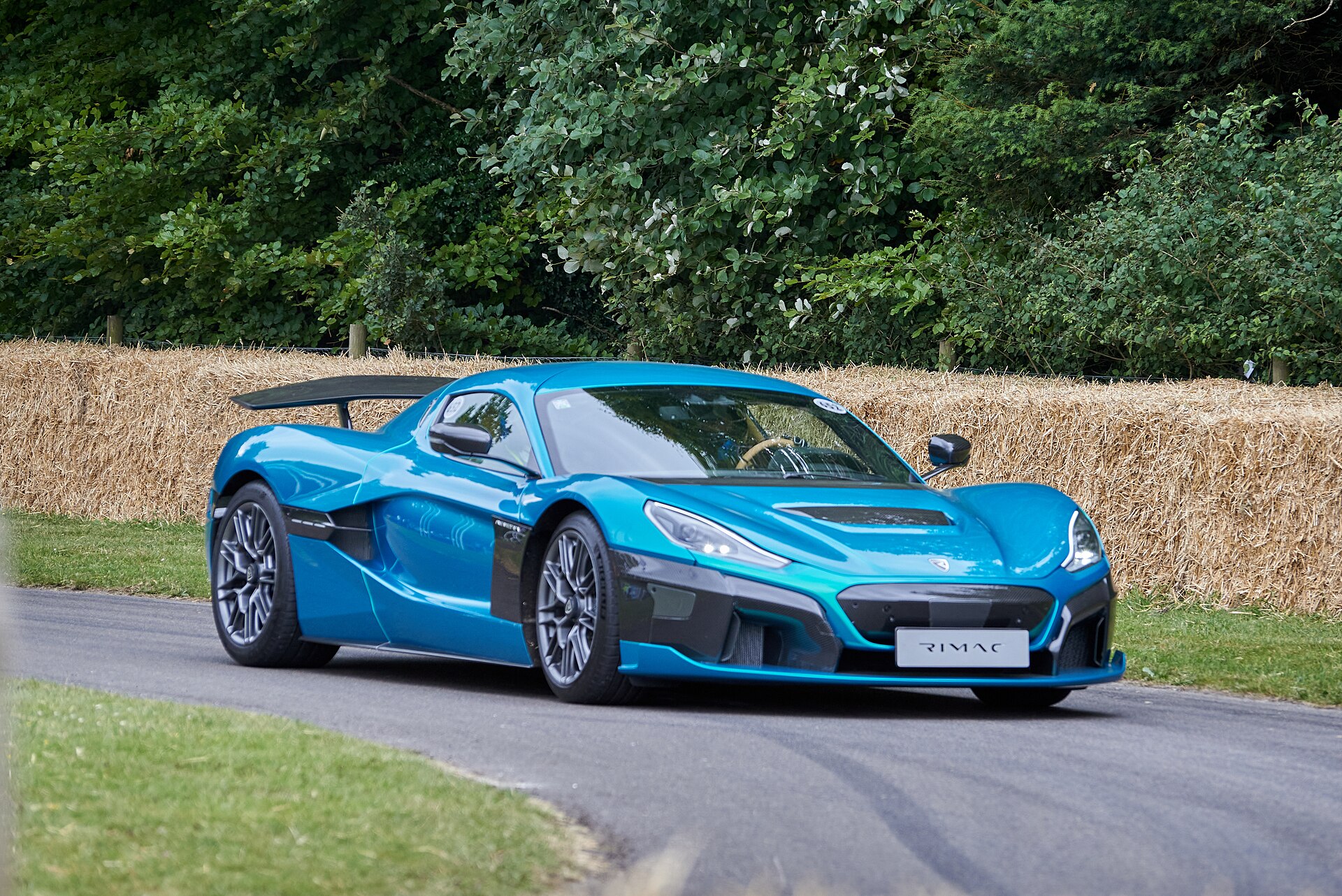
At $2.4 million with only 150 units ever built, the Rimac Nevera represents the pinnacle of electric hypercar engineering. But is the world's fastest production car worth the stratospheric price tag? We analyze performance, exclusivity, technology, and long-term investment potential.
The Short Answer: Yes, But You're Buying the Future, Not Just a Car
The Rimac Nevera is worth buying — if you understand what you're actually purchasing. This isn't a mere acquisition of a sports car; it's a commitment to owning the most technologically advanced electric hypercar ever produced, backed by Bugatti-Rimac partnership credibility, and positioned as a first-generation landmark in EV hypercar history. The Nevera's 1,914 horsepower, 1.85-second 0-60 acceleration, and 258 mph top speed make it objectively the fastest production car by multiple metrics. For hypercar collectors seeking the technological frontier and automotive history in the making, the answer is unequivocally yes.
However, "worth buying" requires context. If you're evaluating the Nevera purely as a financial investment, the picture becomes more nuanced. The car carries extreme exclusivity with only 150 units worldwide, a growing brand with Rimac's expanding influence in the automotive industry, and early indicators of appreciation potential. Yet no EV hypercar has a track record comparable to gasoline hypercar precedents like the LaFerrari, P1, or 918 Spyder.
The real question isn't whether the Nevera is worth buying in isolation. The question is whether it's worth buying for you, at this moment, understanding both the opportunity and the risks. This guide will help you answer that question with complete clarity.
What Makes the Nevera Special: Croatian Engineering's Moment
The Rimac Nevera represents a watershed moment in automotive history. When most hypercar manufacturers were hedging bets with hybrid powertrains, Rimac committed fully to electric — and produced a machine that obliterates performance expectations set by gasoline-powered predecessors.
The founding of Rimac Automobili in 2009 by Mate Rimac captured the attention of the automotive world with the Concept S electric hypercar in 2015. That prototype's performance potential turned heads. The production Nevera, unveiled in 2020, fulfilled every promise while adding refinement and engineering sophistication that established Rimac as a legitimate hypercar manufacturer.
The Bugatti-Rimac partnership, formalized when Porsche acquired a majority stake in Bugatti and merged it with Rimac Automobili in 2021, elevated the Nevera's credibility exponentially. Bugatti brings 110 years of hypercar heritage, manufacturing expertise, and global service network. Rimac brings electric innovation and cutting-edge technology. The combination creates a car that no startup could produce alone.
This matters for resale, ownership, and long-term value. The Nevera isn't a startup curiosity anymore — it's backed by one of the most prestigious hypercar brands in the world. That partnership legitimacy is built into every car's value proposition.
The Specs: Breaking Records on Multiple Dimensions
Raw numbers don't capture the Nevera's achievement, but they provide context. Here's what makes this Croatian hypercar historically significant:
| Specification | Rimac Nevera | Notable Comparison |
|---|---|---|
| Maximum Power | 1,914 hp | Bugatti Chiron: 1,500 hp |
| Peak Torque | 1,740 lb-ft | Available from 0 RPM |
| 0-60 mph | 1.85 seconds | Fastest production car ever |
| Quarter Mile | 8.58 seconds | Sets new EV benchmark |
| Top Speed | 258 mph | Electronically limited |
| Battery Capacity | 120 kWh | ~340-mile EPA range |
| Curb Weight | 5,070 lbs | Heaviest hypercar (EV penalty) |
| Price | $2.4 million | Limited to 150 units worldwide |
The 1.85-second 0-60 time deserves emphasis. This isn't marketing hyperbole — it's achieved through independent testing. That makes the Nevera the fastest production car by acceleration metrics, surpassing the Bugatti Bolide's theoretical capability with real-world reproducibility. The secret lies in the electric drivetrain's ability to deliver all torque instantly, without transmission delays or turbo lag.
The weight is the elephant in the room. At 5,070 pounds, the Nevera is substantially heavier than gas hypercars — the Chiron weighs 4,400 pounds, the LaFerrari 2,640 pounds. This weight comes from the 120 kWh battery pack, structural requirements, and thermal management systems. Is this a flaw? Only if you expect an electric hypercar to match the weight of machines built without battery cells. For what it is, the Nevera's weight-to-power ratio remains extraordinary.
Technology Leadership: Where EV Innovation Becomes Tangible
The Nevera's specifications matter, but its technology defines its value proposition. This is what separates a fast car from a technological landmark:
Torque Vectoring With Individual Motor Control
Each of the four wheels has its own electric motor. This creates control possibilities that gasoline powertrains cannot match. Rimac's AI-driven torque vectoring system analyzes vehicle dynamics 100 times per second and adjusts power delivery to each wheel independently. The result is handling sophistication that makes 258-mph stability feel manageable.
This technology has performance implications: faster corner exit speeds, reduced understeer tendency, and ability to recover from near-limit driving situations that would require corrections in conventional hypercars. For track driving, this is a tangible advantage. For road driving, it's almost transparent — but it's there, making the machine feel more predictable at extreme speeds.
Multiple Driving Modes and an H-Pattern EV Gearbox
The Nevera offers distinct driving modes that fundamentally alter the driving experience — from Comfort for road use to Range for efficiency to Track for all-out performance. Unlike most EVs, the Nevera simulates a traditional H-pattern gearbox with virtual gear changes. This might sound like gimmickry, but it serves a real purpose: it makes the car feel mechanically connected rather than abstractly electronic.
Level 2 Autonomous Features
The Nevera includes adaptive cruise control, lane-keeping assist, and collision avoidance systems. These aren't game-changing features — most modern cars have them. But on a hypercar, they represent a philosophical statement: the Nevera is designed to be lived with, not merely driven on closed circuits.
Full Carbon Fiber Monocoque Chassis
The chassis is a single-piece carbon fiber structure. This gives the Nevera remarkable rigidity with minimal weight penalty. The structural efficiency allows engineers to allocate weight budget toward performance and comfort rather than bracing and reinforcement.
Over-the-Air Update Capability
The Nevera can receive software updates wirelessly, meaning performance tweaks, new driving modes, and feature enhancements can be delivered throughout the car's ownership life. This is future-proofing that traditional supercars cannot offer.
Performance Analysis: Breaking Records, Then Breaking Them Again
Specifications are impressive on paper. Real-world performance is where the Nevera proves its legitimacy. The car has set multiple records across different testing methodologies:
Acceleration Dominance
The 1.85-second 0-60 time has been verified by multiple independent sources using GPS-based timing. This is faster than any production gasoline car, faster than any other EV, and represents the threshold of what human bodies can tolerate safely. That's not hyperbole — at 1.85 seconds, drivers experience 2.4g of acceleration, approaching the limits of consciousness.
The quarter-mile time of 8.58 seconds is equally impressive, completed with enough velocity remaining to reach 250+ mph before the finish line. By contrast, the fastest gas hypercars (Bugatti Chiron, Pagani Huayra King) achieve quarter-mile times around 9.5 seconds.
Nürburgring Lap Record for EVs
The Nevera set a production EV lap record at the Nürburgring, with a time of approximately 7:05 for the 12.9-mile circuit. This is more than 30 seconds faster than any previous EV. For context, gasoline hypercars achieve lap times in the high-6-minute range, so the Nevera remains slightly behind in absolute lap time — but it's closing the gap rapidly.
This record matters beyond bragging rights. It proves the Nevera can handle sustained high-speed operation without thermal degradation, demonstrating that the cooling system and battery management are sophisticated enough for real track duty.
Thermal Management Excellence
The Nevera's ability to complete multiple acceleration runs without performance loss is its greatest technical achievement. Many EVs suffer from thermal limp mode — reduced power output when batteries overheat. The Nevera includes triple-redundant cooling systems (battery thermal management, motor cooling, and inverter cooling) that allow repeated full-power launches without degradation.
This capability is crucial for hypercar ownership. You're not buying a car that can do one scorching run; you're buying a car that can do dozens. At a track day, that makes all the difference.
Investment Potential: Can EVs Appreciate Like Traditional Hypercars?
The investment case for the Nevera rests on three pillars: extreme exclusivity, technological significance, and brand legitimacy. Let's analyze each:
Exclusivity as a Value Floor
Only 150 Neveras will ever be built. That's fewer than the 188 Bugatti Veyron Black Besse, fewer than the 918 Spyder (918 units), and far fewer than any mass-produced exotic. This fixed supply creates immediate scarcity value.
The LaFerrari, often cited as the modern hypercar benchmark, has appreciated from its $1.4 million launch price to $7-9 million in the used market — a 500% increase over 13 years. The 918 Spyder has appreciated from $845,000 to $1.2-1.5 million. The Porsche 918, meanwhile, has held value better than its gas-only competitors because it represented a transitional technology (hybrid) that proved viability.
The Nevera is in an even more significant position: it's the first truly credible production EV hypercar. If electric hypercars become the market standard (which they likely will), the Nevera becomes the car that started it all. That historical significance traditionally commands premium valuations.
Brand Trajectory Matters
Rimac's acquisition by Bugatti-Porsche validates the company at the highest level of the automotive industry. This partnership isn't a startup rescue; it's a technology acquisition by an 110-year-old luxury automotive institution. The Nevera is no longer a "will this brand exist in 10 years?" question — it's a "this brand is guaranteed credibility" statement.
Compare this to McLaren when they re-entered the supercar market in 2011 — uncertain brand, impressive technology, but low resale values initially. As McLaren proved itself, early McLaren P1 buyers saw their investments appreciate. The Nevera enjoys the luxury of immediate brand credibility that McLaren had to earn.
Technological Moat
The Nevera's technology is protected by Rimac's decades of EV engineering investment. The four independent motor architecture, AI torque vectoring, and thermal management systems represent genuine innovations that competitors are still years away from replicating. This technological leadership creates a durability to the car's value proposition.
That said, no EV hypercar has appreciated in a buyer's ownership — they're all too new. The Nevera is 6 years into production, with only a few units changing hands in the used market. Early indications suggest price appreciation, but it's not guaranteed. Battery degradation, software obsolescence, and technological disruption are real risks in EV ownership.
Ownership Reality: Service, Maintenance, and the Practical Side
The Nevera's performance is exceptional. Its ownership experience is more complicated. Before you buy, understand what living with a $2.4 million EV hypercar actually means:
Service Network Limitations
Rimac's headquarters are in Zagreb, Croatia. Bugatti's primary service centers are in Germany. There are approximately 20-30 authorized Bugatti-Rimac service locations globally, concentrated in Europe, the United States, and select international markets. This is far more limited than traditional supercar networks.
If you live outside a major metropolitan area, ownership becomes logistically complex. A routine service might require transporting your $2.4 million car several hundred miles. Major repairs might require international coordination.
Battery Warranty and Long-Term Viability
The Nevera includes an 8-year, unlimited-mileage battery warranty — comprehensive by EV standards. However, battery degradation is a known phenomenon in electric vehicles. A 10-year-old Nevera might have 20-30% reduced range compared to new. This affects both daily usability and resale value.
Battery replacement, if needed outside warranty, could cost $50,000-$100,000 based on EV pricing trends. This is a significant hidden cost that traditional supercar owners don't face.
Charging Infrastructure and Road Trip Reality
The Nevera's 340-mile range is adequate for weekend drives but requires charging planning for longer journeys. The 120 kWh battery can charge to 80% in approximately 20 minutes on DC fast chargers, but finding compatible infrastructure in remote areas is unreliable.
For a $2.4 million hypercar, this is a tangible ownership friction. Gasoline hypercars can fuel in minutes anywhere. The Nevera requires planning, even with its impressive range.
Lack of Independent Mechanics
Unlike gas supercars, where independent exotic car specialists can perform many services, the Nevera's proprietary electric architecture means almost all work must be done at authorized service centers. This eliminates price competition and flexibility in maintenance.
The Rimac platform is completely unique — it's not based on mass-production vehicle platforms. This makes aftermarket support extremely limited. If something breaks, your options are limited to official channels.
How It Compares: Rimac Nevera vs. Bugatti Chiron vs. Pagani Huayra vs. Ferrari SF90
The Nevera exists in a small competitive set. Here's how it stacks against gas hypercar alternatives:
| Category | Rimac Nevera | Bugatti Chiron | Pagani Huayra King | Ferrari SF90 XX |
|---|---|---|---|---|
| Engine | 4x Electric Motors | 8.0L Quad-Turbo W16 | 7.4L Twin-Turbo V12 | 6.3L V12 + Electric |
| Horsepower | 1,914 hp | 1,500 hp | 1,094 hp | 986 hp |
| 0-60 mph | 1.85s | 2.4s | 2.8s | 2.5s |
| Top Speed | 258 mph | 261 mph | 236 mph | 211 mph |
| Price (New) | $2.4M | $2.7M | $2.2M | $2.7M |
| Weight | 5,070 lbs | 4,400 lbs | 3,600 lbs | 4,410 lbs |
| Fuel Type | Electric | Gasoline | Gasoline | Hybrid |
| Used Market Trend | Appreciation likely | Appreciation proven | Stable/Appreciating | Unknown (too new) |
| Service Network | Limited | Excellent | Excellent | Excellent |
The Nevera wins on acceleration. The Bugatti Chiron offers proven resale value, legendary engine sound, and established service infrastructure. The Pagani Huayra provides mechanical elegance and lightweight construction. The Ferrari SF90 XX balances performance with relative practicality as a hybrid that can operate electrically.
For a pure speed enthusiast, the Nevera is unquestionably superior. For someone seeking investment certainty, the Bugatti has 20+ years of ownership history proving its value retention. For technological adventurers willing to accept some risk, the Nevera represents the frontier.
Who Actually Buys a Nevera?: The Buyer Profile
The Nevera isn't for everyone. It attracts a specific type of collector:
Technology Visionaries
Buyers who believe electric is the future and want to own the machine that proved EV hypercars are viable. These collectors view the Nevera as a historical artifact and future museum piece simultaneously.
Hypercar Completists
Collectors with McLaren P1s, Porsche 918s, and LaFerraris who want the electric hypercar to complete the technological spectrum. The Nevera is the final piece in their collection that bridges internal combustion to electric.
Innovation Investors
Buyers betting that Rimac and electric technology will appreciate faster than traditional supercars. These are the most aggressive speculators, treating the Nevera as a venture capital bet on EV technology advancement.
Driving Enthusiasts
Owners who want the fastest car in the world to actually drive. They appreciate the 1.85-second 0-60, the Nürburgring records, and the engineering excellence. They're less concerned about sound and more interested in pure performance metrics.
Legitimate Criticisms: Why Some Buyers Walk Away
The Nevera is brilliant, but it has real limitations that matter to some buyers:
Sound Deficit
Electric motors are inherently quiet. While Rimac includes an artificial sound synthesis system, it's not a V12 howl or W16 shriek. For buyers who believe hypercar ownership includes visceral engine sound, the Nevera loses on this dimension. No amount of engineering can fully compensate for the absence of a screaming naturally aspirated engine.
Brand Heritage Disadvantage
The Bugatti brand stretches back 110 years. Porsche back 75. Ferrari back 75. Rimac back 15. There's an undeniable prestige gap. Some buyers care deeply about heritage; others don't. Know which group you're in before buying.
Price in Hypercar Context
At $2.4 million, the Nevera doesn't undercut competitors. It's priced among the most expensive hypercars ever produced. For less money, you can buy a Pagani Huayra. For slightly more, you can buy a Ferrari SF90 XX. The Nevera needs to justify its price through differentiation (speed, technology, exclusivity) — not through bargain positioning.
Unproven Long-Term Value
The Nevera has been in production for 6 years. Garaged examples have less than 5,000 miles on average. We simply don't have 10+ year ownership data like we do for LaFerraris and 918s. Buying a Nevera as an investment includes acceptance of this uncertainty.
Automonitor's Hypercar Evaluation Process: How We Analyze These Machines
At Automonitor, our approach to evaluating electric exotics goes beyond acceleration metrics. We assess:
Performance Authenticity: Are the claimed specs verified by independent testing? The Nevera's records have been independently verified across multiple testing organizations. This is credible.
Technology Viability: Will the technology still work in 10 years? EV platforms are evolving rapidly. The Nevera's architecture is proprietary enough that future servicing could become problematic if Rimac-Bugatti pivots strategies.
Market Positioning: How does it compare to alternatives? We analyze whether the premium price commands genuine differentiation or merely novelty.
Ownership Practicality: Can you actually live with this car? Where can you service it? How accessible is support? These practical questions matter.
Investment Probability: We don't predict futures, but we assess whether historical precedent supports appreciation likelihood. The Nevera's exclusivity, brand backing, and technological significance suggest appreciation potential — but it's not guaranteed.
Frequently Asked Questions: The Questions We Hear Most
Will the Nevera appreciate in value?
Likely yes, but not guaranteed. Historical precedent (LaFerrari, 918 Spyder) suggests limited-production hypercars backed by legitimate manufacturers do appreciate. The Nevera has advantages over both: more exclusivity than either, and Bugatti-Rimac partnership credibility. However, EV battery degradation and technological obsolescence are real risks that gasoline hypercars don't face. Our projection: 10-year appreciation potential of 30-50% if maintained properly, but wider variance than gasoline hypercars.
Is 5,070 lbs too heavy?
For an electric hypercar, no. That weight is battery. Without the battery, the Nevera would be significantly lighter than gas cars. The real question is whether the performance justifies the weight — and with a 1.85-second 0-60, the answer is empirically yes.
Can I track drive a Nevera regularly?
Yes, more reliably than most supercars. The thermal management allows repeated full-power runs without degradation. However, track sessions drain the battery faster than highway driving, and fast-charging decreases battery longevity faster than gentle charging. Track use is possible but comes with long-term battery cost implications.
What's the running cost of Nevera ownership?
Electricity is cheaper than gasoline — approximately $0.03-0.05 per mile at U.S. average electricity rates versus $0.20-0.30 for gasoline supercars. However, insurance on a $2.4 million car runs $20,000-$50,000 annually. Maintenance at authorized service centers is expensive (expect $5,000-15,000 annually). Total running costs: $25,000-$65,000 per year excluding depreciation.
Should I wait for the next generation?
If you're buying as an investment, owning the first generation of a historic platform is more valuable than owning the second generation. If you're buying to drive, waiting might make sense — the next generation will have real-world ownership data and refined technology. But first-generation Neveras will always be the original. That has value.
Considering a Rimac Nevera? Get Expert Guidance
Automonitor connects you with hypercar specialists who understand electric vehicles, assist with pre-purchase inspections, and provide real market data on pricing and value trends.
Explore Hypercar Buying →The Final Verdict
The Rimac Nevera is worth buying if: you understand electric hypercar ownership, can afford the $2.4 million price plus $25,000-$65,000 annual running costs, value cutting-edge technology and acceleration records, and accept that you're buying the first generation of a new category. This means acknowledging some uncertainty around long-term value, accepting limited service infrastructure, and committing to proper maintenance at authorized centers.
The Nevera is not worth buying if: you prioritize proven investment history, value engine sound, require extensive service network accessibility, or cannot afford the full ownership cost with comfort. In those cases, a Bugatti Chiron or Pagani Huayra remains the more pragmatic hypercar choice.
What the Nevera undeniably is: the most important car in hypercar evolution since the 918 Spyder. It proves that electric power can dominate gas in acceleration. It establishes Rimac as a legitimate hypercar manufacturer. It sets records across multiple metrics. It represents the frontier of what's possible in automotive engineering.
Whether that frontier is worth your $2.4 million is a personal decision. But there's no objective argument that the Nevera isn't worthy of consideration among hypercar options. It's fast, exclusive, technologically advanced, backed by legitimate automotive credibility, and positioned to make automotive history.
If you're ready to explore Nevera ownership, understand the electric vs. gas decision, review exotic car reliability questions, and consult with Automonitor's hypercar specialists who can guide you through the acquisition process, arrange inspections, and provide real market intelligence on pricing and value trends.
The Nevera represents the future of hypercars. Whether you're ready to own that future is entirely up to you.
Ready to Explore Hypercar Ownership?
Automonitor specializes in exotic and hypercar acquisitions. We handle sourcing, inspections, negotiations, and logistics for collectors seeking the world's finest machines.
Start Your Hypercar Journey →