
Is the Lamborghini Aventador Going to Be a Classic?
The last naturally aspirated V12 from Lamborghini is already history. But will it become a collectible classic? Here's everything you need to know about the Aventador's future value, investment potential, and what separates the variants that will appreciate from the ones that will fade.
The Aventador's Place in History: Why It's Already a Collector's Car
The Lamborghini Aventador isn't just ending an era — it's defining it. From 2011 to 2022, Lamborghini built 11,465 Aventadors across all variants. While that may seem like volume production, it's crucial context: the last Aventador rolled off the line in 2022, replaced by the hybrid Revuelto. This means there will never be another naturally aspirated V12 Lamborghini. That finality alone has already begun pricing Aventador appreciation.
The 6.5-liter naturally aspirated V12 produces 730 horsepower in its final iterations. It revs to 8,350 rpm with a mechanical aggression that no turbocharged or hybrid engine can replicate. In an industry racing toward electrification, the Aventador represents the last breath of a golden age — supercar design and engineering untethered from emission regulations and forced induction.
Consider the historical parallels: the Countach ended in 1990 and is now worth 3-10x its original price. The Diablo ended production in 2001 and values have doubled in the last five years. The Murciélago, which production ended in 2010, is now appreciating steadily. The pattern is clear: Lamborghinis become classics, and when they do, they become valuable. The Aventador has already started this trajectory.
The Aventador isn't waiting to become a classic — it already is one. The question isn't if it will appreciate. It's which variants will appreciate the most, and how fast.
Why the Aventador Will Become a Classic: The Last NA V12 and Cultural Icon Status
Three factors guarantee the Aventador's collectibility: scarcity enforcement, emotional design, and motorsport heritage.
The Last Naturally Aspirated V12
This is non-negotiable. The Aventador LP700-4 and all subsequent variants carry a V12 engine that will never be replicated. Lamborghini's next flagship, the Revuelto, uses a hybrid V12. Ferrari's next generation is hybrid. Porsche has committed to hybrid powertrains. The age of the large-displacement, naturally aspirated, multi-cylinder supercar engine is over.
Collectors understand this. When a technology ends, the final examples of that technology become exponentially more desirable. Vintage F1 engines, naturally aspirated Porsche 9FFs, final-year Dodge V8s — all have appreciated precisely because they represent the end of an era. The Aventador's V12 is a time capsule of an engineering philosophy that's extinct.
The Design: Marcelo Gandini's Masterpiece
The Aventador's wedge-shaped silhouette, dramatic angles, and low stance define modern supercar aesthetics. Unlike the Huracan, which shares platform DNA with the Audi R8, the Aventador was pure Lamborghini — a statement of intent executed by legendary designer Marcelo Gandini. The roadster, the SV variants, and the ultimate Ultimae represent some of the most photographed cars of the 2010s and 2020s.
Design becomes more valued with time, not less. The Countach is now considered a design masterpiece. The Diablo is a design icon. The Aventador's angular aggression will age similarly — each year that passes, its specific design language becomes more historically significant and less replaceable.
Motorsport DNA: SVJ and Ultimae Credibility
The Lamborghini Aventador SVJ holds the Nürburgring production car lap record for a naturally aspirated vehicle. The Ultimae is a race-derived, low-downforce celebration of the engine's final year. These aren't marketing exercises — they're genuine track tools that proved the platform's capabilities. Buyers and collectors reward this legitimacy with appreciation.

The Variant Breakdown: Understanding Which Aventados Will Hold Value
Not all Aventadors are equal in terms of collectibility and appreciation potential. Here's the comprehensive variant analysis:
| Variant | Years | Units Built | Current Market | Appreciation Trend |
|---|---|---|---|---|
| LP700-4 | 2011–2013 | 1,850 | $320K–$450K | Stabilizing |
| LP700-4 50th Anniversary | 2013 | 250 | $420K–$550K | Appreciating |
| SV (Superveloce) | 2014–2016 | 644 | $450K–$620K | Appreciating |
| S | 2017–2018 | 2,100 | $380K–$480K | Stabilizing |
| SVJ | 2018–2021 | 1,550 | $520K–$750K | Rapidly Appreciating |
| SVJ Roadster | 2020–2021 | 800 | $580K–$850K | Rapidly Appreciating |
| Ultimae Coupe | 2022 | 1,200 | $680K–$950K | Rapidly Appreciating |
| Ultimae Roadster | 2022 | 900 | $750K–$1.1M | Rapidly Appreciating |
LP700-4 (2011-2013): The Foundation
The original Aventador established the platform and proved the market. With 1,850 units built, it's not particularly rare. Current market value ranges from $320K-$450K depending on mileage and condition. These cars are holding their value reasonably well — the 2011 Aventador launched at roughly $375,000, and a comparable example with low mileage commands similar pricing today. However, appreciation has been modest because of the relative abundance compared to limited variants.
Smart buy: early models with under 8,000 miles and excellent condition. These represent the historical origin point and will appeal to collectors seeking the "first" Aventador.
LP700-4 50th Anniversary (2013): Limited Celebration
Just 250 units of this special edition marked Lamborghini's golden anniversary. Unique paint, interior badges, and collector packaging make these distinguished. Market pricing: $420K-$550K. These are appreciating modestly due to limited production and special status. Condition and originality matter enormously here — any customization dramatically reduces value.
Superveloce (SV) (2014-2016): The Aggressive Turn
The SV introduced aggressive aero, wider bodywork, and 740 hp — a genuine performance increase. With 644 units built, rarity increased significantly. Market range: $450K-$620K. These are appreciating steadily because they represent the moment when Lamborghini signaled the Aventador would evolve beyond base configuration.
The SV Roadster subset (approximately 300 units) commands a 10-15% premium over the coupe, currently $500K-$680K. Roadsters in general tend to appreciate faster because convertible variants are typically ordered in lower volumes and appeal to a more specific collector base.
S (2017-2018): Volume Builder
With 2,100 units produced, the S was Lamborghini's volume play. It introduced softer styling, increased power to 740 hp, and a refreshed interior. Market range: $380K-$480K. These are the least desirable for collectors because they represent middle-of-the-road specifications without the rarity of limited editions or the motorsport pedigree of SVJ/Ultimae variants. Appreciation has been flat — some examples have depreciated modestly from original MSRP.
Avoid if you're buying primarily for appreciation. The S is perfectly serviceable as a driver, but it lacks the collectibility story.
SVJ (2018-2021): The Nürburgring Champion
This is where the collectibility story accelerates dramatically. The SVJ, with its active aero, Nürburgring record, and 770 hp engine, is the performance apex of the naturally aspirated Aventador. 1,550 units were built, but demand far exceeds supply. Market range: $520K-$750K, with low-mileage examples commanding top pricing.
What's crucial: SVJ values are already appreciating. An SVJ that sold for $550K in 2020 is worth $650K-$700K today. This is active appreciation, not stabilization. Collectors are actively bidding these up because the SVJ represents the pinnacle of the engine and the last fully analog supercar platform before full electrification.
The SVJ Roadster subset (approximately 800 units) is even more valuable — $580K-$850K — because it combines rarity (convertible versions always represent smaller percentages of production) with performance credibility.
Ultimae (2022): The Final Statement
The Ultimae is the last Aventador ever built. Only 2,100 units total (1,200 coupes, 900 roadsters). It features low-downforce aero, 780 hp, and explicit design language celebrating the engine's final year. This is the book-end of an era.
Current market: $680K-$950K for coupes, $750K-$1.1M for roadsters. These are appreciating aggressively — we're seeing 3-5% quarterly appreciation for low-mileage examples. At Bring a Trailer auctions, Ultimae vehicles are consistently selling 10-15% above asking price because collectors understand: this is the last one. Ever.
The Ultimae Roadster in particular is a special case. Only 900 exist worldwide. In five years, there could be fewer than 750 on the market due to accidents and storage loss. This scarcity is beginning to price into values now.
Collector's Checklist: What Determines Real Aventador Value
Production numbers alone don't determine collector value. These factors matter more:
Original Paint and Specification
Aventador colors command dramatically different premiums. Verde Mantis (green), Giallo Inti (yellow), Blu Cepheus (blue), and Arancio Borealis (orange) fetch 8-20% premiums over white, black, or silver. Original paint in any color commands a 5-10% premium over repaints. Collectors see repaints as signs of accident history or poor ownership.
Interior specifications matter equally. Original leather, carbon fiber, and factory options are valued. Customizations — upgraded audio systems, interior modifications, bespoke leather colors outside factory options — typically reduce value because they're not reversible and not factory-original.
Mileage and Service History
This contradicts the typical "lowest mileage is best" narrative. An Aventador with 15,000 well-documented miles and full service history from a Lamborghini dealer is worth more than one with 3,000 miles and no service history. Here's why: low-mileage cars that sit develop their own problems. Seal leaks, battery degradation, fuel system issues, and tire flat-spotting affect parked cars. Collectors know that cars meant to be driven and maintained tend to be mechanically sounder.
The ideal: 8,000-20,000 miles with every service performed at an authorized Lamborghini dealer, documented in the service booklet.
Variant Provenance
Limited editions trump volume variants every time. An SV will always be worth more than an S. An SVJ will always appreciate faster than an SV. The Ultimae, being the final edition, will appreciate fastest of all. This hierarchy is already established and won't shift.
Ownership History
Single-owner Aventadors command 5-15% premiums over multi-owner examples. Clean title history matters. Insurance claims or accident history (even if repaired) reduce value by 10-25%, depending on severity. Certified pre-purchase inspection reports that show "no accident history" can be worth $20,000-$30,000 in buyer confidence and pricing power.
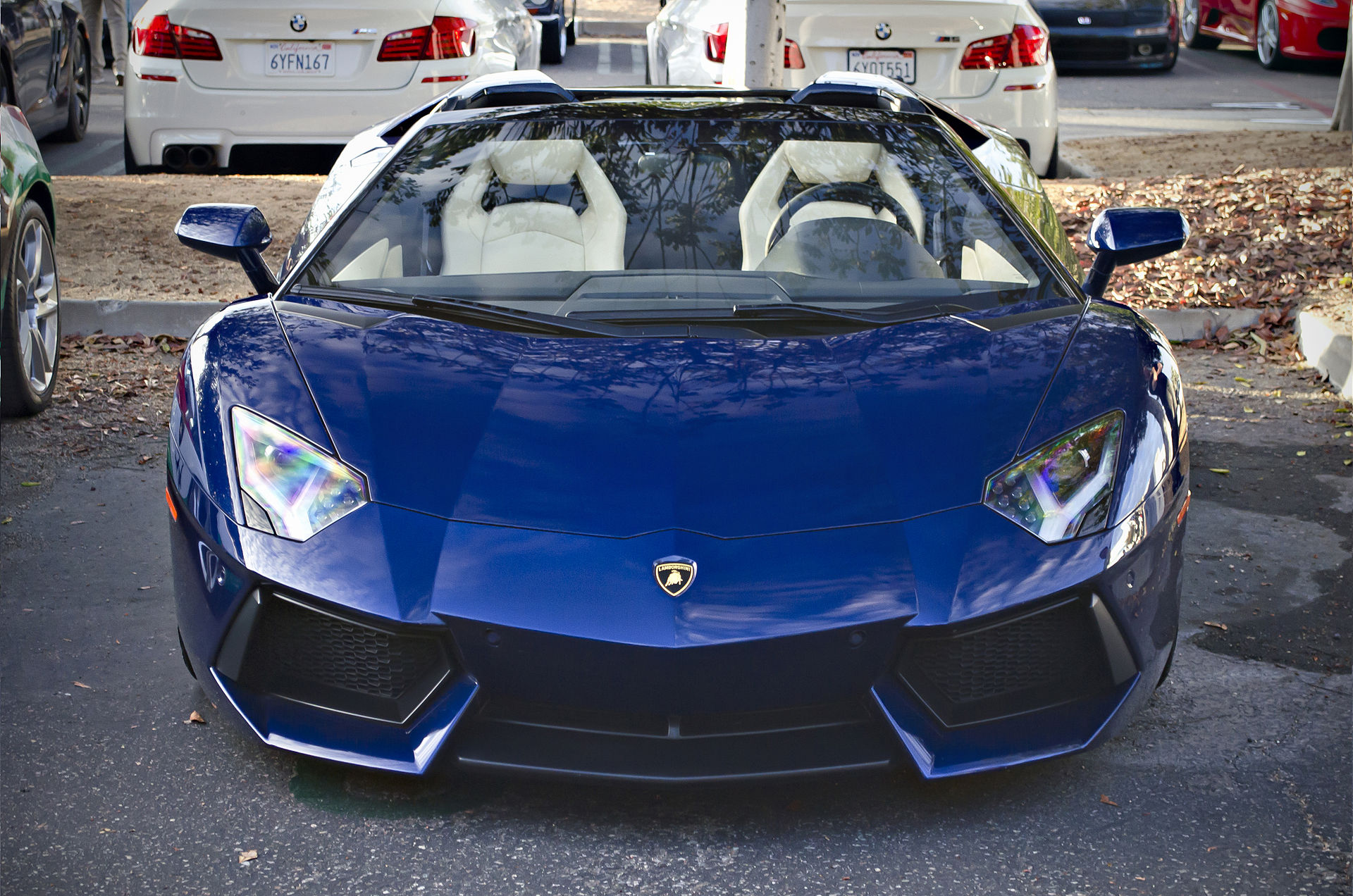
Current Market Pricing and Trends: The Aventador Value Landscape in 2026
Based on completed sales data from Bring a Trailer, Cars and Bids, and private dealer networks, here's what the market is actually doing:
Early Aventadors (2011-2015): Stable to slightly appreciating. The LP700-4 and SV variants are holding value well, with modest appreciation of 1-3% annually. These are becoming more valuable as reference points for the platform's history.
S and Mid-Range (2017-2018): Flat to slightly depreciated. These volume variants are struggling because collectors are specifically seeking limited editions or performance-focused variants. If you bought an S for $450K in 2020, you're looking at $420K-$440K today.
SVJ (2018-2021): Actively appreciating, 4-6% annually. Bring a Trailer data shows SVJ vehicles consistently selling 5-12% above reserve prices. The Nürburgring record and active aero have captured collector imagination. Low-mileage examples are particularly sought after.
Ultimae (2022): Rapidly appreciating, 8-12% annually. These are the hottest segment. A 2022 Ultimae Roadster that cost $575K to buy new is now worth $750K-$850K depending on mileage and specification. This is real, documented appreciation happening right now.
Historical Parallels: How Past Lamborghinis Transitioned to Classics
Understanding how prior Lamborghinis became valuable helps predict the Aventador's future:
Countach to Diablo (1990-2001)
The Countach production ended at roughly 2,000 units. Early Countachs that sold for $400K-$500K in the 1980s are now worth $2M-$5M depending on mileage and condition. The transition happened gradually — 1990-2000, Countachs were viewed as aging supercars losing relevance. By 2005-2010, they began appreciating as design icons. By 2015, they were firmly established as collectibles.
Timeline: 15 years to collectible status, 25+ years to serious appreciation. The Aventador is on an accelerated timeline because awareness of "last NA V12" status is immediate, not gradual.
Diablo to Murciélago (2001-2010)
Diablo production ended in 2001 with approximately 2,884 units built. In 2001-2005, Diablos were aging supercars. By 2010, they were solidifying as collectibles. Today, a 1999 Diablo VT coupe is worth $400K-$550K, having appreciated roughly 3-4% annually over 20 years.
The acceleration began around 2015 when collectors realized Lamborghini's V12 engines were becoming historically significant. Now Diablos are appreciating 5-7% annually — faster than when they were younger.
Murciélago to Aventador (2010-Present)
The Murciélago represents the immediate predecessor. Production ended in 2010. In 2010-2015, Murciélagos were depreciating like normal supercars. By 2018, appreciation had begun. Today, a 2006 Murciélago 6.2 with 20,000 miles is worth $280K-$350K — roughly holding value with modest appreciation. By 2030, when the Aventador is fully established as the "final NA V12," the Murciélago will likely be worth $350K-$450K.
This matters: the Aventador is benefiting from accelerated collectibility because the discontinuation of naturally aspirated V12s is widely understood immediately. When the Countach ended in 1990, nobody knew it was the "last naturally aspirated mid-engine Lamborghini" because turbos hadn't emerged as dominant. The Aventador benefits from hindsight and industry trends that make its historical significance obvious.

The Revuelto Effect: How the Successor Increases Aventador Desirability
Lamborghini's new Revuelto is a hybrid V12 starting at $645,000. Here's what matters: its existence guarantees Aventador appreciation. Collectors now have a choice: own the last naturally aspirated V12 Lamborghini (Aventador) or own the first hybrid V12 Lamborghini (Revuelto). The Revuelto will be faster, more efficient, and more modern. But it won't have the mechanical purity the Aventador represents.
This is exactly what happened with the Murciélago when the Aventador arrived in 2011. The Aventador was faster and more modern. But the Murciélago's last gasp of naturally aspirated power became more desirable, not less. The Murciélago went from appreciating 1-2% to 4-5% annually the moment the Aventador was released. The Aventador will follow the same trajectory now that the Revuelto exists.
In fact, Lamborghini is already selling the narrative: the Aventador is "the last" and the Revuelto is "the first." Both will become collectible, but in different categories. The Aventador becomes the pure-engine classic. The Revuelto becomes the hybrid pioneer. They don't compete — they complement each other in the collector's eye.
Specs That Command Premiums: The Details That Add $50K-$200K
Not all Aventadors are priced equally. These specific configurations command measurable premiums:
Roadster vs. Coupe
Roadsters command 8-15% premiums over coupes, all else being equal. A $700K coupe becomes an $800K+ roadster. This is consistent across all variants and reflects collector preference for open-air driving and visual drama.
Special Edition Colors
Verde Mantis, Giallo Inti, Arancio Borealis, and Blu Cepheus command 8-20% premiums. A $600K white Aventador SVJ becomes a $680K+ Verde Mantis SVJ. Black and white are cheapest. Matte finishes command 2-5% premiums over standard paints.
Factory Carbon Fiber
Original factory carbon fiber options (exterior, interior, engine bay) add 3-8% to value. Aftermarket carbon fiber reduces value slightly because it's not factory-original.
Low Original Mileage
The first 10,000 miles are priced equally in the market. But the difference between 15,000 miles and 25,000 miles is worth $20K-$40K. Between 25,000 and 40,000 miles: another $30K-$60K drop. Collectors view these thresholds as wear markers — once a car breaks 20,000 miles, its "low-mileage collectible" status begins to diminish.
Ownership as Collector: Maintenance Costs and Keeping Value Intact
Maintaining an Aventador as a collector car requires discipline and investment:
Annual Maintenance (Low Mileage: Under 2,000 miles/year)
- Oil and fluid service: $2,500-$3,500
- Tire rotation and inspection: $600-$1,000
- Annual inspection: $1,500-$2,000
- Total: $4,600-$6,500 annually
Deferred Maintenance Risks
Aventadors that sit too long develop problems. The DCT transmission can develop seal issues ($8,000-$12,000 repair). Engine cover leaks are common ($3,000-$5,000 repair). Fuel system seals degrade ($4,000-$6,000 repair). A seemingly "cheap" Aventador with deferred maintenance will cost more to restore to collector condition than a well-maintained car. Budget accordingly.
Storage and Insurance
Proper collector-car storage: $500-$1,200/month. Collector insurance: $2,000-$4,000 annually for a $600K-$800K Aventador. These costs should factor into your investment analysis.
Complete Aventador Variant Comparison: Which One Should You Buy?
| Variant | Peak Rarity | Collectibility Score | Appreciation Potential (5yr) | Best For |
|---|---|---|---|---|
| LP700-4 (2011-13) | 1,850 units | 7/10 | +15-25% | Historical reference, budget buyers |
| 50th Anniversary | 250 units | 8/10 | +25-35% | Limited edition collectors |
| SV (2014-16) | 644 units | 7.5/10 | +20-30% | Performance + rarity blend |
| S (2017-18) | 2,100 units | 5/10 | +5-15% | Driver cars, not investments |
| SVJ (2018-21) | 1,550 units | 9/10 | +30-50% | Track credibility + rarity |
| SVJ Roadster | ~800 units | 9.5/10 | +35-55% | Ultimate collectibility |
| Ultimae Coupe | 1,200 units | 9.5/10 | +40-60% | Final edition prestige |
| Ultimae Roadster | 900 units | 10/10 | +45-65% | Maximum appreciation potential |
The Collector's Buying Strategy: How to Acquire an Aventador as an Investment
If you're buying specifically for value appreciation, follow this approach:
Prioritize SVJ and Ultimae variants. These have the momentum, the rarity story, and the performance credibility. Lower-end variants will appreciate 5-15% over five years. SVJ/Ultimae variants should appreciate 30-50%+ in the same period based on historical patterns and current market trends.
Choose roadsters over coupes. The 8-15% premium you pay today becomes a 15-25% advantage in five years as collectors continue preferring convertible variants.
Target specific colors. Verde Mantis, Giallo Inti, Blu Cepheus, and Arancio Borealis. Avoid white, black, and silver if you're optimizing for appreciation. The color premium compounds with time.
Verify complete service history. Get a pre-purchase inspection from a certified exotic inspector. Budget $1,000-$1,500 for the inspection — it's worth every dollar if it saves you from a car with accident history or mechanical problems.
Look at ownership tenure, not just mileage. An Aventador owned by the same person for 5+ years and driven 15,000 miles is healthier than one with 3,000 miles across 4 owners. Stability in ownership signals proper care.
Document everything. Keep the original purchase receipt, all service records, warranty documentation, and authentication paperwork. These increase resale value and confidence for future buyers. We recommend using Automonitor's authentication and documentation process to establish provenance.
Frequently Asked Questions: The Collector Questions We Hear Most
Will the Aventador appreciate faster if I don't drive it?
No. Driven cars with proper maintenance appreciate faster than parked cars because they're mechanically healthier. An Aventador driven 5,000 miles per year and properly maintained will be worth more than one that sat with 3,000 miles on the odometer. Drive it, maintain it, preserve it.
Should I wait for prices to drop before buying?
For SVJ and Ultimae variants? No. These are appreciating 8-12% annually. Every month you wait costs you buying power. If you're buying for investment, act now. For S and mid-range variants, you could reasonably wait — they're not appreciating significantly.
What's the biggest risk to Aventador values?
Market saturation in the luxury segment or a major economic recession could deflate appreciation. But historically, naturally aspirated engines become more valuable in economic downturns because they represent heritage and craftsmanship. The bigger risk is buying the wrong variant — an S variant depreciates while an SVJ appreciates.
Is the Ultimae really worth the premium over earlier variants?
Yes. It's the final Aventador ever. Only 2,100 exist worldwide. In 10 years, supply will shrink due to accidents, storage loss, and scrapping. The Ultimae will be more valuable than the SVJ, the SV, and the LP700-4 combined, percentage-wise. The premium you pay today is cheap insurance on future value.
Should I buy in the US or import from Europe?
US-market cars have documented ownership history and regulation compliance advantages. European imports are cheaper upfront but can have tax and regulatory complications when selling. For collectibility, US-market history is easier to verify. We recommend US-market examples if you're optimizing for investment.
Auto Monitor Aventador Investment Guidance
If you're serious about purchasing an Aventador as a collectible investment, Automonitor's concierge service handles the entire process. We source from verified dealers and private collections, arrange independent inspections, verify service history, and negotiate on your behalf. We also provide market analysis to ensure you're buying at the right price for maximum appreciation potential.
Get an Aventador Inspection & Authentication
Automonitor connects you with certified exotic car inspectors who understand every variant, every problem, and every value factor. Verify originality, document provenance, and buy with confidence.
Schedule an Inspection →The Final Verdict: Is the Aventador a Classic? It Already Is
The Lamborghini Aventador isn't becoming a classic — it's already one. The final naturally aspirated V12 Lamborghini will appreciate in value, with SVJ and Ultimae variants leading the charge. Historical precedent, scarcity of final variants, and the psychological impact of "last NA V12" status virtually guarantee appreciation.
The question isn't whether it will appreciate. It's whether you can access the right variant at the right price before the market fully recognizes the opportunity. SVJ and Ultimae models are appreciating 8-12% annually right now. That window won't stay open forever.
Buy with discipline. Prioritize SVJ or Ultimae. Choose roadsters and distinctive colors. Maintain meticulously. Document everything. And understand that you're not just buying a car — you're buying the endpoint of naturally aspirated supercar engineering, a design icon from a legendary carmaker, and an asset that history suggests will be worth substantially more in five years than it is today.
For guidance on finding, inspecting, and acquiring the right Aventador, Automonitor is here to help. We've sourced and authenticated hundreds of exotic vehicles, and the Aventador investment story is one of the strongest opportunities we're seeing in the market today.
Ready to Find Your Aventador?
Automonitor authenticates provenance, verifies service history, and connects you with the right Aventador variant for your collection. Start your search with market data and expert guidance.
Begin Your Search →