
Is a Rolls Royce Spectre Worth Buying?
A comprehensive analysis of the world's first ultra-luxury electric car — from its 577 hp electric powertrain to its $420,000 price tag and everything in between.
The Short Answer: Yes, If You Understand What You're Buying
The Rolls Royce Spectre is worth buying — but only if you're purchasing it for the right reasons. This isn't a car designed to impress car enthusiasts or rack up track times. It's designed to redefine what luxury means in the electric age, and in that mission, it succeeds completely.
The Spectre represents a seismic shift in luxury automotive philosophy. For over a century, Rolls Royce has defined itself through mechanical perfection and engineering theater. The Spectre trades mechanical theater for psychological theater — 260 miles of silent, imperceptible acceleration that feels less like driving and more like floating on an invisible cloud of money.
If you're someone who values the Rolls Royce experience — that sensation of being utterly separated from the mechanical complexities of motion — the Spectre delivers it more completely than any car Rolls Royce has ever built. The weight, the sound deadening, the material quality, and the electric powertrain's instant torque all combine to create something genuinely unique in the automotive landscape.
The catch? The Spectre costs $420,000 at the base MSRP, with typical bespoke configurations running $480,000 to $600,000+. It's the most expensive production electric car on Earth. You need to be genuinely comfortable with that investment to understand whether it's worth it.
What the Spectre Is: Rolls Royce's Revolutionary Bet on Electric
The Rolls Royce Spectre, launched in 2024, is the company's first all-electric production vehicle and represents a watershed moment in ultra-luxury automotive design. This is not a conversion of an existing platform — it's a ground-up rethink of what a Rolls Royce should be when unshackled from internal combustion.
Built on Rolls Royce's proprietary Architecture of Luxury platform with integrated battery packs, the Spectre is a two-door fastback grand coupe that measures 18.3 feet long and weighs an eye-watering 6,559 pounds. That weight — the heaviest Rolls Royce has ever built — is no accident. Every kilogram is intentional, designed to create the kind of mass-induced ride quality that no suspension tuning can replicate.
The electric powertrain produces 577 horsepower and 664 pound-feet of instant torque. While those numbers don't lead the performance chart, they're more than adequate for a car that weighs as much as a small house. Zero to 60 mph happens in 4.4 seconds — brisk for a car of this mass, though not supercar-fast. The Spectre maxes out at 155 mph, electronically limited for stability and range preservation.
The 112 kWh battery provides an EPA-estimated 260 miles of range — adequate for luxury use but limiting for long road trips without charging access. DC fast charging at up to 195 kW allows 80-point charging in roughly 40 minutes under ideal conditions, though real-world results vary based on temperature and charger availability.
The Spectre isn't trying to be the fastest or most efficient electric car. It's trying to be the most Rolls Royce electric car ever made — and that distinction matters.
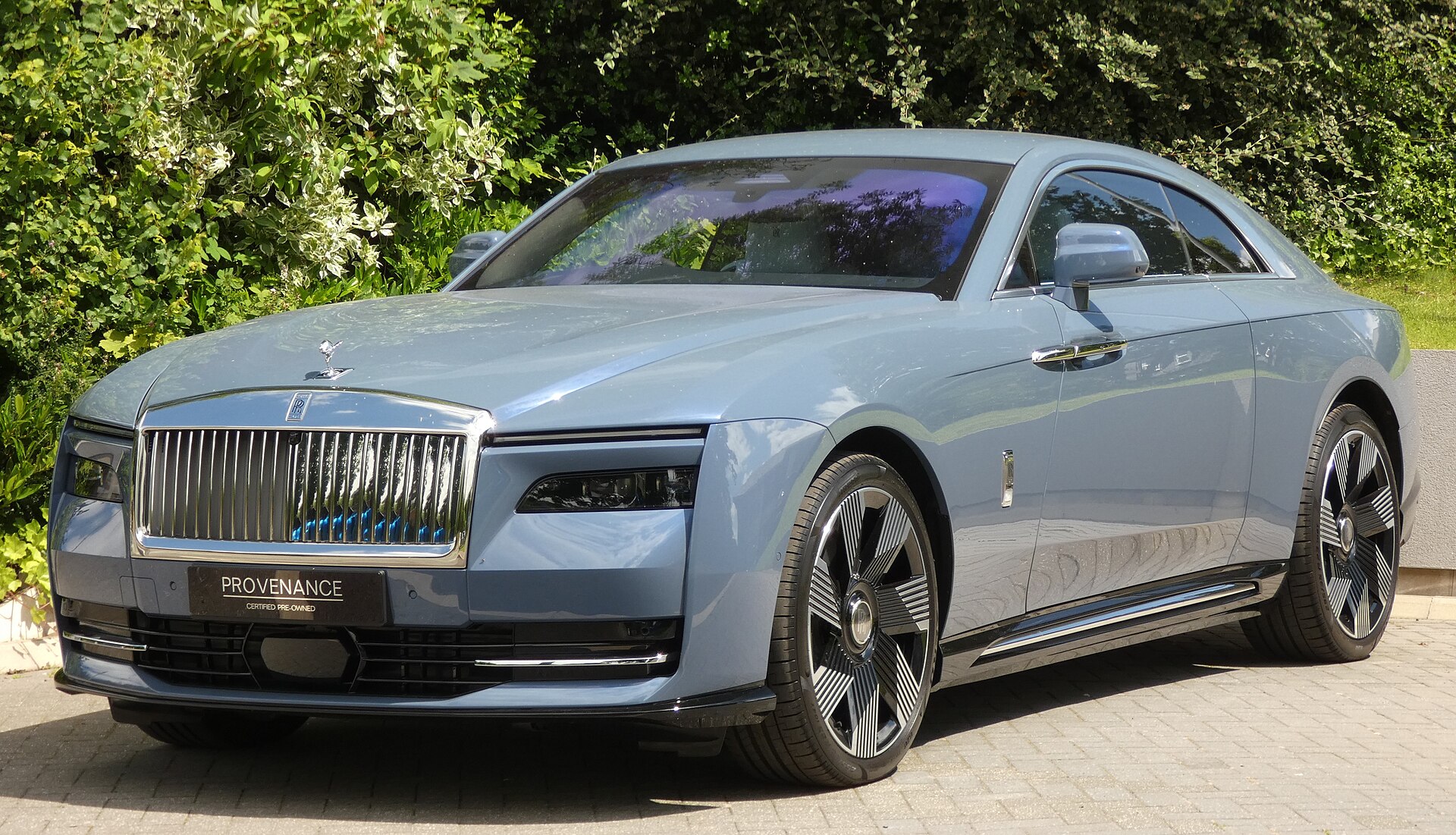
Ultra-Luxury Meets Electric: The Most Refined Cabin Ever Conceived
The interior is where the Spectre reveals its true genius. This is not a luxury car with an electric powertrain bolted underneath. This is a car designed from the ground up to make electric propulsion feel fundamentally superior to everything that came before.
The Spectre features the iconic Starlight headliner with over 5,000 hand-stitched fiber optic lights, a feature Rolls Royce has offered for years but never executed with this level of sophistication. The Illuminated Fascia — a full-width light show across the dashboard — sets the tone the moment you open the coach-hinged rear doors.
Speaking of doors: the Spectre's rear-hinged doors open with a hydraulic pause and silent close. Combined with the Starlight roof, they create a theatrical moment unmatched in the automotive world. The Spirit of Ecstasy statue (the iconic Rolls Royce mascot) now retracts electrically for parking in tight spaces — a small detail that perfectly encapsulates how thoughtfully this car was engineered.
The interior architecture features a split-level dashboard, with the lower section designed for technical controls and the upper section devoted purely to luxury materials. Leather sourced from hides that meet Rolls Royce's exacting standards covers every available surface. The wood trim uses veneers from sustainably harvested forests, then polished to a finish so deep you can see light reflecting off three layers below the surface.
But here's what makes the Spectre genuinely special: the silence. An electric car is inherently quiet, but the Spectre takes that quiet and elevates it into something transcendent. Multi-layer acoustic glazing, foam-injected panels, and vibration-dampening suspension components all work in concert to create an environment so acoustically isolated that normal conversation feels oddly intrusive.
This silence is intentional. Rolls Royce engineers discovered that when you remove engine noise, you must be hyperaware of every other sound. So they eliminated them. Road noise is virtually absent. Wind noise is negligible. The only sound you hear is the sound you deliberately make — the subtle whisper of tires on pavement, the soft beep of the turn signal, the gentle hum of climate control adjusting the cabin temperature.
Performance and Handling: Wafting, Not Warfare
The Spectre isn't designed for driving excitement in the traditional sense. It's designed for the sensation of weightlessness — the feeling that you're not driving a car, but rather piloting a floating pod insulated from the external world.
The 577 horsepower electric motor delivers 664 lb-ft of instant torque, producing acceleration that would embarrass most luxury sedans. But you wouldn't know it from the driving experience. The Spectre accelerates with such smoothness, such completeness of response, that 0-60 in 4.4 seconds feels somehow inevitable rather than thrilling.
The air suspension adapts continuously to road conditions, using cameras and sensors to pre-adjust damping before the wheels even encounter bumps. Combined with the mass of the vehicle — those 6,559 pounds working in concert with suspension geometry — the result is a ride quality that genuinely seems to float above the road surface.
Regenerative braking means you almost never need to use the traditional brake pedal. Lifting off the accelerator initiates one-pedal deceleration that's so seamless passengers won't realize the car is slowing until it comes to a complete stop. This isn't a performance feature — it's a luxury feature, designed to make deceleration feel as smooth and effortless as acceleration.
The steering feels heavier than expected for an electric car, a deliberate choice to maintain the sense of weight and substance even though there's no engine fighting against the wheels. It's not sporty, but it's precisely calibrated to feel responsive without being nervous.
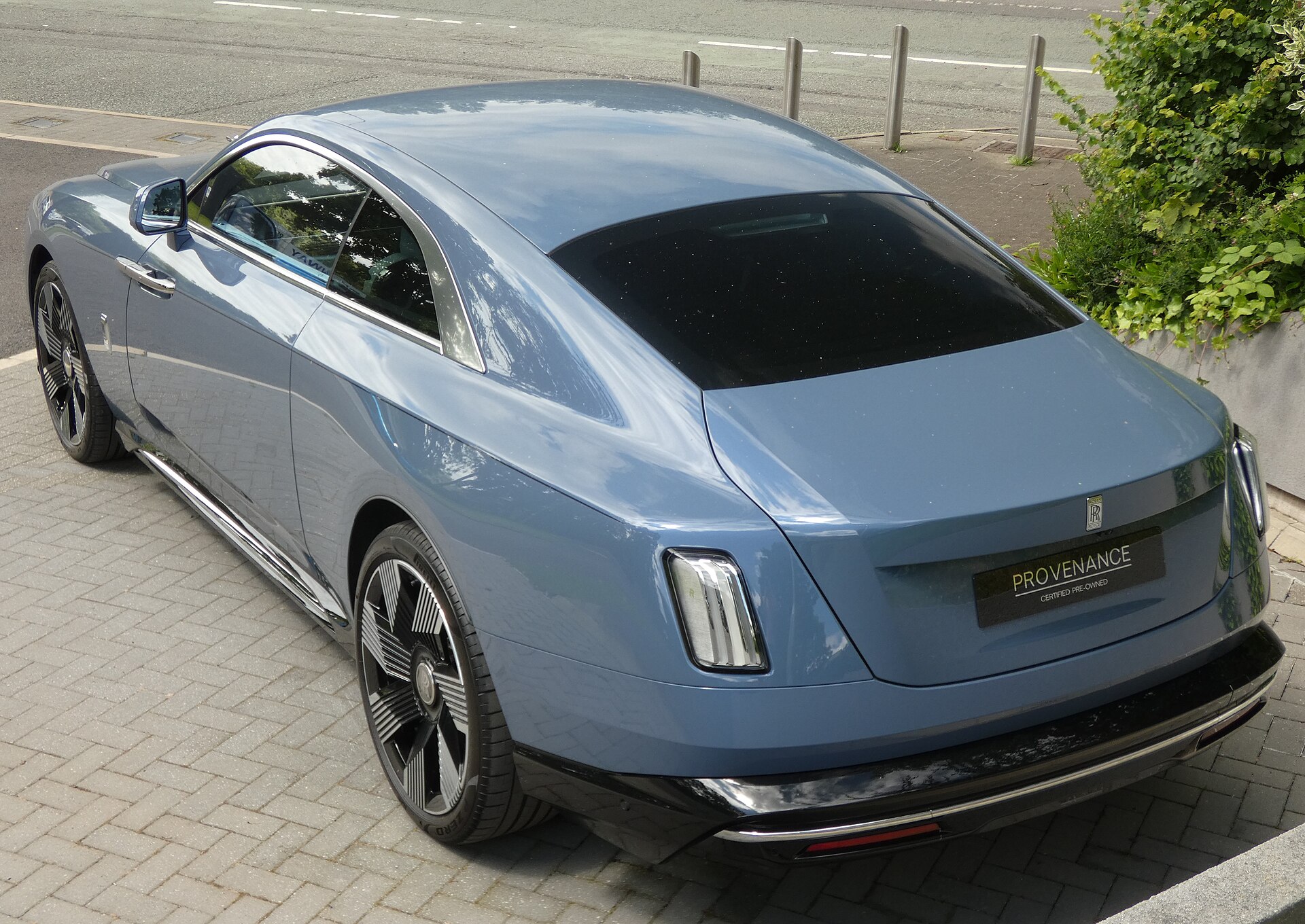
The Real Cost: Purchase Price Is Just the Beginning
The Spectre's base MSRP of $420,000 makes it not just an expensive car, but the most expensive production electric car on the planet. But the real price most buyers pay is considerably higher.
Rolls Royce's philosophy is bespoke customization. Almost every buyer adds features, finishes, and specifications that push the total price into the $480,000 to $600,000+ range. These aren't bolt-on performance upgrades — they're materials upgrades, trim options, and paint finishes that represent hundreds of hours of hand labor.
But purchase price is only one cost dimension. Here's what the complete ownership picture looks like:
| Expense Category | Annual Cost | Notes |
|---|---|---|
| Electricity (charging) | $1,200–$1,600 | 260-mile range at 3-4 miles/kWh efficiency |
| Insurance | $10,000–$18,000 | Specialty coverage for exotic EVs |
| Maintenance & Service | $3,000–$5,000 | Significantly less than ICE Rolls Royce |
| Registration & Taxes | $2,000–$4,000 | State-dependent, varies by location |
| Tires (amortized) | $2,000–$3,000 | Performance tires every 25K–35K miles |
| Total Annual Running Cost | $18,200–$31,600 | Excludes depreciation & major repairs |
The big surprise: annual running costs are actually lower than a traditional Rolls Royce Ghost, because electric motors require virtually no routine maintenance. No oil changes. No transmission service. No spark plugs or fuel filters. Just electricity, insurance, tires, and the occasional scheduled inspection.
The massive wildcard is insurance. The Spectre is so new, and so expensive, that insurance quotes from specialty providers can be shocking. Some buyers report annual premiums exceeding $15,000 just for coverage. That completely changes the economics for some buyers.
Get Expert Guidance on Spectre Ownership
Automonitor connects you with specialists who understand the economics, charging infrastructure, and true cost of Spectre ownership. Don't buy blind.
Talk to an Expert →Comparison Table: Spectre vs Ghost vs Taycan Turbo S vs Mercedes EQS
The Spectre doesn't have true competitors in the traditional sense — it operates in its own segment. But for context, here's how it stacks up against cars with similar positioning or similar price points:
| Category | Spectre | Ghost | Taycan Turbo S | EQS 580 |
|---|---|---|---|---|
| Base Price | $420,000 | $310,000 | $185,000 | $120,000 |
| Powertrain | Electric | Twin-Turbo V12 | Twin-Turbo Hybrid | Electric |
| Horsepower | 577 | 563 | 938 | 516 |
| 0–60 mph | 4.4s | 4.6s | 2.8s | 4.3s |
| Range/Fuel | 260 miles | 450 miles (gas) | 280 miles | 350 miles |
| DC Fast Charging | 195 kW (40 min to 80%) | N/A | 270 kW (23 min to 80%) | 200 kW (31 min to 80%) |
| Annual Insurance | $10K–$18K | $5K–$12K | $3K–$7K | $2K–$5K |
| Luxury Experience | Maximum | Maximum | High | High |
| Depreciation Unknown | Too New | ~5% annually | ~8% annually | ~6% annually |
The Spectre's closest competitor is its own predecessor, the Rolls Royce Ghost, which costs $310,000 and offers a traditional V12 experience. The Ghost is easier to refuel (any gas station) and has more familiar performance characteristics, but it can't match the Spectre's quiet, the Spectre's instant torque, or the Spectre's technological sophistication.
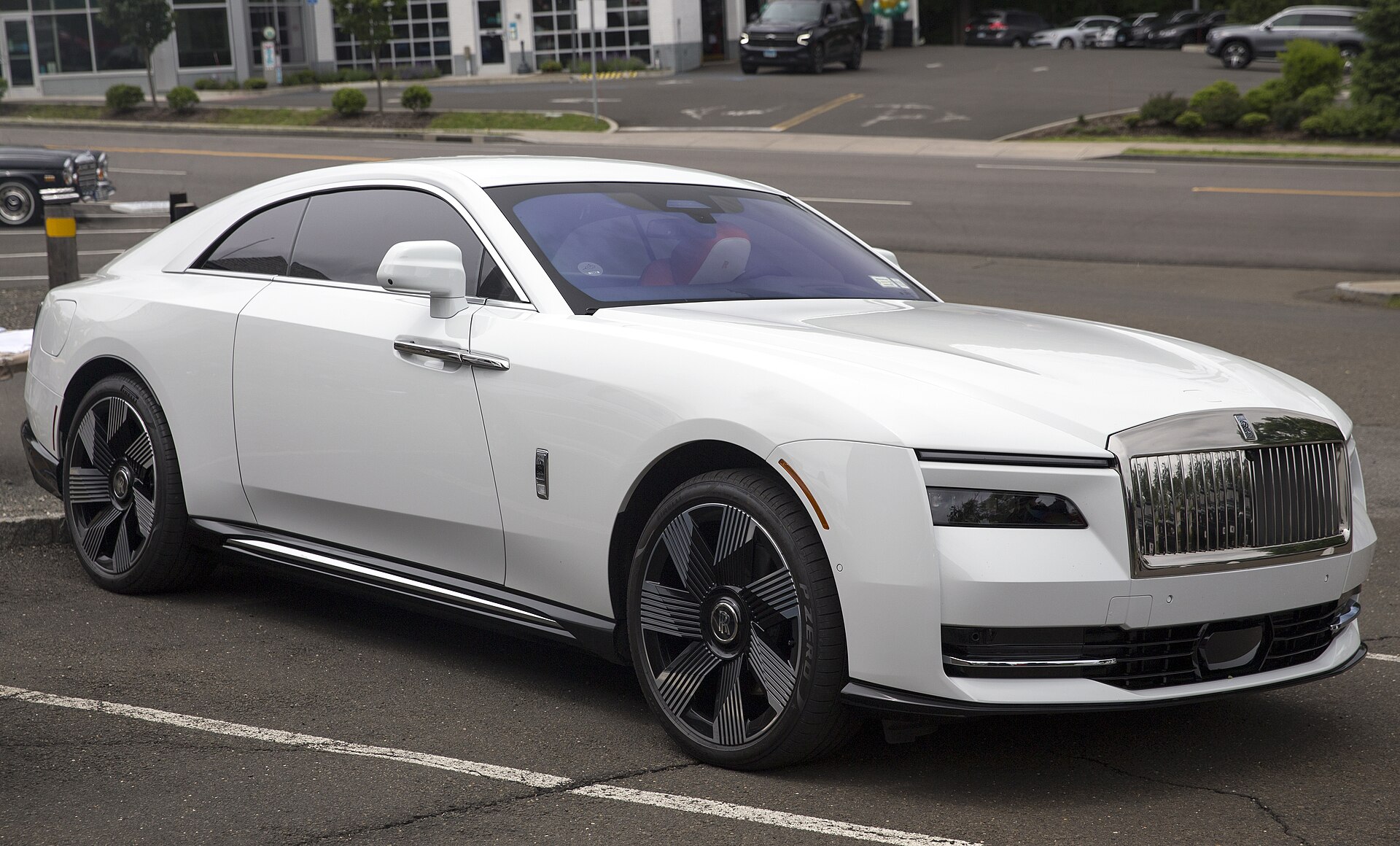
Range Reality: 260 Miles Is Enough — But Just Barely
The 260-mile EPA range is adequate for daily driving and weekend trips, but it creates genuine operational constraints that buyers must accept before purchasing.
In real-world testing, the Spectre achieves between 3.0 to 4.0 miles per kWh depending on driving style, temperature, and speed. This means realistic daily range is somewhere between 240 and 320 miles under favorable conditions, dropping to 200-240 miles in cold weather.
For buyers accustomed to Rolls Royce ownership — people who typically own homes in multiple locations — this means planning charging access at each property. If you're a Spectre owner with homes in New York, Miami, and Los Angeles, you need Level 2 chargers (6.6-11 kW) at each location. Overnight charging provides 30-50 miles of range per hour, meaning a full overnight charge adds 180-240 miles.
DC fast charging at 195 kW is slower than the Porsche Taycan Turbo S (270 kW) and Tesla Superchargers, but adequate for road trips if you're willing to pause every 200-250 miles for 30-40 minutes. This is fine if you value time over speed. It's frustrating if you're accustomed to simply pointing the car toward a destination and driving until you arrive.
The real constraint: charging infrastructure. While North America now has decent DC fast charging networks, the experience is still fragmented. Some chargers work reliably. Some are broken. Some require compatibility adaptors. The Spectre uses CCS (Combined Charging System) connectors, so you have access to Tesla Superchargers (with an adaptor) and Electrify America, but planning long trips requires research that buyers of traditional Rolls Royce models are unaccustomed to doing.
Reliability: Unproven, but Fundamentally Sound
The Spectre is new — launched in 2024, with very few units in customer hands. Long-term reliability data simply doesn't exist yet. However, the fundamental architecture suggests reliability should be excellent.
The electric motor, battery pack, and power electronics are sourced from suppliers with extensive EV experience. The multi-motor drivetrain (one motor per rear wheel in the current configuration) means no single-point failure can disable the car — if one motor fails, the other maintains propulsion.
The battery pack is guaranteed for 10 years/unlimited miles with capacity degradation to no less than 80% of original capacity. Real-world data from Tesla, Porsche, and Lucid suggests EV batteries actually degrade more slowly than originally predicted, so the 80% floor may never be reached on most units.
The suspension, steering, brakes, and climate control all use proven Rolls Royce designs with known reliability records. The software stack is more sophisticated than traditional Rolls Royce systems, but Rolls Royce has partnered with BMW (its parent company) to ensure comprehensive testing and validation.
The real question is long-term: what happens after 8-10 years when the battery warranty expires? Will the Spectre's 6,559-pound mass damage battery longevity? Will the sophisticated suspension systems hold up to the additional weight that electric motors don't offset? We won't know for several more years.
When the Spectre Makes Sense: The Right Buyer Profile
The Spectre is worth buying if you match this profile:
You have multiple homes with charging infrastructure. The Spectre's range means you need reliable charging access at your primary residence and any secondary locations you visit regularly. Apartment dwellers and frequent road trippers should reconsider.
You value silence and isolation above all else. The Spectre's greatest strength is its ability to insulate you from the mechanical world. If that appeals to you more than driving engagement or performance thrills, this is the right car.
You're buying the Rolls Royce experience, not the electric experience. If you're considering the Spectre because you want an exotic EV or cutting-edge performance tech, you're buying for the wrong reasons. The Porsche Taycan Turbo S is faster. The Mercedes EQS is more affordable. The Spectre is about luxury redefined for the electric age.
You can afford the total cost without financial strain. $420,000 base price plus $480,000 to $600,000+ in typical bespoke configurations plus $18,000-$31,000 annual running costs plus potentially high insurance. This needs to be easy money, not strained money.
You're comfortable being an early adopter. The Spectre lacks long-term reliability data. You're accepting some risk in exchange for being the first in your social circle to own this particular statement car.
When NOT to Buy: Reasons to Walk Away
The Spectre is not worth buying if any of these apply:
You do frequent long-distance driving. If you regularly drive more than 250 miles without stopping, the Spectre's range and charging speed will frustrate you. Keep the Ghost or consider the Porsche Taycan Turbo S.
You want proven long-term reliability. The Spectre is too new. If peace of mind matters more than innovation, wait 5+ years for real-world data or choose an established model like the Ghost or Mercedes S-Class.
You want performance or driving engagement. If you buy a Rolls Royce for performance, you're making a category error. The Spectre is slower than a Taycan Turbo S and handles less dynamically than a Porsche 911 Turbo S. That's by design, not accident.
You lack home charging infrastructure. The Spectre is fundamentally designed around home charging. Public charging is a supplementary capability, not the primary charging method. Without home charging, ownership becomes operationally complex.
You're price-sensitive. There's no luxury discount here. You're paying maximum price for an unproven, undesired product category. Wait for second-generation models or competitor entries before expecting any pricing relief.
Depreciation Outlook: Uncertain Territory
The Spectre is too new to have genuine depreciation data. But we can make educated inferences based on comparable products and Rolls Royce's historical depreciation patterns.
Traditional Rolls Royce models depreciate approximately 5% annually, which is exceptional for ultra-luxury cars. However, the Spectre is in a different category — it's the first electric Rolls Royce, built on an unproven platform, with unknown long-term reliability characteristics.
The Porsche Taycan, a performance EV launched in 2019, has depreciated approximately 8% annually. The Mercedes EQS, launched in 2022, shows early signs of depreciating 6-7% annually. If the Spectre follows Rolls Royce's historical patterns, you might see 5% annual depreciation. If it follows luxury EV patterns, you might see 7-8%.
This means a $500,000 Spectre (including bespoke options) purchased today would theoretically be worth $475,000 in one year, $452,500 in two years, and $430,875 in three years — a loss of roughly $70,000 over three years before considering maintenance and insurance.
However: limited production means scarcity value. If Rolls Royce produces fewer than 2,000 Spectres annually (current indications suggest this), early units might appreciate or hold value better than projected, particularly if they develop the "last of their kind" prestige the Lamborghini Huracan enjoys.
AutoMonitor's Role: Tracking Market Evolution
AutoMonitor continuously tracks Spectre inventory, pricing trends, and early used market data. As these cars begin to appear on the secondary market, real depreciation patterns will emerge. If you're considering a Spectre, checking AutoMonitor's market data helps you understand current pricing and what recent sales actually achieved versus asking prices.
We also provide guidance on where to buy, new versus used decisions, and timing optimization for Spectre purchases.
The Final Verdict
The Rolls Royce Spectre is worth buying if you understand that you're not buying a car — you're buying a statement about the future of luxury. You're paying a substantial premium ($110,000+ more than a Ghost) for the psychological experience of driving in complete silence, the convenience of home charging, and the distinction of owning the world's most expensive production electric car.
That's not a rational financial decision. It's a luxury decision. And if you have the means and the inclination, luxury decisions don't need to be rational.
The Spectre succeeds completely at what it sets out to do: redefine ultra-luxury for the electric age. It's silent where the Ghost is quiet. It's smooth where the Ghost is smooth. It's isolated from the external world in a way that no internal combustion engine can achieve.
Is that worth $420,000 to $600,000+? If you're asking the question, you probably don't have the means to buy one. If you have the means and are asking the question, the answer is yes — as long as you understand the full operational and financial picture, have access to home charging, and are comfortable with an unproven product category.
For personalized guidance on whether the Spectre fits your needs and lifestyle, Automonitor's expert team can help navigate the decision. We've guided hundreds of ultra-luxury buyers through similar choices, and we'll make sure you end up in the right car for your circumstances.
Explore Spectre Availability & Pricing
Automonitor provides real market data, expert guidance, and connections to authorized Rolls Royce dealers for qualified buyers.
Get Market Data →