Is a Pagani Huayra Worth Buying?
The Pagani Huayra is more than a car—it's automotive art hand-assembled in Modena by visionaries. But at $3–5 million, is it the right investment? Here's what you need to know about the most exclusive V12 hypercar ever created.
The Short Answer: Yes, If You Understand What You're Buying
The Pagani Huayra is unquestionably worth buying—but only if you understand what ownership truly means. You're not buying transportation. You're not buying the fastest hypercar. You're buying a piece of mechanical art that has appreciated 100-200% since launch, is engineered with obsessive precision, and exists in fewer numbers than some limited-edition hypercars produce monthly.
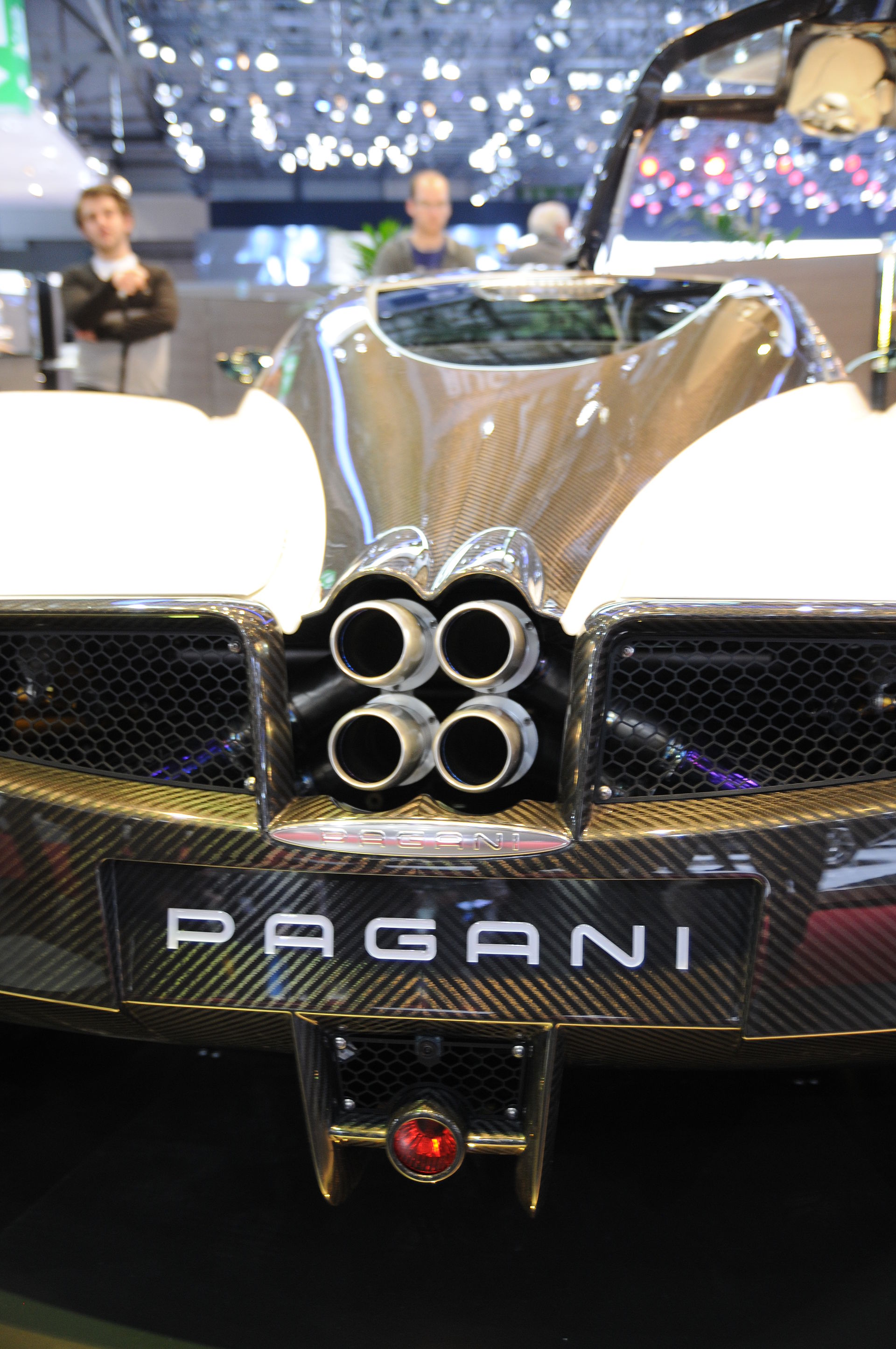
The numbers are staggering: only ~300 Huayras of all variants have been built across all production years. Compare that to Ferrari's output, McLaren's volume, or even Bugatti's relatively limited production. The Huayra is handcrafted in Italy by 50 technicians who spend six months assembling each car. Every carbon fiber panel is hand-laid. Every leather surface is hand-stitched. Every detail reflects Horacio Pagani's obsession with perfection.
From a pure financial standpoint, the Huayra is one of the strongest hypercar investments available. Standard Huayras that launched at $1.5 million now sell for $3–5 million. The track-only Huayra R appreciates even faster. Rarer variants like the BC are effectively impossible to find, and when they appear, prices approach $10 million.
But before you move forward, understand this: owning a Huayra is incompatible with practicality, convenience, and easy maintenance. It's a commitment to experiencing something genuinely rare and extraordinary—or it's not for you.
What Makes the Huayra Special: Automotive Perfection in Modena
Horacio Pagani founded Pagani Automobili in 1992 with a singular vision: create the most technically advanced, artistically beautiful car ever built. The Huayra, which launched in 2012, is the realization of that vision.
The engine is a Mercedes-AMG M158 6.0-liter twin-turbo V12 producing 720 horsepower in standard form and 829 hp in the track-ready BC and R variants. But numbers don't capture the engineering. The V12 runs in a carbon-titanium monocoque chassis that took Pagani eight years to develop. Active aerodynamics—inspired by fighter jet technology—adjust in real-time. The drivetrain is a seven-speed single-clutch transmission from Pagani's partnership with Hubbard Systems, not a standard off-the-shelf component.
Every detail is obsessive. The exposed carbon fiber isn't decorative—it's engineered. Titanium bolts hold the suspension together. The door hinges are forged aluminum. The exhaust pipes are individually tuned. The steering column adjusts electrically. Interior surfaces that most manufacturers plastic-wrap in leather, Pagani sculpts from aluminum and carbon.
The Huayra represents an era when hypercars were designed by visionaries rather than spreadsheets. Horacio Pagani's fingerprints are on every component.
From a performance standpoint, the Huayra remains genuinely competitive in 2026. Zero to 60 comes in 2.8–2.9 seconds depending on variant. Top speed approaches 230 mph. The sound is extraordinary—a naturally aspirated-quality exhaust note from a turbocharged V12 creates a frequency profile that nothing else on earth replicates.
The Variants: Which Huayra to Choose
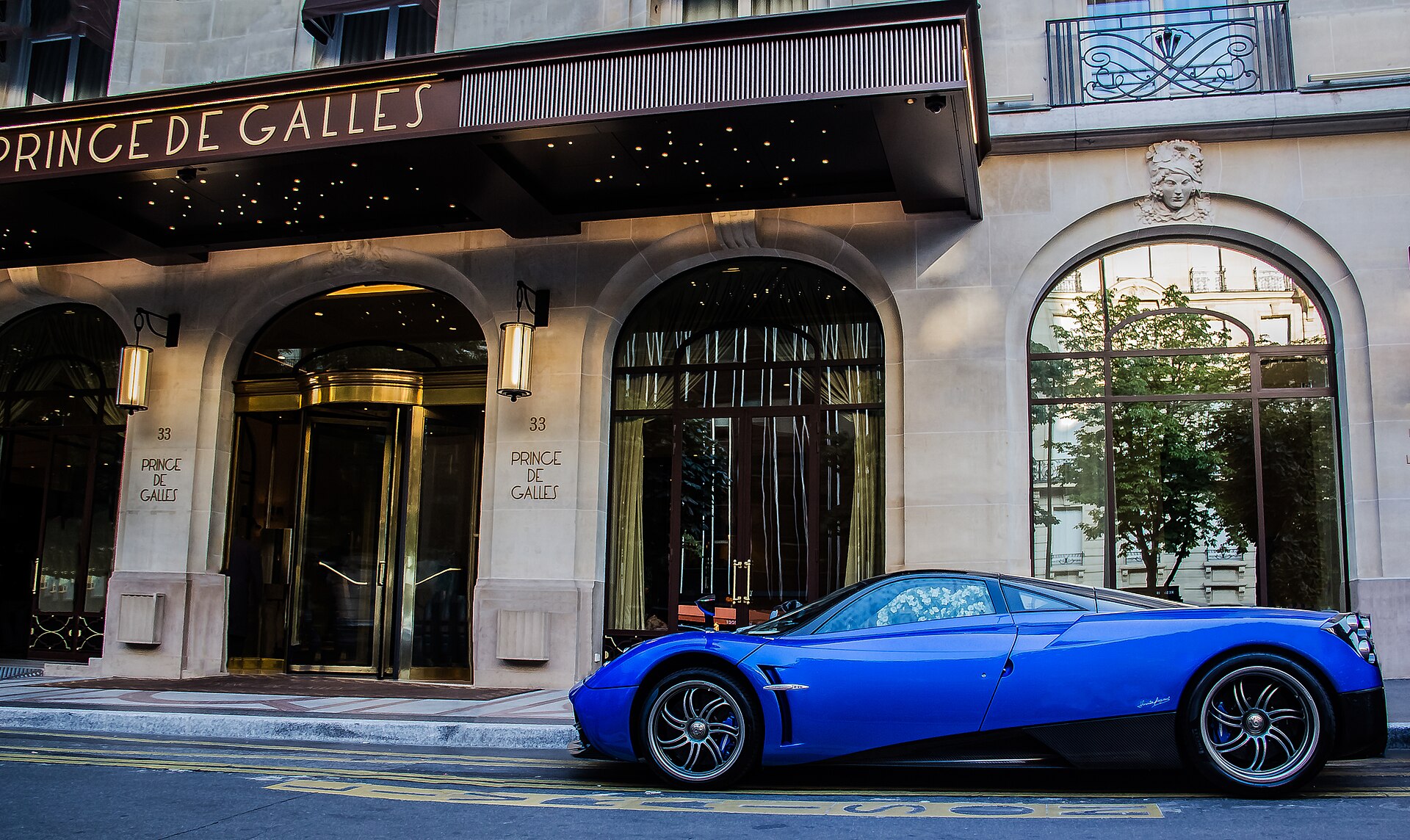
Pagani has released five distinct Huayra variants, each with different specifications, production numbers, and ownership implications:
| Variant | Years | Units Built | Horsepower | Current Price Range |
|---|---|---|---|---|
| Huayra Standard | 2012–2018 | 100 | 720 hp | $2.8M–$4.2M |
| Huayra Roadster | 2017–2021 | 100 | 720 hp | $3.2M–$4.8M |
| Huayra BC | 2017–2021 | 20 | 789 hp | $7.5M–$10M+ |
| Huayra BC Roadster | 2020–2023 | 40 | 829 hp | $8.5M–$11M+ |
| Huayra R (Track-Only) | 2023–Present | 30 | 829 hp | $3.1M base |
The standard Huayra and Roadster are the most attainable entry points. They're not "cheap"—$3–5 million is extraordinary money—but they represent the full Pagani experience at a fraction of BC pricing. The Roadster adds open-top motoring, which some find essential and others consider unnecessary when the car's visceral experience comes from steering, acceleration, and engine sound.
The BC is the driver's car. With 789 hp and aggressive aerodynamic modifications, the BC is 100 pounds lighter and 69 hp more powerful. Only 20 were built, making it significantly rarer. BC Roadsters are rarer still at 40 units. These variants are virtually impossible to find for sale and command stratospheric prices when they appear at auction.
The Huayra R is the purist's choice—track-only, naturally aspirated V12 producing 829 hp, and engineered specifically for circuit performance. It's not street-legal, but it's the most extreme expression of Pagani's engineering philosophy. The R is also the most affordable new Huayra at $3.1 million, though finding one for sale is nearly impossible.
Why It's Worth Buying: Investment, Rarity, and Artistry
Extreme Rarity Creates Price Floors
Total Huayra production across all variants and years: approximately 300 cars. For context, Ferrari produced more F8s in a single month than Pagani will ever produce Huayras. McLaren's 720S production numbers dwarf this figure. The supply constraint is absolute and permanent—Pagani is done building Huayras in current form.
This rarity creates a price floor that's rare in automotive ownership. Even if the broader hypercar market softened, the simple fact that you can never make more Huayras means scarcity protects value. Collectors understand this. Museums want them. Institutions treat them as art assets rather than depreciating vehicles.
Proven Investment Performance
The data is indisputable. A standard Huayra that sold for $1.5 million at launch in 2012 is worth $3.5–4.5 million today—a 140–200% gain over 14 years. Even accounting for maintenance costs, insurance, and storage, the Huayra has outperformed most investment assets over that period.
Rarer variants appreciate even faster. A BC that cost $2.8 million in 2017 can sell for $8–10 million today. Roadsters show similar appreciation trends. This isn't speculation—it's documented in auction results from RM Sotheby's, Bonhams, and private dealer sales across the globe.
Artisanal Craftsmanship as Differentiator
No hypercar is hand-assembled like the Huayra. Yes, every Ferrari has bespoke elements. Yes, every McLaren is individually configured. But the Huayra takes this to another level. Six months. Fifty technicians. Each car is essentially a one-of-one in terms of assembly and quality control.
This artisanal approach means two things: (1) every Huayra has measurable uniqueness that appeals to collectors, and (2) every Huayra reflects the dedication and expertise of the artisans who built it. That craftsmanship resonates with automotive enthusiasts in ways that mass-produced exotics cannot.
The Engine Is Perfection
The Mercedes-AMG M158 is one of the greatest engines ever produced. The twin-turbo V12 produces power linearly from 2,000 rpm to the 7,100 rpm limiter. There's no power surge, no turbo lag in the traditional sense—the boost is managed so precisely that acceleration feels natural and continuous. Combined with Pagani's sophisticated active aerodynamics, the driving experience is as close to "perfect" as any hypercar achieves.

Investment Analysis: How the Huayra Performs vs. Competitors
| Hypercar | Launch Price | Current Value (2026) | Total Appreciation | Annual Appreciation | Production Numbers |
|---|---|---|---|---|---|
| Pagani Huayra | $1.5M | $4.0M avg | +167% | +8.2% | ~300 |
| Bugatti Chiron | $2.6M | $3.2M avg | +23% | +1.8% | 500 |
| Ferrari LaFerrari | $1.4M | $3.8M avg | +171% | +8.4% | 499 |
| Koenigsegg Jesko | $3.0M | $4.2M avg | +40% | +5.7% | ~150 |
| McLaren Senna | $958K | $2.1M avg | +119% | +7.1% | 500 |
The Huayra's investment performance is exceptional. With 8.2% annual appreciation, it outpaces the Ferrari LaFerrari, McLaren Senna, and significantly outpaces the Bugatti Chiron. Part of this comes down to scarcity—300 Huayras versus 500 Chironsalready means supply-side appreciation. But it also reflects buyer preference: when wealthy collectors can choose any hypercar, the Huayra's artisanal appeal becomes increasingly valuable.
Why You Should Hesitate: The Practical Realities of Ownership
Finding One Is Nearly Impossible
The single biggest problem with buying a Huayra: availability. They almost never come to market. Most Huayra owners are collectors who hold their cars for investment appreciation. When one does appear—typically through a specialized dealer like Pagani dealers or brokers—the buying process can take months or years.
There's no online classifieds marketplace where you browse Huayras like you would Lamborghinis or Ferraris. You need connections, patience, and often the willingness to work with dealers in Europe where many Huayras reside.
Maintenance Requires Pilgrimage to Italy
Scheduled maintenance? You ship the car to Modena, Italy, where Pagani Automobili performs service. A basic service runs $8,000–$12,000. Major services, timing belt replacements, or anything requiring internal engine work means the car disappears for 4–6 weeks and costs $25,000–$50,000.
Out-of-warranty repair work is prohibitively expensive. A faulty active aero system component? $30,000–$40,000. Gearbox issues? $80,000+. These aren't speculative costs—they're documented from owners who've shared repair receipts on collector car forums.
There are no independent shops that specialize in Huayra maintenance. You cannot take it to any local mechanic. You cannot get parts from a local dealer. You are entirely dependent on Pagani's service department and the expertise they choose to provide.
Insurance Is Astronomical
Annual insurance for a Huayra runs $30,000–$60,000 depending on driving profile, location, and claims history. Some collectors add additional coverage for storage, transport, and specialized events, pushing annual costs to $75,000+. This is not a $3,000/year insurance situation.
Fuel Economy Is Abysmal
The twin-turbo V12 achieves approximately 8–10 miles per gallon in mixed driving. Premium 98+ octane fuel is required. If you drive the Huayra 3,000 miles annually (typical for a collector car), you're spending $4,000–$5,000 annually on fuel. If you drive it more, those costs spike dramatically.
Storage and Transport
A Huayra cannot sit outside. It requires climate-controlled storage with proper support jacks, and ideally tire pressure monitoring to prevent flat-spotting. Climate-controlled garage space in major cities runs $500–$1,500 monthly. That's $6,000–$18,000 annually just for storage.
Shipping the car between continents costs $5,000–$15,000 per move. If maintenance requires Europe and you're based in the US, you're looking at significant transport logistics.
How It Compares: Huayra vs. Bugatti Chiron vs. Koenigsegg Jesko vs. Ferrari LaFerrari
| Category | Huayra BC | Bugatti Chiron | Koenigsegg Jesko | Ferrari LaFerrari |
|---|---|---|---|---|
| Engine | 6.0L Twin-Turbo V12 | 8.0L Quad-Turbo W16 | 5.0L Twin-Turbo V8 | 6.3L NA V12 + Hybrid |
| Horsepower | 789 hp | 1,500 hp | 1,600 hp | 963 hp |
| 0–60 mph | 2.7s | 2.4s | 2.6s | 2.4s |
| Current Value | $8.5M–$11M | $3.0M–$3.5M | $4.0M–$4.5M | $3.8M–$4.2M |
| Production | 20 | 500 | ~150 | 499 |
| Artisanal Assembly | Handbuilt (6 months) | Industrial production | Bespoke construction | Hand-assembled |
| Reliability | Excellent | Good (complex) | Good | Very Good |
| Usability | Poor (track-focused) | Good (grand tourer) | Fair | Fair |
| Investment Appeal | Exceptional | Moderate | Strong | Strong |
The Bugatti Chiron is the grand tourer—more powerful, more comfortable for long drives, and more accessible. But it depreciates. The Koenigsegg Jesko is the speed demon with the most extreme engineering. The Ferrari LaFerrari is the balanced hybrid expressing the Prancing Horse's heritage.
The Huayra is the artisan's masterpiece. If your priority is speed, the Chiron or Jesko outperform it. If your priority is brand prestige, the Ferrari wins. But if your priority is owning something that is fundamentally unrepeatable—something that exists in smaller numbers than most limited-edition watches and appreciates like fine art—the Huayra is unique.
The Smart Way to Buy: Steps to Securing a Huayra
Step 1: Accept the Timeline
Finding a Huayra for sale can take 6–18 months. If you want a specific variant (BC, Roadster, specific color), timeline extends further. You cannot speed this up. Patience is mandatory.
Step 2: Establish Dealer Relationships
Work with specialty dealers who focus on ultra-rare hypercars. Firms like RM Sotheby's, Bonhams, and select independent brokers have access to Huayras before they hit public auction or listing. Building relationships with these dealers—and understanding their networks—is essential.
Step 3: Verify Service History Thoroughly
Every Huayra should have documented service records from Pagani in Modena. Never buy a car with service gaps. Verify that all scheduled maintenance has been completed. Ask for receipts, service bulletins, and any warranty work history. This documentation directly impacts resale value and ownership experience.
Step 4: Factor in Lifetime Costs
Beyond purchase price, budget:
- Insurance: $30,000–$60,000 annually
- Storage: $6,000–$18,000 annually
- Maintenance: $15,000–$30,000 annually (averaged)
- Fuel: $4,000–$8,000 annually
- Occasional major repairs: $20,000–$50,000 (amortized)
- Total annual running costs: $75,000–$166,000
If these numbers create discomfort, reconsider the purchase. Hypercar ownership should feel financially effortless—if it doesn't, the stress will undermine the pleasure of ownership.
Step 5: Connect with Community
Join Pagani owner groups, forums, and collector networks. Experienced Huayra owners can provide invaluable guidance on maintenance expectations, dealer experiences, and realistic long-term ownership costs. This community knowledge is worth more than any consultant.
Ready to Explore Huayra Ownership?
Automonitor connects you with specialist dealers, curator networks, and expert advisors who specialize in ultra-rare hypercars. We handle the sourcing process so you can focus on the acquisition.
Explore Huayra Options →How to Find a Pagani Huayra: Where Supply Actually Exists
Huayras appear in specific channels. Know where to look:
- RM Sotheby's Auctions: The world's premier auction house for ultra-rare automobiles regularly features Huayras in their sale calendars. Prices at auction can exceed private dealer quotes.
- Specialized Brokers: Dealers like Pagani specialists and global brokers maintain networks of collector cars. Building relationships with these firms is essential.
- Direct from Pagani Owners: Some owners sell privately. Network within collector circles to find cars before they hit public markets.
- European Dealers: A significant portion of Huayras reside in Europe. Italian, German, and Swiss dealers often have access to inventory.
If you want a specific variant—a particular BC Roadster in a specific color—you might need to commission a search that costs $10,000–$20,000 in broker fees. This is normal at this price point. Consider it insurance for sourcing the exact car you want.
The Final Verdict: Is the Huayra Worth It?
The Pagani Huayra is absolutely worth buying if you meet three criteria:
First, you have the financial capacity not just to purchase the car, but to operate it comfortably. Total ownership costs approach $100,000+ annually when you include maintenance, insurance, storage, and fuel. If this figure represents more than 10% of your disposable income, reconsider.
Second, you understand the value proposition. You're buying artisanal craftsmanship, extreme rarity, and investment appreciation. You're not buying practicality. You're not buying daily usability. You're buying a piece of automotive art that happened to have an engine and wheels.
Third, you can accept the inconvenience. Finding one takes months. Maintaining it requires pilgrimage to Italy. Using it means dealing with fuel economy that approaches single digits. Selling it requires working with specialists. If any of this sounds off-putting, the car is not for you.
But if you can meet these three criteria? The Huayra is one of the greatest acquisitions in automotive history. It will appreciate. It will reward you with driving experiences that nothing turbocharged or electrified can replicate. It will connect you with a community of collectors who understand that the rarest, most artisanal cars are the ones worth owning.
Horacio Pagani set out to build the most technically advanced, artistically beautiful car ever produced. Twenty years into production, with only ~300 cars built worldwide, he succeeded. The Huayra isn't just worth buying—it's one of the few cars that will be worth significantly more in ten years than it is today.
Start Your Hypercar Journey Today
Automonitor specializes in connecting collectors with ultra-rare vehicles. Get access to exclusive inventory and expert guidance for your Huayra acquisition.
Begin Your Search →