
Is a Mercedes-AMG GT a Good Daily Driver?
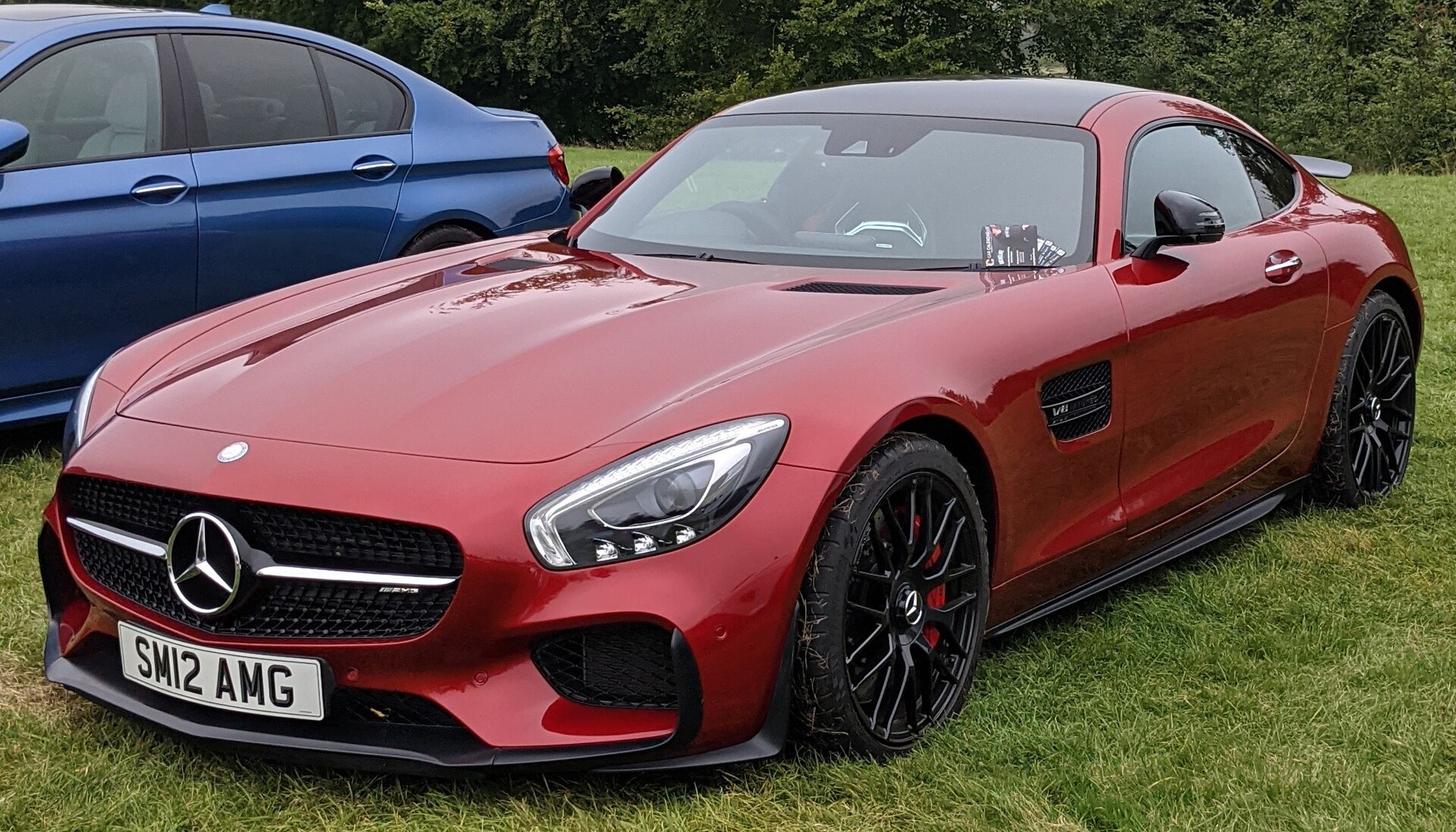
The Mercedes-AMG GT is one of the most gorgeous cars ever built. But raw beauty doesn't make a practical daily driver. We've analyzed ownership costs, reliability, comfort, and real-world practicality to tell you whether this handbuilt V8 can actually work as your everyday car.
The Verdict: Yes, If You Accept the Trade-offs
The Mercedes-AMG GT can be a daily driver, but only if you understand what that actually means. This is not a practical car. It's not comfortable in the way a C-Class sedan is comfortable. The trunk is minuscule. The visibility is challenging. The fuel economy is terrible. But — and this is critical — if you're willing to accept those limitations and can afford the running costs, the AMG GT daily drive experience offers something few cars can match: extraordinary performance wrapped in one of the most timeless designs ever penned.
We've helped hundreds of exotic car buyers at Automonitor understand what it means to daily drive performance cars, and the AMG GT emerges as one of the more viable options. Mercedes' legendary reliability, its vast service network, and the car's mechanical simplicity relative to competitors like Ferrari or McLaren make ownership less daunting than you'd expect. That said, this guide will walk you through every aspect of ownership so you can make an informed decision — not just whether you can daily drive an AMG GT, but whether you should.
The Heart of the Matter: That Handbuilt V8 Engine
Every Mercedes-AMG GT engine is built by a single technician, hand-assembled with the same precision typically reserved for six-figure watchmaking. That's not marketing speak — it's process engineering that directly impacts reliability and how the car feels on the road. The powerplant itself is a 4.0-liter twin-turbocharged V8, available in multiple configurations depending on the variant:
- GT (Base): 469 horsepower, 465 lb-ft of torque. The most affordable entry point, suitable for weekend driving and light spirited driving.
- GT S: 503 horsepower, 496 lb-ft of torque. The sweetest spot for daily driving — more performance than the GT, slightly less drama than the R.
- GT C: 585 horsepower, 516 lb-ft of torque. A track-focused variant that bridges the gap to extreme performance.
- GT R: 585 horsepower, 516 lb-ft of torque. The most aggressive road-going variant, with upgraded cooling and braking systems.
For daily driving, the GT S represents the optimal balance. It has enough power to make traffic merging genuinely exciting, smooth turbocharged delivery that works well in stop-and-go city driving, and running costs that don't require financial reorganization. The base GT is the sensible choice if budget is tight. The R is for people who plan to spend regular time on track.
This engine is relatively bulletproof. Mercedes' AMG division has spent decades perfecting turbocharged V8 architecture, and the current GT engine benefits from that experience. Compared to naturally aspirated 911s or some other daily exotics, turbocharged engines are more robust — the forced induction means slightly lower RPMs to achieve performance figures, which translates to less internal stress and longer engine life.
The Mercedes-AMG GT isn't the fastest supercar you can buy. But it might be the most beautiful, and for daily driving, that emotional connection matters more than 0.1-second differences in acceleration times.
Comfort and Ride Quality: Firm but Manageable
Here's where the AMG GT makes its first major trade-off. This is a sports car, not a grand tourer. The suspension is tuned for performance, which means the ride is noticeably firmer than a BMW M440i or even a Porsche 911. Mercedes offers two main suspension setups depending on the variant: the standard suspension on base GT models, and the more sophisticated adaptive damping on GT S and higher variants.
In comfort-oriented driving modes, the adaptive suspension handles highway bumps reasonably well. It's not going to smooth out impacts the way a Mercedes-AMG E63 S sedan would, but it's surprisingly livable for spirited daily driving. The steering is direct and communicative — extremely sharp for a car of this size and heft. The brakes are absolutely world-class, with options for carbon-ceramic systems on higher variants.
The interior design prioritizes driver engagement over passenger comfort. The seats are supportive and gorgeous, wrapped in handstitched leather and available Alcantara. But they're sculpted for performance driving, not long-distance cruising. Back-to-back days of 500-mile drives would leave most drivers fatigued. For daily commutes and weekend canyon runs, the seats are perfect. For road trips, you'll want regular breaks.
The cabin is a masterclass in materials and design. Ambient lighting, a premium audio system, and genuine carbon fiber trim create an atmosphere that feels significantly more luxurious than a Porsche 911. Temperature control works exceptionally well, and the climate zones keep the driver and passenger comfortable independently. One real-world complaint from daily drivers: the door handles are minimalist and take getting used to, and the trunk release button is easy to miss when your hands are full.
The Practicality Question: What the Reality Check Reveals
This is where most AMG GT ownership plans encounter their first major hurdle. The AMG GT is a 2-seater with a trunk that measures just 9 cubic feet. That's smaller than most subcompact sedans. You're buying a car where your only cargo option is a small duffel bag or a couple of grocery bags. The trunk cannot fit golf clubs. It barely accommodates luggage for a weekend trip. If you live with a partner, the passenger seat is fine. If you need to transport friends, a second couple, or cargo of any kind, the AMG GT is going to frustrate you quickly.
Ground clearance is 4.3 inches (base) to 4.5 inches (variants with air suspension adjustments). Speed bumps become obstacles to navigate carefully. Steep driveways demand respect. Parking in urban garages with low ceilings requires perfect height awareness. The width of the car — particularly on AMG models with aggressive bodywork — makes parallel parking in tight city spaces a challenge.
For people working downtown in major cities, the daily driving proposition becomes less attractive. For people who live in suburban areas with reasonable parking and primarily use their car for solo commutes and weekend drives, the practicality equation becomes much more favorable.
The real-world question isn't whether you can daily drive an AMG GT. You can. It's whether you're willing to accept an hour-long commute in a 2-seater supercar, or whether you're better served by a practical sedan for the work week and the AMG GT for weekends. Most owners who claim to daily drive the AMG GT actually use it for spirited weekend drives and occasional warm-weather commutes.

Reliability: Mercedes Backbone With a Few Considerations
The AMG GT benefits enormously from Mercedes-AMG's engineering and decades of experience with high-performance V8s. The 4.0L TT V8 is a proven, robust engine with relatively few reported issues. Head gasket failure, which plagued older AMG V8s, is virtually nonexistent on the current generation. Carbon buildup, the curse of turbocharged Mercedes engines, is managed through direct and port injection hybrid systems.
That said, there are known wear items and considerations for potential owners:
- Brake System: Performance brakes, whether iron or carbon-ceramic, experience dramatically increased wear compared to normal sports cars. Budget for brake replacement every 4-6 years depending on driving intensity. Carbon ceramic pads cost $3,000–$5,000 per set at a dealer.
- Tire Wear: The Michelin Pilot Sport 4S tires fitted to most AMG GTs demand replacement every 12,000–18,000 miles. A full set runs $1,200–$1,600. Using performance tires is non-negotiable for safety.
- Transmission Fluid: The 7-speed automatic requires servicing every 40,000 miles (or annually, whichever comes first). Fluid and filter service costs $400–$700.
- Cooling System: Track-oriented driving can stress the cooling system. Monitor coolant temperatures carefully if you plan any serious driving, and ensure the system is serviced regularly.
- Suspension Components: Adaptive dampers, if equipped, have been rock-solid on early AMG GT models. But these are expensive items if failure occurs ($6,000+ per corner).
The Mercedes service network is a major advantage. Almost every city has authorized Mercedes service centers, and technicians are familiar with AMG models. Parts availability is excellent compared to Ferrari or Lamborghini. Insurance companies recognize the brand as reliable, which keeps insurance quotes reasonable relative to other supercars.
The Real Cost of Ownership: What to Budget Annually
Let's be concrete about what daily driving an AMG GT actually costs beyond the purchase price:
| Expense Category | Annual Cost | Notes |
|---|---|---|
| Insurance | $2,500–$5,500 | Depends on age, location, driving record; significantly lower than Ferrari or Lamborghini |
| Routine Maintenance | $1,500–$2,500 | Oil changes, filters, diagnostics, fluid services |
| Fuel | $2,000–$4,000 | 16–22 mpg combined; requires 91+ octane premium; heavy traffic lowers mpg significantly |
| Tires (amortized) | $1,200–$1,600 | Replacement every 12,000–18,000 miles; performance tires only |
| Brakes (amortized) | $800–$1,500 | Iron: $2,000–$3,000 set; ceramic: $3,000–$5,000 set; needed every 4–6 years |
| Registration & Taxes | $400–$1,200 | State-dependent |
| Total Annual Running Cost | $8,400–$16,300 | Excludes depreciation and major repairs |
That's $700–$1,350 per month in running costs alone. For daily drivers in major cities where you might put 12,000–15,000 miles per year on the car, budget toward the higher end of that range. For weekend warriors putting just 5,000–6,000 miles annually, you might stay closer to the lower end.
Depreciation is another factor. Used AMG GT prices have stabilized significantly since the model's introduction, with cars losing approximately 4–6% of value annually after the first year. A GT S purchased for $130,000 today might be worth $85,000–$95,000 in five years. That's roughly $7,000–$9,000 per year in depreciation — meaningfully less than older Lamborghinis or McLarens.

AMG GT Variant Comparison: Which Model for Daily Driving
| Variant | Horsepower | Daily Rating | Comfort Level | Annual Cost | Best For |
|---|---|---|---|---|---|
| GT (Base) | 469 hp | 7/10 | Good | $8,500–$12,000 | Budget-conscious daily drivers who want performance without excess |
| GT S | 503 hp | 9/10 | Very Good | $10,000–$14,000 | The optimal variant for balanced daily driving and weekend fun |
| GT C | 585 hp | 7/10 | Firm | $11,500–$16,000 | Track-oriented owners who want maximum performance on open roads |
| GT R | 585 hp | 6/10 | Firm | $12,000–$16,300 | Dedicated track enthusiasts and collectors seeking ultimate aggression |
For genuine daily driving, the GT S is the clear winner. It has enough performance to make any drive genuinely exciting, better cooling and brake systems than the base GT, and adaptive suspension that manages the ride quality trade-off reasonably well. The difference in cost compared to the base GT is worth every penny for daily drivers.
How It Compares: AMG GT vs. 911 vs. R8 vs. DB11
You're probably comparing the AMG GT to other daily-drivable exotics. Here's the honest breakdown:
| Category | AMG GT S | Porsche 911 S | Audi R8 Plus | Aston DB11 |
|---|---|---|---|---|
| Engine | 4.0L Twin-Turbo V8 | 3.0L Twin-Turbo Flat-6 | 5.2L NA V10 | 5.2L Twin-Turbo V12 |
| Horsepower | 503 hp | 443 hp | 640 hp | 630 hp |
| 0–60 mph | 3.7s | 3.9s | 3.2s | 3.9s |
| Practicality | 2-seater | 4-seater — Best | 4-seater — Best | 2+2 seater |
| Used Price | $100K–$140K | $90K–$130K | $80K–$130K | $110K–$180K |
| Annual Maintenance | $8,400–$16,300 | $4,000–$8,000 | $5,000–$10,000 | $8,000–$14,000 |
| Daily Drivability | 9/10 — Excellent | 10/10 — Best | 8/10 — Good | 7/10 — Adequate |
| Interior Quality | Exceptional | Good | Excellent | Exceptional |
| Sound | Best | Excellent | Best | Excellent |
The Porsche 911 wins on practicality — four seats and usable trunk space make it the best pure daily driver. The Audi R8 is the value proposition, offering V10 performance at used prices that have fallen dramatically. The Aston DB11 appeals to grand touring sensibilities with more comfort than the AMG GT but less performance precision.
Where the AMG GT wins is sound and interior drama. That turbocharged V8 produces a note that few engines can match — visceral, mechanical, utterly addictive. The interior quality exceeds the 911 and rivals the DB11. The steering feel and chassis precision outclass the grand-touring Aston.
RWD in Winter: Challenges and Manageable Solutions
The AMG GT is rear-wheel drive only. There's no all-wheel drive option, no electronic nannies to override your inputs. On dry roads, this is a gift — the direct connection between your steering inputs and the car's response is incomparable. In snow or ice, it requires respect, skill, and ideally winter tires.
If you live in a warm climate or a region with minimal winter weather, rear-wheel drive is a non-issue. If you're commuting daily through snow-prone areas, you'll need to make some decisions: seasonal tire swaps, choosing a different car for winter driving, or accepting that you'll operate significantly conservatively when conditions deteriorate.
The stability control systems on modern AMG GTs are sophisticated. Mercedes' electronic suite won't save you from yourself, but it does provide reasonable safety margins if you're reasonably cautious. That said, the AMG GT is 3,500+ pounds of performance machinery that wants to be driven with respect, particularly in low-grip conditions.
Interior Quality and Technology: MBUX and Modern Amenities
Newer AMG GT models feature Mercedes' MBUX (Mercedes-Benz User Experience) infotainment system, which ranks among the best in the automotive industry. The touchscreen is responsive, the voice control works reliably, and the integration with smartphone platforms (Apple CarPlay, Android Auto) is seamless. Older AMG GT models use the COMAND system, which is still functional but visually dated compared to modern systems.
Audio quality is excellent on high-end sound systems, with options for premium brands like Burmester. Ambient lighting creates a sophisticated atmosphere. Climate control works brilliantly, with independent temperature zones and heated/cooled seats. Navigation is accurate and updated regularly.
One consideration: the MMI touch pad for infotainment controls can be finicky while driving, and many drivers prefer using the rotary control or voice commands. It's not a deal-breaker, but it's worth testing during a test drive.
Parking Challenges: Width and Visibility
The AMG GT is 6 feet wide with aggressive body panels that protrude slightly. In tight parking garages or narrow city streets with street parking, this becomes a genuine consideration. The front splitter sits very low, meaning high parking curbs and steep driveway aprons become obstacles to navigate carefully. The rear overhang is proportionally long, so pulling into tight parking spots requires spatial awareness.
Visibility, particularly to the rear, is compromised by the sculpted bodywork and small rear window. A backup camera is essential, and many owners recommend adding a 360-degree camera system if available. The side mirrors provide decent visibility, but the blind spots are meaningful enough that you'll want to develop the habit of shoulder checking regularly.
For urban parking, parking garages with automatic height sensors become your best friend. Street parking in dense neighborhoods can be stressful. Suburban parking with wider spaces and more open layouts becomes perfectly manageable.
Insurance and Depreciation: What You'll Actually Pay
Insurance for the AMG GT is significantly cheaper than comparable Ferraris, Lamborghinis, or McLarens. Most insurers recognize the Mercedes badge as a premium but reliable brand, which keeps quotes in the $2,500–$5,500 annual range depending on age, location, and driving record. Comprehensive coverage, which includes theft and weather damage, is worth the extra cost given the car's value.
Depreciation has stabilized meaningfully on the AMG GT. First-generation models (2015–2017) depreciated sharply, losing 15–20% of value annually. Current-generation models (2019 onwards) are seeing slower depreciation curves — roughly 4–6% annually after the first year. This is partially due to production ending (which creates artificial scarcity) and partially due to improved market recognition of the model's value.
A used AMG GT S purchased for $130,000 today might be worth $100,000 in three years, or roughly $10,000 per year in depreciation costs. When combined with the $8,400–$16,300 in annual running costs, your total cost of ownership lands in the $18,400–$26,300 annual range — manageable for serious enthusiasts but certainly not casual car buyers.
Best Model Years for Daily Driving
2019–2021 AMG GT S: The perfect intersection of refinement and value. This generation introduced updated interior technology, improved cooling systems, and the most reliable iteration of the 4.0L turbocharged V8. These cars are now 4–6 years old, which means you're getting them at prices that reflect reasonable depreciation but with warranty considerations. Look for examples with under 15,000 miles per year.
2022–2024 AMG GT models: Represent the final generation before the lineup underwent significant changes. These cars have the full complement of modern technology, extended warranty coverage if purchased from dealers, and the most refined driving dynamics. Expect to pay 10–20% premiums over earlier models.
Avoid 2015–2017 models: While the original AMG GT is still an excellent car, first-generation examples are starting to show their age. Warranty coverage is limited, and running costs reflect more aggressive depreciation combined with aging components. The jump in refinement from these early models to 2019+ cars justifies waiting a bit longer or budgeting for newer examples.
Frequently Asked Questions About Daily Driving an AMG GT
Can you really daily drive an AMG GT in cold climates?
Technically yes, practically challenging. Rear-wheel drive in snow demands winter tires and cautious driving. Most owners in snow-prone climates use the AMG GT seasonally and switch to a practical AWD car for winter. If you live where winter means occasional cold snaps but rarely heavy snow, seasonal tire swaps with a quality set of winter rubber make daily driving viable.
What's the worst-case expensive repair?
Engine rebuild or replacement would be the worst case, but this is extraordinarily rare. More realistically, the turbocharger assembly ($8,000–$15,000) or transmission fluid service ($400–$700) represents the most common major expenses. Carbon ceramic brake replacements ($3,000–$5,000) happen regularly on track-driven examples but less frequently on purely street-driven cars.
Is the 2-seater layout a dealbreaker?
For some buyers, yes. If you regularly transport passengers beyond one other person, the AMG GT isn't practical. If you drive solo 95% of the time and occasionally carry one passenger, it's not an issue. Be honest with yourself about your actual needs before buying.
How does the AMG GT compare to a used Porsche 911 for daily driving?
The 911 is more practical (4 seats, better trunk, lower running costs) and more usable in all weather conditions. The AMG GT is more dramatic (superior sound, more striking styling, handbuilt engine) and more engaging from a driver's perspective. Choose the 911 for pure practicality. Choose the AMG GT if you want a daily driver that genuinely excites you.
Should you finance or pay cash for an AMG GT?
This depends on your financial situation. If buying outright strains your emergency fund or prevents you from investing, financing makes sense. Exotic car financing options exist at competitive rates (5–8% for well-qualified buyers). If you have cash reserves and buying the car doesn't compromise other financial priorities, paying outright eliminates interest costs and simplifies future selling.
Find Your Ideal AMG GT or Comparable Daily Driver
Automonitor connects you with certified exotic car specialists who understand the nuances of daily-driving supercars. Get pre-purchase inspections, market valuations, and expert guidance on the right variant for your needs.
Start Your Search →The Final Analysis: Is the AMG GT Right for You?
The Mercedes-AMG GT is a legitimate daily driver for the right person. That person understands the trade-offs: the trunk space is limited, the ride is firm, the fuel economy is poor, and the running costs are significant. That person also recognizes what they're getting in return: a handbuilt engine that sounds like nothing else on the road, interior quality that exceeds most supercars, a reliability profile that doesn't require constant anxiety, and — most importantly — a car that delivers genuine excitement every single time you press the accelerator.
If you commute two hours daily in heavy traffic, you'll resent the AMG GT quickly. If you drive 10,000 miles per year on mostly open roads and weekend canyon runs, you'll love it. If you live somewhere with reliable weather and can accept parking challenges, the practicality equation tips favorably. If you're in a snow-heavy region and need year-round reliability, the Porsche 911 or another four-wheel-drive option makes more practical sense.
The broader question of whether you can daily drive an exotic car has an answer with the AMG GT: yes, you can, and unlike some supercars, you might actually want to. The key is going in with eyes wide open about costs, practicality, and the specific compromises you're making. That's where Automonitor comes in. We've guided buyers through this exact analysis hundreds of times, and we'll help you navigate variant selection, pre-purchase inspection requirements, market valuation, and the entire ownership journey. Get started with a consultation today, and let's find the right car for your driving style and needs.
Ready to Explore Daily-Driving Supercars?
Automonitor specializes in helping buyers find, inspect, and purchase performance vehicles that work for real-world driving. Let's find the right car for your lifestyle.
Get Expert Guidance →