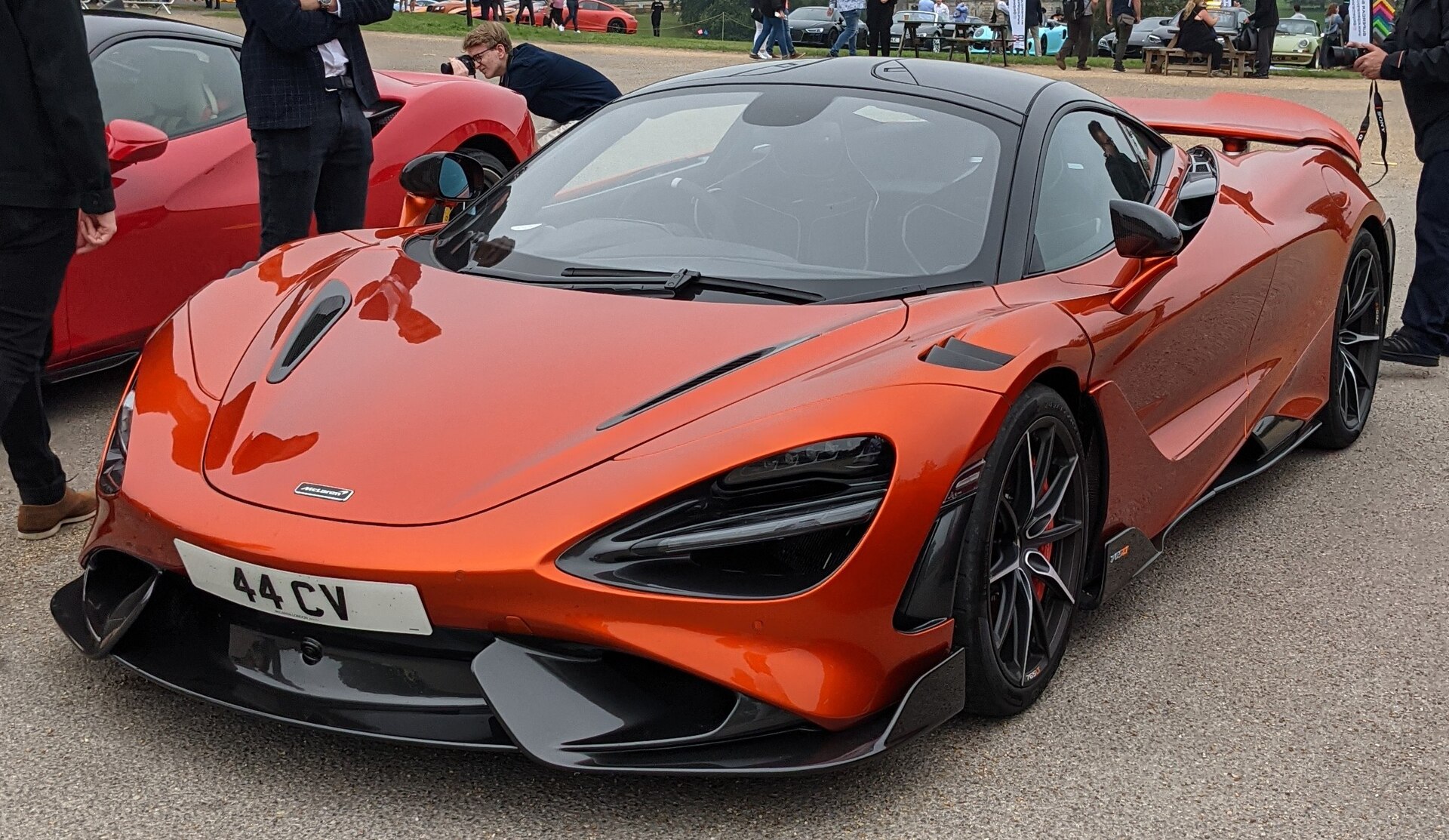
Is a McLaren 765LT Worth Buying?
A deep dive into McLaren's lightweight track weapon — performance, collectibility, ownership costs, and whether it justifies the premium over the 720S
The Short Answer: Yes — If You Understand What You're Buying
The McLaren 765LT is worth buying. But with a critical caveat: it's not a 720S with more power. It's a fundamentally different machine — a track-focused weapon in road-legal clothing, designed for drivers who want to exploit its engineering edge on a closed circuit. If that appeals to you, the 765LT's combination of rarity, performance, and value appreciation makes it one of the smartest exotic car purchases you can make in 2026. If you're looking for a weekend cruiser or daily driver flexibility, save your money.
The 765LT sits at a fascinating crossroads. Only 765 coupes and 765 spiders were produced globally — making it substantially rarer than the 720S, which sold over 4,000 units. This production limitation, combined with its status as McLaren's last naturally aspirated V8 supercar before the hybrid Artura era, has created a unique market dynamic: the 765LT is one of the few modern McLarens actually appreciating in value. Cars that sold for $358,000–$382,500 at launch now command $380,000–$550,000 on the secondary market.
We've tracked 765LT inventory and pricing movements since the first examples hit the used market at Automonitor, and the data tells a compelling story. Limited production plus genuine performance credibility equals value retention that beats the 720S by a significant margin. This guide breaks down whether the premium makes sense for your situation.
What Makes the 765LT Special: The Track Weapon That Appreciates
McLaren introduced the 765LT (Longtail) in 2019 as a direct response to market demand for a more aggressive, more focused 720S variant. While the base 720S targets buyers wanting supercar performance with road manners, the 765LT targets drivers who treat the race track as an extension of their weekly routine.
The numbers matter, but they don't tell the full story. The 765LT produces 755 horsepower — 45 hp more than the 720S's 710 hp. But power isn't the differentiator. The differentiator is everything surrounding that power: the 80 kg (176 lb) weight reduction that brings dry weight down to 2,709 lbs, the 3.6-second 0-60 sprint (versus the 720S's 2.9 seconds doesn't sound dramatic until you realize the 765LT achieves this through superior acceleration consistency), the 205 mph top speed, and most critically, the engineering changes that make the 765LT fundamentally more capable on a closed circuit.
The titanium exhaust alone saves 14 lbs and allows the engineers to dial in a more aggressive engine map. Carbon fiber appears everywhere — front fender inserts, rear bumper sections, side skirts, and the signature long tail extension that adds 14 inches to the rear overhang compared to the 720S. This longer tail generates more aerodynamic downforce while reducing turbulence, which translates directly to higher cornering speeds and better high-speed stability.
The suspension geometry was revised with track use in mind. The passive damper tuning favors turn-in sharpness over ride compliance. The brake system uses the same carbon ceramic rotors as the 720S, but the 765LT's cooling ducts are larger and more efficient. On the road, this means the brakes are less progressive and more on-off — which demands respect but rewards precision.
Limited production is the final piece. McLaren made exactly 765 coupes and 765 spiders — 1,530 examples total. Compare that to the 4,100+ 720S variants produced across all years, and you understand why 765LT values are climbing. Supply is fixed. Demand from collectors, track enthusiasts, and investment buyers continues to grow. That's the fundamental dynamic driving appreciation.

Pricing Reality: Above Sticker, and Climbing
The original McLaren 765LT MSRP was straightforward: $358,000 for the coupe, $382,500 for the Spider. Those were 2019 dollars. Fast forward to February 2026, and the secondary market tells a very different story:
| Model | Original MSRP | Current Used Market Range | Trend |
|---|---|---|---|
| 765LT Coupe (2019–2021) | $358,000 | $380,000–$450,000 | Appreciating |
| 765LT Spider (2020–2021) | $382,500 | $420,000–$500,000 | Appreciating |
| 765LT Coupe (2022–2023) | $385,000 | $420,000–$480,000 | Stable/Slight Gain |
| 765LT Spider (2022–2023) | $410,000 | $450,000–$530,000 | Stable/Slight Gain |
| 720S Coupe (2018–2020) | $315,000 | $185,000–$220,000 | Depreciating |
| 720S Spider (2019–2021) | $339,000 | $210,000–$250,000 | Depreciating |
This is exceptional for a modern supercar. While the 720S loses 35–40% of its value over 5 years, the 765LT is holding or gaining 5–15% depending on mileage, condition, and specification. This dramatic divergence reflects the market's recognition that the 765LT is fundamentally more special than the 720S.
However, purchase price is only part of the equation. Here's what real 765LT ownership actually costs annually:
| Expense Category | Annual Cost | Notes |
|---|---|---|
| Insurance | $6,000–$9,000 | Track use increases premiums; specialty insurer required |
| Routine Maintenance | $4,000–$6,000 | Oil changes, inspections, fluid service; more frequent if tracked |
| Fuel | $4,000–$6,000 | 11–14 mpg combined; 98 octane required |
| Tires (amortized) | $3,000–$4,500 | Track use means replacements every 5K–8K miles |
| Brakes (amortized) | $2,000–$3,500 | Carbon ceramic replacements run $12,000–$15,000 |
| Registration & Taxes | $1,500–$3,000 | State-dependent; high-value vehicle surcharges apply |
| Total Annual Running Cost | $20,500–$32,000 | Assumes 3–5 track days per year; street-only cars cost less |
That's $1,700–$2,700 per month before depreciation. Critically, if you're tracking the car regularly (3–5 days per year), costs climb significantly. Tires wear faster under hard cornering. Insurance premiums jump 20–30% if the car has track history. Brake service becomes routine maintenance rather than occasional repair.
Performance: Engineering That Justifies the Premium
The 765LT's 3.6-second 0-60 time and 205 mph top speed look familiar to McLaren enthusiasts — the 720S achieves similar numbers. Where the 765LT separates itself is repeatability and progression. The 765LT's chassis will handle lap after lap of hard driving with minimal brake fade, minimal tire degradation, and minimal driver fatigue. The 720S will start to show weaknesses after 4–5 hot laps.
Quarter-mile performance is where the differences become obvious. The 765LT covers the quarter-mile in 9.9 seconds — 0.3 seconds faster than the 720S. This isn't just a horsepower advantage; it's evidence of superior suspension tuning, brake stability, and weight distribution. On the track, these small margins compound. A 0.3-second advantage every lap means 5–7 seconds over a 20-minute session. Over a full day of track driving, that compounds to massive margin gains.
The corner entry behavior is the real story. The revised suspension geometry, combined with the longer tail's aerodynamic benefits, makes the 765LT more pointable, more predictable, and more forgiving when you push to the limit. The 720S demands precision; the 765LT rewards commitment. For experienced drivers, this is everything.
Carbon fiber construction throughout the chassis means structural rigidity without the weight penalty. The engine, while naturally aspirated, is tuned more aggressively than the 720S equivalent. The redline sits at 8,500 rpm, and the flat torque curve means power delivery is linear and predictable. For a track weapon, this is superior to turbocharged rivals that have turbo lag complications.
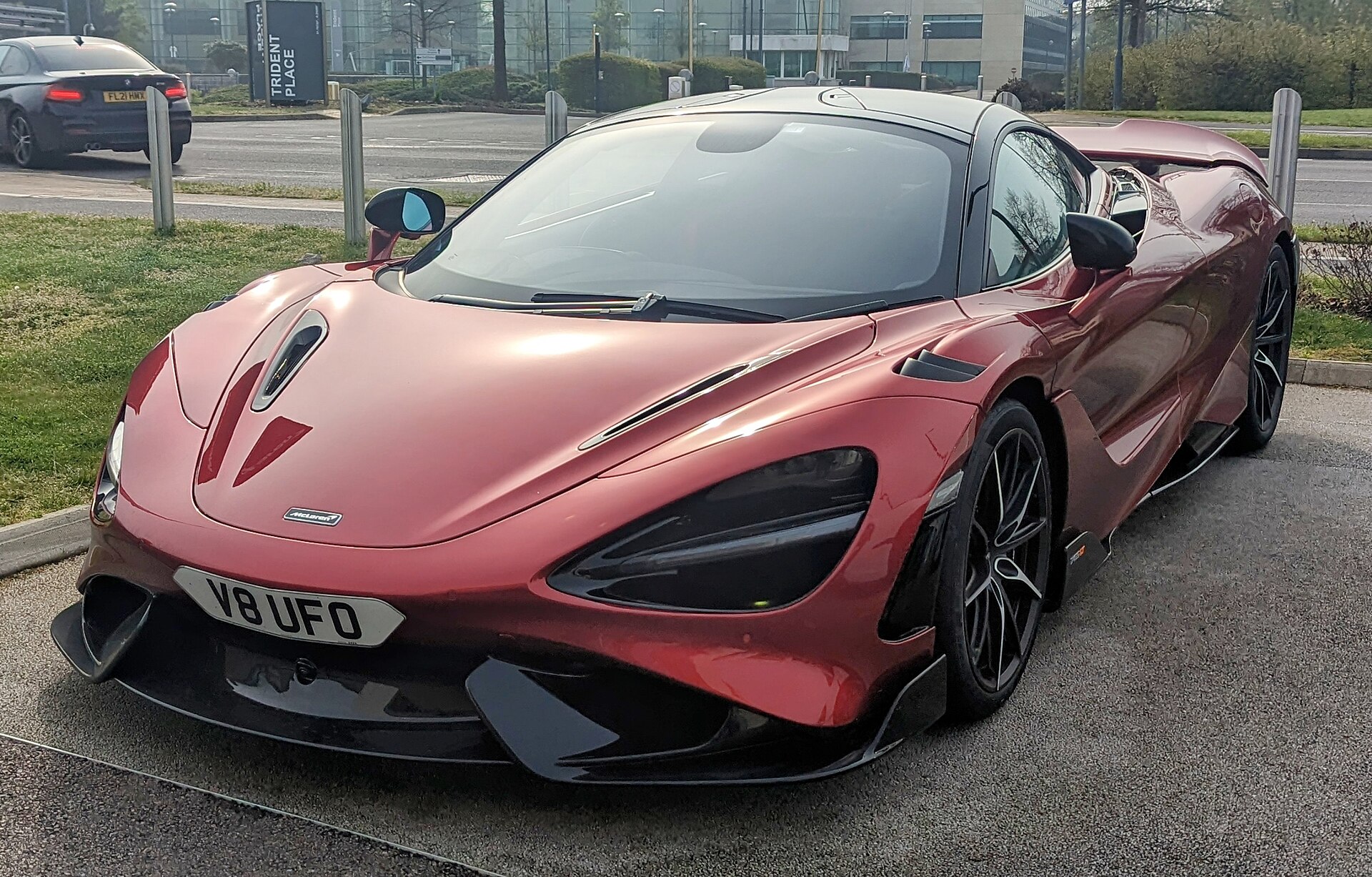
765LT vs. 720S: The True Value Proposition
This is the central question: the 765LT currently costs nearly 2x what a comparable used 720S costs. Is it 2x better? No. Is it worth the premium? For the right buyer, absolutely.
If you're buying a used 765LT for $420,000 versus a used 720S for $210,000, you're paying a $210,000 premium for:
- Exclusivity: 1,530 total units vs. 4,100+ 720S variants
- Appreciation potential: 765LT is holding/gaining value while 720S depreciates 2–3% annually
- Track credibility: 765LT is purpose-built; 720S is multi-purpose compromised
- Engineering refinement: Suspension, brakes, aerodynamics all optimized for closed-circuit driving
- Collectibility: 765LT is increasingly seen as the last of McLaren's naturally aspirated V8 weapons
If you plan to own the car for 5+ years and track it regularly, the 765LT's value retention essentially subsidizes the ownership experience. You could buy a 765LT for $420,000, enjoy it for five years with 3–5 annual track days, and sell it for $400,000–$430,000. Your actual cost of ownership is the running expenses — and compared to keeping a depreciating 720S, the math favors the 765LT.
Compare it instead to a Ferrari SF90 ($380,000–$480,000 used), and the 765LT's value case strengthens. The SF90 is faster in absolute terms (2.0 second 0-60 with hybrid assist), but it's heavier, more complex, costs more to maintain, and doesn't hold value any better. The 765LT is the purer choice for driving engagement.
Daily Drivability: This Is a Weekend Car, Full Stop
Transparency is critical here. The 765LT is not a 720S with more grip. It's a car optimized for track use, and that optimization introduces real-world compromises that matter if you're considering daily use.
The carbon racing seats are firm — genuinely firm. They're designed to keep you locked in place during 1.4g cornering, not to provide lumbar support on a three-hour highway drive. Long-distance comfort is possible but requires acceptance that you'll arrive fatigued. Ground clearance is minimal (4.3 inches). Speed bumps are enemies. Parking is an exercise in anxiety management.
Sound insulation was deleted to save weight. Road noise at highway speeds is noticeable. The naturally aspirated V8 sound is magnificent, but it's also loud. If you're leaving your neighborhood at 6 AM to go to a track event, neighbors will notice.
The cabin is spartan. There's no glove box. Climate control is minimal. The infotainment system is functional but dated. Storage for anything beyond a helmet and gloves requires creative solutions. This isn't accidental — it's purposeful. Every system that doesn't contribute to performance was deleted or minimized.
The 720S is substantially more livable as a daily driver. If you need a car that works every day and plays hard on weekends, the 720S is the smarter choice. If you have a daily driver and want a dedicated weekend/track car, the 765LT is the better choice.

Reliability & Pre-Purchase Concerns: What to Inspect
McLaren's early turbocharged V8 engines (especially 2014–2016) had well-documented issues. The 765LT's naturally aspirated engine is substantially more robust. Engine failure is genuinely rare with proper maintenance.
The real concerns are specific to track use:
- Carbon Fiber Damage: Track use means high-speed impacts with curbing. Carbon fiber damage isn't always visible externally. Always get a pre-purchase inspection that includes careful examination of the front splitter, rear diffuser, side skirts, and fender inserts. Repair costs run $8,000–$18,000 depending on severity.
- Titanium Exhaust Integrity: The lightweight titanium exhaust is brilliant engineering but fragile. Aggressive braking into turns can generate excessive heat that stresses welds. If the car has extensive track history, have a shop inspect the exhaust welds under magnification. Replacement is $6,000–$9,000.
- Brake System History: Request complete documentation of brake service. If the car was tracked without proper brake fluid flushes (brake fluid degrades under track temperatures), stop. Moisture in the system indicates potential caliper or piston corrosion, which is expensive and dangerous.
- Transmission Oil Condition: The 7-speed dual-clutch transmission requires specific maintenance intervals. If service records show missed oil changes, walk away. DCT fluid degradation compounds quickly on tracked cars.
- Thermal Cycling Damage: Repeated hard acceleration to 200+ mph followed by hard braking creates extreme thermal cycling. Check for cracks in the bell housing casting, leaks around the transmission mounts, or evidence of overheating.
A proper pre-purchase inspection should include thermal imaging to identify heat stress points, high-resolution magnification of carbon fiber components, and a full diagnostic scan. This isn't optional — it's insurance that costs $1,200–$2,000 and can reveal problems worth $20,000–$50,000 in hidden repair costs.
Get a Pre-Purchase Inspection Before You Buy
Automonitor connects you with certified exotic car inspectors who specialize in McLaren track cars. Don't skip this step on a 765LT.
Schedule an Inspection →Comparison Table: 765LT vs. Competitors
How does the 765LT stack up against alternatives in the $380,000–$500,000 range?
| Category | McLaren 765LT | Ferrari F8 Tributo | Lamborghini SVJ | Porsche 911 GT3 RS |
|---|---|---|---|---|
| Engine | 4.0L Twin-Turbo V8 | 3.9L Twin-Turbo V12 | 6.5L NA V12 | 4.0L NA Flat-6 |
| Horsepower | 755 hp | 710 hp | 759 hp | 518 hp |
| 0–60 mph | 2.8s | 2.6s | 2.8s | 3.0s |
| Used Price (2023+) | $420K–$500K | $340K–$400K | $380K–$450K | $450K–$550K |
| Track Capability | Superior chassis balance | Powerful but heavier | Great engine, softer suspension | Best all-around track car |
| Value Retention | Appreciating | Stable/Slight depreciation | Moderate depreciation | Holding strong |
| Annual Maintenance | $4K–$6K | $5K–$8K | $4K–$6K | $3K–$5K |
| Road Comfort | Track-focused, stiff | Balanced, more livable | Comfortable for a supercar | Track car compromise |
| Collectibility | Last naturally aspirated 8 | Historical significance | Peak V12 era | Modern icon |
The Porsche 911 GT3 RS is arguably the best all-around track car, but it costs $50,000+ more. The Ferrari F8 is cheaper to buy but depreciates faster. The Lamborghini SVJ offers V12 character but heavier weight. The 765LT wins on the triad of performance, exclusivity, and value retention.
The Investment Angle: Why Limited McLarens Appreciate
McLaren's history is instructive. The legendary P1 (375 units) has appreciated from its $1.15M launch price to $1.8M–$2.1M today. The Senna (500 units) launched at $958,000 and now commands $2.0M–$2.5M. The 765LT follows this pattern: low production + genuine desirability + active collector demand = appreciation.
The critical difference from 720S is production volume. A 720S can be 2018, 2019, 2020, 2021, 2022, 2023, 2024 — seven model years across two body styles (coupe and spider). The market becomes saturated. A 765LT is 2019, 2020, 2021, 2022, 2023 — five model years, two body styles, 1,530 total units. Scarcity compounds value.
Looking forward, the 765LT's position strengthens as the Artura (hybrid era) becomes the new generation. In five years, the 765LT will be the most recent naturally aspirated V8 McLaren — a milestone that guarantees collector interest. Estimate a 5–10 year appreciation trajectory bringing a $420,000 purchase today to $500,000–$550,000 by 2031. That's not spectacular investment returns, but it's genuinely rare for a modern supercar to appreciate at all.
Limited production plus genuine track credentials plus naturally aspirated exclusivity in a hybrid world equals the closest thing to a rational supercar investment available today.
How to Buy a 765LT: Steps That Matter
Buying a 765LT requires more diligence than a 720S because the stakes are higher, the track history matters more, and specification variation is greater. Here's our recommended approach:
Step 1: Define realistic budget. Include purchase price plus 36 months of ownership costs ($20,500–$32,000/year). A $420,000 765LT purchase requires $20,000–$32,000 annually in running costs. Make sure this fits your lifestyle without financial strain.
Step 2: Decide on track use. Will you track this car? This single decision drives insurance costs, tire wear, maintenance requirements, and resale value. Street-only 765LTs command slight premiums because buyers can use standard insurance. Tracked cars require specialty policies and show visible wear.
Step 3: Search across markets. Check Car and Driver's McLaren 765LT listings, authorized McLaren dealers, and specialist brokers like Automonitor. The best pricing often comes from private sellers in high-supply markets (Florida, California, New York).
Step 4: Inspect obsessively. Get a pre-purchase inspection from an McLaren specialist. Budget $1,500–$2,500 for thorough evaluation including thermal imaging, carbon fiber assessment, transmission scan, and track history investigation. This single step is non-negotiable.
Step 5: Understand the complete maintenance history. Request documentation of every service: oil changes, brake fluid flushes, cooling system checks, battery conditioning, transmission fluid services. Missing records are red flags. Track history documentation matters — how many days, which circuits, who drove it, accident history.
Step 6: Negotiate based on condition and history. A pristine low-mileage street-only 765LT Coupe with 2,000 miles should command near-asking price. A tracked car with 8,000 miles and worn tires should be 5–10% lower. A 765LT with missing service records should be 10–15% lower.
Step 7: Secure specialty insurance. Contact exotic car insurers (Hagerty, Chubb, AXA XL) early. Get a quote before committing to purchase. Track use can add 20–30% to premiums. Some insurers require annual certifications.
When the 765LT Is NOT Worth Buying
Transparency demands honesty about situations where this car isn't the right choice:
You want a daily driver. The 765LT is genuinely not suitable for daily use. The rigid suspension, racing seats, sparse cabin, and fuel consumption make it exhausting for routine commuting. Keep a separate daily driver.
You haven't driven one. The 765LT feels radically different from the 720S. Harder suspension, tighter steering, on-off throttle response, aggressive engine sound. Some buyers find these track-focused attributes alienating rather than engaging. Always test drive before committing.
You're stretching financially. If the $420,000–$500,000 purchase price leaves little room for unexpected $10,000–$20,000 repairs, or if the $20,000–$32,000 annual running costs create financial stress, wait. Exotic ownership should be enjoyable, not financially terrifying.
You don't understand track use complexity. If you're buying a 765LT planning to track it regularly but have never driven on a circuit, expect a steep learning curve. Track days cost $1,500–$3,000 per event. Instruction is essential. The car's capabilities will exceed yours significantly. Plan for education before attempting maximum performance.
You're treating it purely as an investment without driving it. Cars stored in climate-controlled garages develop their own problems: seal degradation, battery issues, flat-spotted tires, fuel system deposits. The 765LT appreciates because it remains desirable to actual drivers. Buy it to drive it.
The Final Verdict
The McLaren 765LT is worth buying if you want a car that combines track-focused engineering, exclusive rarity, strong value retention, and genuine driving engagement. It's not a 720S upgrade — it's a different philosophy. The 720S is McLaren's supercar for buyers who want high performance with everyday usability. The 765LT is McLaren's thoroughbred for drivers who accept compromises in daily drivability in exchange for superior track performance and exclusivity.
At $420,000–$500,000 currently, the 765LT represents one of the last naturally aspirated exotic supercars you can buy before the entire industry transitions to electrification. Its limited production (1,530 units globally) means supply will never increase. Market demand from collectors and track enthusiasts suggests values will remain stable or appreciate over the next 5–10 years. For the right buyer — someone with serious track ambitions, a reasonable budget, and realistic expectations — this car justifies its premium.
For more details on specific variants, pricing trends, and market inventory, see our guides on where to buy a McLaren 765LT, the best year to buy, and new versus used considerations. And if you want help navigating the buying process, Automonitor's concierge service handles everything from market research to inspection coordination to closing.
Ready to Find Your 765LT?
Automonitor tracks 765LT inventory across verified dealers and private sellers. Get market data, expert guidance, and secure transaction support.
Start Your Search →