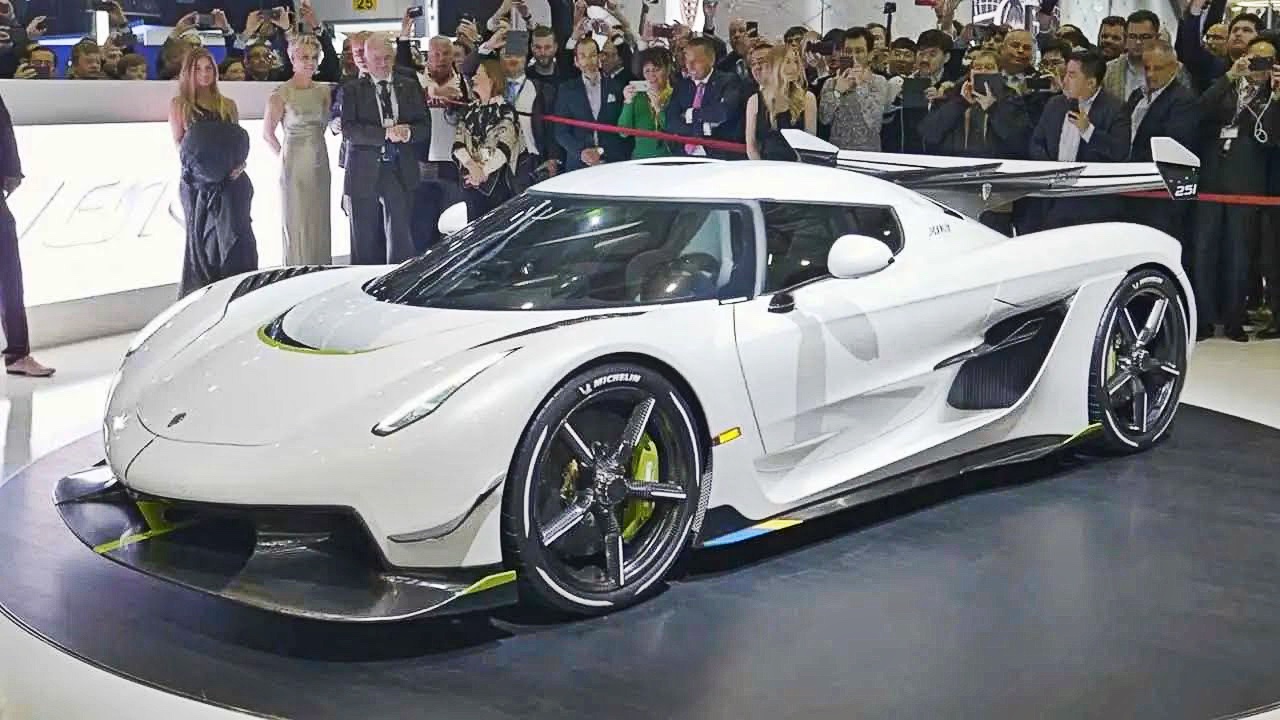
Is a Koenigsegg Jesko Worth Buying?
Only 125 will ever exist. The 1,600 hp Light Speed Transmission is unlike anything else on Earth. At $3.4 million, it might be the fastest car ever made. But is the Koenigsegg Jesko actually worth the price, the exclusivity burden, and the extreme ownership costs? Here's what you need to know.
The Short Answer: Only If You Understand What You're Buying
The Koenigsegg Jesko is worth buying. But the decision isn't about money — it's about understanding that you're acquiring a piece of automotive engineering history that may never be replicated, paired with ownership costs and practicality constraints that few people are equipped to handle.
This isn't a car you buy for investment appreciation or daily usability. You buy a Jesko because you're one of only 125 people on Earth who will ever own one, because the light-speed transmission technology exists nowhere else, because the claimed 330 mph top speed represents the frontier of what's mechanically possible, and because you want to experience one of the purest expressions of engineering excess ever assembled.
If you've already decided you want a Koenigsegg Jesko, this guide won't talk you out of it. Instead, it will tell you exactly what that ownership commitment entails — the maintenance realities, the service constraints, the comparison to alternatives like the Bugatti Chiron and Pagani Huayra, and why the scarcity and technological innovation justify the extraordinary expense.
What Makes the Jesko Special: The Frontier of Hypercar Engineering
Christian von Koenigsegg, the founder and visionary behind the Swedish hypercar manufacturer, named the Jesko after his father. More than nostalgia, the Jesko represents the culmination of three decades of Koenigsegg's relentless pursuit of mechanical perfection — a car built to be possibly the fastest production automobile ever created.
The powerplant is a 5.0-liter hand-built twin-turbocharged V8 producing 1,280 horsepower on gasoline and 1,600 horsepower on E85 biofuel. Let that sink in: 1,600 hp from a naturally-aspirated displacement equivalent to some entire engines. The engineering tolerances are extraordinary — each engine is individually built by one Koenigsegg technician, who signs the finished block. This isn't mass production; it's bespoke automotive sculpture.
But the engine is secondary to the transmission. The revolutionary Light Speed Transmission (LST) is a multi-clutch, 9-speed automatic that can theoretically shift between any gear instantaneously. Traditional dual-clutch transmissions are limited by the time it takes to physically disengage one clutch and engage another. Koenigsegg's LST bypasses this constraint entirely, enabling gear changes in milliseconds with zero power loss.
The Jesko comes in two variants: the Jesko (downforce-focused, with a massive active rear wing for track capability) and the Jesko Absolut (low-drag, with a claimed 330 mph theoretical top speed). Only 125 units will ever be built across both variants — that's 25 units per year at Koenigsegg's Angelholm, Sweden facility, spread across both configurations. All are already allocated.
The MSRP of $3.4 million is the base figure. With any specification customization — which every Jesko owner demands — the real cost approaches $3.8–$4.2 million. And unlike Ferrari or Lamborghini, there is no dealer markup. Koenigsegg sells only to pre-approved buyers, most of whom have existing relationships with the brand or whom Koenigsegg has personally vetted.
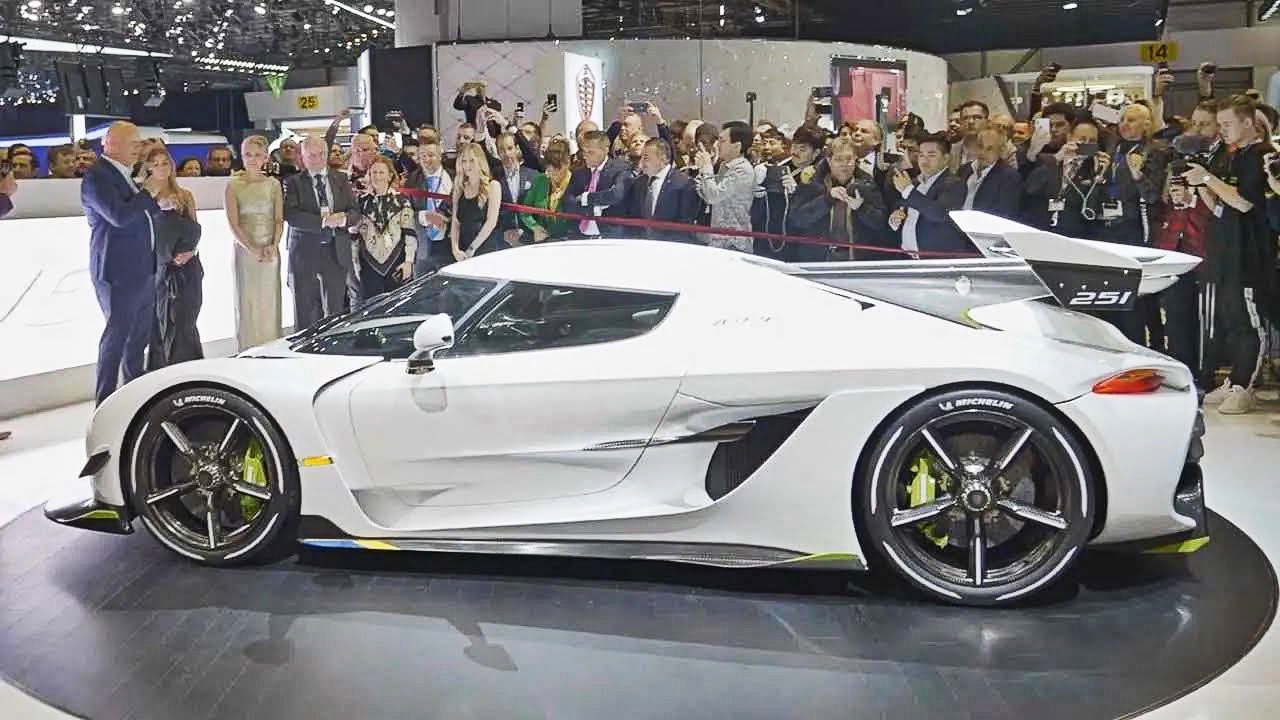
The Specifications: Numbers That Redefine "Extreme"
Let's look at the raw specifications side-by-side against competitors:
| Specification | Jesko | Jesko Absolut | Bugatti Chiron | Pagani Huayra |
|---|---|---|---|---|
| Engine | 5.0L Twin-Turbo V8 | 8.0L Quad-Turbo W16 | 5.98L Twin-Turbo V12 | |
| Horsepower (E85) | 1,600 hp | 1,500 hp | 800 hp | |
| Torque | 1,194 lb-ft | 1,180 lb-ft | 590 lb-ft | |
| 0–60 mph | 2.8s | 2.4s | 2.5s | 2.8s |
| Top Speed (claimed) | 330 mph | 330+ mph | 261 mph (verified) | 217 mph (verified) |
| Transmission | Light Speed Transmission (9-speed) | 7-speed DSG | 7-speed AMT | |
| Weight | 3,100 lbs | 4,400 lbs | 3,000 lbs | |
| Production Run | 125 total | 500 units | 100 units (original) | |
| MSRP | $3.4M+ | $3.0M–$3.2M | $2.9M–$3.1M | |
The numbers are extraordinary, but what matters more is the engineering philosophy behind them. Koenigsegg's approach is fundamentally different from Bugatti's. Bugatti makes the W16 because it's a statement of excess — pure displacement, four turbos, and brute force. Koenigsegg makes the 5.0L V8 because it achieved the same power output with dramatically less weight, complexity, and fuel consumption. It's the engineering triumph versus the engineering spectacle argument, and different buyers will side with different philosophies.
The True Cost of Ownership: Beyond the Purchase Price
The $3.4–$4.2 million purchase price is only the entry fee. Koenigsegg Jesko ownership carries recurring costs that are virtually impossible to predict but easy to understand will be significant:
| Expense Category | Annual Cost Range | Context |
|---|---|---|
| Insurance | $40,000–$80,000 | Specialty exotic insurers; extreme coverage required |
| Maintenance (annual service) | $8,000–$15,000 | Angelholm facility or authorized service points only |
| Fuel (if regularly driven) | $5,000–$10,000 | E85 premium fuel, 8 mpg highway |
| Tires (amortized) | $8,000–$12,000 | Michelin Pilot Sport tires at $3,000+ per set, 8K mile life |
| Brakes (amortized) | $5,000–$8,000 | Carbon ceramic replacement $18,000+ |
| Registration & Permits | $2,000–$5,000 | State-dependent, plus international papers |
| Total Annual (assumed minimal use) | $68,000–$130,000 | Excludes major repairs, major service events, or depreciation |
More critically: major service events. Every 40,000 kilometers (roughly 25,000 miles), the Jesko requires a comprehensive service that costs $25,000–$40,000. The transmission fluid and filters require specialized fluids available only through Koenigsegg. The engine requires hand-inspection and potential turbocharger rebuilds. If you drive your Jesko 5,000 miles per year (modest for an exotic, low for a Koenigsegg), you'll hit this 40,000 km service every five years.
Then there's the geographic problem: service must be performed at Koenigsegg's facility in Angelholm, Sweden, or at one of only three authorized global service points (Monaco, Dubai, and Los Angeles). If you live in London, Singapore, or Sydney, you're facing logistics costs of $15,000–$30,000 per service event to ship the car, arrange warranty work, and ship it back.
Insurance deserves its own paragraph. Standard exotic insurers won't touch a Koenigsegg Jesko. You're looking at specialty providers like Hagerty, XL Capital, or Allianz's exotic division, all of whom price based on stated annual mileage (expect to declare 1,000–3,000 miles), verified storage (temperature-controlled, alarm-protected), and proof of professional driving experience. A single accident will cost $200,000+ to repair and will likely exceed the insurer's willingness to continue coverage on that vehicle.
Finding and Securing a Koenigsegg Jesko
Koenigsegg allocation is closed. All 125 units are claimed. However, used Jesko ownership is becoming possible through the secondary market. Automonitor can help you navigate the acquisition process.
Learn Where to Find One →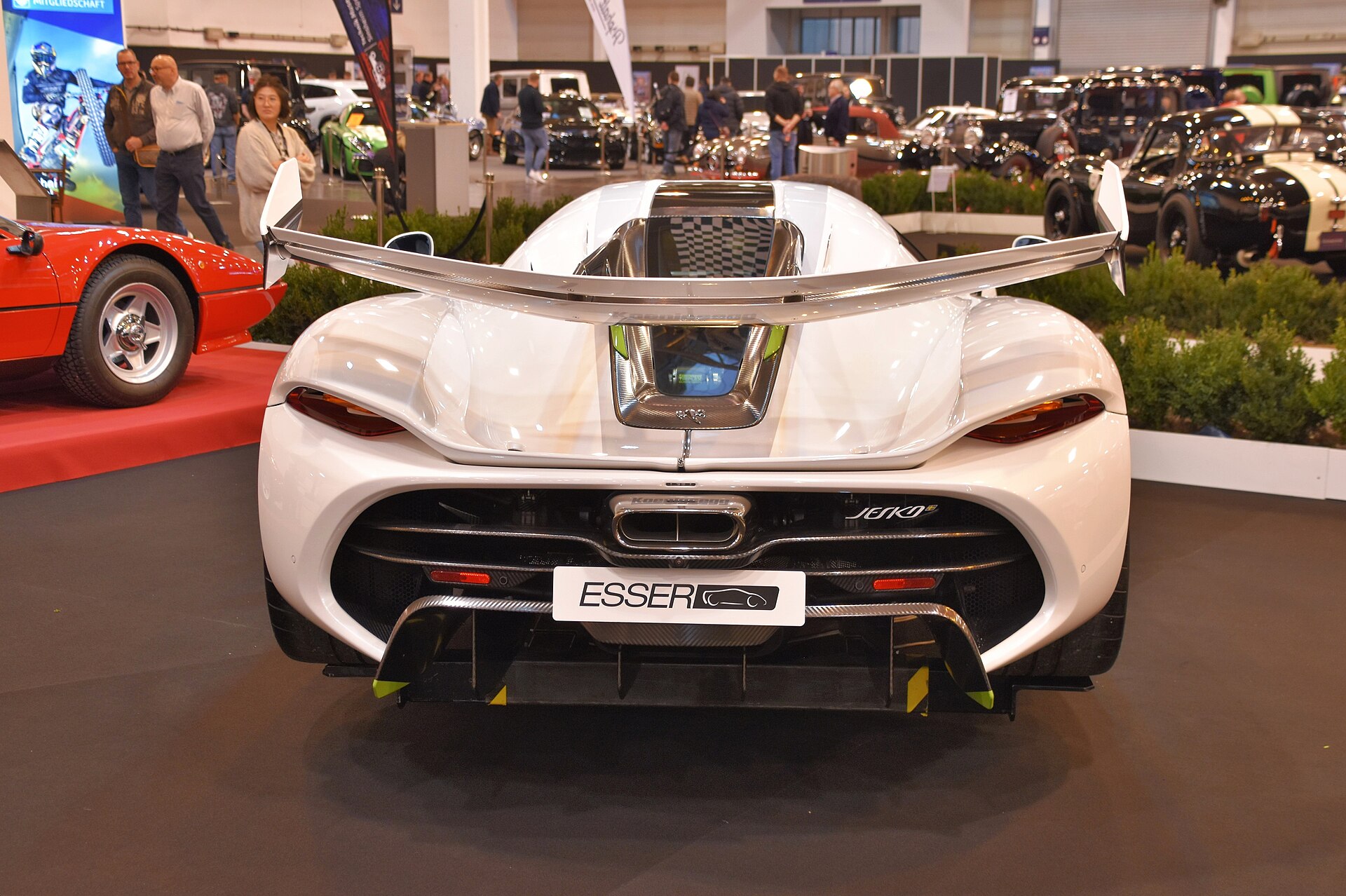
Why the Jesko Is Worth Buying: The Case for Extreme Exclusivity
1. Technological Innovation You Can't Buy Elsewhere
The Light Speed Transmission exists only in the Jesko. Not in a Ferrari, not in a Pagani, not in any Bugatti. This is proprietary technology that represents years of Koenigsegg's engineering innovation. Every time you shift gears, you're using transmission technology that doesn't exist anywhere else on Earth. That's not a marketing slogan — that's engineering fact.
2. Extreme Rarity with Finite Supply
125 units total. The Bugatti Chiron had 500. The Pagani Huayra had 100 in its original production run but is continuing with the Huayra R model. The Jesko's 125-unit cap is absolute — production ends when allocation is consumed, likely around 2027. This creates a hard ceiling on supply that doesn't exist for most hypercars.
Supply constraints historically create value floors. The Koenigsegg One:1, with only 6 units built, has appreciated from its $1.6M list price to $5–$7M on the secondary market. The Agera RS, limited to 25 units, trades from $3–$4M today versus its $2.5M MSRP. The Jesko's 125 units won't appreciate at that magnitude, but the precedent suggests that Koenigsegg's limited-run cars hold their value remarkably well and often appreciate.
3. Performance Credentials That Might Justify the Cost
The Jesko Absolut's claimed 330 mph top speed has not been verified in road tests (regulatory constraints make that testing nearly impossible), but the engineering math behind it is credible. A sub-3,200 lbs car with 1,600 hp and a 0.279 Cd drag coefficient running on E85 fuel achieving 330 mph is theoretically feasible. That's not a marketing fantasy — it's an engineering specification backed by real data.
If the Jesko Absolut is indeed the fastest production car ever made, that becomes a historical fact that follows the car forever. The buyer of the car that set the production speed record pays a premium, but owns a piece of automotive history.
4. Swedish Engineering Excellence
Koenigsegg's engineering standards are obsessive. Every component is hand-finished. Every engine is built and signed by a single technician. The fit and finish of a Koenigsegg is legendary among owners — gaps measured in tenths of a millimeter, surfaces finished to museum quality. The Jesko isn't a car assembled by robots on a line; it's a custom art piece with 1,600 horsepower.
5. A Daily Possibility (Theoretically)
Unlike the Bugatti Chiron or Pagani Huayra, which are brutal and unforgiving on public roads, the Jesko's lighter weight and active suspension tuning make it more feasible to actually drive. Not comfortable—never comfortable—but less miserable. The cabin is tight but finished in hand-stitched leather. The infotainment is minimal but functional. The steering is direct without being exhausting. You can theoretically drive a Jesko for 200 miles in a day without hospitalization. The Chiron and Huayra test that limit much more aggressively.
Why You Might Hesitate: The Real Ownership Challenges
Allocation Is Closed. If you want a new Jesko from Koenigsegg, you can't have one. All 125 units have been allocated. Your only option is the secondary market, where prices range from $5.2–$6.8M for existing examples (used 2023–2024 models with 2,000–8,000 miles). That's a $1.8–$2.6M premium over the original MSRP. Is exclusivity worth doubling the purchase price? For some buyers, yes. For most, it's unjustifiable.
Service Is a Logistical Nightmare. If you don't live within 500 miles of Los Angeles, Monaco, or Dubai, every service event becomes a multi-week international journey. You can't take the Jesko to your local exotic specialist. You can't find Koenigsegg-approved fluids at your neighborhood Porsche dealer. The brand's exclusivity comes with ownership friction that shouldn't be underestimated.
Insurance Creates a Ceiling on Usability. Most Jesko owners are limited to 1,500–3,000 miles per year by insurance restrictions. Some policies require annual inspection at an authorized facility (which means shipping to Sweden, Monaco, or LA). You're not buying a car; you're buying an asset that you're licensed to occasionally operate.
Depreciation Uncertainty. Yes, limited Koenigseggs have appreciated. But market conditions change. An economic recession, a shift in luxury spending patterns, or even a negative press story about Koenigsegg's reliability could reverse appreciation. You're betting that the Jesko remains desirable in 2030 and 2035. That's not guaranteed.
Practicality Is Sacrificed Entirely. The Jesko has no cup holders. The cargo space is minimal. Ground clearance is 4.1 inches — speed bumps are enemies. Rain driving is stressful because visibility is poor and the car is sensitive to hydroplaning at low speeds. It's a track-focused hypercar forced to exist in a world with regular roads.

How It Compares: Jesko vs. Chiron vs. Huayra vs. Tuatara vs. Venom F5
The Jesko operates in an extremely exclusive segment. Let's examine how it stacks up against the only true competitors:
| Category | Jesko | Bugatti Chiron | Pagani Huayra | SSC Tuatara | Hennessey Venom F5 |
|---|---|---|---|---|---|
| Engine | 5.0L Twin-Turbo V8 | 8.0L Quad-Turbo W16 | 5.98L Twin-Turbo V12 | 5.9L Twin-Turbo V8 | 5.6L Twin-Turbo V8 |
| Horsepower | 1,600 hp (E85) | 1,500 hp | 800 hp | 1,350 hp | 1,817 hp |
| Weight | 3,100 lbs | 4,400 lbs | 3,000 lbs | 2,750 lbs | 3,245 lbs |
| 0–60 mph | 2.8s | 2.5s | 2.8s | 2.0s (claimed) | 2.1s |
| Top Speed | 330+ mph (theoretical) | 261 mph (verified) | 217 mph (verified) | 330 mph (claimed) | 301 mph (claimed) |
| Production | 125 units | 500 units | 100+ units | 100 units | 99 units |
| MSRP | $3.4M+ | $3.0M–$3.2M | $2.9M–$3.1M | $1.75M | $1.6M |
| Service Support | 3 global locations | Bugatti dealerships worldwide | Limited network | Very limited | Limited |
| Value Retention | Expected excellent | Very good | Very good | Unknown | Unknown |
Each car tells a different story. The Bugatti Chiron is the prestige choice — the badge carries weight, service is more accessible, and the quad-turbo W16 is iconic. The Pagani Huayra is the art-piece choice — lower power but extraordinary design and exclusivity. The SSC Tuatara and Hennessey Venom F5 are the speed-focused choices, offering claimed performance that rivals or exceeds the Jesko at significantly lower prices, but with less-established value retention.
The Jesko splits the difference. It's not as accessible as the Chiron, not as artistic as the Huayra, not as speed-focused as the Tuatara, and not as budget-friendly as the Venom F5. But it's the only hypercar with the Light Speed Transmission, the lightest car in the category, and Koenigsegg's proven track record of appreciation.
The Smart Way to Acquire a Jesko: Secondary Market Realities
Since primary allocation is closed, all new acquisitions are secondary market. Here's the strategy:
Understand the Premium. Secondary market Jeskos are trading at $5.2–$6.8M today. That's a 50–100% markup over original MSRP. You're paying for exclusivity, warranty transfer (sometimes), and the provenance of the specific car. Accept this before making offers.
Verify Provenance and Service History. Every Koenigsegg is registered with the company. Demand a full service history from the Angelholm facility or authorized service points. Any gaps in service history are red flags. One owner should have complete documentation of every fluid change, every inspection, every modification.
Get a Professional Inspection. This isn't optional. Engage a Koenigsegg specialist (very few exist in the US; the Los Angeles service center can recommend inspectors) to conduct a full pre-purchase evaluation. Budget $8,000–$15,000 for this inspection. It will identify any transmission issues, turbocharger problems, or suspension wear.
Understand the Warranty Transfer. Koenigsegg's original warranty is 5 years / 40,000 km. Some used Jeskos still have remaining warranty that transfers to the new owner. Others have expired. This affects insurance premiums and service costs significantly.
Negotiate from Data. Use completed sales data from RM Sotheby's, Bonhams, and private sales to establish market value. Don't get emotional about Koenigsegg mystique. The car is an incredible machine, but it's still subject to normal supply/demand economics.
Secure Financing Early. Most exotic car lenders will finance a Jesko, but expect 20–30% down and rates around 6–8%. JJ Best Banc and Woodside Credit Union both have experience with hypercars this exclusive. Pre-approval strengthens your negotiating position.
Investment Potential: Will the Jesko Appreciate?
The investment case for the Jesko rests on precedent. Koenigsegg's track record with limited-production cars is exceptional:
- One:1 (6 units built, 2014–2015): Original MSRP $1.6M. Current market value $5–$7M. That's a 210–340% appreciation over 10 years, or roughly 12–17% annualized.
- Agera RS (25 units, 2016–2018): Original MSRP $2.5M. Current market value $3.5–$4.5M. That's 40–80% appreciation over 7 years, or roughly 5–10% annualized.
- CCXR (4 units, 2008–2010): Original MSRP $2.0M. Current market value $4–$5M. That's 100–150% appreciation over 15 years, or roughly 5–7% annualized.
The Jesko's appreciation potential depends on several factors: whether it successfully achieves the 330 mph claim (if verified, it appreciates significantly; if disputed, it stagnates), whether the Light Speed Transmission becomes more broadly respected as revolutionary (it should), and whether Koenigsegg's brand continues strengthening (historically, it has).
Conservative estimate: a Jesko purchased today at $5.5M could realistically be worth $6.5–$7.5M in 5 years, assuming minimal mileage, perfect service history, and continued global demand for hypercars. That's 3–5% annualized appreciation plus the intangible value of driving one of the world's greatest machines.
But don't buy a Jesko purely for investment. You're speculating on market dynamics that can shift rapidly. Buy it because you want to drive it, experience the engineering, and own a piece of hypercar history.
When a Jesko Is NOT Worth Buying
You're Stretching Your Budget. If buying a Jesko means liquidating retirement accounts, taking on high-interest debt, or compromising other financial priorities, walk away. The running costs alone ($70,000–$130,000 annually) will become crushing. Exotic car ownership should be comfortable.
You Want Daily Usability. The Jesko is a weekend warrior. You can't drive it in the rain without stress. You can't park it in street parking. You can't take it to the grocery store. If you need a supercar you can actually use regularly, consider a Ferrari SF90, McLaren 765LT, or McLaren 720S instead.
You Don't Have Access to Service. If you live far from Los Angeles, Monaco, or Dubai, the Jesko becomes a complicated asset. Service costs explode with shipping and logistics. The car spends more time in transit than in your garage. Unless you're prepared to fly the car to Sweden annually or build a relationship with one of the three authorized centers, this car isn't practical for you.
You Haven't Driven a Hypercar. Never owned anything more exotic than a 911 Turbo S? Rent one first. The width, the power delivery, the steering sensitivity, the brake response — hypercars are fundamentally different machines. Drive a Chiron or a Huayra for a day. Understand whether you actually enjoy piloting 1,600+ hp before committing $5.5M.
You're Worried About Reliability. The Jesko is hand-built by a 25-person company in Sweden. Koenigsegg doesn't have the quality-control infrastructure of Ferrari or Lamborghini. Most Jeskos have been flawless, but early issues (gearbox software updates, turbocharger tuning refinements) have occurred. If reliability is your primary concern, the Bugatti Chiron is the safer bet.
The Driving Experience: Why Extreme Performance Matters
Specifications and numbers don't capture the Jesko experience. Here's what actual owners report:
The sound is transcendent. The twin-turbo V8 produces a mechanical fury that exceeds even the Bugatti Chiron or Ferrari LaFerrari in intensity. The turbo spools with an aggressive whistle, the engine erupts with a raw, mechanical scream, and the exhaust note carries through the cabin with visceral intensity. Every acceleration is a sensory event.
The LST transmission feels supernatural. Gear changes occur in 100 milliseconds with zero power loss. There's no torque interruption, no moment of uncertainty, no delay. You demand power, and the car responds instantly. It's driving future technology today.
The cornering ability is extraordinary. At 3,100 lbs and with active suspension managing every bump, the Jesko corners with precision that rivals purpose-built race cars. The steering is heavy but communicative. The brake response is immediate. The grip is seemingly unlimited.
The ride is firm. Very firm. Speed bumps are enemies. Rough pavement rattles your bones. But that firmness translates to absolute control — you always know exactly where the chassis is, what the tires are doing, how much grip exists. For a hypercar, it's remarkably connected to the road.
The Final Verdict: Hypercar Ownership Redefined
The Koenigsegg Jesko is worth buying if you can afford the $5.2–$6.8M secondary market price, understand and accept the $70,000–$130,000 annual running costs, have access to authorized service, and want to own one of the world's most exclusive and technologically advanced machines.
It is not worth buying if you're stretching your finances, lack service access, expect daily usability, or are motivated primarily by investment appreciation.
The Jesko represents the absolute frontier of what's mechanically possible. The Light Speed Transmission is revolutionary. The claimed 330 mph speed represents the edge of feasibility. The 125-unit production run creates a hard ceiling on supply. The Swedish engineering excellence is unmatched.
If you want the most technologically advanced hypercar ever built, with the proven potential for value appreciation, and you're comfortable with the extreme costs and logistics, the Jesko is the right choice. If you want a more accessible hypercar, the Bugatti Chiron or Pagani Huayra might suit you better.
But if you've decided you want a Jesko, don't second-guess yourself. You're joining one of 125 owners worldwide. You're experiencing engineering that won't be replicated. You're driving the possible future of hypercar design.
Find a Koenigsegg Jesko through Automonitor's network of exotic dealers and private sellers, or contact us for help navigating the acquisition process. We've helped buyers secure hypercars in this segment, and we know exactly what questions to ask.
Ready to Find Your Koenigsegg Jesko?
Automonitor connects you with verified Jesko sellers, handles due diligence, and provides market analysis so you can acquire with total confidence. Secondary market Jeskos require expertise.
Find Jesko Listings →