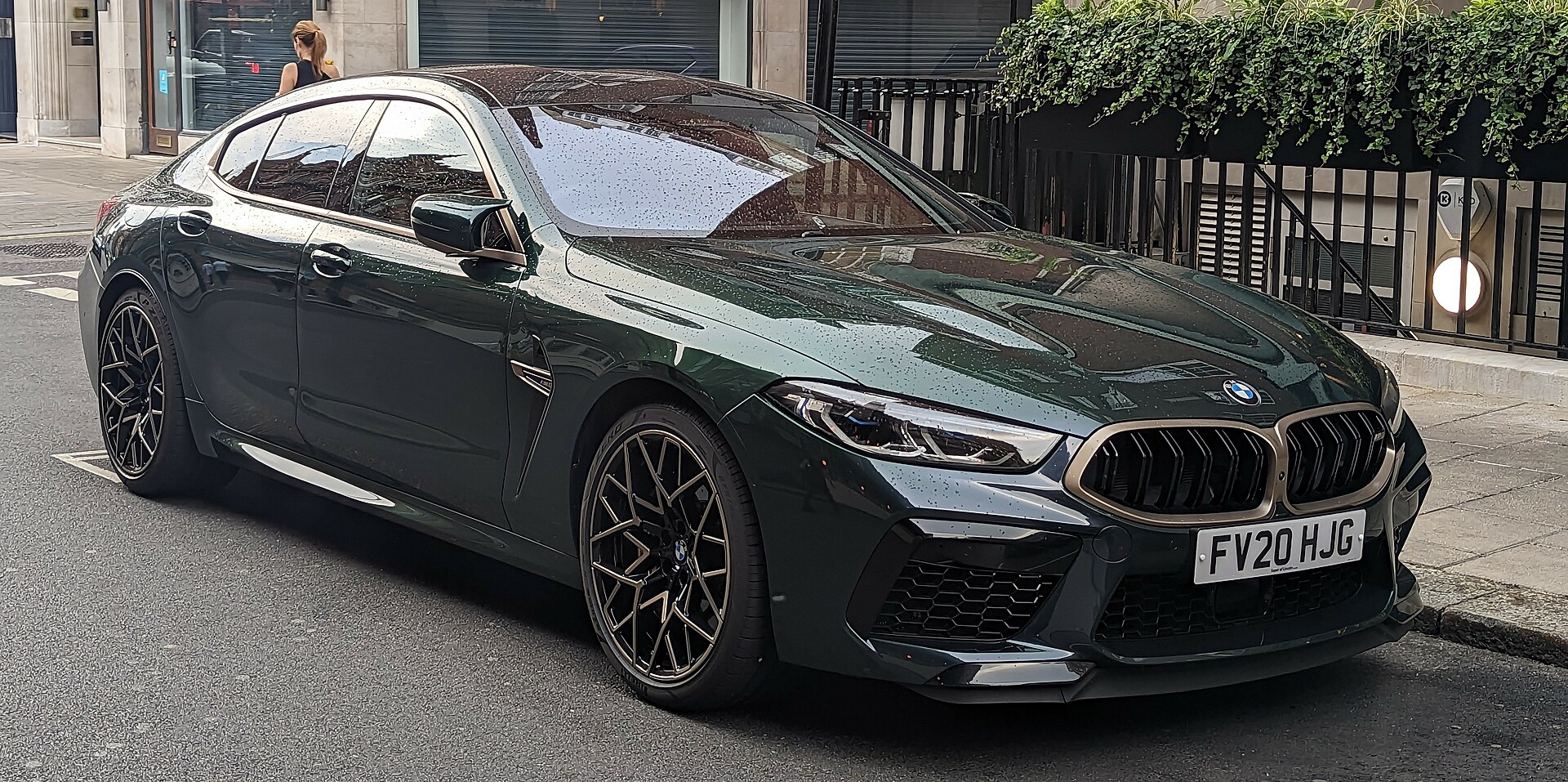
Is a BMW M8 Worth Buying?
The M8 is undeniably fast — 617 horsepower, 3.0-second 0-60, the full luxury tech suite. But is it worth the steep depreciation and $133K+ MSRP? Here's the honest breakdown on performance, value, and whether the M8 Competition justifies the cost.
The Short Answer: Yes, But Only as a Used Car
The BMW M8 Competition is worth buying — but almost exclusively in the used market at $65K–$90K. This is one of the fastest, most luxurious grand tourers ever produced. The 4.4-liter twin-turbo V8 produces 617 horsepower and hits 60 mph in just 3.0 seconds. You get a fully loaded luxury cabin, available xDrive all-wheel drive, and the latest BMW iDrive 8 infotainment system. At those used prices, it's outstanding value for a performance car with genuine daily driver capability.
But here's the critical caveat: buying new at MSRP ($133K–$140K) is a different story. The M8 loses 40–50% of its value in three years. That's brutal depreciation for a luxury car, and it means you're essentially paying a premium for the honor of being the first owner. If you're considering a new M8, you need to account for that $25,000–$30,000 annual depreciation burn.
This guide covers everything you need to know about the BMW M8 — from the S63 engine's turbocharged characteristics to how it stacks up against the Mercedes-AMG GT, Porsche 911 Turbo S, and Aston Martin Vantage. By the end, you'll know exactly whether the M8 is the right choice for you.
What Is the BMW M8? The Misunderstood Flagship
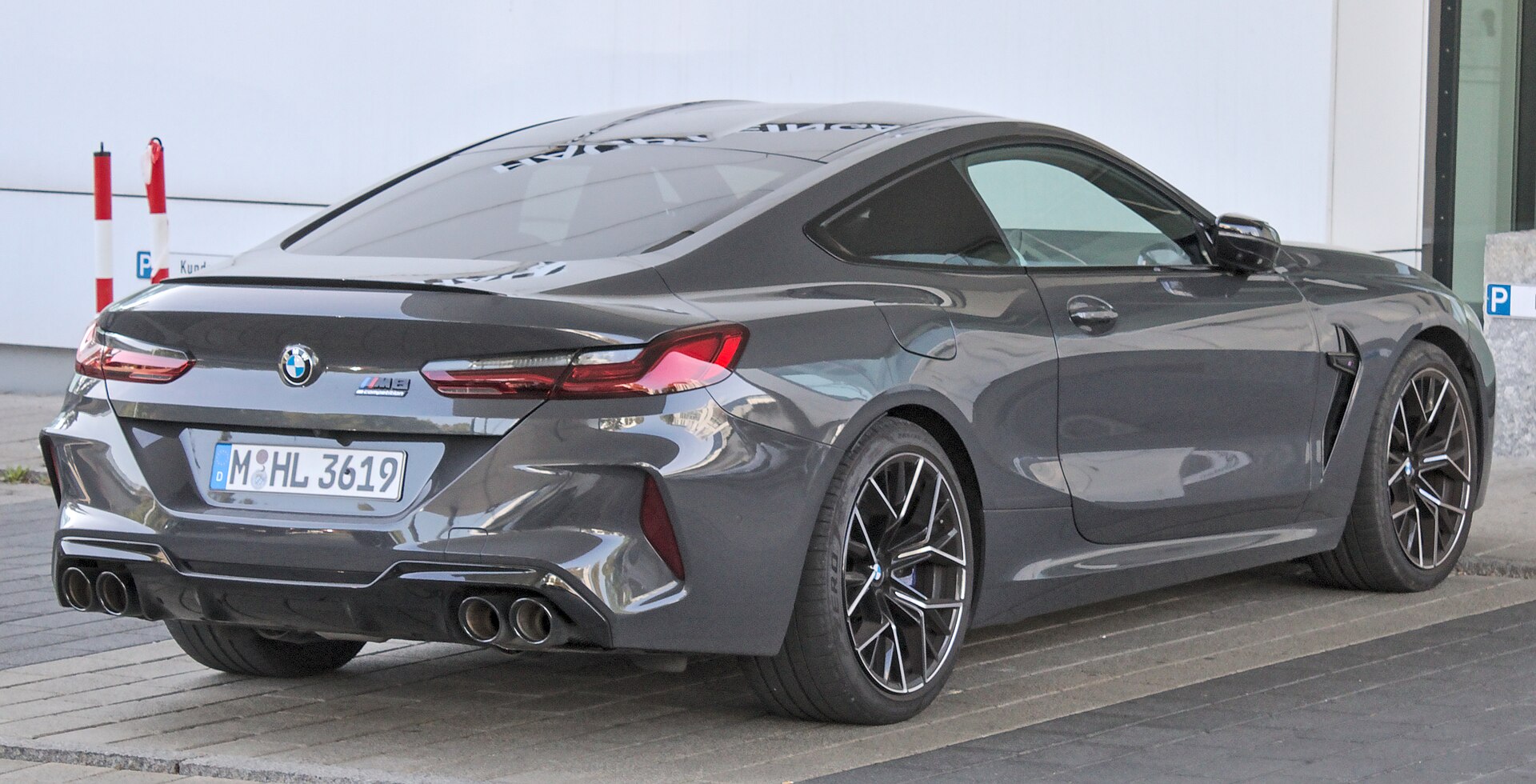
The BMW M8 is the crown jewel of the M Performance division — BMW's most powerful, most expensive production car. Launched in 2020 as a 2021 model year, the M8 is available in three body styles: Coupe (the purist choice), Convertible (the grand tourer), and Gran Coupe (the practical compromise). All three share the same magnificent engine and the same significant weight problem.
The heart of the M8 is the S63 engine — a 4.4-liter twin-turbocharged V8 that represents the pinnacle of naturally aspirated-era BMW engineering. The Competition variant produces 617 hp and 553 lb-ft of torque. The base M8 makes 503 hp, but skip it; you want the Competition. The difference is $15,000 upfront, but it's the standard that matters.
That turbocharged V8 is paired with an 8-speed automatic transmission and available xDrive all-wheel-drive system. The xDrive variant is genuinely better in all driving conditions — more confidence in the rain, more acceleration, better weight distribution. Standard M8s are rear-wheel-drive only, which is fine, but xDrive is the move if you plan to actually drive the car.
The M8 is heavy. The Coupe weighs 4,400+ pounds; the Convertible and Gran Coupe are even heavier. For context, a Porsche 911 Turbo S weighs roughly 3,700 pounds. That extra 700 pounds makes itself known on the back roads — not as a dealbreaker, but as a constant reminder that you're driving a car designed for comfort first, performance second.
Performance Reality: 0-60 Is Not Everything
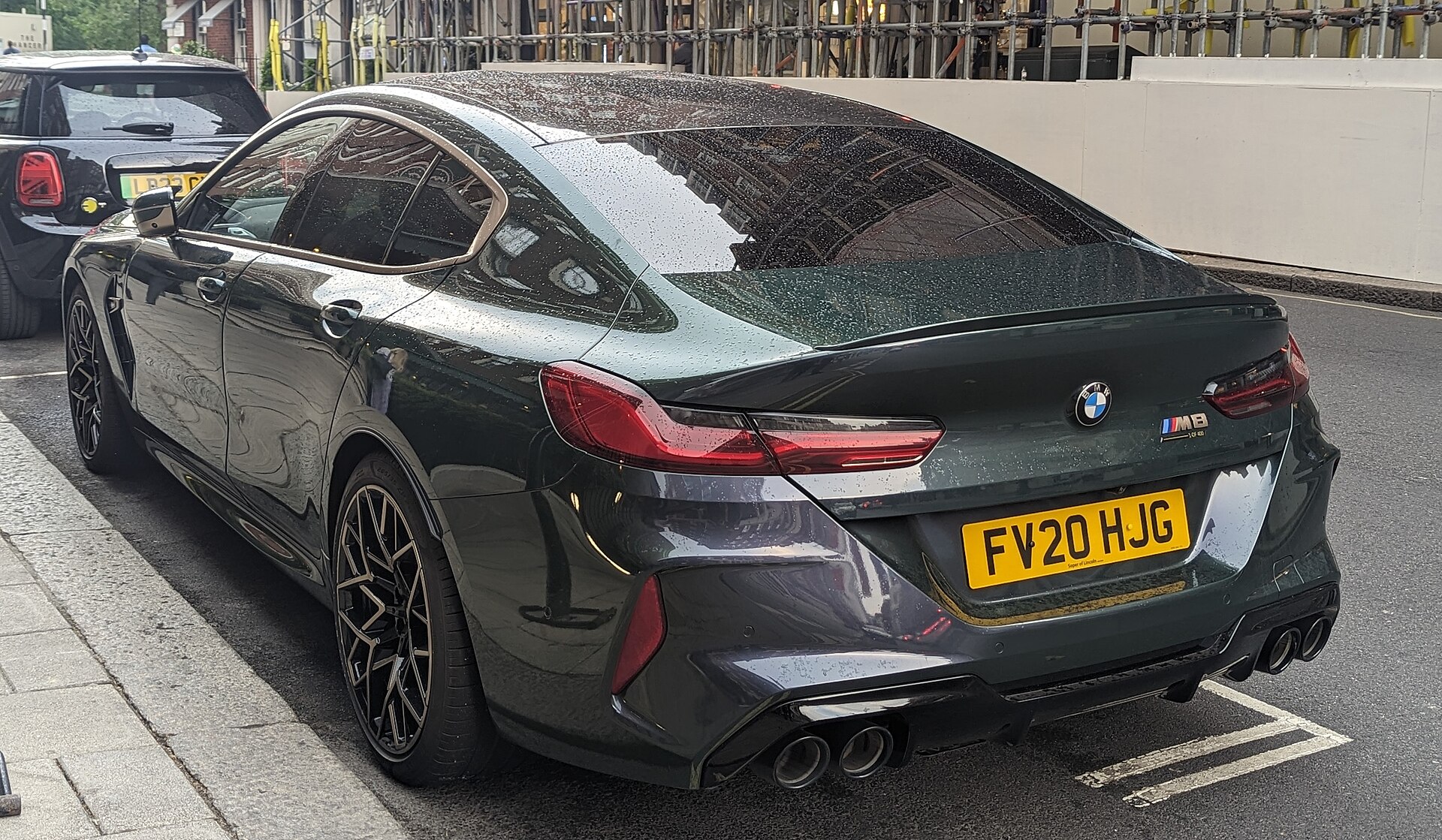
The M8 Competition hits 60 mph in exactly 3.0 seconds (verified by multiple publications). The top speed is electronically limited to 155 mph, though without the limiter it would exceed 180 mph. Visually, it's impossible to call the M8 slow. It accelerates with a roar and a sense of occasion that draws attention from everyone within earshot.
But here's where the M8 becomes polarizing: it doesn't feel as fast as its numbers suggest. This is the turbocharged curse. The S63 produces peak torque at just 1,800 rpm, so you feel the power delivery more as a constant shove than a crescendo. There's no screaming engine note at 8,000 rpm. The turbos do most of the work, and the experience feels more like controlled fury than theatrical performance. Compare this to a naturally aspirated competitor like the Ferrari Roma, and you'll feel the difference immediately.
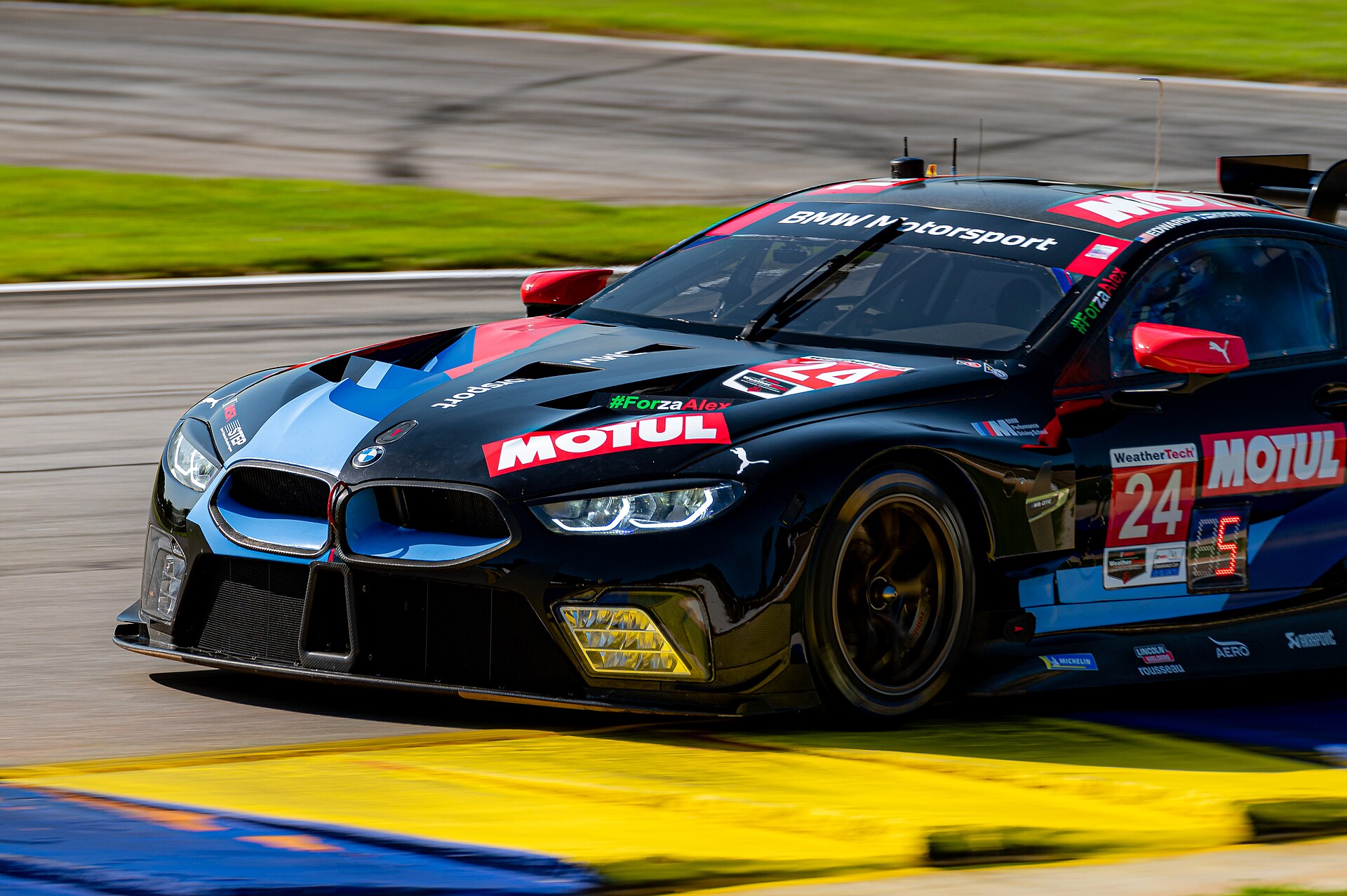
On the track, the M8's 4,400-pound weight becomes a liability. The Porsche 911 Turbo S circles faster and brakes harder, thanks to superior weight distribution and less rotating mass. The M8 is quick enough for a track day, but it's not a track-specialist car. You're not buying the M8 for apex-hunting weekend warrior sessions; you're buying it for confident, comfortable highway blasts and the occasional spirited canyon drive.
Where the M8 actually excels is in acceleration linearity. Because the twin turbos boost throughout the rev range, the acceleration never drops off. You don't hit a VTEC wall or wait for boost to kick in — it's present from the moment you touch the throttle. This makes the M8 genuinely quick in real-world driving scenarios: rolling acceleration on the highway, passing slower traffic, merging onto freeways. In these moments, the M8 feels faster than its straight-line numbers would suggest.
Driving Characteristics: Comfort First, Handling Second
The M8 is best understood not as a sports car, but as a luxury grand tourer with serious performance credentials. In Comfort mode, the suspension is genuinely compliant. The steering is light. The transmission shifts smoothly. You could drive this car cross-country without fatigue. The turbocharged engine is quiet at cruise — not silent, but refined. The interior is genuinely one of the best luxury cabins in any car: soft leather, the gorgeous curved BMW iDrive 8 display, ambient lighting that sets the mood.
Switch to Sport mode, and the M8 transforms. The suspension stiffens. The steering tightens. The transmission holds gears longer and executes downshifts with blips of the throttle. But even in Sport mode, the M8 prioritizes composure over aggression. The chassis control is superb — the car feels planted and stable even when you're pushing hard — but it doesn't reward the kind of precise steering input that sports cars traditionally do.
This is where Porsche has BMW beaten. The 911 Turbo S is lighter, more compact, and has a more direct connection between steering input and chassis response. The M8 feels like it's processing your inputs through layers of electronic mediation. That's not a criticism — it's the nature of the beast — but it's a real difference you'll feel if you've spent time in both cars.
The all-wheel-drive system is exceptional, though. In wet conditions or slippery surfaces, the M8 xDrive is dramatically more confident than the rear-wheel-drive version. If you're planning to drive the car year-round or in varied weather conditions, xDrive is a $2,500 option that pays for itself in peace of mind.
The Real Cost of Ownership: What the M8 Actually Costs to Own
The MSRP for a new BMW M8 Competition Coupe starts at $133,150. Add options (technology package, carbon interior trim, extended warranty) and you're easily at $150K+. A Gran Coupe adds roughly $10,000; a Convertible adds another $12,000.
But MSRP is only the starting point. Here's what actual M8 ownership costs:
| Expense Category | Annual Cost | Notes |
|---|---|---|
| Insurance | $2,500–$4,500 | Varies by age, location, driving record |
| Routine Maintenance | $1,500–$2,500 | Oil changes, filters, inspections |
| Fuel | $2,000–$3,000 | 13–15 mpg combined; premium fuel required |
| Tires (amortized) | $800–$1,200 | Michelin Pilot Sport 4S: $200+ per tire |
| Brakes (amortized) | $600–$1,000 | M-spec brakes: $5K+ when service due |
| Registration & Taxes | $600–$1,500 | State-dependent |
| Total Annual Running Cost | $8,000–$14,000 | Excludes depreciation |
That's roughly $650–$1,200 per month in running costs. Add depreciation (about $2,000–$2,500/month on a new car), and the true cost of ownership is $2,650–$3,700 per month. For a car you're driving, not storing, that's actually reasonable for the performance and luxury you're getting. But for an investment play? It's brutal.
The M8 is generally reliable from a BMW perspective. The S63 engine has proven robust in thousands of examples. The transmission is solid. Common minor issues include adaptive suspension noises, occasional iDrive software hiccups, and brake dust accumulation (M brake pads are dusty). None of these are serious, and none are expensive.
Depreciation: The M8's Greatest Weakness
Here's the painful truth: the BMW M8 loses approximately 40–50% of its value in three years. A car that costs $140,000 new will be worth $70,000–$84,000 in 36 months. That's a $14,000–$23,000 annual depreciation hit.
This happens for several reasons. First, the new car market for performance BMWs is competitive. A three-year-old M8 competes against the Mercedes-AMG GT (same price point, better depreciation), the Porsche 911 Turbo S (same performance, better prestige), and the upcoming M8 G90 generation (newer, more advanced). Used buyers have options, and M8s aren't first-choice for most.
Second, the M8 nameplate doesn't carry the historical weight of Ferrari or Porsche. Nobody buys an M8 purely for badge prestige. They buy it for the specific combination of performance, luxury, and practicality. That's a narrower market than you'd think.
Third, the M8 doesn't have the collector potential of a Porsche 911 or the exotic appeal of a Mercedes-AMG GT. In five years, a 2021 M8 will be worth $45,000–$55,000. A 2021 911 Turbo S will be worth $65,000–$75,000. That's the real difference between buying a fast car and buying a car that holds its value.
The practical implication: only buy the M8 new if you plan to keep it for 5+ years and genuinely want the warranty and newest technology. Otherwise, buy used at $65K–$90K and let the previous owner absorb the depreciation hit.
How It Compares: M8 vs. AMG GT vs. 911 Turbo S vs. Vantage
The M8 doesn't exist in a vacuum. Here's how it stacks up against the direct competitors you're probably evaluating:
| Category | BMW M8 Comp | Mercedes-AMG GT | Porsche 911 Turbo S | Aston Martin Vantage |
|---|---|---|---|---|
| Engine | 4.4L Twin-Turbo V8 | 4.0L Twin-Turbo V8 | 3.8L Twin-Turbo Flat-6 | 5.2L Twin-Turbo V12 |
| Horsepower | 617 hp | 585 hp | 640 hp | 715 hp |
| 0–60 mph | 3.0s | 3.4s | 2.6s | 3.5s |
| Used Price ($65–90K range) | $65K–$90K | $70K–$100K | $80K–$110K | $75K–$95K |
| 3-Year Depreciation | 40–50% | 35–45% | 30–40% | 45–55% |
| Annual Maintenance | $1,500–$2,500 | $2,000–$3,500 | $2,500–$4,000 | $3,500–$6,000 |
| Luxury & Tech | Excellent | Excellent | Good | Good |
| Practicality (seating) | 4 Full Seats (Gran Coupe: 5) | 2 Seats | 4 Seats | 4 Seats |
| Reliability | Good | Good | Excellent | Fair |
The Mercedes-AMG GT is the prestige pick — better badge recognition, similar performance, and slightly better depreciation. The Porsche 911 Turbo S is the sensible choice — fastest car, highest reliability, best track credentials, but significantly more expensive. The Aston Martin Vantage is the emotional pick — gorgeous design, intoxicating V12 soundtrack, but the worst depreciation and highest maintenance costs.
The M8 wins on one critical dimension: practicality. The Gran Coupe seats five adults in reasonable comfort. The Mercedes-AMG GT is a two-seater. The 911 is cramped in the back. The Aston is beautiful but compromised. If you need a car that can genuinely transport four people plus luggage, the M8 Gran Coupe is the only serious choice.
Which Version Should You Buy? Coupe, Convertible, or Gran Coupe?
The M8 comes in three flavors, and the choice matters more than you might think. Here's the breakdown:
M8 Coupe: The Purist Choice ($65K–$85K used)
The standard M8 Coupe is the design statement — sleek, aggressive, lower ride height, and the most engaging on technical roads. If you primarily drive alone or with one passenger, and you value handling over practicality, this is your car. Coupe depreciation is steepest because used buyers prefer the practicality of the Gran Coupe or the indulgence of the Convertible. That makes Coupes the cheapest on the used market — great for buyers, brutal for Coupe owners at resale.
M8 Convertible: The Grand Tourer ($70K–$90K used)
The Convertible has a power-operated soft top that operates in under 20 seconds. The cabin is impressively quiet and well-insulated when the top is up. Wind noise with the top down is present but not egregious for a big convertible. The Convertible is the most fun-focused version — you get fresh air, the V8 soundtrack, and all the luxury of the Coupe with better practicality for weekend trips.
M8 Gran Coupe: The Practical Choice ($75K–$95K used)
The Gran Coupe is the smart buy. It seats five, has a proper back seat, and includes a large hatchback trunk that actually fits luggage for four people on a road trip. You sacrifice the sleek coupe silhouette, but you gain genuine everyday versatility. If you're buying this car to actually drive regularly, the Gran Coupe is the standout choice. Read our best year to buy a BMW M8 guide for detailed variant recommendations by year.
The xDrive Decision: All-Wheel Drive vs. Rear-Wheel Drive
This is the most important option you'll choose. The xDrive all-wheel-drive system costs $2,500, but it transforms the driving experience, particularly in any weather beyond perfect conditions.
Standard rear-wheel-drive M8s are genuinely fun on dry roads — they're reactive, they respond to throttle input, and on the limit you get real feedback about tire grip. But in wet conditions, they demand more driving precision. A moment of inattention in the rain can result in oversteer. This is fine if you're an experienced driver and you plan to drive cautiously in bad weather, but it's a trade-off.
The xDrive system uses an electronically controlled multi-plate clutch that continuously adjusts torque distribution between the front and rear axles. The result is extraordinary stability and acceleration in any condition, combined with the agility of rear-wheel drive. It's the best of both worlds. If you drive year-round, drive in rain, or drive in snow, xDrive is essential. If you drive in Southern California and only when the sun is shining, the RWD is fine.
When Should You Buy the M8? The Right Time in the Market
The M8 launch generation (2020–2023) is where you want to focus your search. By 2026, you can find well-maintained 2020–2022 examples at excellent prices in the $65K–$85K range. The next-generation M8 (G90) is coming in 2026, which will cause used M8 values to drop another 5–10% as inventory increases. Wait until mid-2026 if you can; used prices will be lower and selection will be better.
Mileage sweet spot: 15,000–30,000 miles. At this mileage, the steep depreciation has already occurred, but the car is young enough that major services are still several years away. Cars over 50,000 miles are acceptable if the price reflects it; avoid cars over 80,000 miles unless they're priced like $35,000 bargains.
Color: White and black are the most common and least valuable. Silver, gray, and blue command modest premiums. If you see a used M8 in Donington Grey or Orca Black, these colors are more desirable and you'll pay slightly more, but you'll recover that premium when you sell.
How to Find and Buy the Right M8: A Step-by-Step Guide
Buying an M8 used is straightforward if you follow the process. Here's the approach we recommend:
Step 1: Set your budget realistically. Budget for purchase price plus $2,000/year in maintenance. If you're buying at $75,000, plan for $5,000 in annual running costs over the first five years. If that's uncomfortable, the M8 is beyond your budget.
Step 2: Choose your configuration. Decide on Coupe/Convertible/Gran Coupe, xDrive or RWD, and your preferred color. Don't compromise on these; they directly affect your ownership happiness and resale value.
Step 3: Search broadly. Use Autotrader, Cars.com, Bring a Trailer, and Carsandbids for inventory. Set filters for your configuration and sort by price. The best-priced M8s are often in markets with high luxury car turnover: Florida, Southern California, Texas, and the Northeast.
Step 4: Get a pre-purchase inspection. Non-negotiable. BMW M cars require expert evaluation. A proper PPI costs $500–$800 and should include a full diagnostic scan, suspension inspection, and cooling system pressure test. Find an independent BMW specialist; never use the selling dealer for a PPI.
Step 5: Negotiate with data. Use Kelley Blue Book, NADA Guides, and recent comparable sales to establish market value. Factor in any deferred maintenance — if the car needs new brake pads (M8s are expensive), take that off the asking price.
Step 6: Arrange financing. Use your bank or credit union if possible. If you need exotic car financing, specialist lenders like JJ Best Banc and Woodside Credit offer good rates. Expect 10–15% down and rates around 6–8% depending on credit and vehicle age.
When the M8 Is NOT Worth Buying
Be honest about whether the M8 is right for you. Walk away if:
You need a reliable daily driver. The M8 can be daily driven, but it shouldn't be. It's thirsty on fuel (13–15 mpg), needs premium gas only, has terrible parking visibility, and minimal ground clearance. Winter driving is stressful without xDrive. If you need a car that works every day, buy a 911 Turbo S (better in snow) or a traditional performance sedan like an Audi RS6.
You're stretching financially. The M8's running costs are real. If ownership requires depleting savings or taking on debt, walk away. This car should be easy to own, not stressful.
You haven't driven one. Always test drive before you buy. Some drivers find the steering numb, the brake response unintuitive, or the driving position awkward. Discover these dislikes before you've signed paperwork.
You're buying it as an investment. The M8 depreciates hard and doesn't have collector upside. Storage costs, insurance, and maintenance eat any appreciation potential. Drive the car; don't store it.
The Final Verdict
The BMW M8 is absolutely worth buying — in the used market at the right price. At $65K–$85K for a 2021–2022 model with 20,000–35,000 miles, you're getting one of the fastest, most luxurious performance cars ever produced at a price that reflects its depreciation pain. The xDrive system is exceptional in bad weather. The Gran Coupe is legitimately practical for a four-person road trip. The S63 engine, while turbocharged, produces genuinely exciting acceleration. The interior is one of the best luxury cabins available.
But here's the critical distinction: buying new at $133K+ MSRP is a different calculation. You're paying a $25,000+ premium to be the first owner, and you'll lose $40,000–$60,000 in value over three years. That math only works if you plan to keep the car for 5+ years, love the M8 specifically, and can afford the depreciation hit without financial strain.
If you want maximum performance-per-dollar, the M8 at current used prices is outstanding value. If you want a car that holds its value and gives you genuine driving pleasure, the Porsche 911 Turbo S is the smarter choice, even at higher used prices. If you want the most prestige, the Mercedes-AMG GT carries more weight. But if you want the best balance of speed, luxury, practicality, and value, the used BMW M8 is exactly what you should be looking at.
Ready to Find Your M8?
Automonitor connects you with vetted sellers, handles pre-purchase inspections, and provides real market data so you can buy with total confidence.
Start Your Search →