Is an Aston Martin DBX Worth Buying?
A thorough analysis of Aston Martin's luxury SUV — from the standard V8 to the ferocious 707, covering performance, ownership costs, and whether it justifies the price
The Short Answer: Yes, If You Understand What You're Buying
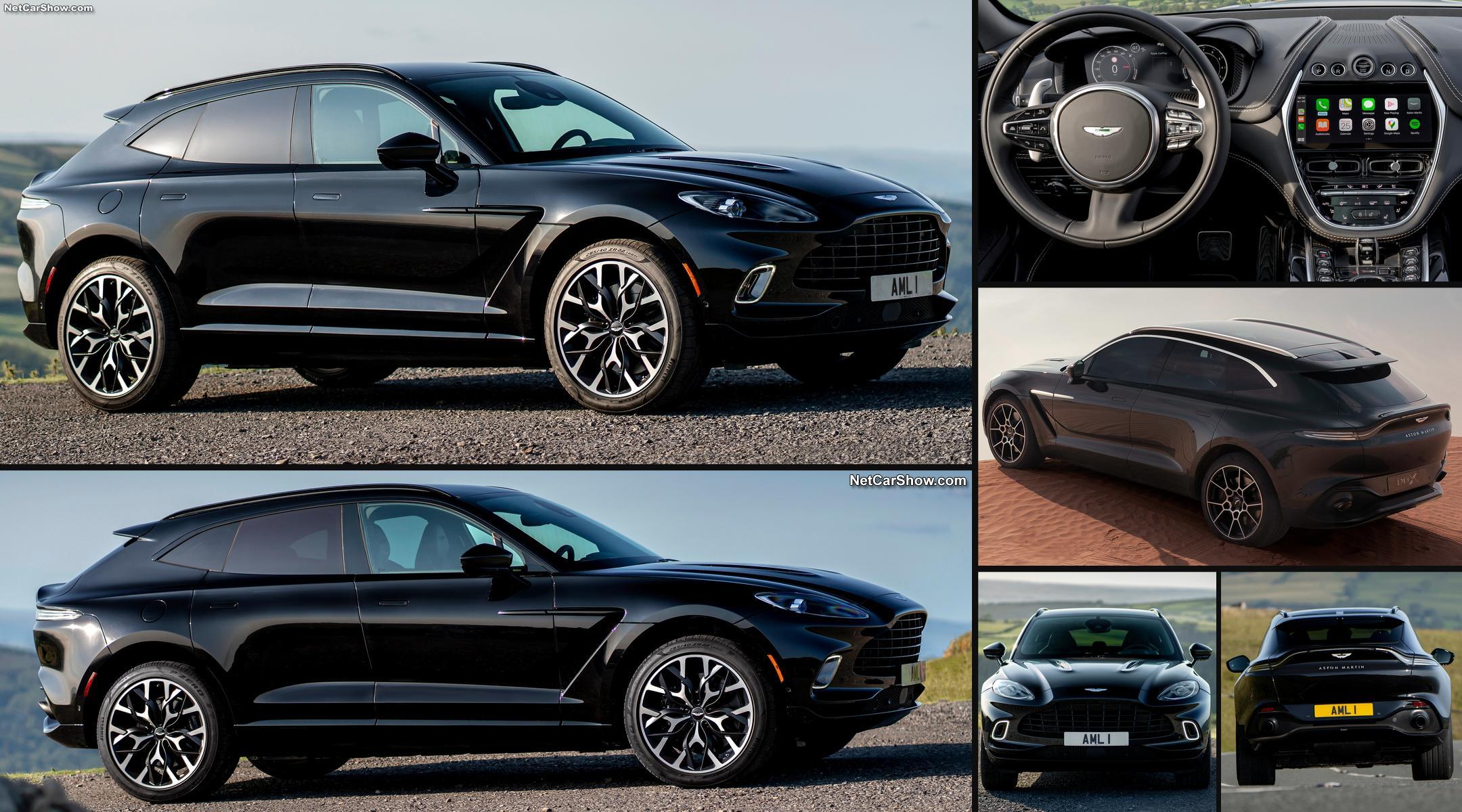
The Aston Martin DBX is worth buying. But context matters. When Aston Martin launched the DBX in 2020, it wasn't a passion project — it was a lifeline. The British luxury brand was hemorrhaging cash, and the company's survival depended on the DBX finding an audience among buyers who wanted exotic luxury without the compromises of a two-seat supercar. The DBX succeeded beyond expectations, becoming Aston Martin's most important model and the car that kept the marque alive through its financial crisis.
Today, the DBX proposition is clearer than ever. The standard DBX with its 542-horsepower Mercedes-AMG V8 is a genuinely beautiful luxury SUV. The DBX707 with 697 horsepower is the world's most powerful production luxury SUV — a statement that transforms the entire ownership proposition. And crucially, the depreciation curve has shifted in buyers' favor: used DBX prices have become compelling, especially for those willing to buy the standard model instead of the latest generation.
The question isn't whether the DBX is worth buying. The question is whether the DBX is worth buying for you. This guide answers that question by examining the car's design, performance, reliability, ownership costs, depreciation, and positioning against competitors like the Lamborghini Urus, Bentley Bentayga, and Porsche Cayenne Turbo GT.
What the DBX Is: Aston Martin's First SUV, and Its Crown Jewel
The DBX debuted in 2020 as Aston Martin's first-ever SUV and only four-seat model. It's built on a bespoke platform that uses a Mercedes-AMG 4.0-liter twin-turbo V8 engine — the same powerplant found in the Mercedes-AMG E63 and G63. This wasn't laziness; it was pragmatism. The AMG V8 is one of the most proven, reliable engines in the automotive world, and it gave Aston Martin a foundation on which to build something genuinely special.
The DBX standard produces 542 horsepower and 516 lb-ft of torque. It accelerates from 0-60 mph in approximately 4.5 seconds and tops out at 181 mph. For most buyers, this is more than sufficient. The suspension is tuned for a combination of comfort and performance, the ride height is substantial, and the presence — oh, the presence — is unmistakable. Nothing else looks like a DBX. The proportions are perfect. The grille is iconic. The interior is sumptuous.
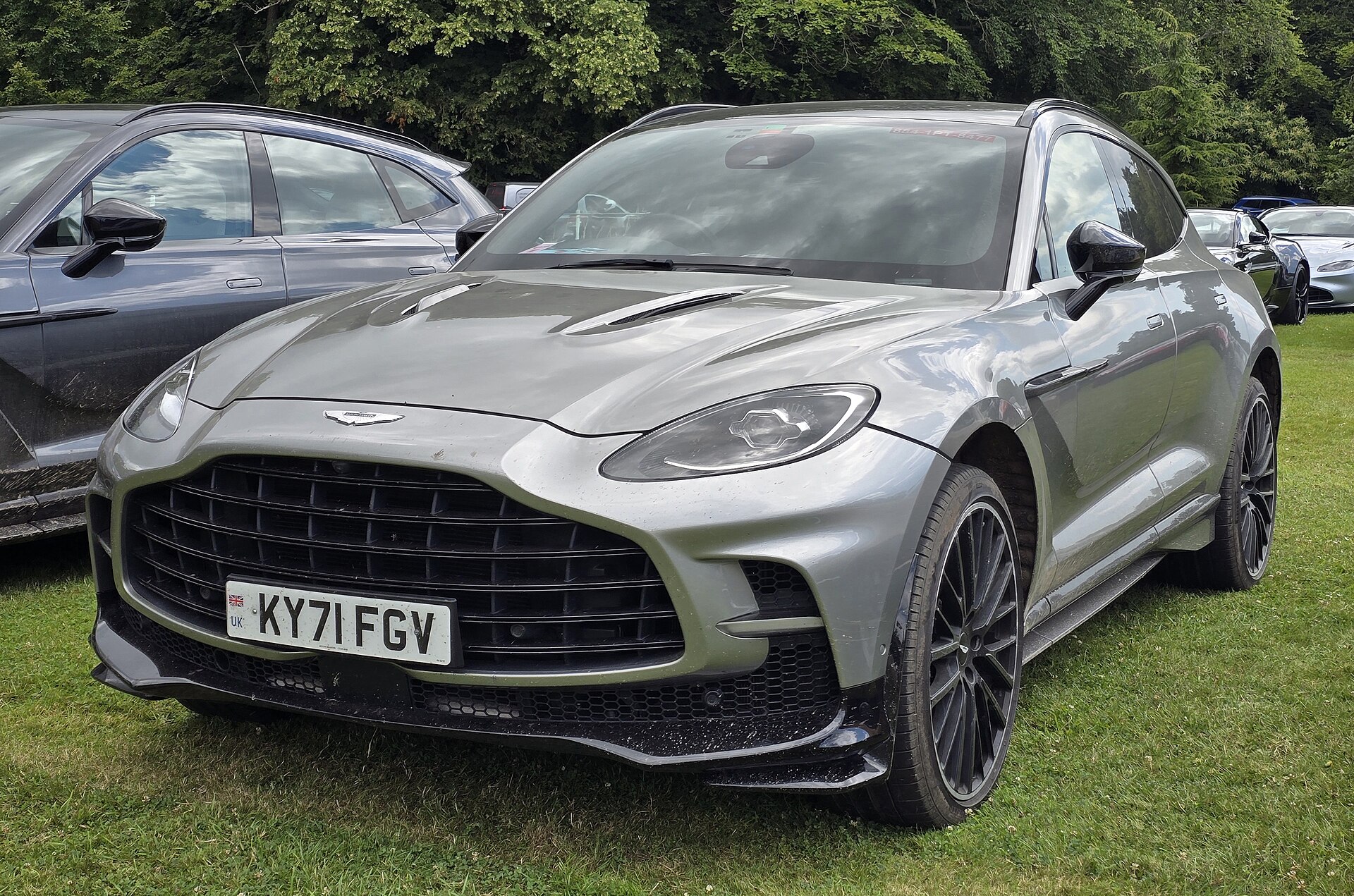
Then came the DBX707, launched in 2022. Aston Martin took the same platform, increased the turbo boost, recalibrated the engine management, upgraded the exhaust, stiffened the suspension, and added carbon ceramic brakes. The result is a luxury SUV with 697 horsepower, 649 lb-ft of torque, 0-60 in 3.1 seconds, and a top speed of 193 mph. At launch, it was the world's most powerful luxury SUV — a distinction it holds to this day. The 707 isn't just more powerful than the standard DBX; it's fundamentally different. It's an Aston Martin that doesn't apologize.
Design and Presence: The Most Gorgeous SUV Ever Built
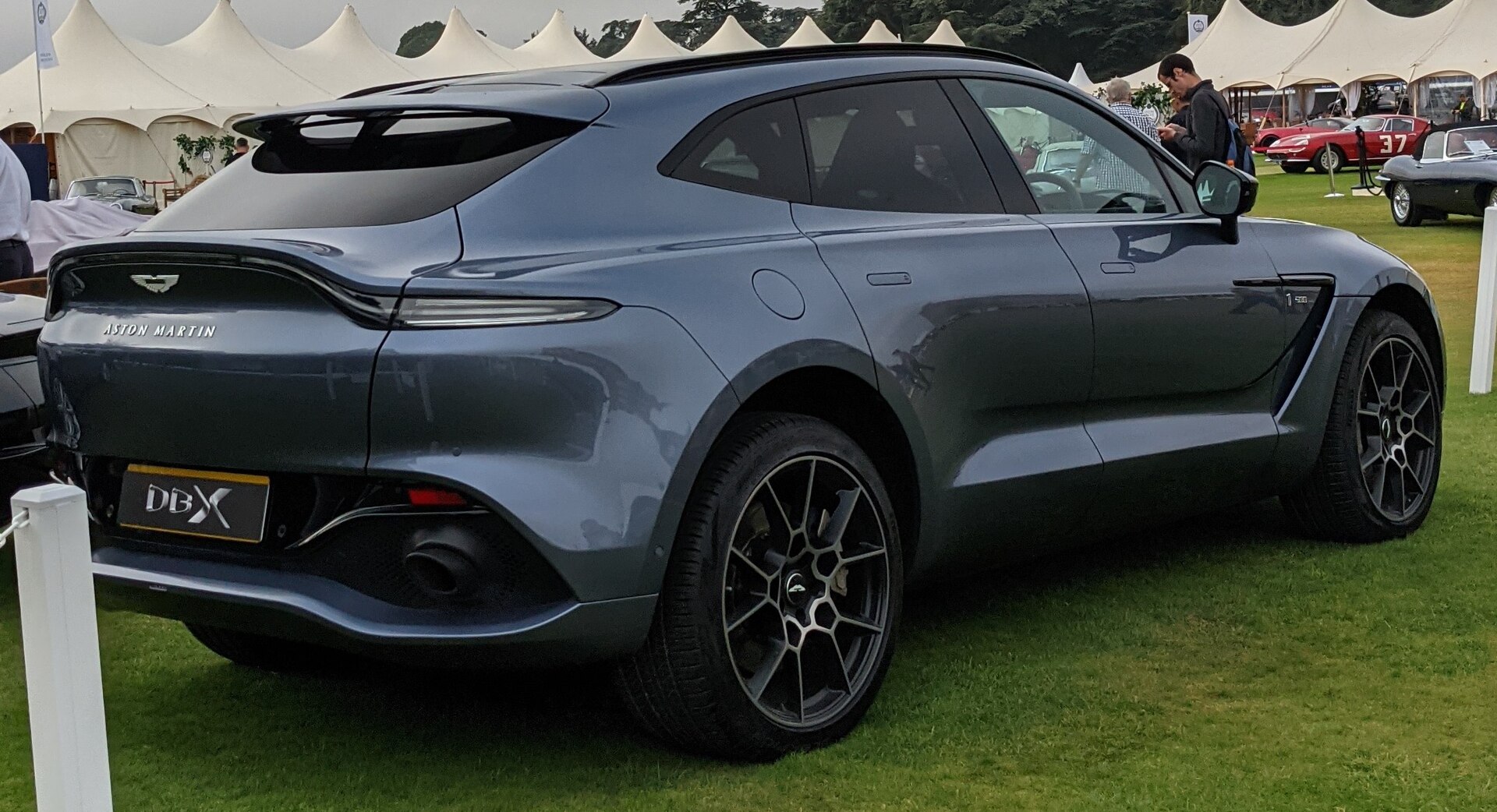
We need to talk about how the DBX looks, because this is why people buy it. The DBX's proportions are nearly perfect. The clamshell hood, the flared haunches, the extended wheelbase, the relationship between the cabin and the cargo area — every element works together to create an object of desire. This is a design that photographs beautifully and looks better in person. Competitors like the Range Rover Sport look like trucks. The Bentley Bentayga looks like a Bentley shrunken down. The Porsche Cayenne looks angular and corporate. The DBX looks like a work of art.
Inside, the DBX offers genuine luxury. The leather is supple. The wood trim is real. The seats are supportive without being harsh. The infotainment system, borrowed from Mercedes-Benz, works intuitively. The cabin insulation is excellent — wind and tire noise are well-controlled even at highway speeds. The steering wheel, the instrument cluster, the touch points — everything has an air of occasion. You feel like you're driving something special, because you are.
The DBX's emotional appeal is its superpower. You don't buy it because it's the fastest SUV or the most spacious or the most practical. You buy it because every time you drive it, you're reminded that you made a decision that prioritized beauty, exclusivity, and the intangible feeling of owning something different.
Performance Reality: Standard vs. 707 — The Gap Is Enormous
On paper, the difference between 542 and 697 horsepower seems incremental. On the road, it's transformative. The standard DBX feels quick and competent. The DBX707 feels genuinely quick — faster than most people expect from a 4,850-pound SUV. The 0-60 time drops from 4.5 seconds to 3.1 seconds. That's the difference between "quick" and "supercar territory."
The DBX707 also gets an active exhaust that opens under acceleration, producing a sound that has no business coming from an SUV. It's not quite as visceral as a naturally aspirated engine, but it's dramatic enough to make every acceleration feel like an event. The standard DBX is quiet and refined. The 707 is theatrical.
The standard DBX is appropriate for buyers who want luxury and presence with genuine performance. The DBX707 is for buyers who want to remind themselves — and everyone else on the road — that this isn't just an SUV, it's an Aston Martin. If you're budget-constrained, the standard makes sense. If you can afford it, the 707 is the version that justifies the entire premise.
Pricing and Ownership Costs: What You'll Actually Spend
Let's talk money. Here's what the DBX market looks like in early 2026:
| Model | MSRP (New) | Used Market Range | Year/Mileage Sweet Spot |
|---|---|---|---|
| Standard DBX (2021-2023) | $181,000 | $110,000–$160,000 | 2021–2022, 8K–18K miles |
| Standard DBX (2024-2025) | $189,000 | $160,000–$175,000 | 2024–2025, under 5K miles |
| DBX707 (2023-2024) | $239,000 | $170,000–$220,000 | 2023–2024, under 10K miles |
| DBX707 (2025) | $245,000 | $210,000–$240,000 | 2025, under 3K miles |
The most compelling value proposition is a 2021-2022 standard DBX with 10K-20K miles at $120K-$140K. You're getting a two-year-old luxury SUV with full Aston Martin warranty transfer for less than the cost of a new Range Rover Sport SVR. The 707, while expensive, holds value better than the standard — 20-30% depreciation versus 35-45% for the standard DBX.
Now, annual ownership costs. This is where the dream meets reality:
| Expense Category | Annual Cost | Notes |
|---|---|---|
| Insurance | $5,000–$8,000 | Varies by location, age, driving record |
| Routine Maintenance | $3,500–$5,500 | Oil changes, filter service, fluid checks |
| Fuel | $4,000–$5,000 | 15–18 mpg combined; premium fuel required |
| Tires (amortized) | $1,200–$2,000 | Michelin Pilot Sport 4S replacement $2,400–$3,200 |
| Brake Service (amortized) | $800–$1,500 | Carbon ceramics optional but recommended |
| Registration & Taxes | $1,200–$2,500 | State-dependent |
| Total Annual Running Cost | $15,700–$24,500 | Excludes depreciation & major repairs |
This is roughly $1,300–$2,000 per month in running costs. For context, that's more expensive than a Porsche Cayenne ($2,500–$3,500/month depreciation) but comparable to a Bentley Bentayga ($1,500–$2,200/month running costs). If this budget feels comfortable, you're in the right market. If it feels stretched, reconsider.
Depreciation: Standard vs. 707 Tells a Different Story
The standard DBX has depreciated heavily. A 2021 model that cost $185K new is now worth $120K–$140K. That's a 25-35% loss over four years. It's significant, but not catastrophic — many luxury SUVs lose 40-50% in the same period.
The DBX707 tells a different story. Because it's newer, rarer, and more desirable as a driver's car, it's holding value better. A 2023 DBX707 that cost $238K has likely depreciated only 20-25% to date. This is largely because there are far fewer 707s on the market, and they're viewed as more special than the standard car.
The practical implication: if you're budget-conscious, buy a 2021-2022 standard DBX at $120K-$140K. The depreciation has already happened. You're buying at a price point where the car makes sense relative to competitors. If you can afford the premium, the DBX707 is the version that holds value better and delivers the emotional payoff that justifies the exotic car category.
Reliability and Ownership Reality: Not Perfect, But Improving
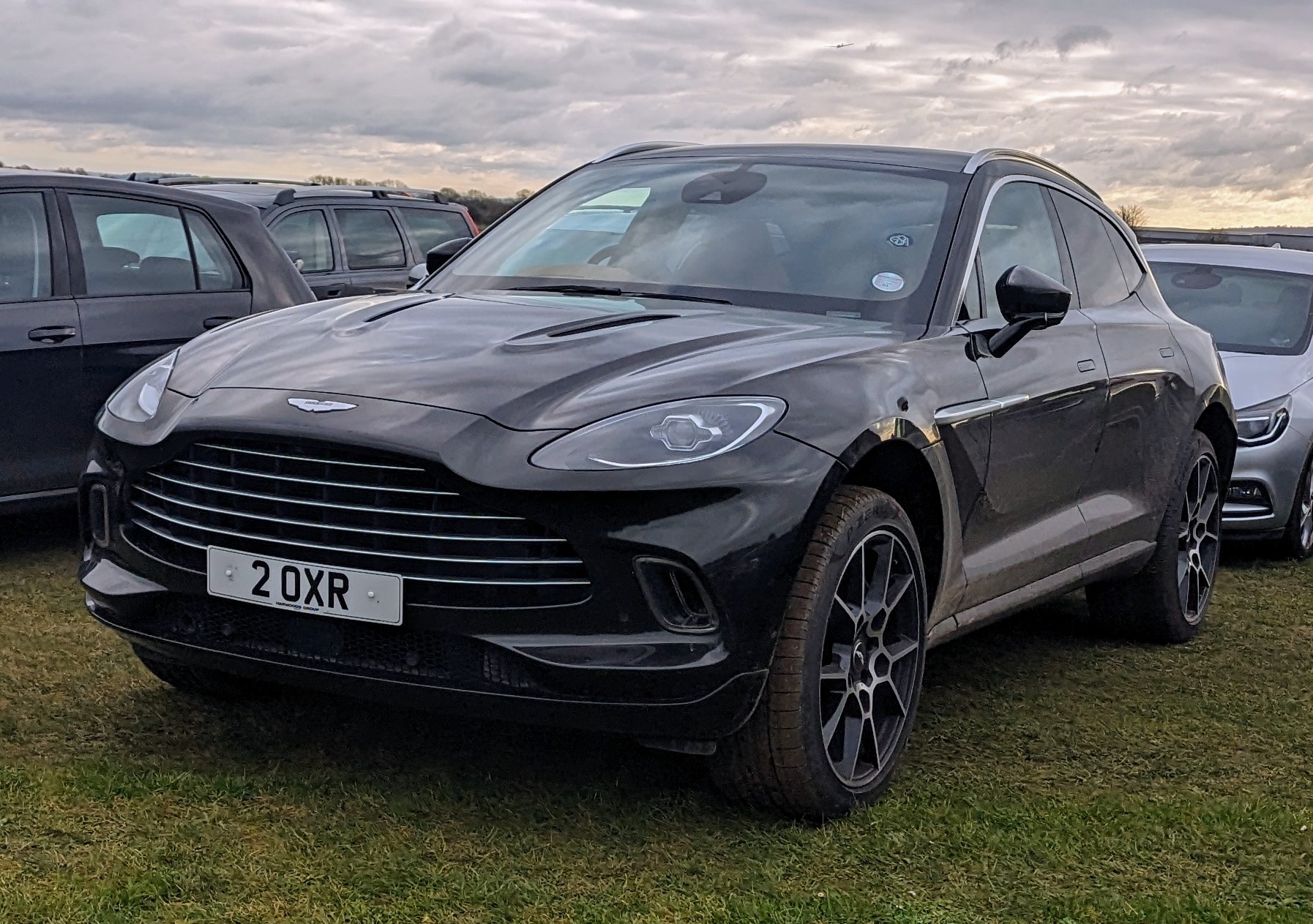
Aston Martin's historical reliability reputation is deserved — but the DBX is different. Because it uses the Mercedes-AMG V8 engine and transmission, you're getting an engine with millions of miles of real-world validation. The twin-turbo 4.0-liter V8 is one of the most reliable engines in the world. The nine-speed automatic is proven. The electrical architecture is Mercedes-derived.
That said, there are Aston Martin-specific concerns:
- Infotainment glitches: The MBUX system can be finicky. Software updates have helped, but some owners report occasional freezes or unresponsiveness. This is annoying, not expensive — usually resolved by a software update.
- Air suspension: Some early DBX models (2020-2021) developed minor air suspension noises. This is rare and typically covered under warranty if caught early.
- Trim and panel gaps: Some owners report fit-and-finish inconsistencies. Aston Martin's manufacturing is improving, but it's not at the level of Porsche or Bentley. This is cosmetic, not structural.
- Brake dust accumulation: The brake dust from the Brembo system is heavy. Plan to wash the wheels more frequently than you would on a Japanese luxury SUV.
Overall reliability assessment: The DBX is as reliable as any luxury SUV in its category, and more reliable than older Aston Martins or most Ferraris. If you're comparing to a Porsche Cayenne Turbo GT, the Porsche is probably slightly more bulletproof. If you're comparing to a Range Rover Sport, the DBX is comparable or slightly better. The Mercedes-Benz components are the difference.
Competitive Comparison: DBX707 vs. Lamborghini Urus S vs. Bentley Bentayga V8 vs. Porsche Cayenne Turbo GT
You're not buying in a vacuum. Here's how the DBX707 stacks up against the cars you're probably also considering:
| Category | DBX707 | Urus S | Bentayga V8 | Cayenne Turbo GT |
|---|---|---|---|---|
| Engine | 4.0L Twin-Turbo V8 | 4.0L Twin-Turbo V8 | 4.0L Twin-Turbo V8 | 4.0L Twin-Turbo V8 |
| Horsepower | 697 hp | 657 hp | 542 hp | 670 hp |
| 0–60 mph | 3.1s | 3.6s | 4.0s | 3.5s |
| Used Price (2023) | $180K–$210K | $175K–$210K | $140K–$180K | $160K–$200K |
| 5-Year Depreciation | ~25% | ~28% | ~30% | ~22% |
| Annual Maintenance | $3.5K–$5.5K | $4.5K–$7K | $4K–$6K | $2.5K–$4K |
| Design & Presence | Exceptional | Aggressive | Conservative | Subtle |
| Driving Feel | Emotional | Dramatic | Refined | Sporty |
| Reliability | Good | Mixed | Excellent | Excellent |
The Lamborghini Urus S is more aggressive and slightly cheaper, but the Lamborghini badge carries a different expectation — when it breaks, it breaks harder. The Bentley Bentayga V8 is more understated and more refined, but it lacks the emotional punch. The Porsche Cayenne Turbo GT is the sensible choice — it's the best driver's car of the group and has near-bulletproof reliability, but it feels like a tool rather than an indulgence. The DBX707 wins on presence and emotional connection. It loses on raw reliability and driving dynamics compared to the Porsche.
Which DBX Should You Buy? Standard vs. 707
If your budget is $120K-$150K: Buy a 2021-2022 standard DBX. You get 90% of the experience at 40% of the price. The 542-horsepower engine is genuinely quick, the interior is sumptuous, and the presence is unmatched. This is the user's buy.
If your budget is $150K-$180K: Still buy a standard DBX, but look for a newer 2023-2024 model with lower miles. The warranty will provide peace of mind, and the car is in its prime.
If your budget is $180K-$220K: This is the DBX707 sweet spot. A 2023-2024 DBX707 with 5K-10K miles delivers the full emotional experience — the 0-60 time, the exhaust note, the knowledge that you're driving the world's most powerful luxury SUV. The depreciation curve favors you, and the driving experience justifies the premium.
If your budget is $220K+: Buy the newest DBX707 you can find. Spec it with carbon ceramic brakes and the active exhaust. This is a car designed to be driven hard, and the higher-spec options only add to the experience.
When the DBX Is NOT Worth Buying
Be honest with yourself. The DBX isn't the right car if:
You need bulletproof reliability. If you're the type of person who keeps a car for 10+ years and expects zero maintenance surprises, buy a Porsche Cayenne or Mercedes G-Class. They're more predictable.
You want understated luxury. The DBX is a design statement. Every person at a valet or parking lot will look at it. If you prefer to fly under the radar, the Bentley Bentayga is more discreet.
You need maximum practicality. The Range Rover Sport has more interior space and better off-road capability. The DBX prioritizes beauty over utility.
You're buying it purely as an investment. Cars depreciate. The DBX is a depreciating asset that costs $15K-$25K per year to operate. Buy it because you love driving it, not because you think it will appreciate.
You've never driven one. The DBX feels different in person — the ride, the visibility, the seat position, the steering weight. Drive one before you commit. Some buyers find it less comfortable than they expected; others become instant evangelists.
The Used DBX Value Play: Where the Real Opportunity Lies
Here's the truth that most exotic car buyers don't realize: 2021-2022 standard DBX models at $120K-$140K represent extraordinary value. You're getting a car that cost $185K new, that's now four years old, with full transferable warranty, and sits in a price category where it can actually be driven without the paranoia that accompanies higher-end cars.
This is the DBX for people who want the experience without the financial terror. You can take it on a 500-mile road trip. You can park it at a restaurant. You can drive it in the rain. The depreciation has already happened, and the car is stable. The only downside is that you're buying a car at the end of its first generation rather than the beginning of a new one.
The 2023-2024 standard DBX at $150K-$170K is the compromise. Newer, lower mileage, on the refreshed platform, but still at a price that makes sense. The DBX707 used at $170K-$210K is for buyers willing to pay for the performance and emotional experience.
The Smart Way to Buy: Steps That Minimize Risk
Step 1: Determine your real budget. Add purchase price plus 18 months of running costs ($23K-$37K). If this total is uncomfortable, wait until it is.
Step 2: Choose standard vs. 707. The standard is the smarter buy for most people. The 707 is the buy for people who want to justify the expense through driving enjoyment.
Step 3: Get a pre-purchase inspection. Non-negotiable. Find an Aston Martin specialist ($800-$1,200) who will check the air suspension, electronics, engine management, brake condition, and transmission function. A used DBX is a premium car, and you need premium inspection.
Step 4: Check service history. Did the previous owner maintain it properly? Are service records documented? This matters enormously for a used Aston Martin.
Step 5: Test drive multiple examples. Drive different years, different mileages, both standard and 707. Understand how the car feels, sounds, and handles before you commit.
Step 6: Negotiate from data. Know the market value. Don't let the salesperson control the narrative. Use completed sales data to make your offer.
Why Automonitor Makes This Easier
At Automonitor, we specialize in exotic and luxury vehicle acquisitions. We track DBX inventory across 200+ verified dealers, we maintain historical pricing data that lets us identify genuine value, and we coordinate pre-purchase inspections with certified Aston Martin specialists. Finding the right DBX is easier when you have resources that understand the market.
The Final Verdict
The Aston Martin DBX is worth buying. The standard DBX is a beautiful, emotionally rewarding luxury SUV that holds value better than most competitors. The DBX707 is an extraordinary driver's car that happens to be an SUV. The design is timeless. The interior is sumptuous. The presence is unmatched.
The depreciation has become favorable for used buyers. A 2021-2022 standard DBX at $120K-$140K is an exceptional value proposition — you're buying a two-year-old luxury SUV with full warranty at less than the cost of a new Porsche Cayenne Turbo. The DBX707 used is even more compelling as a driver's car, holding value better and delivering the full performance promise.
Is it worth buying? Yes — if you can afford the running costs, understand the depreciation curve, and buy the right variant for your needs. The DBX was created to save Aston Martin, and it succeeded by delivering something that no other company can quite replicate: a luxury SUV that looks like a masterpiece and drives like an Aston Martin.
If you're ready to find your DBX, start with Automonitor's inventory, where we track every available example and provide real market context. We'll help you navigate the process, coordinate inspections, and ensure you end up in the right car at the right price.
Ready to Find Your Aston Martin DBX?
Automonitor connects you with vetted sellers, handles pre-purchase inspections, and provides real market data so you can buy with total confidence.
Start Your Search →