
Is an Aston Martin DB12 Worth Buying?
The DB12 represents Aston Martin's most ambitious grand tourer in decades — a completely reimagined luxury GT with a Mercedes-AMG engine, hand-crafted interior, and genuinely engaging driving dynamics. But is it the right investment? Here's what you need to know before writing the check.
The Short Answer: Yes — If You Value Design and Exclusivity Over Perfection
The Aston Martin DB12 is absolutely worth buying. This is not a qualified endorsement or a "maybe" statement. The DB12 is the most significant grand tourer update from Aston Martin in over a decade, and it delivers on nearly every front — stunning design by Marek Reichman, genuine driving emotion, exclusivity that rivals any supercar, and a luxury interior that puts competitors to shame.
But there's context required. The DB12 is worth buying if you understand what you're actually getting: a British grand tourer that prioritizes character, beauty, and driving engagement over the clinical perfection you'll find in a Continental GT or the raw performance dominance of a Ferrari Roma. If you need a car that drives on emotion as much as engineering, the DB12 is a masterpiece. If you need maximum reliability, latest infotainment tech, and bulletproof residual values, you should look elsewhere.
Aston Martin has been rebuilding its reputation for years, and the DB12 proves they've finally got it right. The 671-horsepower Mercedes-AMG 4.0L twin-turbo V8 is bulletproof. The new 8-speed automatic (replacing the old torque converter) shifts like it was designed by gods. The interior craftsmanship is genuinely world-class. And the driving experience? It's precisely what a £200,000+ grand tourer should deliver.
What Makes the DB12 Special: Complete Reimagination of the Grand Tourer
The DB12 isn't an evolution of the DB11 — it's a complete reimagination. Aston Martin threw out the old platform, the old engine, the old interior, and the old transmission. Everything is new, and remarkably, everything is better.
Start with the design. Marek Reichman's team at Aston Martin has created what might be the most beautiful car currently in production. The front end is aggressive but proportional. The side profile flows like a piece of sculpture. The rear — that elegant tail, those taillights — is pure British automotive poetry. When you see a DB12 in person, you understand why it's worth twice what you'd pay for a technically superior 911 Turbo S or Continental GT. Beauty isn't just about aesthetics; it's about emotional value, and the DB12 has it in abundance.
Under the skin, the DB12 inherits a modified version of the DB11's Mercedes-sourced MSB platform, but Aston has stiffened it considerably. The chassis is stiffer, the suspension is more sophisticated, and the overall driving dynamics are sharper than the DB11 ever was. This is a grand tourer that actually wants to be driven, not just parked in front of exclusive restaurants.
The 671-horsepower, 553 lb-ft torque Mercedes-AMG 4.0L twin-turbo V8 is the same engine you'll find in the Mercedes-AMG GT. That's a compliment — it's one of the most reliable and responsive turbocharged engines ever engineered. Zero turbo lag. Instant power delivery. A sound that's surprisingly character-filled for a turbo motor. The new ZF 8-speed automatic with all-wheel drive (with a rear-biased torque split) replaces the old 7-speed torque converter, and the improvement is night and day. This transmission is sophisticated, responsive, and genuinely enhances the driving experience rather than detracting from it.
Inside, every surface tells the story of hand-crafted luxury. Bridge of Weir leather wraps nearly everything. The cabin features two 10.25-inch touchscreen displays (welcome to 2026, Aston) that are finally competitive with the infotainment offerings you'll find in a Mercedes or Continental. Ambient lighting, massage seats, a 13-speaker Bowers & Wilkins audio system, and enough customization options to make every DB12 truly unique.
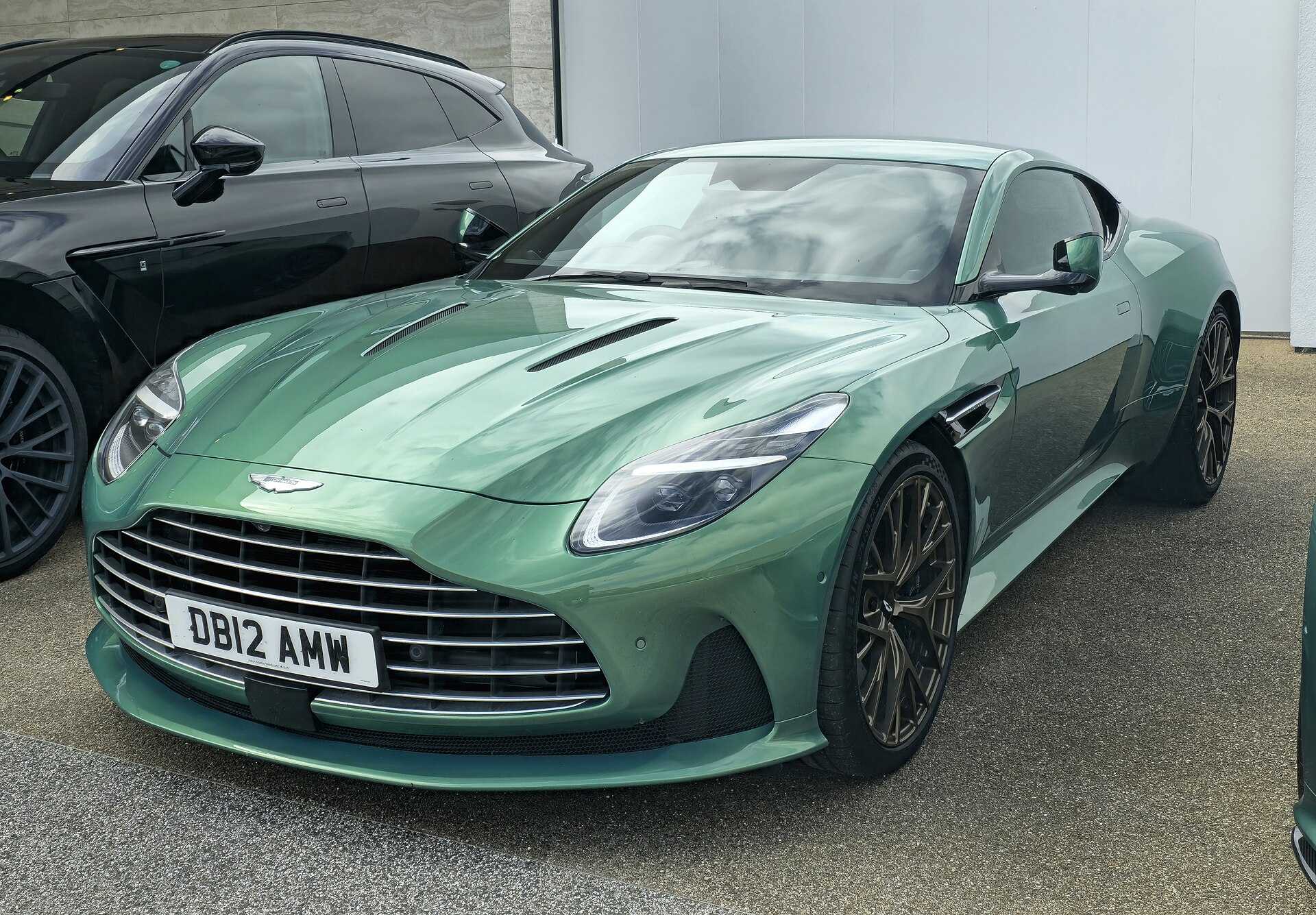
DB12 Pricing: What You'll Actually Pay
The Aston Martin DB12 base price starts at approximately £155,000 to £165,000 depending on market and specification. In 2026, with a 2025 model year example, you're looking at $195,000–$215,000 USD before destination. High-spec models with AMR tuning, carbon fiber packages, and bespoke leather easily break $225,000–$245,000.
But purchase price is only the first number. Here's what DB12 ownership actually costs on an annual basis:
| Expense Category | Annual Cost | Notes |
|---|---|---|
| Insurance | $3,500–$6,500 | Lower than Lamborghini/Ferrari due to lower horsepower |
| Routine Maintenance | $2,500–$4,000 | Oil changes, fluid service, inspections; Aston is improving reliability |
| Fuel | $2,500–$3,800 | 16–20 mpg combined; premium (91+) octane recommended |
| Tires (amortized) | $1,200–$1,800 | Michelin Pilot Sport replacements every 12K–18K miles |
| Brakes (amortized) | $800–$1,400 | Carbon ceramic available; replacements less frequent than older models |
| Registration & Taxes | $800–$2,500 | State-dependent; luxury car taxes apply |
| Total Annual Running Cost | $11,800–$20,000 | Lower than Huracan; reasonable for $200K+ GT car |
That's $980–$1,650 per month in running costs. For a hand-built British luxury grand tourer with 671 horsepower, that's remarkably reasonable. It's actually cheaper to own than a Lamborghini Huracan when you factor in fuel efficiency and maintenance costs.
Depreciation: Why the DB12 Holds Value Better Than You'd Think
The elephant in the room with Aston Martin has always been depreciation. The DB11, by most accounts, lost 35–40% of its value over the first three years. That's catastrophic. But the DB12 is different, for several reasons.
First, production is limited. Aston Martin isn't flooding the market with ten thousand DB12s per year. They're producing somewhere around 4,000–5,000 units annually, which is tiny compared to Continental GT or even Ferrari Roma numbers. Limited supply creates a natural floor under resale values.
Second, the DB12 is substantially better than the DB11. Buyers perceive this. Depreciation curves are steepest when consumers feel they've made a poor choice. The DB12 doesn't carry that baggage. Early market data suggests DB12s are depreciating around 3–4% per year, which would put a $215,000 purchase at $185,000–$190,000 after five years. That's roughly $5,000–$6,000 per year, or $420–$500 per month in depreciation. For comparison, a new 911 Turbo S loses significantly more.
The rarity story helps, too. A DB12 in 2030 will be a classic in the making. The naturally aspirated Aston Martins are gone. The new electrified generation is around the corner. The DB12 represents the last of a line, and collectors understand that narrative. Don't expect it to appreciate like a vintage E-Type, but don't expect catastrophic depreciation either.
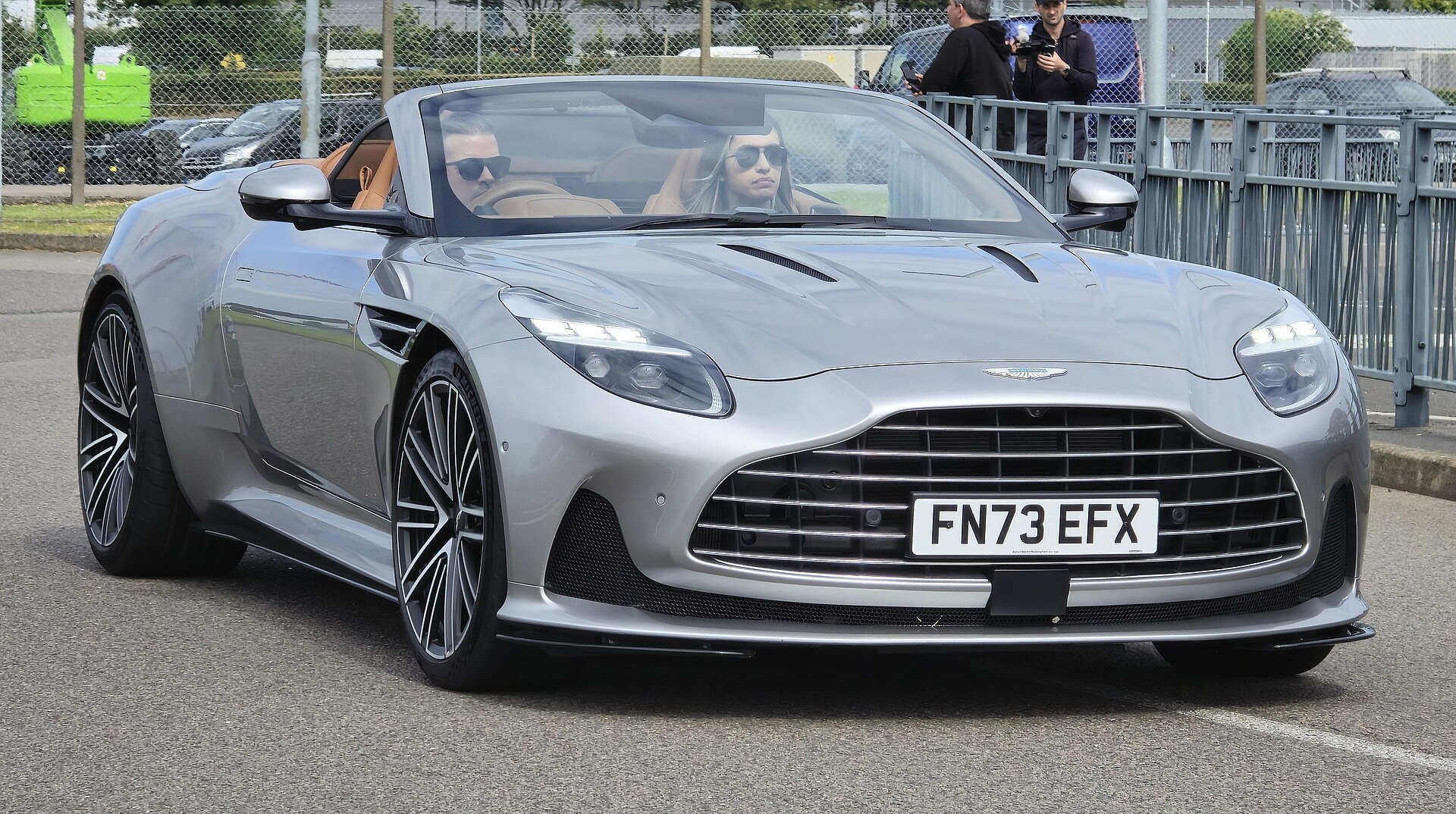
Reliability: Better Than Aston's History, But Still Aston
This is the hard conversation. Aston Martin's historical reliability rating has been abysmal — worse than Ferrari, on par with McLaren at their worst. The brand has struggled with electrical gremlins, trim panel gaps, and transmission issues for years. The DB11 had its fair share of complaints.
The DB12 changes this narrative. The Mercedes-AMG engine is rock-solid. The ZF 8-speed transmission is one of the most reliable automatics ever built. The electrical architecture is much more robust than the DB11's. However, this is still Aston Martin, which means:
- Interior Trim Issues: Early DB12s have had reports of squeaks from the panoramic sunroof and minor panel gaps. These are warranty items and not expensive, but they happen.
- Electrical Gremlins: The dual touchscreen system can occasionally freeze or require reboots. Aston has issued software updates. Not a major issue, but annoying in a $200K car.
- Cooling System: Like the DB11, the DB12 can develop coolant weeps around radiator connections if driven hard and frequently tracked. Regular flushing mitigates this.
- Air Suspension: The optional air suspension (on certain trims) can develop leaks. Repair costs run $3,000–$5,000. Stick with the conventional suspension if you want reliability.
- Dealer Network: This is huge. Aston has limited dealer presence in the United States compared to Continental GT, Ferrari, or Lamborghini. Finding service can be painful. Budget for transport if you're not near a major city.
Overall verdict: the DB12 is genuinely more reliable than any previous Aston Martin. It's probably more reliable than a Ferrari Roma or McLaren 720S. It's not as bulletproof as a Porsche 911 or Bentley Continental GT. But it's acceptable for a hand-built luxury vehicle, especially when you factor in the warranty coverage and improving Aston service network.
Verify DB12 Condition with a Professional Inspection
Aston Martin electrical and interior issues are best caught by certified exotic car inspectors. Automonitor connects you with specialists who know exactly what to look for on the DB12.
Schedule an Inspection →The Driving Experience: British Luxury With Real Character
Numbers and specs don't capture why the DB12 is worth buying. The actual experience of driving one does.
The DB12 sits somewhere between a grand tourer and a true sports car. It's genuinely comfortable on long highway drives — air suspension options make it plush, the seats are hand-stitched leather perfection, and the cabin is remarkably quiet at speed. But flip it to Sport mode, and the DB12 transforms. The steering weight increases. The suspension stiffens. The transmission holds gears longer. And suddenly you've got a car that corners like it's on rails with 671 horsepower at your disposal.
The twin-turbo V8 doesn't have quite the personality of a naturally aspirated engine (nothing does), but it's far better than the old DB11 powerplant. It pulls hard from 2,000 rpm all the way to the 7,000 rpm limiter. Power delivery is smooth, predictable, and genuinely engaging. The sound is a deep V8 thunder, not as raw as a Lamborghini but infinitely more sophisticated.
The new transmission is revelatory. The old 7-speed torque converter in the DB11 was a weak point. This ZF 8-speed shifts crisply in Sport mode and seamlessly in Comfort mode. It's one of the best automatic transmissions ever fitted to a car, and it transforms the driving experience compared to the DB11.
The DB12 doesn't try to be a Ferrari or a Porsche. It's perfectly content being exactly what it is: a stunningly beautiful British grand tourer that delivers both luxury and genuine driving engagement.

DB12 vs. Bentley Continental GT vs. Ferrari Roma vs. Mercedes-AMG GT
You're not buying a DB12 in a vacuum. Here's how it stacks up against the obvious competitors:
| Category | Aston DB12 | Bentley Continental GT | Ferrari Roma | Mercedes-AMG GT |
|---|---|---|---|---|
| Engine | 4.0L Twin-Turbo V8 | 4.0L Twin-Turbo W12 | 3.9L Twin-Turbo V8 | 4.0L Twin-Turbo V8 |
| Horsepower | 671 hp | 626 hp (Speed) / 505 hp (standard) | 611 hp | 630 hp |
| 0–60 mph | 3.4s | 3.5s (Speed) | 3.3s | 3.5s |
| Base Price | $195K–$215K | $215K–$240K | $240K–$270K | $185K–$210K |
| Interior Luxury | Exceptional — Hand-Crafted | Exceptional — Technical | Sporty — Minimalist | Sporty — Aggressive |
| Driving Dynamics | Balanced & Engaging | Refined & Composed | Sharp & Aggressive | Focused & Responsive |
| Reliability | Good (improved) | Excellent | Good | Excellent |
| Design Impact | Stunning — Timeless | Elegant — Classic | Modern — Aggressive | Technical — Aggressive |
| Depreciation (5yr) | ~18–20% | ~25–28% | ~20–22% | ~22–25% |
The Bentley Continental GT is the refinement king — it's more composed, more prestigious in certain circles, and more bulletproof from a reliability standpoint. But it's also older technology and lacks the design impact of the DB12.
The Ferrari Roma is sharper and more aggressive, but it's also less comfortable on long drives and significantly more expensive to buy and maintain. You're paying for the prancing horse, not necessarily the driving experience.
The Mercedes-AMG GT is actually cheaper than the DB12, uses the same engine, and offers better warranty coverage and service availability. It's the sensible choice if you want maximum value and reliability.
The DB12 wins on three metrics: design, exclusivity, and the emotional quotient of owning a true British luxury car. If those three things matter to you, the DB12 is the right answer.
How to Buy Smart: The Process That Saves Money and Headaches
Buying a DB12 requires a different approach than buying a Continental GT or 911. This is a hand-built car from a manufacturer with a relatively small dealer network. Due diligence matters.
Step 1: Test drive multiple examples. DB12s can vary considerably from car to car due to hand-assembly. Some examples feel tighter and more refined than others. Drive at least 2–3 cars before making an offer.
Step 2: Understand specification. A base DB12 is already well-equipped, but options matter for resale. Avoid dark colors (silver, gray, black sell better). Carbon fiber trim adds value. The air suspension is optional and adds maintenance risk — stick with the conventional setup.
Step 3: Verify maintenance history. A DB12 with complete service records from an Aston Martin dealer commands a 5–8% premium over examples with sketchy maintenance history. It's worth paying for a well-documented car.
Step 4: Get a thorough pre-purchase inspection. Have a specialist examine the electrical systems, interior trim for gaps or squeaks, cooling system for leaks, and transmission operation. This costs $600–$1,200 but can save you $10,000+ in hidden issues.
For more guidance on how much a DB12 costs and current market pricing, check our detailed pricing guide. If you're ready to search for one, visit where to buy an Aston Martin DB12 for our sourcing recommendations.
Step 5: Secure financing early. Exotic car lenders like JJ Best Banc and Woodside Credit specialize in vehicles like the DB12. Expect 20–30% down and rates between 5–8% depending on your credit profile and the vehicle's age.
When a DB12 Is NOT Worth Buying
Before you commit, here are scenarios where we'd tell you to walk away:
You need maximum reliability. If you're the type of owner who can't tolerate electrical quirks or occasional warranty visits, buy a Porsche or Mercedes. The DB12 is more reliable than historical Aston products, but it's not bulletproof.
You want a daily driver for a rainy climate. The DB12's ground clearance is minimal and the low-profile tires are sensitive to potholes. If you live somewhere with terrible roads, this isn't the car. The Porsche 911 Turbo S is more practical for year-round use.
You need a reliable dealer network nearby. If you're not within 50 miles of an Aston Martin dealer, plan for transport costs and delayed service. This adds up over ownership.
You're buying purely as an investment. While the DB12 holds value better than the DB11, it's not an appreciating asset. Buy it to drive it, not to park it hoping it goes up in value.
You haven't lived with a turbocharged engine before. Turbo lag (even minimal turbo lag) is different from a naturally aspirated V10 or V12. Test drive extensively before committing.
Other Aston Considerations: DB12 vs. DBX vs. Vantage
If you're shopping Aston Martin, the DB12 isn't your only option. Here are the alternatives:
The Aston Martin DBX is a luxury SUV positioned as a direct competitor to the Porsche Cayenne. If you need four-wheel-drive capability and more interior space, the DBX is the answer. But it's not a grand tourer — it's genuinely an SUV, just a very beautiful one.
The Vantage is Aston's sports car, smaller and sharper-handling than the DB12. If you want maximum driving engagement and don't care about grand touring comfort, the Vantage is worth exploring. But it's a different vehicle for a different purpose.
The DB12 is the middle child — more capable as a daily driver than the Vantage, more fun to drive than the DBX, and properly positioned as the flagship grand tourer. For most buyers, it's the right Aston Martin.
Calculate Your Total Ownership Costs
Automonitor's ownership cost calculator factors in insurance, maintenance, fuel, depreciation, and surprise repairs. Know your true cost of ownership before you buy.
Calculate Total Cost →The Final Verdict
The Aston Martin DB12 is absolutely worth buying if you value design, exclusivity, and driving emotion over clinical perfection. It's a stunningly beautiful car that delivers on nearly every front. The 671-horsepower Mercedes-AMG engine is bulletproof. The hand-crafted interior is world-class. The driving experience balances comfort and engagement in a way that few cars achieve.
Yes, Aston Martin has reliability baggage. Yes, the dealer network is smaller than you'd like. Yes, you'll pay more for the DB12 than a comparable Mercedes-AMG GT. But you're not buying a Mercedes. You're buying a British luxury icon that happens to perform like a modern supercar.
The DB12 is the car Aston Martin should have built years ago. Now that they finally have, it's genuinely worth the investment. Just make sure you understand what you're getting: a hand-built luxury grand tourer with character, not a technical masterpiece.
Ready to take the next step? Automonitor's concierge buying service handles DB12 sourcing, pre-purchase inspections, market valuation, and financing. We've helped buyers navigate the Aston Martin market, and we'll make sure you end up in the right car at the right price. Check out our guides for where to buy a DB12 and current DB12 pricing to get started.
Ready to Find Your Aston Martin DB12?
Automonitor connects you with vetted sellers, handles comprehensive pre-purchase inspections, and provides real market data so you can buy with confidence.
Start Your Search →