
How to Sell My Porsche 911: The Definitive Guide to Maximizing Resale Value
Selling a Porsche 911 isn't like selling most cars. The 911 is the most liquid exotic in the world — it has the largest buyer pool, most predictable values, and strongest demand. But that doesn't mean every 911 sells for top dollar. Here's how to leverage the 911's advantages while avoiding the mistakes that cost owners tens of thousands.
Why the Porsche 911 Is the Easiest Exotic to Sell
Selling a Ferrari is hard. Selling a Lamborghini is harder. Selling a McLaren can feel like finding a needle in a haystack. But selling a Porsche 911? That's almost effortless by comparison — and it's one of the most underrated advantages of 911 ownership.
The reason isn't complicated: the 911 has been in continuous production for 63 years, with over 1.2 million built. Porsche Club of America membership exceeds 80,000 active members. Every Porsche specialist dealer in North America has a waiting list of buyers. Every exotic car broker's phone rings when they acquire a well-maintained 911. The 911 isn't special because it's rare — it's valuable because it's ubiquitous among people with serious money.
This liquidity advantage is massive. A Ferrari 488 might sit on the market for 4-6 months. A Lamborghini Huracán could take 3-4 months even at fair pricing. A Porsche 911? Most sell within 3-6 weeks, and the best examples sell within days. That's not luck — that's market structure. More buyers exist for 911s than any other supercar, which means more bidders competing for your car, which means better pricing for you.
This guide shows you exactly how to exploit that advantage. We've helped hundreds of 911 sellers achieve top-market pricing by understanding what buyers value, where to list, how to present the car, and when to sell. Follow these principles and you'll maximize your recovery.
Understanding 911 Generation Pricing: 991.1, 991.2, and 992
Not all 911s are priced equally, and generation dramatically affects value. Here's what the current market shows for well-maintained examples with complete service histories:
| Model | Generation | Used Market Range | Market Notes |
|---|---|---|---|
| Carrera / Carrera S | 991.1 (2012–2015) | $55K–$85K | Entry point; good liquidity; PDK premium: +$10K–$15K |
| Carrera / Carrera S | 991.2 (2016–2018) | $70K–$105K | Turbocharged; stronger demand; colors matter |
| Carrera / Carrera S | 992 (2020–present) | $85K–$130K | Newest generation; steady demand; full warranty advantage |
| GT3 (Manual) | 991.1 (2014–2018) | $170K–$215K | Manual premium is significant; RS even higher |
| GT3 (Manual) | 991.2 (2019–2023) | $190K–$250K | Updated engine; stronger demand; RS valued at +$60K–$100K |
| GT3 (PDK) | 991.2 (2019–2023) | $165K–$210K | PDK loss: -$25K–$40K vs. manual; still liquid |
| GT3 | 992 (2022–present) | $220K–$290K | New generation; still depressing; manual still premium |
| GT3 RS | 991.2 (2019–2023) | $270K–$340K | Rarity factor; very strong demand; appreciate yearly |
| GT3 RS | 992 (2024–present) | $340K–$420K | Production limited; waiting lists exist; new owner typically holds |
| Turbo S | 992 (2021–present) | $200K–$260K | Powerful; practical; less specialized buyer pool |
| GTS | 992 (2022–present) | $145K–$185K | Value sweet spot; balanced performance; easy to sell |
The key insight: generation matters, but transmission and variant matter even more. A 991.2 Carrera with a manual transmission will fetch $10K–$15K more than the identical car with PDK. A GT3 manual can be $25K–$40K higher than PDK. If you're selling a 991.2 GT3 RS manual in a desirable color, you're looking at the strongest buyer demand and the most predictable pricing in the entire 911 universe.

The Manual Transmission Premium: Quantifying the Difference
This is one of the most significant pricing factors, and it differs dramatically by variant. A Carrera PDK owner might expect a $12K-$15K haircut compared to a manual Carrera. But a GT3 RS PDK owner could be looking at a $40K-$60K reduction versus a comparable manual RS.
Why the difference? On base Carreras, PDK is objectively superior for most drivers — faster shifts, better fuel economy, more relaxed driving. Many buyers prefer it, which narrows the gap. But on GT3 and GT3 RS models, PDK is seen as a compromise on a car designed for visceral, engaged driving. Serious enthusiasts see it as a downgrade, not an alternative, which creates the larger penalty.
If you own a PDK GT3, you already have that discount priced in — but it's worth knowing the magnitude. A 991.2 GT3 RS in Agate Gray with full service history and moderate mileage in manual form might fetch $310K. The same car in PDK could be $265K-$280K. That $30K-$45K difference is real.
The practical implication: if you're buying a used 911 specifically to resell later, factor this into your purchase price now. If you own a PDK GT car, drive it hard, enjoy it, and don't worry about the resale penalty — it's worth the cost of ownership to have a car you actually want to drive.
Option-Specific Value: What Buyers Actually Pay For
Porsche owners have obsessed over options for decades. Some options genuinely affect resale value, while others are cosmetic. Here's what actually moves the market:
High-Value Options (adds $5K–$20K):
- PCCB Ceramic Brakes: The most desired option. Ceramic brakes signal an owner who actually drives the car hard, maintains it properly, and didn't cheap out. Adds $5K–$12K depending on condition and variant. A 991.2 GT3 without ceramics is already at a discount; with them, you've got a premium buyer pool.
- Sport Chrono Package: Includes launch control and active engine mounts. Adds $3K–$8K, especially on Carreras where it signals performance-oriented ownership. Less impact on GT cars where it's standard expectation.
- Rear-Axle Steering (992): Makes the 992 behave more agile. Adds $6K–$10K; many younger buyers specifically seek this out.
- Exclusive Manufaktur Colors: Paint to order in anything other than standard colors (Sport Gray Metallic, Jet Black, etc.) adds $4K–$15K depending on how distinctive and original the color is. Unique paint is a conversation starter and signals committed ownership.
- Full Leather Interior: Adds $2K–$6K if it's well-maintained. Partial leather or cloth drop value by the same amount.
- Carbon Fiber Packages: Interior carbon trim, exterior carbon packages add $4K–$12K on newer models. But they must be in perfect condition — chipped or delaminated carbon is a red flag that kills buyer confidence.
Moderate-Value Options (adds $1K–$5K):
- Navigation and Premium Sound: Modest boost; most buyers expect these on newer cars.
- Parking Assist Systems: Valued at $1K–$3K on older models; standard on newer ones.
- Ventilated Seats: Adds $2K–$4K in warmer markets; less valuable in cold climates.
Low / Negative Value:
- Non-Standard Wheels: Aftermarket wheels can actually hurt your price if they're seen as tacky or low-quality. Porsche's factory wheels always appeal to traditionalists.
- Lowering Springs / Suspension Modifications: Any modification from the factory setup raises red flags. Buyers worry about misuse and hidden damage. Remove them before selling.
- Tinted Headlights or Tail Lights: Reduces value slightly; many buyers see it as immature tuning.
Where to Sell Your 911: The Right Channel for Maximum Value
You have four main options, each with different advantages and drawbacks:
Option 1: Porsche Specialist Dealers (Highest convenience, often lower price)
Parks Place Automotive, Suncoast Porsche, Westtown, and other dedicated dealers are extremely attractive for simplicity — you drive in, they appraise the car, you sign documents, and the money hits your account. Zero hassle.
But here's the reality: they're professional appraisers who know what the market is. They'll offer you 8-15% below private-sale value because they need margin to retail the car. If your 991.2 Carrera S is worth $95K private party, expect an offer around $80K-$87K. That's not dishonest — that's how dealer math works.
When to use this: You have little time, value simplicity over money, or the car has known issues that would scare private buyers. For a well-maintained example? You're leaving $7K-$15K on the table.
Option 2: Bring a Trailer (Auction; broad reach; competitive bidding)
Bring a Trailer is the gold standard for reaching serious enthusiasts. Their bidding audience is pre-vetted, highly engaged, and genuinely interested in cars. Seller fees are 8% of hammer price, which is higher than other channels, but the competitive bidding often more than makes up for it.
The process is transparent and professional. Your car gets photographed and described by their team, auction runs for 7 days, and the winning bidder has already been vetted. Money arrives within days.
The catch: your car needs to photograph well and have a compelling story. A 991.1 Carrera with unknown service history and 60K miles will underperform on BaT. A 991.2 GT3 RS with full dealer service history, 8K miles, and documented maintenance? That could set a price record.
When to use this: You have a special or significant car with strong provenance. The auction format forces buyers to compete, pushing prices up. Expect 5-10% higher prices than equivalent dealer offers.
Option 3: PCA Mart and Rennlist Classifieds (Enthusiast buyers; lower fees; higher effort)
The Porsche Club of America runs a classifieds section where serious 911 enthusiasts browse regularly. Rennlist (the 911 enthusiast forum) also has active buying activity. These channels reach committed buyers who understand 911s deeply.
The advantage: you can talk directly to buyers who know what they're looking at. You can be specific about maintenance, modifications, and condition. The audience is sophisticated enough to understand value.
The disadvantage: lower traffic means longer time to market. You'll need to handle showings, answer questions, manage multiple interested parties, and negotiate. Fees are minimal (PCA Mart is free for members; Rennlist is free), but you're doing the work of marketing and sales.
When to use this: You're not in a hurry and you have a well-documented example with story value. The 1998 993 Carrera with 22K original miles and single-owner history? PCA Mart enthusiasts will fight for it.
Option 4: Automonitor's Selling Service (Market data + buyer network + concierge)
Automonitor's selling platform connects you with our network of thousands of pre-qualified 911 buyers. We handle professional photography, market valuation, buyer vetting, and transaction logistics. No hassle, competitive pricing, and expert guidance throughout.
When to use this: You want expert market knowledge, professional presentation, and serious buyer access without the time investment of managing private sales or the margin loss of dealer trade-ins.
Critical Pre-Sale Preparation: What Buyers Actually Inspect
Before you list, you need to address known weak points that 911 buyers specifically look for. Missing one of these checks and you'll either lose a sale or face a price reduction right before closing.
RMS Seal (991.1 only): The RMS (rear main seal) is the most common 991.1 failure point. A leaking RMS can develop into an expensive repair ($3K-$6K). Many buyers will walk if they spot oil residue around the bell housing. Before selling a 991.1, get it inspected by a Porsche specialist. If there's any hint of seepage, budget to fix it — the $4K repair will prevent a $12K price reduction from a concerned buyer.
IMS Bearing (997 and earlier 991s): If you own a 997 or very early 991, the IMS bearing is a known concern point. The bearing failure isn't common, but the prospect of a catastrophic engine failure ($15K-$25K) scares buyers. Have this inspected and documented. If you've had it replaced or upgraded, that's a selling feature.
Coolant Pipe Leaks: High-mileage 911s sometimes develop leaks around coolant piping, particularly after track days. Listen for any hissing when the engine is running, and run a cooling system pressure test as part of your pre-sale inspection. A $400 pressure test now prevents a $8K negotiation reduction later.
Bore Scoring (997): Some 997 models developed bore scoring (tiny cracks in cylinder walls), which can lead to oil consumption and catastrophic failure. This is less common than the IMS issue but still a buyer concern on high-mileage examples. Get it inspected by a Porsche specialist.
Brake Pads and Rotors: If pads are below 20% thickness or rotors show scoring, budget to replace them ($2K-$4K for quality parts and labor). Buyers will notice worn brakes immediately and use them to negotiate hard.
Tire Condition: All four tires should have at least 50% tread remaining. If not, replace them before selling — it's a relatively inexpensive upgrade (Porsche-specific tires run $800-$1,200 for a set) that signals proper maintenance and gives buyers confidence.
Service History Documentation: This is non-negotiable. Buyers want to see proof that every major service was completed at a Porsche dealer or certified independent shop. Keep every service invoice, every recall completion certificate, and every fluid service record. Spotty service history can reduce your price by $10K-$20K.

The Importance of Documentation: Paperwork That Pays
A 991.2 Carrera S with full Porsche dealer service history from day one sells faster and for 10-15% more than an identical car with mixed service records. This isn't just preference — it's risk management. Buyers know that a car that was maintained properly at a dealer is less likely to have hidden problems.
Essential Documentation:
- Full service records: Every oil change, every fluid service, every inspection from purchase to present. Original dealer invoices are gold.
- Original window sticker: If you have it, include it. It shows original options, color, and transmission — helps with provenance.
- Complete vehicle history reports: Carfax or AutoCheck showing zero accidents, clean title, consistent ownership. A clean history is foundational.
- Warranty information: If extended warranty is transferable, document it. Some Porsche CPO warranties transfer; some don't. Know your situation and explain it.
- Maintenance records beyond the factory: Any significant work (suspension alignment, transmission service, etc.) should be documented with shop receipts.
- Porsche Club of America membership: If you're a member, transferring your membership to the new owner is a nice touch that signals community and legitimacy.
Missing documentation doesn't make your car unsellable — it just makes it cheaper. A buyer will discount $5K-$15K for incomplete service records, simply because they can't verify proper maintenance.
Get an Accurate Market Value for Your 911
Automonitor's data-driven valuations account for generation, options, transmission, and color. Know exactly what your 911 is worth before you list.
Get Your Free 911 Valuation →Photography and Presentation: How to Make Your 911 Stand Out
Photography accounts for 40-50% of whether a buyer even looks at your listing. Bad photos sink great cars. Good photos can make a good car look exceptional.
Essential Shots:
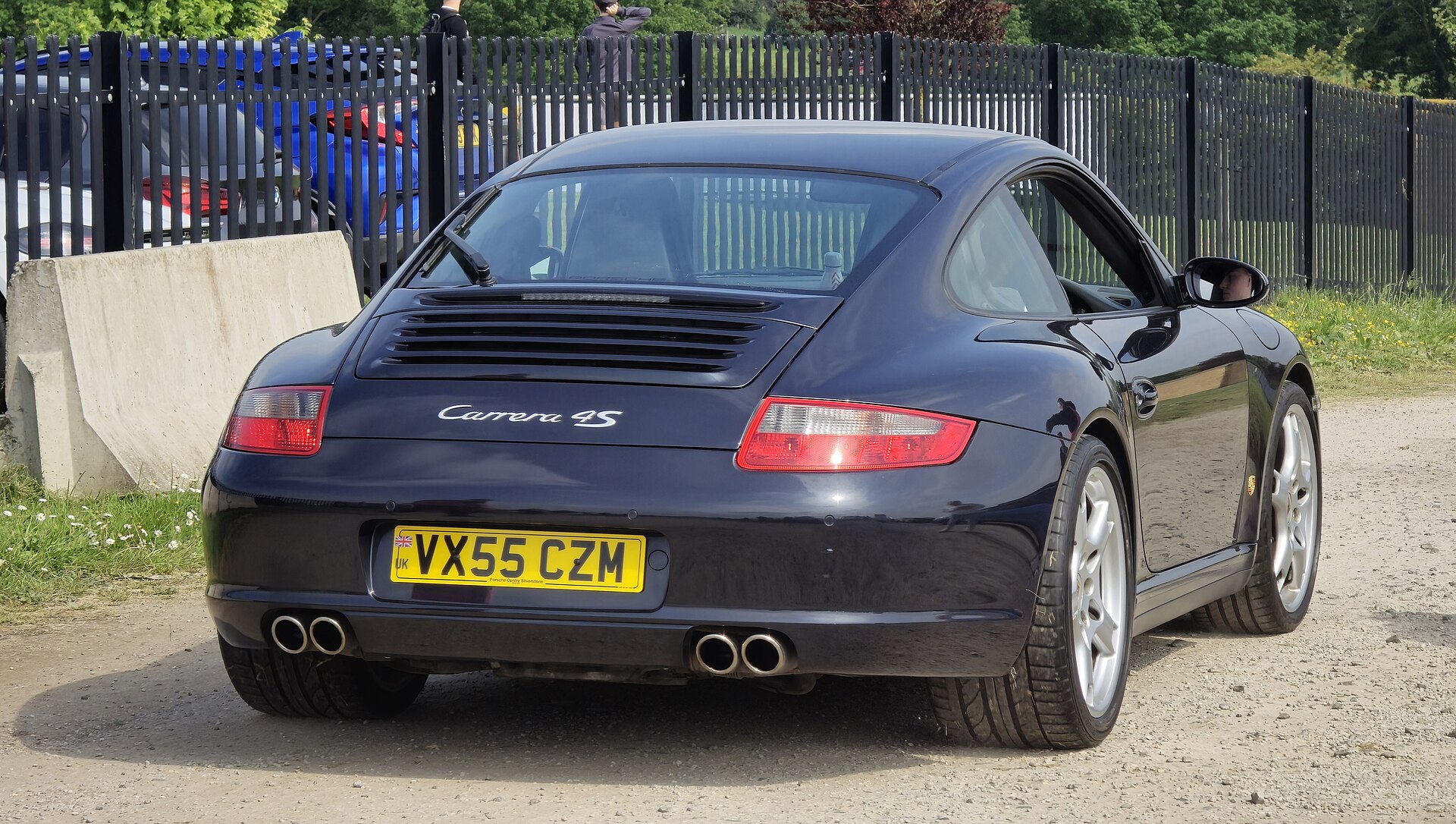
- Rear 3/4 angle (golden hour): This is the money shot. Capture the rear 3/4 angle — the full profile of the car — in golden hour light (first hour after sunrise, last two hours before sunset). This angle shows the full proportions of the 911, the iconic ducktail (if applicable), and looks premium.
- Front 3/4 angle: Balance the rear shot with a front 3/4 in the same lighting. Shows the headlights, badge, and front fascia.
- Straight driver's side and passenger's side: Clean, straight profiles under neutral lighting (not golden hour). Shows body condition and proportions.
- Engine shot (through decklid opening or hood): Pop the hood and photograph the engine bay. A clean, detailed engine conveys proper maintenance. A dirty engine suggests neglect, even if the car is well-maintained. Clean before shooting.
- Interior driving position: Show the driver's seat, steering wheel, dashboard. Photograph from the driver's seat looking forward (not selfie angle). Buyers want to see how the car feels from the helm.
- Interior detail shots: Closeup of sport seats if equipped, steering wheel, gauges, shifter/selector. Show condition of leather, carbon trim, or special options.
- Undercarriage shot: If you're listing on a platform like Bring a Trailer, a photo of the undercarriage (taken on a lift) shows no rust, proper suspension condition, and signals transparency.
- Close-up of any damage or imperfections: This sounds counterintuitive, but transparency builds trust. If there's a small chip in paint, a minor scratch, or a dent, photograph it clearly. Buyers appreciate honesty and will discount less for known issues than unknown ones.
Photography Tips:
- Use a DSLR or mirrorless camera, not a smartphone if possible. Better dynamic range, better focus, better overall quality.
- Shoot in RAW format if your camera supports it; edit in Lightroom or Adobe Camera Raw.
- Photograph on a clean surface (driveway, parking lot without debris).
- Ensure the car is freshly cleaned and detailed — wheels clean, no water spots, windows crystal clear.
- Avoid parking spots with distracting backgrounds (busy streets, unattractive buildings). Plain, clean backgrounds are best.
- Use a polarizing filter to reduce glare and improve color saturation.
- Shoot at golden hour (sunrise/sunset) for hero shots. Shoot at midday in even light for detail shots.
Timing Your Sale: When the Market Is on Your Side
Market cycles matter. Some times of year see stronger 911 demand than others.
Strong Selling Seasons:
- April–May: Spring weather arrives, driving season begins, tax refunds hit accounts, people think about summer plans. This is peak season for exotic car sales.
- September–October: Fall weather is pleasant for driving, new model year arrives, people with summer sales commissions spend money. Strong secondary peak.
- November–December: Year-end bonuses and holiday spending create demand, though inventory is also higher so competition is fierce.
Weak Selling Seasons:
- January–February: Post-holiday spending fatigue, bad weather in many markets, people recovering from holiday debt.
- August: Too hot to drive in many regions, people are on vacation, less active buying.
Generation-Specific Timing: If you own a 992 GT3 RS or 992 Turbo S that's relatively new, there's no need to wait for perfect season — these sell fast year-round. But if you own a 991.1 base Carrera with 80K miles, listing in April-May will significantly shorten your time on market and likely yield better pricing than listing in January.
Pricing Strategy: How to Set Your Ask
Pricing is the single biggest factor in how fast your car sells and how much money you make. Too high, and it sits unsold while the market moves. Too low, and you leave money on the table.
The Right Approach:
Start by researching recent comparable sales — not asking prices, but actual sale prices. Look at Bring a Trailer hammer prices over the last 30-60 days for your generation/variant/condition combination. Look at dealer listings for similar cars in your region. Look at PCA Mart recent sales. Average those data points. That's your market price.
Price 2-5% above market if your car is above average (lower mileage, better condition, special color, better spec). Price at market if it's average. Price 5-10% below market only if there's an issue (higher mileage, accident history, spotty service, or a model variant that's harder to move).
Expect to negotiate 5-10% off your asking price before serious offers. So if your target sale price is $90K, list at $95K-$96K to accommodate typical negotiation.
Managing the Sale Process: From Inquiry to Closing
Pre-Purchase Inspections (PPI): Almost every serious buyer will want a PPI before committing to purchase. Plan for this. Identify a reputable Porsche specialist who can conduct a comprehensive inspection (cost: $500-$800). Be prepared for the inspection — expect the inspector to spend 1.5-2 hours on the car and require a lift. The PPI is part of the sales process, not a surprise.
Showings: Be prepared for multiple showings, especially if you list in peak season. Have the car clean and ready. Have all documentation organized and accessible. Be ready to answer detailed questions about maintenance, modifications, accidents, service history, and known quirks.
Offers and Negotiation: Once serious offers come in, negotiate from data. If an inspector finds worn pads ($2.5K to replace), that's a legitimate reduction. If someone offers $15K below your asking price with no justification, that's a lowball and you can hold firm or pass.
Closing: Work with a reputable escrow company or the buyer's attorney to handle funds transfer, title transfer, and documentation. Don't accept personal checks. Don't transfer the title until funds clear. These are standard precautions that protect both parties.
Connect With Serious 911 Buyers: Automonitor's Marketplace
Automonitor's marketplace connects you with thousands of pre-qualified Porsche buyers ready to make offers on your 911. Instead of managing listings across multiple platforms and handling individual inquiries, let our network do the heavy lifting. We handle market valuation, professional photography, buyer vetting, and transaction coordination. You get fair market pricing and serious offers.
Connect With Serious 911 Buyers Today
Automonitor's network includes thousands of pre-qualified Porsche enthusiasts ready to buy. List your 911 and start receiving offers from verified buyers.
List Your 911 Now →The Final Word: Your 911 Will Sell
The Porsche 911 is the most liquid exotic in the world. It will sell. The only variable is how much money you recover and how much time you invest in the process.
You have every advantage: a massive buyer pool, strong brand loyalty, predictable values, and consistent demand. Use that advantage by preparing your car properly, documenting maintenance meticulously, presenting it professionally, and pricing it strategically. Do those four things and you'll get market-rate or above for your 911 — no matter which generation or variant you own.
Your 911 isn't a commodity. It's an entry point into a community and a lifestyle. The right buyer will understand that. Your job is helping them find you.
Ready to List Your 911?
Get started with Automonitor's professional selling service. Market valuation, buyer network, and expert guidance to help you achieve the best price.
Start Your Sale →