
How Much Does It Cost to Maintain a Porsche 911? Generation-by-Generation Breakdown
The Porsche 911 is among the most reliable performance cars ever built. But reliability doesn't mean free. This is the complete breakdown of what 911 ownership actually costs across six generations — from routine maintenance to catastrophic repairs nobody talks about.
Why Understanding 911 Maintenance Matters: The Real Cost of Ownership
The Porsche 911 has a reputation for reliability that's well-earned. These cars run past 200,000 miles with routine care. Compared to a Ferrari or Lamborghini, a 911 is genuinely affordable to maintain. But "affordable" is relative when you're talking about a $100,000+ vehicle. A $2,500 major service on a used 911 is still real money — and it hits harder if you weren't expecting it.
The generation you own determines everything. A 996 from 2002 has completely different failure modes and repair costs than a 992 from 2022. Some generations carry notorious weak points — bore scoring on the 997.1, IMS bearing failures on the 996, and others — that can cost $20,000+ to repair. Knowing which generation you're considering, and what that generation is actually prone to, is the difference between a smart purchase and a financial headache.
This guide breaks down the exact costs for every 911 generation from 1999 to 2026. We've sourced data from service records, dealer price quotes, independent specialist shops, and owner forums. You'll learn what you'll spend on routine maintenance, what catastrophic repairs actually cost, and which generations offer the best value for cost-conscious buyers.
Quick Reference: 911 Maintenance Costs by Generation
| Generation | Years | Annual Cost | Key Concern | Special Risk |
|---|---|---|---|---|
| 992 | 2020–Present | $2,000–$3,500 | Warranty coverage | None known yet |
| 991.2 | 2017–2019 | $2,000–$3,500 | Turbo service costs | Minor issues only |
| 991.1 | 2012–2016 | $2,500–$4,000 | Engine longevity | Water pump seals |
| 997.2 | 2009–2012 | $2,500–$4,500 | Transmission fluid | Intermediate shaft bearing |
| 997.1 | 2005–2008 | $3,000–$5,000 | Bore scoring risk | $15K–$25K repair |
| 996 | 1999–2004 | $3,000–$6,000 | IMS bearing failure | $2.5K–$4K repair |

Routine Maintenance Costs: What You'll Pay Every Year
Let's start with the predictable stuff — the maintenance items you know are coming. These are the costs you budget for, not the emergency repairs that make you lose sleep.
Oil and Filter Changes
Oil changes on a 911 are not a $30 Jiffy Lube job. Porsche engines require synthetic oil, the service intervals are specific to your variant, and the labor is expensive. Here's what you'll actually pay:
- Independent specialist shop: $250–$350 (most cost-effective)
- Porsche dealer: $350–$450 (OEM parts, warranty coverage)
- Interval: Every 10,000 miles or annually, whichever comes first
If you drive your 911 conservatively (5,000 miles/year), you're paying $250–$450 annually. If you drive 15,000 miles/year, expect $750–$1,350. Multiply that across a decade of ownership and the arithmetic adds up quickly.
Minor Service (Every 20,000 miles)
A minor service includes oil and filter change, visual inspection, fluid top-offs, and filter replacements. This is more comprehensive than just an oil change but less invasive than a major service.
- Independent shop: $500–$800
- Porsche dealer: $700–$1,200
Major Service (Every 40,000 miles)
Major services are where costs escalate. These involve air filter replacement, cabin filter replacement, brake fluid flush, coolant system inspection, suspension inspection, and a full diagnostic scan. For newer turbocharged models, add turbo-specific inspections.
- Independent specialist: $1,200–$1,800
- Porsche dealer: $1,800–$2,500
Brake Service
Brake maintenance on a 911 varies dramatically depending on your model and how you drive. Daily drivers need brake service less frequently than cars that see occasional track time or hard driving.
- Brake pad replacement (standard brakes): $600–$1,200
- Brake rotor replacement (if needed): $2,000–$4,000 per axle
- PCCB ceramic brake service (GT3, Turbo models): $8,000–$16,000
- Brake fluid flush: $400–$600
If you drive your 911 as intended — spirited weekend drives, the occasional track day, or aggressive city driving — plan on brake pads every 15,000–30,000 miles. That's $1,200–$2,400 every few years, or roughly $400–$800 annually when amortized.
Tire Replacement
911 tires are performance-spec rubber, not economy all-seasons. You're buying tires that can handle 1.0+ G lateral acceleration, and they cost accordingly:
- Factory tire replacement (per set of 4): $1,200–$2,000
- Replacement frequency: Every 8,000–15,000 miles (depending on driving style)
- Annual amortization: $800–$2,000
Track-day warriors see tire life drop to 3,000–5,000 miles. Street drivers push 10,000–20,000 miles per set. Factor in alignment costs ($400–$600) every few years.
Transmission Service
PDK (dual-clutch transmission): Porsche calls for PDK service every 40,000 miles on newer models, though many owners stretch intervals. Service includes fluid change and filter replacement, running $400–$600 at a dealer.
Manual transmission: Much cheaper to maintain. Porsche doesn't mandate fluid changes for manuals, though some independent shops recommend fluid replacement every 80,000 miles ($300–$500). Clutch replacement is rare but expensive: $2,500–$4,000.
Annual Cost Summary
For an owner driving a typical 911 10,000 miles per year with routine maintenance performed at an independent specialist shop:
- Oil changes: $500 (roughly 2 per year)
- Brake service (amortized): $600
- Tire replacement (amortized): $1,200
- Minor/major services (amortized): $800
- Fluid top-offs and miscellaneous: $300
- Total annual routine maintenance: $3,400
At a Porsche dealer with the same mileage, expect $5,500–$7,000 annually. The difference between specialist shops and dealers is typically 15–30%, which adds up significantly over multi-year ownership.
Generation-by-Generation Breakdown: What Every 911 Will Cost
992 (2020–Present): $2,000–$3,500/year
The newest generation 911 is also the most reliable in the lineage. The 3.0L turbocharged flat-six engine is proven technology borrowed from the 991.2, and Porsche's warranty coverage is comprehensive for the first few years. Most owners under warranty should see minimal costs beyond routine maintenance.
Variant-specific costs: Standard Carrera models are cheapest to maintain. The Carrera S Turbo variant adds turbo-specific service requirements and higher-wear items. GT3 models (with 4.0L naturally-aspirated engine) require synthetic oil changes every 5,000 miles and cost more per service, but the naturally-aspirated engine is bulletproof in terms of reliability.
Known issues: None documented yet. These cars are still new, and warranty coverage shields most owners from early failures.
Depreciation-adjusted cost: A new 992 loses roughly 15–20% of value in the first three years. When you factor in maintenance plus depreciation, the true annual cost of 992 ownership runs $8,000–$12,000.
991.2 (2017–2019): $2,000–$3,500/year
The final pre-turbo 911 generation (2017–2019 models still offered naturally-aspirated options) and the first to embrace turbocharged engines. The 991.2 is exceptionally well-sorted. Porsche spent years perfecting the platform, and it shows in reliability statistics.
Variant-specific costs: Naturally-aspirated Carrera models are the cheapest to maintain. Turbo variants cost roughly $400–$600 more annually due to turbo-specific service. The GT3 with its 4.0L naturally-aspirated engine is nearly as cheap as the standard Carrera, despite its performance pedigree.
Known issues: Minor issues only. Some owners report water pump seal leaks around the 80,000-mile mark, but these are exceptional cases, not widespread failure patterns. Expect repair costs of $1,200–$2,000 if it happens to you.
Bargain assessment: For cost-conscious buyers, the 991.2 is one of the best value 911s available in the used market. You're getting a nearly modern platform with proven reliability at depreciation-adjusted prices.
991.1 (2012–2016): $2,500–$4,000/year
The first generation 991 was a clean-sheet design that modernized the 911 platform. The direct-injection naturally-aspirated engines are robust, but they've now logged enough miles in the wild that patterns are emerging.
Variant-specific costs: Standard Carrera models are cheapest. Turbo models will see slightly higher costs. GT2 and GT3 models cost marginally more due to harder driving patterns owners typically subject these cars to, but the engines themselves are no more expensive to maintain.
Known issues: Water pump seal leaks are more common than on the 991.2. A failing water pump seal causes a slow coolant leak and can escalate to overheating if not caught early. Repair costs run $1,500–$2,500. Some 991.1 models also developed intermediate shaft bearing noises, though this is less common than on the 997.2.
Cost breakdown: Routine maintenance runs $2,500–$3,500/year. Plan an additional $2,000–$4,000 in deferred maintenance if the car hasn't been well-maintained, or $0 if it has pristine service history.
997.2 (2009–2012): $2,500–$4,500/year
The second-generation 997 was Porsche's last purely naturally-aspirated 911 before the turbo era began. The 3.4L and 3.6L engines are bulletproof if maintained. These cars are now 12–15 years old in many cases, and used-market examples show the wear patterns that matter.
Variant-specific costs: Standard Carrera models cost $2,500–$3,500/year. The Turbo variant adds turbo-specific services and higher fuel consumption, pushing costs to $3,500–$5,000/year. GT2 models (the rarest and most track-focused variant) are similarly expensive.
Known issues: The intermediate shaft bearing (IMS bearing) is the 997.2's Achilles heel. This bearing connects the accessory drive shaft and is prone to premature wear. Failure produces a grinding noise and can cause catastrophic engine damage if ignored. IMS bearing replacement costs $2,500–$4,000. Not every 997.2 will need this repair, but it's common enough that it should factor into your buying decision. Always get a pre-purchase inspection that specifically tests for IMS bearing wear.
Other issues: Some 997.2 owners report variable valve timing (VarioCam) solenoid issues ($800–$1,500 repair). Cooling system components are aging on these cars — radiators and expansion tanks occasionally fail ($1,200–$2,000).
Repair risk assessment: Plan for an unexpected $2,000–$3,000 repair every 2–3 years of ownership. If you find a 997.2 with documented IMS bearing service already completed, the risk profile drops significantly.
997.1 (2005–2008): $3,000–$5,000/year + Catastrophic Bore Scoring Risk
The original 997 generation is where 911 reliability starts to become conditional. These cars have over 15+ years of real-world data, and a troubling pattern has emerged: bore scoring on some engines.
Variant-specific costs: Standard Carrera models cost $3,000–$4,000/year in routine maintenance. Turbo variants cost $4,000–$6,000/year. GT2 models (turbocharged, track-focused) cost even more due to higher-stress operation and harder driving patterns.
The bore scoring problem: Some 997.1 engines develop score marks on the cylinder walls, particularly in certain build periods and with certain VIN ranges. The cause is debated (manufacturing defect, insufficient oil circulation, carbon buildup from direct injection — Porsche hasn't officially acknowledged it), but the result is clear: scoring leads to compression loss, oil burning, and eventually catastrophic engine failure.
Bore scoring repair cost: If caught early and managed through oil consumption monitoring, costs run $2,000–$5,000 (repair kit installation). If allowed to progress to full engine failure, a complete engine replacement costs $15,000–$25,000 (parts + labor), not including removal and reinstallation. Some owners have reported engine replacement costs exceeding $30,000 when labor is factored in.
Mitigation strategy: Not all 997.1 engines will score. Get a pre-purchase inspection that includes an oil consumption test. Establish a regular oil analysis program (every 2–3 oil changes) to catch scoring early. Some specialty shops in California and Arizona have experience with bore scoring repairs and can advise on your specific VIN.
Investment perspective: The bore scoring risk makes 997.1 models riskier than newer generations, but it also makes them cheaper on the used market. If you're a knowledgeable buyer willing to manage the risk, 997.1 values offer upside. If you're risk-averse, skip it and buy a 991 or newer.
996 (1999–2004): $3,000–$6,000/year + IMS Bearing Risk
The 996 was the first water-cooled 911, released in 1998. These cars are now 20+ years old. The ones still on the road have proven themselves, but they've also logged enough miles to reveal every weakness in the design.
Variant-specific costs: Standard Carrera models cost $3,000–$4,500/year. Turbo models cost $5,000–$7,000/year. GT2 models are expensive to own and expensive to fix, running $6,000–$9,000/year in routine maintenance before factoring in occasional repairs.
The IMS bearing catastrophe: The 996 generation suffered from a notoriously inadequate intermediate shaft bearing. This small bearing, designed to connect the accessory drive, fails prematurely on a significant percentage of 996 engines. Failure is often catastrophic, leading to complete engine seizure.
IMS bearing failure scope: Porsche estimates that roughly 5–10% of 996 engines will experience IMS failure. That might sound low, but given the hundreds of thousands of 996s produced, it means thousands of cars are walking time-bombs. VINs with early builds (1998–2001) are higher risk than later models.
IMS bearing replacement cost: Proactive replacement (preventative) costs $2,500–$4,000. Reactive replacement (after failure, which often requires engine teardown) costs $4,000–$8,000. Full engine replacement due to IMS-related damage costs $12,000–$20,000.
Insurance perspective: Some specialty insurers now offer "IMS bearing failure" coverage as an add-on for 996 owners, typically costing $200–$400/year for coverage up to $15,000. This isn't traditional insurance — it's more like a damage waiver — but it provides psychological peace of mind.
Buying recommendation: Only buy a 996 if the IMS bearing has been already replaced (get documentation), or if you're willing to budget the replacement into your purchase price and timeline. A 996 with a time-bomb IMS bearing that hasn't been addressed is a liability, not an investment.
Other 996 issues: Cooling system failures are common on these aging cars ($1,500–$2,500 repairs). Head gasket leaks occur ($2,000–$3,500 repair). Electrical gremlins are frequent. The VarioCam system sometimes fails ($1,200–$2,000).
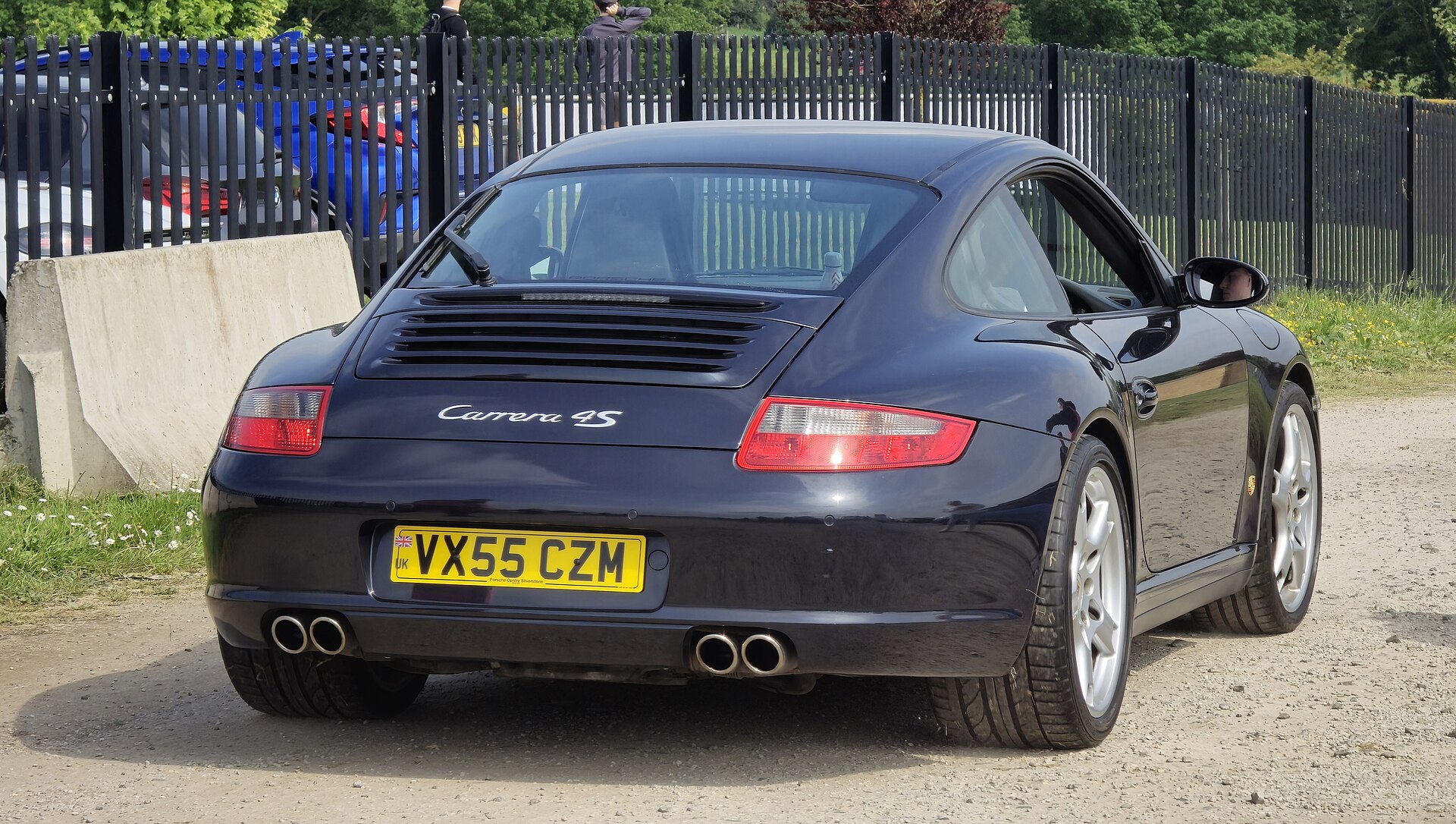
How Model Variants Affect Maintenance Costs
Not all 911s cost the same to maintain. The variant you choose determines brake costs, oil change intervals, service complexity, and parts availability.
Carrera vs. Carrera S
The Carrera S has a larger displacement engine and more aggressive tuning, but maintenance costs are nearly identical. The primary difference is fuel consumption (Carrera S requires premium 91+ octane versus regular 87 octane for base Carrera). Both use the same service intervals. Choose based on performance preference, not cost considerations.
Turbo Models
Turbo variants (Carrera Turbo, 911 Turbo S) require more intensive maintenance. Turbocharger systems add complexity, oil gets contaminated faster due to turbo heat, and service intervals are more aggressive. Expect 15–25% higher annual maintenance costs compared to naturally-aspirated models.
GT3 and GT3 RS
The naturally-aspirated 4.0L engine in GT3 models is nearly bulletproof, but these cars are driven harder than base Carrera models. Brake service is more frequent. Tire wear is accelerated. Track-focused variants push scheduled maintenance to the top of the cost spectrum. Plan on $4,000–$6,000 annually even for street-driven GT3s.
GT2 (deprecated)
The turbocharged, track-focused GT2 (available through 2010) is the most expensive 911 variant to maintain. These were purpose-built for hard driving, and owners typically drive them that way. Brake service, tire replacement, and engine maintenance all cost more.
Porsche Prepaid Maintenance Plans
Porsche offers prepaid maintenance programs that can reduce long-term costs if you drive aggressively or put high mileage on your car. These typically cover service for 3–6 years or a specific mileage allowance.
Porsche Pre-Owned Certified Program: Covers service for one year or first service after purchase, whichever comes first. This is standard with CPO purchases.
Porsche Service Plus Program: Covers scheduled maintenance, wear items (pads, brake fluid), and roadside assistance. Costs roughly $1,200–$2,000 annually depending on model. If you drive 15,000+ miles/year, this breaks even or saves money versus paying for services à la carte.
Assessment: For owners keeping cars less than 3 years, skip these programs. For owners keeping cars 5+ years with high mileage, these programs pay for themselves.

Porsche Dealer vs. Independent Specialist Costs
The choice between a dealer and an independent specialist shop can save or cost you thousands over several years of ownership.
Porsche Dealer Advantages
- Factory-trained technicians with model-specific expertise
- Official Porsche parts with full warranty
- Comprehensive warranty coverage on repair work
- Direct access to Technical Service Bulletins and recalls
Porsche Dealer Disadvantages
- Labor rates: $150–$200/hour (vs. $100–$130 at specialists)
- Diagnostics often cost more upfront
- Less flexibility on alternative parts or creative solutions
- Longer turnaround times
Independent Specialist Advantages
- Lower labor rates: $100–$130/hour
- More personalized service and flexibility
- Often more willing to discuss alternative solutions
- Faster turnaround times
- Better familiarity with common issues on specific generations
Independent Specialist Disadvantages
- Warranty coverage may be limited
- Variable expertise across shops
- May lack access to latest factory technical information
Cost Comparison Example
A major service on a 911 at a Porsche dealer: $2,000–$2,500. Same service at an independent specialist: $1,400–$1,800. Over 5 years of regular maintenance, you'll save $6,000–$10,000 by using a specialist shop, assuming equivalent quality.
Recommendation: Use an independent specialist for routine maintenance (oil changes, minor services, tire work). Use the dealer for warranty work, warranty-related diagnostics, and complex repairs where warranty coverage matters (especially on newer cars).
Catastrophic Repairs and When They Matter
Beyond routine maintenance, certain 911 issues can cost thousands and should factor into your purchase decision.
Engine Failure Repairs
IMS bearing (996, early 997.2): $2,500–$8,000 depending on whether caught early or after failure
Bore scoring (997.1): $2,000–$25,000 depending on severity
Head gasket leak (older cars): $2,000–$4,000
Complete engine replacement: $15,000–$35,000 (parts + labor) for any generation
Transmission Repairs
PDK transmission service (beyond scheduled maintenance): $2,000–$8,000
Manual transmission clutch replacement: $2,500–$4,000
Complete transmission replacement (rare): $8,000–$15,000
Suspension and Chassis
Air suspension repair (if equipped, 997.2+): $3,000–$5,000
Adaptive damper replacement: $2,000–$4,000
Complete suspension overhaul: $5,000–$12,000
Electrical and Electronics
PDK transmission computer issues: $2,000–$4,000
Engine control module failure: $1,500–$3,500
Battery and electrical system (on aging cars): $1,000–$3,000
How Auto Monitor's 911-Specific Inspection Catches Issues Early
The most expensive repair is the one you don't see coming. Automonitor's pre-purchase inspections include 911-specific diagnostic protocols that catch expensive issues before they become catastrophic.
Generation-specific focus: Our inspectors know which generation you're buying and what that generation is prone to. Inspecting a 996? We focus on IMS bearing diagnostics. Inspecting a 997.1? We test for bore scoring indicators. Inspecting a 991? We validate water pump integrity.
Oil analysis: Included in every inspection, this catches metal particles indicating bearing wear, carbon buildup, and other warning signs.
Thermal imaging: Identifies hot spots in the engine bay indicating cooling system issues before they fail catastrophically.
Full diagnostic scan: Our equipment communicates with the 911's on-board computer to extract fault codes, stored issues, and maintenance history from the vehicle itself.
A comprehensive pre-purchase inspection costs $600–$1,200 and typically identifies $5,000–$15,000 in deferred or upcoming maintenance. That's the best insurance you can buy before purchasing an older 911.
Get a 911-Specific Pre-Purchase Inspection
Don't buy a Porsche 911 without knowing what you're really getting. Our inspectors know every generation's weak points and can save you tens of thousands in unexpected repairs.
Schedule Your Inspection →Porsche 911 Maintenance vs. Other Exotics: Why the 911 Is Actually Affordable
When you compare 911 maintenance costs to other exotic cars in the same price range, the 911 looks remarkably reasonable.
| Car | Annual Maintenance | Oil Change Cost | Major Service Cost | Reliability Rating |
|---|---|---|---|---|
| 911 Carrera | $3,000–$4,000 | $300–$450 | $1,200–$2,000 | Excellent |
| Corvette Z06 | $2,500–$3,500 | $250–$400 | $1,000–$1,500 | Very Good |
| Ferrari 488 | $4,000–$7,000 | $600–$900 | $3,000–$5,000 | Good |
| Lamborghini Huracan | $3,000–$5,000 | $400–$600 | $2,000–$3,500 | Good |
| McLaren 720S | $3,500–$6,000 | $500–$800 | $2,500–$4,000 | Mixed |
The 911 combines low maintenance costs with exceptional reliability. The Corvette costs less to maintain but has a shorter shelf life as an exotic. Ferraris and Lamborghinis cost significantly more. McLarens are more expensive and less reliable. The 911 is the pragmatist's exotic — affordable to own, reliable, and still tremendously fun to drive.
PDK Automatic vs. Manual Transmission: How Transmission Type Affects Costs
The transmission you choose significantly affects maintenance costs over the life of the car.
PDK (Dual-Clutch Automatic)
Service intervals: Every 40,000 miles, Porsche recommends a full fluid and filter service.
Service cost: $400–$600 per service at a specialist, $600–$1,000 at a dealer.
Over 100,000 miles: 2–3 services = $1,200–$3,000 total transmission service costs.
Catastrophic repair (rare): If the transmission requires repair beyond fluid service, costs escalate to $4,000–$15,000 depending on damage.
Manual Transmission
Service intervals: Porsche doesn't mandate periodic fluid changes for manuals, though independent shops often recommend flushing every 80,000 miles.
Service cost: $300–$500 if you choose to flush fluid, or $0 if you skip it (most do).
Over 100,000 miles: $0–$1,500 total transmission service costs.
Clutch replacement (when needed): $2,500–$4,000. Most clutches last 80,000–120,000 miles if driven conservatively, though aggressive drivers see 50,000-mile clutches.
Cost Verdict
For low-mileage owners, the manual transmission is cheaper. For high-mileage drivers (15,000+ miles/year), the PDK's superior reliability and no-clutch-replacement-costs make it the better value long-term. Choose based on driving preference, not cost — the difference is minimal when amortized across the life of the car.
Frequently Asked Questions About 911 Maintenance Costs
1. Can I daily-drive a 911 and keep maintenance costs down?
Yes, but with caveats. A 911 is one of the most practical sports cars ever built. Ground clearance is low (problematic for rough roads), fuel economy is poor (13–18 mpg), and winter driving requires careful tire selection. If you daily-drive a 911, plan on higher brake wear, more frequent tire replacement, and accelerated maintenance on suspension components. Budget an additional $1,500–$3,000 annually compared to weekend-only drivers.
2. What's the difference in maintenance between a naturally-aspirated and turbocharged 911?
Turbocharged models require more frequent oil changes (every 5,000 miles vs. 10,000 for naturally-aspirated), higher-quality synthetic oil, and more intensive service inspections. Expect 15–25% higher annual maintenance costs for turbocharged variants. The naturally-aspirated 4.0L GT3 engines are slightly cheaper to maintain than turbocharged models but are generally as reliable.
3. How often do IMS bearing failures actually happen on 996s and early 997.2s?
Porsche has never officially acknowledged the scope of IMS failures, but industry estimates suggest 5–10% of 996 engines and 2–5% of early 997.2 engines experience IMS failure. VINs from 1998–2001 (early 996 production) are higher risk than later cars. Always verify IMS status before purchasing a 996 or early 997.2.
4. Is bore scoring a death sentence for a 997.1?
Not necessarily. Many 997.1 engines display zero signs of bore scoring over their entire lifespan. Others show early signs (increased oil consumption, lower compression readings) but stabilize with careful management. If caught early with oil analysis and proper maintenance, some owners have managed bore-scored engines to 150,000+ miles. The risk exists but isn't universal — it's conditional based on VIN, maintenance history, and driving patterns.
5. Should I buy an extended warranty for a used 911?
It depends on age and mileage. For cars under 5 years old and under 60,000 miles, a warranty is less critical (most issues are covered by factory warranty). For cars 5–10 years old, an extended warranty can provide peace of mind but costs $2,000–$4,000 upfront. For cars older than 10 years, extended warranties are expensive and limited in coverage — better to budget for repairs than pay for warranty you may not need.
Total 911 Ownership Cost Summary
Here's a realistic picture of total 911 ownership costs for a buyer purchasing a used 991.1 and keeping it for 5 years with 10,000 miles/year (50,000 miles total):
- Purchase price (example 991.1): $65,000
- Insurance (5 years at $2,500/year average): $12,500
- Fuel (5 years at $2,500/year average): $12,500
- Routine maintenance (5 years at $3,000/year): $15,000
- Unexpected repairs/deferred maintenance: $5,000–$10,000
- Registration, taxes, miscellaneous: $5,000
- Resale value (991.1 depreciates ~15% in 5 years): $55,000
- Net cost of ownership: $10,000 purchase + $50,000 operating costs - $55,000 resale = $5,000 total net cost, or $1,000/year
That $1,000/year net cost assumes you resell the car at fair market value. If you sell at a loss or keep the car longer, your annual costs increase. The takeaway: 911 ownership is sustainable for buyers with $50,000–$70,000 annual budgets who plan to keep the car 3–5 years.
Ready to Buy or Sell Your 911?
Automonitor handles inspections, valuation, negotiations, and logistics so you can buy or sell with complete confidence. Get paired with market data and verified dealers.
Find Your 911 →Final Thoughts: The Real Cost of 911 Ownership
The Porsche 911 is one of the most reliable performance cars ever built. Compared to a Ferrari 488 or Lamborghini Huracan, the 911 is genuinely affordable to own and maintain. But "affordable" should never be confused with "cheap." Annual maintenance costs of $3,000–$5,000 are real numbers that should fit comfortably in your budget.
The generation you choose matters enormously. A 992 or 991.2 is a modern, reliable car with minimal known issues. A 997.1 or 996 requires careful selection and proactive maintenance but offers significant used-market value if you're willing to manage the risk. An IMS bearing failure on a 996 can cost $20,000 if you're unlucky, but that's an extreme case — most 996 owners never experience it.
Get a pre-purchase inspection. Choose your specialist shop wisely. Understand which generation you're buying and what that generation is prone to. Drive the car regularly (sitting idle is worse for 911s than consistent use). And budget for the unexpected — because on a 20+ year old car, the unexpected happens.
Do that, and 911 ownership is one of the most rewarding investments you can make in a performance car.