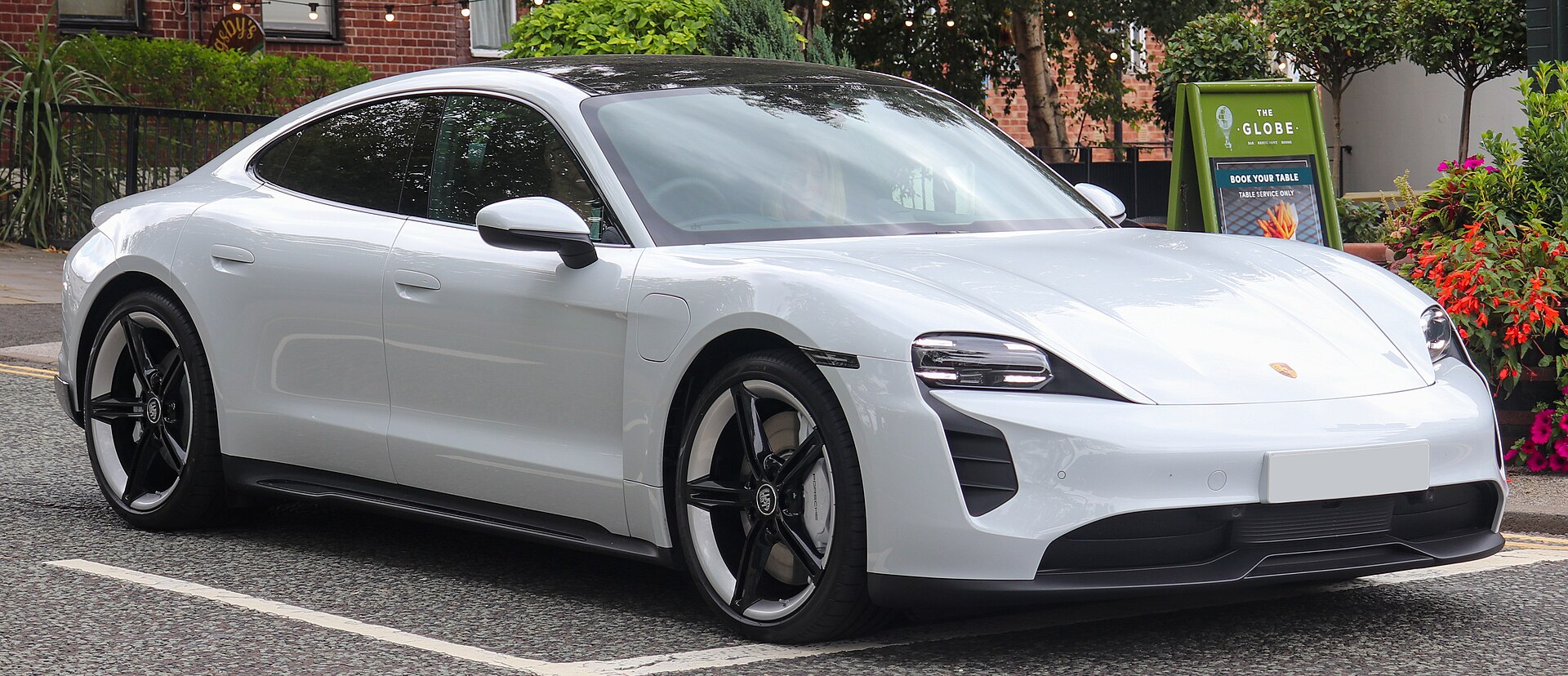
How Much Does a Porsche Taycan Turbo Cost?
A complete breakdown of Porsche Taycan Turbo pricing — from MSRP and options to insurance, charging, maintenance, and total cost of ownership
The Short Answer: $161,500 MSRP, But Plan on $175K–$200K Out the Door
The Porsche Taycan Turbo starts at $161,500, making it the value play in Porsche's all-electric supercar lineup. But that number is deceptive. After you add the options buyers actually want—sport suspension packages, premium audio, performance trim upgrades—expect to pay $175,000 to $200,000 for a fully loaded new Taycan Turbo. And if you factor in the total cost of ownership over five years, including insurance, charging, and maintenance, the real number gets more interesting: the Taycan Turbo is cheaper to own than a 911 Turbo S, despite its higher purchase price.
The used market tells an even more compelling story. A 2021 Taycan Turbo that sold for $185,000 new is worth $75,000–$95,000 today—devastating depreciation that makes buying used the move for anyone willing to accept an older EV battery warranty. But for early buyers who kept their cars, the Taycan Turbo is proving to be a faster, more practical supercar than traditional gas engines. Here's what you actually need to know about pricing this machine.
New Porsche Taycan Turbo Pricing: The Lineup Breakdown
Porsche's Taycan lineup has three main variants at the performance end of the spectrum. The Taycan Turbo sits in the middle—more powerful than the base model, less extreme than the GT variant:
| Variant | MSRP | Horsepower | 0–60 mph | Range (EPA) |
|---|---|---|---|---|
| Taycan Turbo | $161,500 | 670 hp (overboost) | 2.7s | 280 miles |
| Taycan Turbo S | $197,400 | 750 hp (overboost) | 2.5s | 285 miles |
| Taycan Turbo GT | $230,000 | 1,020 hp (overboost) | 2.1s | 290 miles |
The Turbo is Porsche's entry-level performance EV, and it's the one that makes financial sense for most buyers. The Turbo S adds $35,900 for an extra 80 hp and negligible acceleration improvement (2.7s to 2.5s). The Turbo GT is a lightweight, track-focused machine that costs $68,500 more than the Turbo. Unless you're planning regular track days, the Turbo delivers 95% of the experience at a significantly lower price.
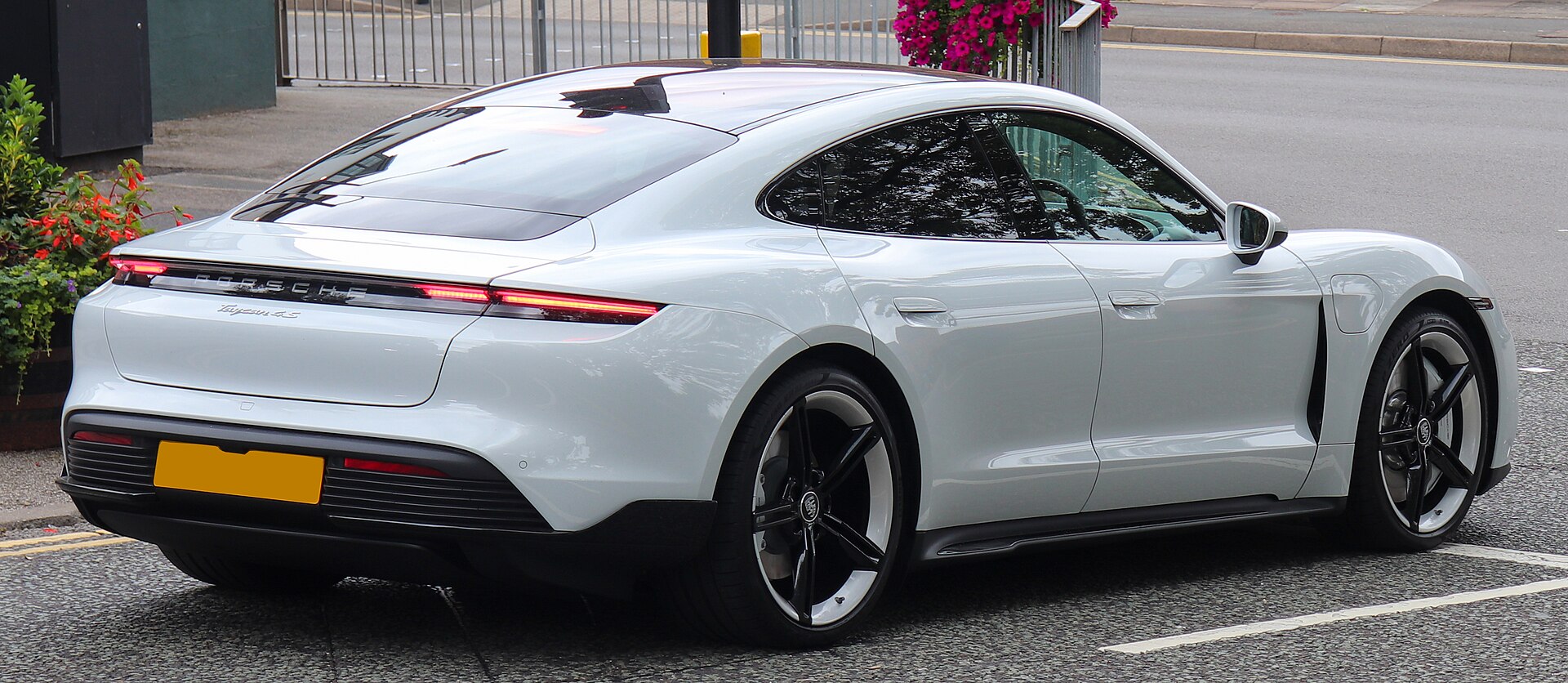
Popular Options That Add $14,000–$40,000
Here's where new Taycan buyers stumble. The $161,500 MSRP doesn't include the features you actually want. Even Porsche enthusiasts are surprised by the option pricing on this car:
| Option Package / Feature | Cost | Notes |
|---|---|---|
| Sport Chrono Package | $1,350 | Launch control, vehicle dynamics monitoring |
| Adaptive Suspension (PDCC) | $3,950 | Porsche Dynamic Chassis Control |
| Rear-Axle Steering | $2,280 | Improves handling and maneuverability |
| Panoramic Sunroof | $1,410 | Glass roof reduces headroom |
| Premium Package | $5,810 | Bose sound, leather, ambient lighting |
| Exterior LED Matrix Lights | $1,620 | Upgraded headlight system |
| Taycan Aero Kit | $3,420 | Carbon fiber styling |
| Premium Interior Trim | $2,880 | Leather upgrades and customization |
A realistically equipped Taycan Turbo—with suspension, sport chrono, rear-axle steering, premium audio, and LED lights—easily hits $180,000–$190,000 before taxes and delivery fees. If you add the aero kit and premium interior trim, you're looking at $195,000–$205,000. The choice to go minimalist or load up options dramatically impacts the final price.
Used Market Pricing: Massive Depreciation Opportunity
The Taycan's depreciation curve is among the steepest in the supercar segment. Here's what the used market looks like in early 2026:
| Model Year | Typical Mileage | Current Market Price | Depreciation from New |
|---|---|---|---|
| 2020–2021 Taycan Turbo | 8,000–25,000 miles | $70,000–$95,000 | -45% to -55% |
| 2022–2023 Taycan Turbo | 5,000–18,000 miles | $90,000–$120,000 | -35% to -45% |
| 2024 Taycan Turbo | 2,000–8,000 miles | $120,000–$145,000 | -20% to -30% |
This depreciation is brutal compared to traditional Porsche 911s, which lose 15–20% in the same period. Why? Four factors: high initial production volume, rapid technology improvements in EV batteries and efficiency, range anxiety concerns with older battery chemistry, and direct competition from the Tesla Model S Plaid, which offers comparable performance at lower used prices.
For buyers, this is opportunity. A 2022 Taycan Turbo that originally cost $185,000 is now available for $100,000–$110,000. You're buying a three-year-old car with 8-year/100,000-mile battery warranty remaining. That's the sweet spot in the used market.

Why Has the Taycan Depreciated So Hard?
High initial production. Porsche produced over 75,000 Taycans in the first four years of production. That's not rare—it's mass-market premium. That supply flood destroyed values.
Battery technology improved dramatically. A 2020 Taycan has 80–85 kWh usable capacity. A 2024 Taycan has similar capacity but 10–15% more efficient chemistry. Newer is meaningfully better, creating pricing pressure on older stock.
Range anxiety remains real. The EPA rates the 2020 Taycan at 225 miles. The 2024+ model hits 280 miles. That 25% range gap feels significant to buyers, even though most daily driving patterns don't require it.
Tesla Model S Plaid competes directly. The Plaid offers equivalent performance (0–60 in 1.9s vs. Taycan's 2.7s), faster charging (up to 250 kW), and lower used prices. A 2021 Model S Plaid is worth $85,000–$105,000 today. The Porsche badge doesn't overcome that price gap.
The Taycan Turbo's depreciation is painful for early buyers, but it's a gift for second-hand shoppers. A 2023 model with a six-year warranty for $105,000 is among the best EV supercar values in 2026.
Performance Specs: All-Electric Speed That Rivals Gas Supercars
The Taycan Turbo's numbers are genuinely competitive, though the naming convention is confusing. There's no turbo engine in the Taycan Turbo—"Turbo" is Porsche's legacy naming. Here's what you're actually getting:
Power and Speed: 670 hp (with overboost function), 0–60 in 2.7 seconds, 155 mph top speed. The overboost kicks in for short bursts, giving you maximum acceleration when needed. This is legitimately supercar-fast—faster than most gas-powered 911s, slower than the GT variant.
Range: EPA-rated 280 miles on 2024+ models with the base battery. This is where Porsche's 800-volt architecture shines. Most competitors need larger batteries to hit 250+ miles; the Taycan does it with a smaller, lighter pack.
Charging: 270 kW DC fast charging capability. On a Porsche Charging Station, you can add 200 miles in 22.5 minutes. On a standard Level 2 home charger (11 kW), a full recharge takes 9 hours. This is the fastest production EV charging architecture available.
800-Volt Architecture: This is the key to understanding why the Taycan is special. Nearly every other EV uses 400-volt systems. Porsche's 800-volt infrastructure means faster charging, cooler temperatures during performance, and less efficiency loss—translating to better real-world range.

Charging Costs vs. Gas: $40–$60/Month vs. $300–$500 for a Gas Supercar
The often-overlooked advantage of EV ownership is fuel cost. Here's the real math:
Home Charging (Level 2): Assuming 12,000 miles annually and 3.5 miles per kWh efficiency, you need roughly 3,429 kWh per year. At the U.S. average residential rate of $0.1595/kWh, that's $547 annually—about $46/month. In states with cheaper electricity (Texas, Louisiana), you might pay $30/month. In expensive states (California, Hawaii), it could hit $80/month.
DC Fast Charging on Road Trips: Most network operators charge $0.25–$0.50 per kWh. A long road trip requiring 2,000 miles adds maybe $200–$300 once per year. Amortized, that's negligible for most owners.
Comparison to Gas Supercar: A Porsche 911 Turbo S (similar performance) averages 14–16 mpg. At $3.50 per gallon, 12,000 miles costs $2,625–$3,000 annually. A comparable gas car costs 5–6x more to fuel than the Taycan.
Annual Fuel Advantage: $2,500–$3,000 saved every year. Over five years of ownership, that's $12,500–$15,000 you're not spending on fuel. This doesn't fully offset the higher purchase price of the Taycan, but it's a meaningful offset.
Maintenance Savings: No Oil Changes, Regenerative Braking, Prepaid Service Available
EV maintenance is fundamentally different from gas supercars:
| Maintenance Category | Taycan Turbo Annual Cost | 911 Turbo S Annual Cost |
|---|---|---|
| Oil Changes & Fluid Service | $0 | $400–$600 |
| Brake Service | $200–$400 | $2,000–$4,000 |
| Tire Rotation & Replacement | $400–$700 | $400–$700 |
| Air Filter & Cabin Filter | $150–$300 | $300–$500 |
| Routine Diagnostics | $150–$300 | $300–$600 |
| Annual Total | $900–$1,700 | $3,400–$6,400 |
No Oil Changes: Electric motors don't need oil. The Taycan has no engine fluids to change, no transmission fluid, no spark plugs. You save roughly $400–$600 annually just on this alone.
Regenerative Braking Reduces Wear: The Taycan's electric motor slows the car during braking, meaning your mechanical brake pads last 3–4x longer than in a gas car. Most Taycan owners won't replace brake pads in the first 100,000 miles. A gas supercar needs $2,000–$4,000 brake service every 40,000 miles.
Prepaid Maintenance Plans: Porsche offers a $2,250 warranty for six years/80,000 miles that covers maintenance on the Taycan. This locks in brake fluid changes, cabin air filter service, and diagnostics at a fixed price. It's a wise buy if you plan to keep the car beyond year three.
Total Annual Savings vs. 911 Turbo S: $2,000–$4,700 per year. Over five years, you're saving $10,000–$23,500 in maintenance costs. This compounds the fuel savings and partially offsets the higher purchase price of the Taycan.
Insurance: $3,000–$5,000 Annually
Insurance on the Taycan Turbo is competitive with other Porsche sports cars, but there are EV-specific considerations:
Base Insurance Rates: Most insurers charge $3,000–$5,000 annually for a 30-year-old driver with clean record in a major metro area. This is similar to a 911 Carrera, slightly higher than a Boxster. Some insurers charge modest EV discounts (5–10%), while others don't.
Battery Coverage Important: Make sure your policy explicitly covers the battery pack. A battery replacement is estimated at $20,000–$30,000 if it fails outside warranty. Porsche's 8-year/100,000-mile warranty covers defects, but not damage from accidents. Confirm your insurer covers unintended battery damage.
Lower Usage Discounts: Some insurers offer discounts if you primarily use the Taycan for weekend driving. Since the total cost of ownership favors regular use (cost per mile is lower), this discount might not apply if you drive 12,000+ miles annually.
Specialty Insurer Option: Consider exotic car insurers like ACV, Specialty Underwriters, or SafePoint. They understand EV supercars better and sometimes offer better rates than mainstream carriers.
Total Cost of Ownership: Taycan Turbo vs. 911 Turbo S vs. Tesla Model S Plaid vs. BMW M5
Here's the five-year ownership cost comparison assuming 12,000 miles annually:
| Expense Category | Taycan Turbo | 911 Turbo S | Model S Plaid | BMW M5 |
|---|---|---|---|---|
| Purchase Price (avg. used 2021) | $185,000 | $185,000 | $95,000 | $85,000 |
| Fuel/Charging (5 years) | $2,500 | $14,000 | $2,500 | $10,000 |
| Maintenance (5 years) | $5,500 | $20,000 | $8,000 | $10,000 |
| Insurance (5 years) | $20,000 | $22,000 | $18,000 | $12,000 |
| Registration/Taxes | $3,000 | $3,000 | $2,000 | $2,000 |
| Estimated Resale Value (5-year-old) | -$105,000 | -$125,000 | -$50,000 | -$45,000 |
| 5-Year Total Cost | $111,000 | $119,000 | $75,500 | $64,000 |
The Taycan Turbo costs roughly $8,000 more than a 911 Turbo S over five years, despite the identical purchase price. Why? The 911 holds value better (Porsche enthusiasts pay premium prices for gas models), while Taycans depreciate faster. However, the Taycan's fuel and maintenance savings almost entirely close that gap. For equivalent performance, the Taycan is a reasonable financial play—and it's significantly cheaper than the BMW M5 despite higher purchase price.
The Battery Question: 8-Year Warranty, Minimal Degradation
The elephant in the room for EV buyers is the battery. Here's what you need to know about the Taycan's battery:
Warranty Coverage: Porsche covers the high-voltage battery for 8 years/100,000 miles (whichever comes first). This is industry-standard. If the battery degrades below 70% capacity, Porsche replaces it for free. Most owners never hit this threshold.
Real-World Degradation: Taycan owners with 50,000+ miles report minimal capacity loss. The 800-volt architecture and active thermal management keep battery temperatures low during charging and performance driving. Real-world data shows 95%+ capacity after 100,000 miles for typical owners. This is among the best EV battery longevity in the industry.
Replacement Cost if Out of Warranty: Estimated $20,000–$30,000 for a new battery pack installed. This is expensive, but it's also a worst-case scenario that rarely happens. Factor it into risk calculations if you're buying a car with warranty expiring soon, but don't obsess over it.
Second-Owner Warranty: If you buy a used Taycan, the warranty transfers to you. A 2022 Taycan with original warranty still has 6+ years/75,000 miles of coverage. This makes used Taycans significantly more attractive than used gas cars, where major powertrain work often falls on the second owner.
Thermal Management: The Taycan's cooling system actively manages battery temperature during fast charging and performance driving. This is why it outperforms competing EVs in repeated acceleration tests. The battery stays cool, power output stays high, and degradation stays low.
Tax Incentives: Taycan Does NOT Qualify for $7,500 Federal Credit
Federal Tax Credit: The Taycan Turbo does NOT qualify for the $7,500 federal EV tax credit. Why? It's built in Germany, and the IRA (Inflation Reduction Act) requires vehicles to be assembled in North America. The credit applies to Tesla Model S Plaid (built in Texas) and BMW iX xDrive50, but not the Porsche Taycan.
State and Local Incentives: Check your state. Some states offer modest EV incentives ($2,500–$5,000) regardless of assembly location. California, Colorado, and New York historically offer additional incentives. These change annually, so verify before purchase.
HOV Lane Access: In some states, you get solo-occupancy HOV lane access. In California, this saves 45+ minutes per week if you commute. Over five years, that's worth roughly $3,000–$5,000 in time savings. It's a benefit not quantified in traditional cost-of-ownership calculators.
The lack of federal credit stings when comparing to other EVs, but it doesn't eliminate the Taycan's financial advantage. Maintenance and fuel savings still make it cheaper to own than the 911 Turbo S.
Find the Right Taycan for Your Budget
Automonitor tracks Taycan Turbo pricing across all model years and flags the best deals. We help you understand real market values so you pay fair price.
Browse Available Taycans →Smart Buying Strategy: New vs. Used, Where to Shop
Buying New: Unless you specifically want the latest battery technology and full warranty, buying new doesn't make financial sense given Taycan depreciation. If you must buy new, negotiate hard. Porsche dealers often have inventory they need to move. A 5–10% discount off MSRP is realistic on new Taycans. Target end-of-month or end-of-quarter for maximum leverage.
Buying Used (2023–2024): This is the sweet spot. A 2024 Taycan Turbo with under 5,000 miles costs $120,000–$140,000. You get the modern battery, most of the warranty, and avoid the steepest depreciation. Expect to pay 30–35% less than new while getting a nearly-new car.
Buying Used (2021–2022): If you're budget-conscious, a 2022 Taycan Turbo at $100,000–$110,000 is exceptional value. You sacrifice some battery efficiency and have six years of warranty remaining, but the savings are substantial. The car is still fast, still elegant, still practical.
Where to Shop: Porsche dealers have certified pre-owned inventory with warranty extensions. Auction sites like Bring a Trailer and Cars and Bids offer transparent pricing and competitive bidding. Independent exotic dealers often have better pricing than franchised Porsche stores but no warranty.
Pre-Purchase Inspection: Mandatory for any used Taycan. Battery health diagnostics are critical—a Porsche dealer can run a complete battery assessment showing real capacity and chemistry performance. Budge $500–$1,000 for this inspection; it's worth every cent.
Should You Buy a Taycan Instead of a 911 Turbo S or Model S Plaid?
The Taycan Turbo sits at an odd price point. Here's how to think about it versus the alternatives:
vs. 911 Turbo S ($185K–$210K used): The 911 is faster (0–60 in 2.5s), holds value better, and sounds extraordinary. The Taycan is cheaper to own, doesn't need oil changes, and refuels faster. If heritage and sound matter, the 911 wins. If total cost of ownership and practicality matter, the Taycan wins. They're genuinely different cars.
vs. Tesla Model S Plaid ($85K–$110K used): The Plaid is faster, cheaper, and has better range. The Taycan is more beautifully designed, has better interior materials, and better steering feel. The Plaid is an EV first that happens to be fast. The Taycan is a Porsche first that happens to be electric. If you prioritize speed and price, Plaid wins. If you prioritize the driving experience and craftsmanship, Taycan wins.
vs. BMW M5 ($85K–$100K used): The M5 is cheaper, faster, and more practical as a daily driver (bigger interior, better ergonomics). The Taycan is more exclusive, more technologically advanced, and cheaper to operate long-term. The M5 is a sedan. The Taycan is a fastback. If you need space and comfort, M5 wins. If you want a driver's car that's also an EV statement, Taycan wins.
The Final Pricing Summary
Here's the essential pricing takeaway for the Porsche Taycan Turbo:
New MSRP: $161,500 base, realistically $180,000–$200,000 with options
Used Market (2024): $120,000–$145,000
Used Market (2022–2023): $90,000–$120,000
Used Market (2020–2021): $70,000–$95,000
Annual Operating Cost: $3,000–$4,000 (insurance, charging, maintenance, registration)
5-Year Total Cost of Ownership: $111,000 (purchase + operations - resale)
Best Buy Recommendation: 2023–2024 model year, 8,000–15,000 miles, $105,000–$130,000 price range. You get modern technology, substantial warranty, significant savings versus new, and avoid the worst depreciation hit.
The Taycan Turbo isn't the cheapest supercar. It's not the fastest. It's not the rarest. But it's the most practical to own, the cheapest to operate, and among the most rewarding to drive. In an era where performance cars are being electrified whether we like it or not, the Taycan Turbo proves that EVs can be supercars worth buying.
Ready to Buy or Sell a Taycan?
Automonitor provides market data, pre-purchase inspections, and concierge buying/selling services for Porsche Taycans. We've handled hundreds of EV supercar transactions.
Get Started Today →