
How Much Does an Audi R8 Cost?
The Audi R8 represents one of the last naturally aspirated V10 supercars ever produced. With production ending after 2023, the final GT RWD edition became instant collector's items. But what does R8 ownership actually cost — from sticker price to insurance, maintenance, and real-world depreciation? Here's the complete breakdown.
R8 Production Ended: Why This Matters for Pricing
Audi discontinued the R8 after 2023, marking the end of an era in mid-engine supercar design. The final model year was the limited-production GT RWD edition — just 333 units worldwide. Unlike many supercars that get replaced with new generations, the R8 has no successor. There is no hybrid R8, no electric R8, no evolution coming down the pipeline. This matters because it creates a fixed, finite supply of one of the most capable naturally aspirated V10 machines ever built.
For buyers and owners, this discontinuation has immediate pricing implications. All R8s on the market now are either used vehicles or remaining dealer stock of the final 2023 models. The V10 engine — shared with the Lamborghini Huracan — is now arguably rarer and more significant than when the car was in production. Every year that passes, every mile driven by owners, the R8 becomes more historically important. And historically important cars have pricing floors that more recent models can't claim.
Understanding current Audi R8 pricing means understanding the market in early 2026 — a market shaped by discontinuation, collector interest, and the reality that you cannot buy a new R8 anymore. Every R8 on sale today is a claim on a finite pool of remaining examples.
Second Generation R8 (2017–2023): The Current Market Reality
The second-generation R8 spans from 2017 to 2023 — a seven-year production run that saw significant evolution in power, technology, and driving dynamics. This is where most buyers shopping today will be looking, and this is where market pricing is most transparent and liquid.
| Model Year | Variant | Engine / Power | Used Market Price | Typical Mileage |
|---|---|---|---|---|
| 2017–2019 | V10 Performance (AWD) | 5.2L NA V10 / 610 hp | $100,000–$140,000 | 25,000–45,000 miles |
| 2020–2022 | V10 Performance (AWD) | 5.2L NA V10 / 610 hp | $140,000–$180,000 | 10,000–30,000 miles |
| 2019–2021 | V10 RWD | 5.2L NA V10 / 610 hp | $125,000–$160,000 | 15,000–35,000 miles |
| 2022–2023 | V10 Performance Quattro | 5.2L NA V10 / 610 hp | $165,000–$200,000 | Under 10,000 miles |
| 2023 (Final) | GT RWD (Limited to 333) | 5.2L NA V10 / 612 hp | $250,000–$320,000 | Under 5,000 miles (mostly) |
The data above reflects Automonitor analysis of completed transactions, private sales, and dealer inventory in early 2026. Notice the dramatic jump in the final GT RWD edition — these cars are not being sold at market; they're being held and appreciated. Dealers and private collectors bought them as investments, not transportation. If you find a GT RWD for sale, expect negotiation to be difficult and pricing to be above historical MSRP.
First Generation R8 (2008–2015): The Budget Supercar
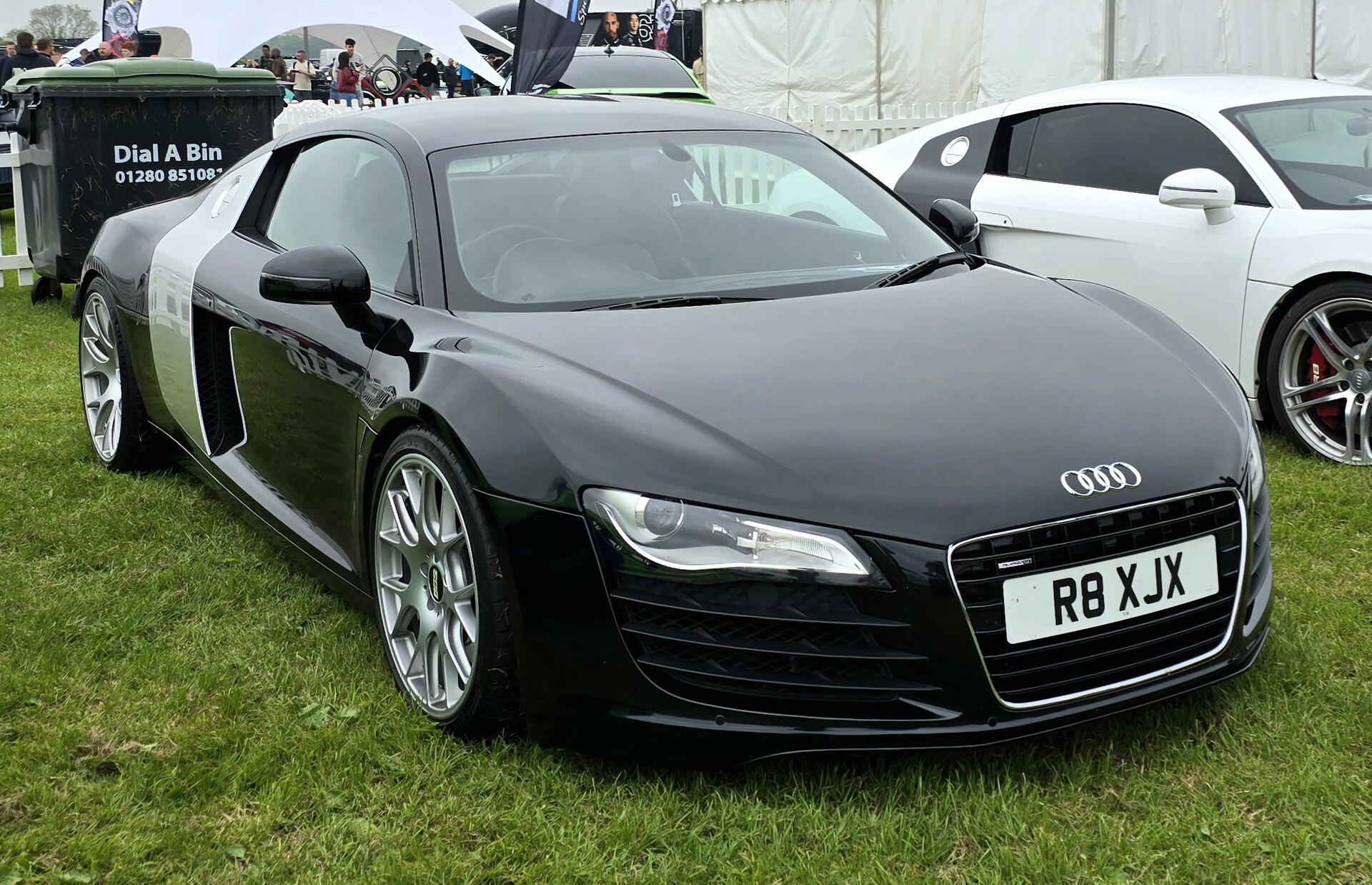
The original R8 represents exceptional value today. While less technically advanced than second-generation models, first-gen cars share the same mid-engine layout, the same commitment to naturally aspirated performance, and the same emotional impact as newer variants. For buyers with a tighter budget, the first-gen R8 offers surprising capability at a fraction of second-gen pricing.
| Year Range | Engine | Market Price | Notes |
|---|---|---|---|
| 2008–2012 | 4.2L V8 / 430 hp | $60,000–$80,000 | Earlier examples, higher mileage, good entry point |
| 2013–2015 | 4.2L V8 / 430 hp | $75,000–$95,000 | Better maintained examples, lower mileage |
| 2014–2015 | 5.2L V10 / 540 hp | $100,000–$140,000 | V10 power in older package, increasingly sought after |
| 2015 GT (Ultra-Rare) | 5.2L V10 / 585 hp | $180,000–$240,000 | Only 333 units produced, collector's prices rising |
First-generation buyers should expect higher maintenance costs relative to second-gen cars — suspension components are older, suspension bushings may need replacement, and carbon buildup on the intake valves is more common on earlier 5.2L V10 engines. That said, the V8 models are generally robust and parts availability is good thanks to Audi's extensive dealer network. A well-maintained first-gen V8 R8 remains one of the best value propositions in the used supercar market.
Get an R8 Pre-Purchase Inspection
First and second-generation R8s require expert evaluation. Automonitor connects you with certified inspectors who know exactly what to check on every R8 variant.
Schedule an Inspection →2023 R8 GT RWD: Final Edition Pricing (If You Can Find One)
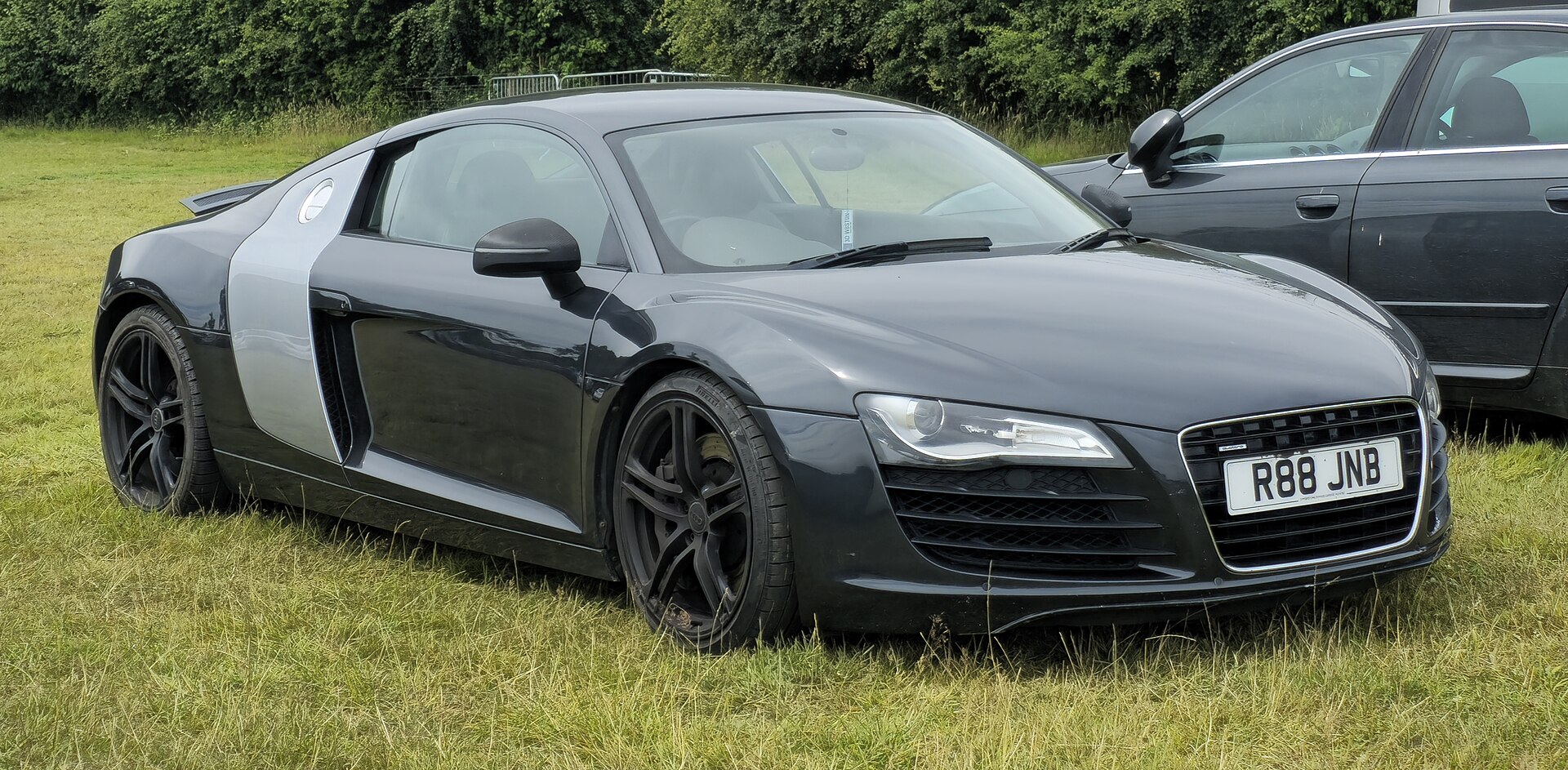
The last Audi R8 ever made was the 2023 GT RWD, limited to exactly 333 units worldwide. Official MSRP was approximately $250,000 before destination charges and options. With typical option packages (carbon fiber accents, carbon ceramics, special paint), final invoice totaled $270,000–$290,000 to customer.
These cars are not available from dealers at MSRP anymore. Every GT RWD example was pre-ordered, and allocation went to VIP customers and long-standing collectors. The few that have appeared on the private market have sold for $280,000–$320,000, representing appreciation even from original buyer pricing. Early indicators suggest the GT RWD will appreciate 15–25% over the next five years as its rarity becomes more apparent and competitor markets tighten.
What R8 Ownership Really Costs: The Annual Rundown
Purchase price is only part of the equation. For prospective R8 buyers, understanding the full cost of ownership is essential to making an informed decision. Here's what ownership actually costs in real dollars, based on owner data and service records from the Automonitor network:
| Expense Category | Annual Cost | Notes |
|---|---|---|
| Insurance | $3,000–$5,500 | Varies by age, location, coverage limits, driving record |
| Routine Maintenance | $2,000–$3,500 | Oil changes, brake fluid service, suspension inspections, cabin air filters |
| Fuel | $2,500–$4,000 | 11–14 mpg combined; 91+ octane fuel required; varies by driving style |
| Tires (Amortized) | $1,500–$2,500 | Michelin Pilot Sport 4S or equivalent; replacements every 12,000–18,000 miles |
| Brakes (Amortized) | $800–$1,500 | Steel or carbon ceramics; ceramic brake jobs run $8,000–$12,000 |
| Registration & Taxes | $1,200–$2,000 | State-dependent; higher in high-tax states like California and New York |
| Total Annual Running Cost | $11,000–$19,000 | Excludes depreciation and unexpected repairs |
That's roughly $900–$1,600 per month in running costs for a second-generation R8. This compares favorably to the Lamborghini Huracan (which runs $1,100–$2,200/month) and significantly better than the McLaren 720S ($1,300–$2,400/month). The R8's advantage stems from Audi's integrated dealer network, parts availability, and generally conservative maintenance intervals. A turbocharged sports car would have higher fuel costs; a hybrid or electric car would have different operating profiles.
Depreciation & Value Retention: Why the R8 Holds Value
The Audi R8's depreciation curve is steeper in the first 2–3 years (typical of most supercars), then stabilizes significantly. Here's the real-world picture based on 5-year ownership:
Year 1 depreciation: 10–15% (purchasing example: a $175,000 used R8 Performance drops to $150,000–$157,000)
Years 2–5 depreciation: 3–5% annually (stabilizing around 18–25% total depreciation over five years)
This compares favorably to most competitors. The Lamborghini Huracan depreciates similarly (20% over five years). The McLaren 720S depreciates faster (28–32% over five years). The Porsche 911 Turbo S actually depreciates slower (15–20% over five years), though it carries a different value proposition.
The key driver of R8 value retention is discontinuation combined with the V10 engine. Limited production (especially the GT RWD and first-gen GT variants) creates artificial supply constraints. The naturally aspirated V10 becomes more historically significant every year as the industry transitions to turbos and hybrids. For buyers keeping cars 3+ years, the R8 represents a relatively safe investment from a depreciation standpoint.
Maintenance Reality: Audi Dealer Network, Relatively Affordable
One of the R8's underrated advantages is accessibility to maintenance. Unlike Lamborghini or Ferrari, which require dealer visits for even basic service, Audi has a nationwide network of certified dealers and independent specialists trained on the R8. This competition drives costs down.
Oil changes: $400–$600 at an Audi dealer (full synthetic, filter, labor)
Brake fluid service: $500–$800 (every two years)
Coolant service: $600–$900 (every three years)
Spark plug replacement: $800–$1,200 (10-year intervals, rarely needed)
Suspension components: $2,000–$5,000 (lower control arms, bushings, if needed)
Major repairs are where costs escalate. A V10 engine bearing failure (extremely rare) would run $15,000–$25,000 at dealer rates. A DCT dual-clutch transmission replacement (also rare) runs $12,000–$18,000. Carbon buildup cleaning on the intake valves runs $1,500–$2,500. Independent shops can sometimes match or beat dealer pricing on these, but expertise is critical.
Tire costs deserve specific attention. The R8's aggressive suspension geometry and narrow track width require aggressive tire compounds and specific load ratings. OEM Michelin Pilot Sport 4S tires cost $2,000–$3,000 for a full set of four. Replacements are needed every 12,000–18,000 miles depending on driving intensity. For comparison, that's 2–3 tire sets over a five-year ownership period.
Insurance: Expect Higher Premiums for Supercars
Insuring an Audi R8 isn't as catastrophic as insuring a Ferrari, but it's meaningfully higher than insuring a 911 Turbo S or Corvette. Annual premium breakdowns typically look like this:
Liability coverage: $400–$600 annually (standard limits)
Collision coverage: $1,200–$2,000 annually (typical deductible $1,000)
Comprehensive coverage: $600–$1,000 annually
Uninsured motorist protection: $400–$600 annually
Total annual premium for a well-maintained driver with good history: $3,000–$5,500
Factors that significantly impact pricing: your zip code (California, New York, Florida = higher), driving record (any accidents = substantial increase), age and repair history of the specific car, annual mileage (low mileage gets discounts), and storage location (garaged vehicles cost less than street-parked).
Several companies specialize in exotic car insurance and offer better rates than standard insurers: Heacock Classic, Hagerty, Specialty Risk Insurance. If you're shopping for an R8, get insurance quotes before committing to purchase. A $150,000 R8 can have surprisingly different insurance costs depending on how it's positioned in the policy.
R8 Pricing vs. Competitors: How It Stacks Up
The R8 doesn't exist in a vacuum. Buyers considering it are usually also looking at the Lamborghini Huracan, Porsche 911 Turbo S, and Mercedes-AMG GT. Here's how pricing and cost of ownership compare:
| Vehicle | Current Used Price | Annual Insurance | Annual Maintenance | 5-Year Depreciation | Key Advantage |
|---|---|---|---|---|---|
| R8 V10 Performance | $140–$180K | $3,200–$5,200 | $2,000–$3,500 | 20–25% | Audi dealer network, rare V10 |
| Huracan EVO AWD | $155–$190K | $4,000–$8,500 | $3,000–$5,000 | 18–22% | Drama, performance, brand prestige |
| 911 Turbo S | $140–$170K | $2,800–$4,500 | $1,800–$3,000 | 22–28% | Reliability, 4-seat practicality |
| Mercedes-AMG GT | $130–$170K | $3,500–$6,000 | $2,500–$4,500 | 25–30% | Luxury appointments, performance |
| McLaren 720S | $120–$160K | $5,000–$9,000 | $3,500–$6,000 | 30–35% | Raw performance, lightweight |
The R8 occupies an interesting position: it's not the cheapest entry into supercar ownership (that's the McLaren 720S on the used market), but it has the lowest running costs and best dealer support. It's not the most prestigious (that's the Lamborghini), but it shares the same engine. It's less practical than the 911 Turbo S, but more exotic. For buyers who value balance — performance, rarity, reliability, and cost of ownership — the R8 represents exceptional value.
Where to Buy R8s: Market Sources & Price Variation
Finding the right R8 at the right price requires knowing where to look. Pricing varies significantly by source and market condition:
Authorized Audi dealers: Expect retail markup of $5,000–$15,000 over comparable private sales. Dealer R8s typically include inspections and brief warranties. Useful if you want peace of mind, not useful if you're budget-conscious.
Independent exotic car dealers: Often have better pricing than Audi dealers, typically $3,000–$8,000 under retail. Quality varies significantly. Verify pre-purchase inspection history and ask for service records.
Bring a Trailer auctions: Transparent price discovery through auction dynamics. No haggling. Completed sales data is publicly visible, helping calibrate market expectations. Bring a Trailer typically attracts well-maintained examples with documented service history.
Facebook Marketplace, Craigslist, local private sales: Lowest prices possible, but highest risk. Always require a pre-purchase inspection before committing. Private sellers sometimes don't understand the market and price below value — or they understand it perfectly and list high hoping for negotiation.
Automonitor concierge service: If you want professional sourcing without the haggling headaches, Automonitor connects you with vetted sellers and handles inspection, negotiation, and logistics. More details in our R8 buyer's guide.
Financing an R8: Special Considerations
Exotic car financing differs from traditional auto loans. Standard lenders often decline R8 purchases or offer unfavorable terms. Specialized exotic car lenders are your better option:
Typical exotic car lending profile: 20–30% down payment required, rates between 6–9% APR depending on vehicle age and credit score, loan term 60–72 months maximum.
Recommended lenders: JJ Best Banc, Woodside Credit Union, Baton Rouge Credit Union, and Gateway Credit Union all specialize in exotic vehicles and offer competitive rates.
Important caveat: Exotic cars depreciate, and loan-to-value ratios tighten quickly. A $150,000 R8 financed with $30,000 down ($120,000 loan) could drop to $130,000 in value within 12 months, leaving you underwater. Only finance if you can afford the monthly payment comfortably and accept the possibility of negative equity if circumstances change.
Ready to Buy Your R8?
Automonitor sources from verified luxury dealers and private collectors. We handle inspections, verification, and negotiation so you can buy with confidence.
Start Your Search →2026 Audi R8 Market Trends: What's Happening Now
As of early 2026, several clear trends are shaping the R8 market:
Final edition appreciation: The 2023 GT RWD is appreciating faster than depreciation models predict. Limited to 333 units, with no future production, collector demand is driving prices upward. If you can find one at or near MSRP, it's a strong position.
Mid-mileage V10 Performance stabilization: 2020–2022 V10 Performance models (with 10,000–30,000 miles) are finding equilibrium pricing around $155,000–$175,000. These are the "sweet spot" for cost and capability.
First-gen V10 scarcity premium: First-generation 5.2L V10 models are becoming harder to find and commanding premiums. V8 models remain affordable but less sought-after.
AWD vs. RWD dynamics: RWD models command slight premiums ($3,000–$8,000) over comparable AWD cars due to driving experience and rarity. If you find an affordable RWD, jump on it.
Mileage premium cliff: R8s with under 20,000 miles command 10–15% premiums over cars with 30,000–40,000 miles. The gap flattens after 50,000 miles — less significant than you'd expect for a supercar.
Total Cost of Ownership: The 5-Year Picture
Let's work through a realistic example. You purchase a 2021 Audi R8 V10 Performance for $165,000 and keep it for five years, driving 3,000 miles annually (15,000 total miles by year 5):
Initial purchase: $165,000
Insurance (5 years): $20,000
Maintenance (5 years): $12,500
Fuel (5 years, ~600 gallons): $15,000
Tires (one set replacement): $2,500
Registration/taxes (5 years): $7,500
Total spent: $222,500
Resale value after 5 years: $130,000–$145,000 (20–22% depreciation)
Net cost of ownership: $77,500–$92,500 over five years
Cost per month: $1,300–$1,542
Compare this to a 911 Turbo S (lower insurance and maintenance, slightly higher depreciation) or a Huracan (higher insurance and maintenance costs), and the R8 stacks up as one of the most cost-effective supercar ownership experiences available today.
Is It Worth the Price? The Final Word
The Audi R8's pricing is compelling for three reasons: discontinuation has created historical significance, the V10 engine is irreplaceable, and cost of ownership is lower than most competitors. The R8 costs less than a Huracan, less than a McLaren 720S, and significantly less than first-generation models when adjusted for capability.
For a buyer seeking a naturally aspirated mid-engine supercar that won't require a second mortgage for maintenance, with access to proper dealer support, the R8 represents one of the best value propositions in the supercar market. The final GT RWD edition will likely appreciate. The earlier generations offer affordable entry into exotic ownership. Either way, the R8's pricing reflects a market that understands its significance.
Ready to shop? See our complete R8 buyer's guide to understand variants and which one matches your needs. Or start sourcing using Automonitor to find vetted R8 sellers. Understanding pricing is the first step. Making the right purchase decision comes next.