
How Many Miles Is Too Many on a Used McLaren? The Critical Buyer's Guide
A used McLaren at the right mileage can be one of the best exotic car values on the market. The wrong mileage can turn a dream purchase into a six-figure financial disaster. Here's exactly what you need to know before you buy.
The Short Answer: It Depends on the Model, But There's a Pattern
Unlike the Porsche 911 or even a Lamborghini Huracan, McLarens depreciate harder and show mileage more aggressively. That's not because McLarens are unreliable — it's because McLarens are a younger brand, they have a reputation for electrical gremlins, and the used buyer market knows McLaren maintenance costs more than Ferrari or Porsche.
The simple answer: fewer miles is always better on a McLaren. But the real answer is more nuanced. A well-maintained 765LT with 8,000 miles is worth significantly more than a neglected one with 3,000 miles. A meticulously serviced 570S with 30,000 miles is a better buy than a mystery car with 15,000. And a McLaren GT with 40,000 miles? That's actually fine — the GT was designed for touring and handles mileage better than any McLaren in their portfolio.
This guide breaks down exactly how many miles is too many for every McLaren model, what those miles actually cost you in depreciation and maintenance, and how to navigate the most common — and expensive — problems that emerge as mileage climbs.
Why McLarens Depreciate Harder Than Competitors
Before diving into mileage thresholds, you need to understand why mileage matters more on a McLaren than on a comparable Ferrari or Porsche.
McLaren is a young brand. Founded in 1985 as a racing team and not launching their road car division until 2011, they don't have 50+ years of brand prestige baked into the purchase decision. That means McLaren buyers are more price-sensitive and more likely to shop based on the specific car's condition rather than brand loyalty. A high-mileage McLaren sits longer on dealer lots than a high-mileage Ferrari.
Second, the brand carries an unfair reputation for electrical problems and unreliability. Some of this is deserved (early McLarens had infotainment gremlins), and some is myth. But perception shapes market value. When a buyer is deciding between a 720S and a 488, and both are the same year and price, they'll often choose the Ferrari because they perceive it as more reliable — even though modern McLarens are competitive on reliability with Ferrari.
Finally, McLaren has a limited dealer network compared to Ferrari or Porsche. That means maintenance and repairs are either handled at one of a few McLaren-authorized dealers, or they're handled by trusted independents who may not have McLaren-specific expertise. Higher friction on service costs equals lower market values for used cars.
The result: a McLaren with 40,000 miles depreciates 5-8% more than a comparable 488 or 911 Turbo S with the same mileage. That differential compounds. It's the single biggest reason to be more aggressive about mileage thresholds on a McLaren.
Know Exactly What You're Getting Into
Automonitor's McLaren-specific pre-purchase inspections catch the expensive hidden issues early. The inspection pays for itself on the first repair you avoid.
Schedule a McLaren Inspection →
The McLaren Model-by-Model Mileage Breakdown
Every McLaren is not created equal. The touring-focused GT handles high mileage better than the track-focused 600LT. The newer Artura needs different evaluation criteria than the older 12C. Here's the breakdown by model:
McLaren GT: 40,000+ Miles Is Fine
The McLaren GT is the exception to the "fewer miles is better" rule. This car was explicitly designed for touring and high-mileage use. It's the only McLaren production car with a rear hatch, improved ride comfort, and touring-focused engineering.
Mileage thresholds for the GT are fundamentally different than sport models:
- Under 20,000 miles: Premium pricing tier. Expect 5-10% higher valuations. These cars have barely broken in. Service history becomes critical.
- 20,000-40,000 miles: The sweet spot. Cars in this range are past break-in but still have substantial life left. Values are stable and depreciation is minimal.
- 40,000+ miles: Still perfectly acceptable. The GT was engineered for this. You'll see 10-15% discounts compared to the 20K-40K range, but these cars are not high-risk. One owner, full service history examples at 50,000-60,000 miles are genuinely good buys.
The GT is built on a slightly modified version of the existing McLaren carbon monocell, but it gets softer suspension tuning, better soundproofing, and an interior designed for extended use rather than track duty. You can realistically daily drive a GT with 30,000+ miles without second-guessing the decision.
McLaren 570S and 570GT: 30,000-Mile Inflection Point
The 570S is one of the most common McLarens on the used market (2015-2021 production run). It's also where mileage starts to matter seriously.
- Under 15,000 miles: Premium pricing. First-owner examples with full service history command top dollar. Low mileage + documented maintenance = minimal risk.
- 15,000-30,000 miles: Good value. The sweet spot for most buyers. Depreciation has settled, but the car is still low-mileage enough to be desirable. These are typically $20-35K cheaper than sub-15K examples.
- 30,000+ miles: Inspect hydraulically-actuated door systems carefully (doors are a known weak point). At this mileage, the door actuators may start showing early signs of wear. A full service inspection is non-negotiable, not optional.
The 570GT (fixed roof, not the coupe) follows the same thresholds but with slightly better mileage tolerance due to the more refined suspension tuning.
McLaren 600LT: 10,000 Miles Is the Hard Cutoff
The 600LT is a track car in street clothes. It was engineered for circuit work, and mileage tolerance is correspondingly tight.
- Under 10,000 miles: Premium pricing justified. These are barely-used examples, likely garage queens. Expect 10-20% premiums over the 10K-15K range. Some appreciation potential for exceptionally clean examples with documented track use only.
- 10,000-15,000 miles: The acceptable range. Cars in this territory are still desirable. Track history is important — confirmed track miles are less concerning than street miles in this case.
- 15,000+ miles: Proceed with caution. At this mileage, potential owners need to know exactly what those miles represent. Was the car tracked aggressively? Street driven? Garage kept? The 600LT's lightweight construction means racing hard wears components faster than street driving.
The 600LT uses the same carbon fiber monocell as other McLarens, but it's extremely lightweight (1,247 lbs), uses track-focused dampers, and benefits from Brembo carbon ceramic brakes. These components degrade faster under hard driving than on more civilized models.
McLaren 720S: 25,000 Miles Is the Reality Check
The 720S is arguably McLaren's most important model — it was the first major refresh of the Sports Series and defined the modern McLaren sound and performance standard. It's also where hydraulic suspension wear becomes the dominant cost concern.
- Under 15,000 miles: Ideal pricing tier. Full value retention. These cars are coveted by collectors and cautious first-time McLaren buyers.
- 15,000-25,000 miles: Good value with less premiums. Sweet spot for practical buyers. Depreciation has been absorbed but the car is still in the "low mileage" category.
- 25,000+ miles: Critical inspection required on the hydraulic suspension system. This is the mileage threshold where the P1 suspension (based on the original P1 hypercar's system) starts showing wear on some examples. A failing hydraulic pump or seal can cost $8,000-$12,000 to repair. Not a deal-breaker, but absolutely verify condition before purchase.
The 720S also saw the introduction of the "Spider" convertible variant. Convertibles show slightly higher mileage tolerance due to their premium pricing at purchase — depreciation spreads slightly differently across the mileage curve.
McLaren 765LT: 5,000-Mile Sweet Spot
The 765LT is the spiritual successor to the 650S and represents McLaren at their most aggressive. It's a track-focused supercar in every dimension.
- Under 5,000 miles: Premium tier. Track-proved examples with documented circuit use at major tracks (Laguna Seca, Road America) command appreciating values. These are investment-grade cars.
- 5,000-10,000 miles: Sweet spot for serious buyers. Still low-mileage, but premiums have normalized. A 765LT with 8,000 well-documented miles is a strong buy.
- 10,000+ miles: Careful evaluation required. Ask hard questions about service history, previous track use, and current condition. The 765LT's aggressive nature means higher-mileage examples may have experienced harder driving.
The 765LT shares mechanical DNA with the 570S but with major revisions: upgraded turbochargers, revised suspension geometry, and weight reduction focused on the chassis. These refinements mean it tolerates hard driving better than earlier models, but track activity still leaves a mark on components.
McLaren Artura: 10,000 Miles (Caveat Emptor)
The Artura is the newest McLaren road car (2021+) and the first to use a hybrid powertrain. Mileage evaluation on the Artura is inherently uncertain because there's limited long-term data.
- Under 10,000 miles: Safest territory. These cars are still covered by McLaren's hybrid battery warranty. Minimal risk.
- 10,000-15,000 miles: Acceptable with one caveat: verify full service history. Engine and hybrid system updates are important to confirm.
- 15,000+ miles: Ask specific questions about battery health. McLaren can run diagnostics, but this requires dealer coordination. Factor in potential hybrid battery service costs ($15,000-$25,000) if warranty coverage expires.
The Artura's hybrid system is a known uncertainty. Some early examples have experienced heat management issues and software glitches. By 2026, McLaren has largely addressed these, but older examples (2021-2022) can be problem cars. A pre-purchase battery diagnostic is worth the $800-1,200 cost.
McLaren 12C: Condition Trumps Mileage
The 12C (2011-2014) is McLaren's original modern supercar and carries significant baggage. Early examples are cheap now — often $70K-120K — because they're depreciated nearly to extinction. That depreciation is actually an opportunity if you're careful.
- Under 15,000 miles: Rare and desirable. Original owner examples with full McLaren service history are the safest bets.
- 15,000-30,000 miles: Common. Prices settle here. This is the bread-and-butter 12C that's available in the used market.
- 30,000+ miles: Don't let low prices fool you. The 12C at high mileage is where hidden maintenance costs emerge. Grazier transmission issues, turbo carbon buildup, and cooling system problems are known issue categories. A $90K 12C with 40,000 miles could cost you $15,000+ in service in the first 12 months of ownership.
The 12C is not a bad car. It's actually mechanically solid. But it's old enough that component wear is real, and the used market for 12Cs is savvy about hidden problems. Unless you have significant hands-on experience with turbocharged engines and McLaren-specific systems, a pre-purchase inspection on a 12C is more important than on any newer model.
The McLaren Hydraulic Suspension Problem: The #1 Cost Concern at High Mileage
If there's one thing you need to understand about McLarens at high mileage, it's the hydraulic suspension system. This is the single biggest expense concern that emerges as mileage climbs.
McLarens from the 570S onwards use an active hydraulic suspension system with a cross-linked design. This system provides extraordinary handling and responsiveness compared to traditional adaptive suspension. But it's also complex, and it fails.
The system includes a hydraulic pump, accumulators, dampers with integrated solenoids, and interconnected hydraulic lines running throughout the chassis. The pump pressurizes the system to 210 bar. When seals start failing — and they do, predictably, between 15,000-40,000 miles on some examples — you're looking at expensive repairs.
Early warning signs: The car settles lower than normal when parked. You hear a hissing sound during suspension cycling. The suspension no longer actively manages road imperfections. The system is stuck in one mode.
Repair costs: Seal replacement and pump service runs $3,000-$6,000. Full pump replacement costs $10,000-$15,000. In extreme cases where the cross-linked lines have suffered internal corrosion, replacing the entire suspension system can reach $25,000-$30,000.
This is not a hypothetical concern. Multiple examples documented on McLarenLife forums show failures between 20,000-35,000 miles. Some are warranty-covered. Many are not, especially if the car has changed ownership or left the dealer network for service.
When evaluating any McLaren over 20,000 miles, have your pre-purchase inspector test the suspension system with the car running and parked. Listen for hissing. Check for visible hydraulic fluid leaks. Ask to see the service records — if the suspension fluid was serviced, that's a good sign. If there's no record of suspension service by 25,000 miles, that's a yellow flag.

Door Actuators: The $2K-$8K Wild Card
Every McLaren 570S and newer (except the GT) uses hydraulically-actuated doors. These doors are stunning to open and close, electronically powered to move through their full range. They're also a common failure point as mileage accumulates.
The actuators wear out. When they do, the door either won't open/close smoothly, makes grinding noises, or fails to open at all. Single door actuator replacement runs $2,000-$3,500. Both doors done together (recommended, since if one is failing the other is usually heading in that direction) is $4,000-$7,000 with labor.
Some examples show failures as early as 10,000 miles. Others make it to 50,000 without issue. There's no reliable predictor. When inspecting any McLaren with powered doors, cycle them 10-15 times to listen for grinding sounds or delays in opening/closing. A car that's been sitting in a garage for extended periods is more likely to have actuator issues than one that's been regularly driven.
Other High-Mileage Concerns: Transmission, Brakes, and Engine-Out Service
The carbon fiber monocell — McLaren's foundation for every car — is virtually indestructible. A McLaren chassis will outlast every other component on the car. But other systems degrade as mileage climbs.
Transmission: The SSG (Seamless Shift Gearbox) is reliable, but deterioration in shift smoothness and occasional clunking at low speeds starts appearing around 30,000-40,000 miles on higher-use examples. Service costs $500-$1,500 for fluid and filter. Repair costs are far higher ($15,000+) if the actual transmission needs work.
Brakes: McLarens come with carbon ceramic brakes as standard. These are expensive ($8,000-$12,000) to replace when they wear out, but they last 50,000-70,000 miles depending on driving style. Inspect pad thickness. If they're below 25% remaining, factor in $10,000+ in upcoming costs.
Engine-Out Service Requirements: Here's the hidden cost that blindsides buyers: some McLaren maintenance requires engine removal. The 12C and early 570S require engine removal for timing chain cover work, some cooling system repairs, and major turbo service. This is a $8,000-$15,000 labor job before you even touch the part that needs replacement. Budget-conscious buyers should avoid cars that need this work.
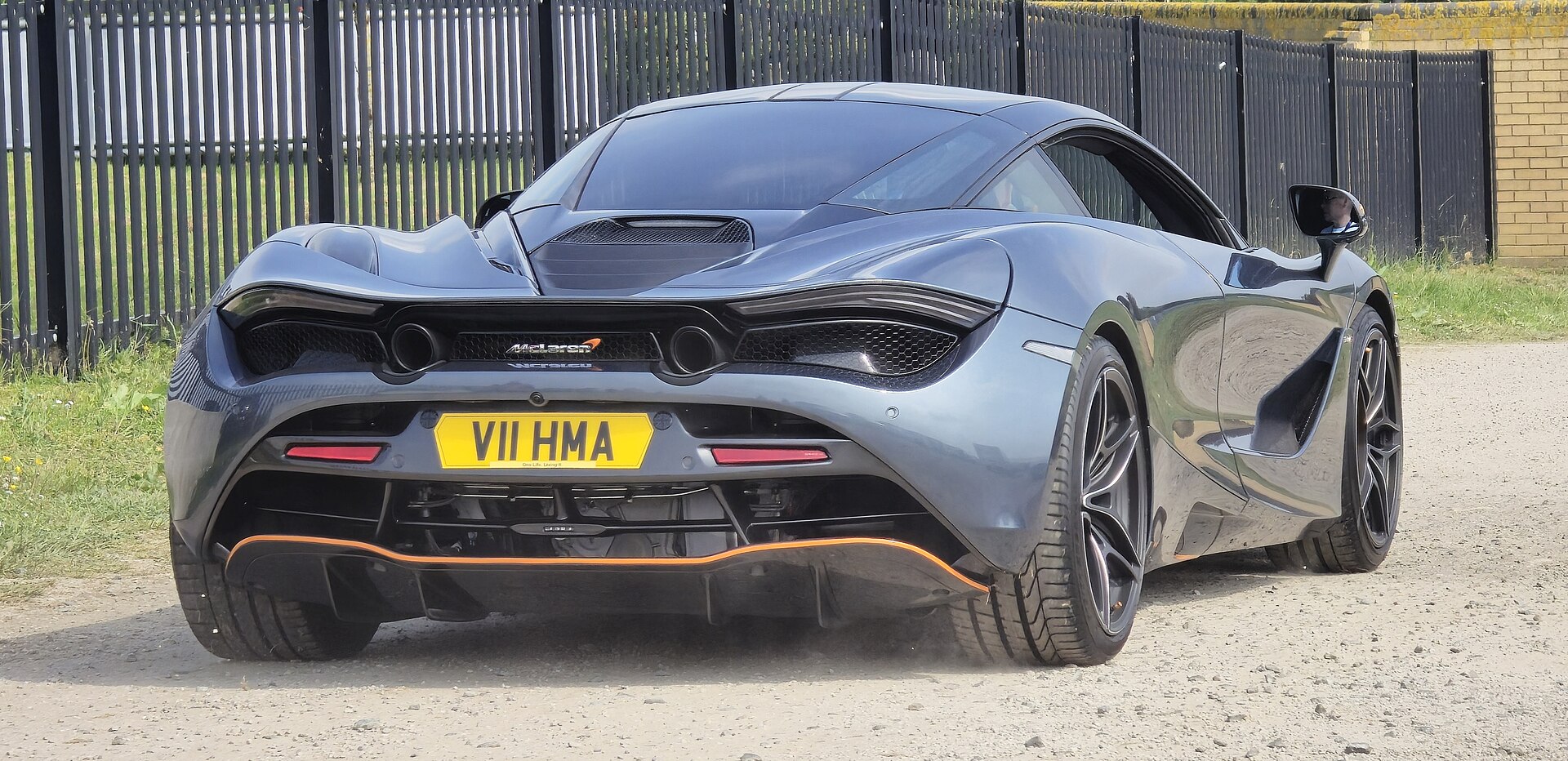
What Buyers Miss: Service History vs. Condition
Here's a critical insight: a McLaren with 28,000 miles and spotty service history is riskier than a McLaren with 35,000 miles and documented full McLaren dealer service every 10,000 miles.
The brand-new buyer's mistake is fixating on mileage at the expense of service history. A car with lower mileage doesn't tell you whether it was maintained. A car with higher mileage and complete service records tells you exactly how that car was treated.
When evaluating any McLaren, request:
- Every service record from purchase to present. Gaps are red flags.
- Confirmation of all major service intervals completed (10,000 mile services minimum).
- Proof of hydraulic suspension fluid service (if the mileage warrants it).
- Any warranty work or recalls completed.
- Current state of the brake pads (millimeters remaining).
A McLaren with three owners, complete service history, and 40,000 miles is a safer bet than a single-owner McLaren with 20,000 miles and spotty independent shop records. Don't let low mileage fool you into skipping the inspection.
Automonitor's McLaren-Specific Inspection Priority List
If you've decided on a McLaren and want to know what a professional inspection covers, here's the priority ranking of what matters most:
| Inspection Priority | What We're Looking For | Cost If Failed | Mileage Concern Level |
|---|---|---|---|
| 1. Hydraulic Suspension | Pump condition, seal integrity, fluid leaks, cross-link system pressure test | $5K-$30K | 20K+ miles critical |
| 2. Door Actuators | Smooth operation, grinding sounds, electronic response time | $4K-$8K | 15K+ miles check |
| 3. Brake Condition | Pad thickness (should be 30%+ remaining), disc wear, rotor scoring | $8K-$12K | 35K+ miles critical |
| 4. Carbon Monocell | Impact damage, cracks, previous accident repair evidence, epoxy repairs | $25K-$80K+ | Any mileage concern |
| 5. Transmission | Shift smoothness, clunking at low speed, fluid condition and smell | $1.5K-$20K | 30K+ miles check |
| 6. Engine/Turbo System | Oil leaks, turbo noise, timing chain cover condition | $3K-$25K | 25K+ miles check |
| 7. Electrical/Infotainment | Display functionality, navigation, Bluetooth, software version | $1K-$5K | 15K+ miles check |
The Appreciation Play: Which McLarens Hold Value or Appreciate
If you're buying a McLaren partly as an investment, mileage becomes even more critical. Some models appreciate or at least hold value better than others.
720S Spider (low mileage): The convertible market has appreciated since 2022. A well-maintained 720S Spider with under 15,000 miles is holding value remarkably well. Some are appreciating 2-3% annually.
600LT (any condition): Limited production (3,500 units total) and track-proven performance means 600LTs hold value better than 570S variants. A 600LT with 8,000 miles and clean history might actually be worth more in 2026 than it was in 2023.
765LT (extremely low mileage): The 765LT is appreciating in the sub-5,000 mile, verified low-mileage segment. These cars are becoming collectible. A 765LT with 2,000 miles and track history is a genuine investment play.
12C (only if cheap enough): The 12C has bottomed in depreciation. A $80-100K 12C that you buy and maintain well might actually appreciate slightly as it becomes more historically significant. But this only works if you buy it cheap enough that even minor repairs don't erase upside.
Artura (wait and see): Too new to predict. Don't buy an Artura as an investment play. The hybrid system is still being refined. Buy it because you love driving it.
Red Flags That Stop the Deal
Some high-mileage McLarens are legitimate good buys. Others are expensive disasters waiting to happen. These are the red flags that should make you walk away:
- No service records: If the seller can't provide documentation of maintenance, the car was likely not maintained. Walk away.
- Hydraulic suspension service never completed: Any McLaren over 25,000 miles should have suspension fluid service records. If there are none, assume the system has issues.
- Multiple owners in short timeframes: A 570S with 5 owners in 7 years (common in this market) suggests people keep buying and quickly selling because they discover expensive problems.
- Accident history + carbon monocell damage: A previous accident is a red flag. If the repair history shows carbon monocell work, factor in potential structural issues and long-term reliability concerns.
- Timing chain cover visible oil leaks: These aren't just cosmetic. They indicate internal issues and engine-out service may be needed soon.
- Grinding sounds from doors: If actuators are already failing, the repair is imminent and expensive. That cost comes out of your negotiating power — or out of your pocket.
- Suspension "feels different" between drives: This suggests the hydraulic system is starting to fail intermittently. Have a shop pressure-test the system immediately.
How McLaren Mileage Thresholds Compare to Ferrari & Porsche
You're probably comparing McLarens to Ferrari 488 and McLaren maintenance costs, or a McLaren 720S vs. Porsche 911 GT3. Here's the honest mileage comparison:
| Brand | Sweet Spot Mileage | Premium Threshold | Caution Threshold | Depreciation Per 10K Miles |
|---|---|---|---|---|
| McLaren 720S | 15K-25K | 15K miles | 25K+ miles | 8-12% |
| Ferrari 488 | 20K-35K | 20K miles | 35K+ miles | 6-8% |
| Porsche 911 Turbo S | 25K-40K | 25K miles | 45K+ miles | 4-6% |
| McLaren GT | 30K-50K | 40K miles | 60K+ miles | 6-8% |
The takeaway: McLarens depreciate faster per 10,000 miles than comparable Ferraris or Porsches. That's the used market pricing in risk. Which means if you can find a well-maintained McLaren with complete service history at higher mileage, you're getting a genuine discount that reflects perceived risk, not actual risk.
The Smart Buying Strategy: Playing Mileage Intelligently
Here's how to win at buying a used McLaren:
Strategy 1: Buy The Low-Mileage Anomaly - Find a 570S with 8,000 miles that's been sitting in a garage for 3 years. The seller is tired of insurance and storage costs. It's under-driven, not over-driven. These cars often have less wear than 20K-mile examples that were actually driven. Negotiate aggressively on storage concerns, but these are often solid buys at 10-15% discounts to normal pricing.
Strategy 2: Buy The Well-Maintained Higher-Mileage Car - A 720S with 28,000 miles, complete McLaren service history, and brake pads at 40% remaining is worth the premium over a 15K-mile car with sketchy maintenance. The higher mileage discount more than compensates for the actual reduced risk.
Strategy 3: Buy The GT and Ignore Mileage - Seriously. A McLaren GT was designed to be driven. Buy one with 45,000 miles if it has documentation and decent service history. You'll save 20-30% versus a 25K-mile example, and the GT actually tolerates mileage well. This is the model where being counterintuitive pays off.
Strategy 4: Avoid the Cheap 12C Unless You're Mechanically Confident - A 12C at $85K with 35,000 miles might seem like a steal. It's not. It's a high-risk cost trap. If you know what you're getting into, great. If you don't, buy the more expensive 570S instead. Peace of mind is worth the premium.
Five Questions Buyers Always Ask About Mileage
Q: Is a McLaren with 40,000 miles worth buying?
A: It depends on the model and maintenance. A 40K-mile GT with full service history is a great buy. A 40K-mile 765LT is a risk. A 40K-mile 570S needs careful inspection of the hydraulic suspension. Don't let mileage alone drive the decision.
Q: Should I pay for a pre-purchase inspection if the mileage is low?
A: Always. Mileage doesn't reflect how hard a car was driven or whether it was maintained. A 12K-mile car that was tracked or poorly maintained is riskier than a 25K-mile car that was driven conservatively and fully serviced. The inspection costs $800-1,500 and protects you from $10K+ in hidden repairs.
Q: What mileage should I avoid entirely?
A: Skip any McLaren where you can't verify service history, regardless of mileage. Skip any 600LT with over 18,000 miles unless track history is fully documented. Skip any 12C with over 35,000 miles unless it's cheap enough to account for repairs. These are the models and mileage combinations where risk exceeds reward.
Q: How do I know if those miles were easy street miles or hard track miles?
A: Ask for the service records (maintenance frequency tells you), look at brake pad wear (track cars wear brakes faster), and listen to the engine (track-used cars often show carbon buildup). The paint on the front bumper is also telling — if it's heavily stone-chipped, the car was probably driven hard or tracked. Have a pre-purchase inspector do thermal imaging of the brakes to see if they're tracking evenly, which suggests consistent use.
Q: Can I negotiate harder on a higher-mileage McLaren?
A: Absolutely. A 28K-mile 720S asking $165K is more negotiable than a 15K-mile 720S at the same price. The mileage gives you leverage. Use it. Factor in known upcoming maintenance (brake service, suspension service) and negotiate those costs off the asking price. You'll often find that higher-mileage cars are more negotiable than the pricing suggests.
The Final Word
Buying a used McLaren is not a straightforward transaction. The brand's younger age in the marketplace, the reputation for electrical gremlins, and the real cost of maintenance at high mileage all add up to this: mileage matters more on a McLaren than on a comparable exotic car from Ferrari or Porsche.
But mileage is not destiny. A well-maintained 40,000-mile GT is a better buy than a neglected 15,000-mile 570S. Complete service history is more important than low odometer readings. And for the GT specifically, mileage is almost irrelevant — it was designed to be driven.
The sweet spot for most McLarens? 18,000-28,000 miles with complete service documentation. This is where depreciation has settled, mileage is still low enough to be desirable, and the car hasn't yet reached the high-mileage maintenance thresholds that can blindside unprepared buyers.
Get a pre-purchase inspection. Verify service history. Understand the known failure points at the mileage you're considering. And if something doesn't add up — if the service records are sketchy, if the suspension feels wrong, if the door actuators grind — walk away. There's always another McLaren. There's not always another chance to avoid a six-figure repair bill.
Learn which McLaren models are the most reliable or find out whether you can daily drive a McLaren to narrow down your search before you start looking at specific cars. And when you're ready to buy, Automonitor connects you with McLaren specialists who know exactly what these cars need at every mileage point.
Ready to Find Your Perfect McLaren?
Automonitor sources from verified luxury dealers and handles pre-purchase inspections focused on the issues that matter. We'll make sure you're not overpaying for miles or getting surprised by hidden costs.
Start Your McLaren Search →