
Ferrari Portofino vs Ferrari Roma: Which Grand Tourer Should You Buy?
Two of Ferrari's most accessible grand tourers sit at opposite ends of the design spectrum. The Portofino offers convertible thrills and everyday usability. The Roma delivers fixed-roof elegance and raw performance. Here's everything you need to know before choosing between them.
The Quick Answer: It Depends on Your Lifestyle
If you want to drop the top, feel the wind, and experience open-air motoring in a car that can genuinely be your daily driver, the Ferrari Portofino M is your answer. If you want the ultimate combination of performance, sophistication, and show-stopping presence, the Roma is the choice. Both are phenomenal machines — but they serve different purposes, and your answer depends on whether you prioritize driving freedom or driving theater.
The Portofino M is a convertible grand tourer with 591 horsepower, hitting 60 mph in 3.5 seconds with a retractable hardtop that operates in 19 seconds at speeds up to 45 mph. The Roma is a fixed-roof coupe with 612 horsepower, hitting 60 mph in 3.2 seconds with no compromise between aero and roof. From a pure numbers perspective, the Roma is faster and more powerful. From a pure lifestyle perspective, the Portofino offers something the Roma cannot: genuine open-air wind-in-your-hair driving in a car that actual people actually use daily.
This comparison covers everything from engine specifications and performance metrics to real-world ownership costs, daily driveability, depreciation patterns, and which car is likely to hold its value better. By the end, you'll know exactly which Ferrari GT belongs in your garage.
Engine Specifications and Performance: Power vs Practicality
Both cars share the same basic architecture — a 3.9-liter twin-turbocharged V8 with mid-mounted placement — but Ferrari has tuned them differently for their intended purposes.
The Portofino M produces 591 horsepower and 561 lb-ft of torque. Zero to 60 mph takes 3.5 seconds, with a top speed of 199 mph. The 7-speed dual-clutch transmission shifts smoothly at low speeds and aggressively during performance driving. In Strada mode, it prioritizes refinement and usability. Switch to Corsa mode, and the suspension tightens, exhaust valves open fully, and the entire character transforms.
The Roma produces 612 horsepower and 561 lb-ft of torque — a 21 hp advantage that matters on a track but is barely perceptible on the road. Zero to 60 mph takes 3.2 seconds, with a top speed of 209 mph. Like the Portofino, it uses a 7-speed DCT and benefits from the same dual-mode driving system. The Roma is faster in raw numbers but not dramatically faster in the way that matters to most buyers.
Where the difference is real: aerodynamics. The Roma's fixed roofline and integrated aerodynamic design create a coefficient of drag of 0.33 Cd, compared to the Portofino M's 0.36 Cd when the roof is up. At highway speeds, this translates to slightly better stability and fuel efficiency for the Roma. At high speeds on a track, it matters more. On a backroad with the Portofino's roof down, it's irrelevant.
| Specification | Portofino M | Roma |
|---|---|---|
| Engine | 3.9L Twin-Turbo V8 | 3.9L Twin-Turbo V8 |
| Horsepower | 591 hp @ 7,500 rpm | 612 hp @ 7,500 rpm |
| Torque | 561 lb-ft @ 3,000-5,750 rpm | 561 lb-ft @ 3,000-5,750 rpm |
| 0-60 mph | 3.5 seconds | 3.2 seconds |
| Top Speed | 199 mph | 209 mph |
| Transmission | 7-Speed Dual-Clutch | 7-Speed Dual-Clutch |
| Body Style | Retractable Hardtop | Fixed-Roof Coupe |
| Aerodynamic Drag | 0.36 Cd (roof up) | 0.33 Cd |
| Curb Weight | 3,299 lbs | 3,374 lbs |
From a performance standpoint, the Roma edges out the Portofino on paper. In real-world driving at legal speeds, both cars deliver more performance than almost any driver can exploit. The Portofino M is genuinely quick, and the Roma being 0.3 seconds faster to 60 is the difference between two cars that are both absurdly fast.

Design Philosophy: Two Completely Different Approaches
The Portofino M and Roma couldn't be more different in terms of their design language, despite sharing mechanical components.
The Portofino is a modern interpretation of classic grand touring convertibles — think 1950s Ferrari Barchetta meets 2020s technology. Its long hood, short overhangs, and proportions emphasize length and grace. The retractable hardtop is a engineering marvel that folds in seconds without interrupting the car's sleek roofline when closed. Open the top, and the Portofino transforms into a pure convertible experience. Close it, and you get coupe-like aerodynamic benefit. It's the ultimate expression of flexibility in automotive design.
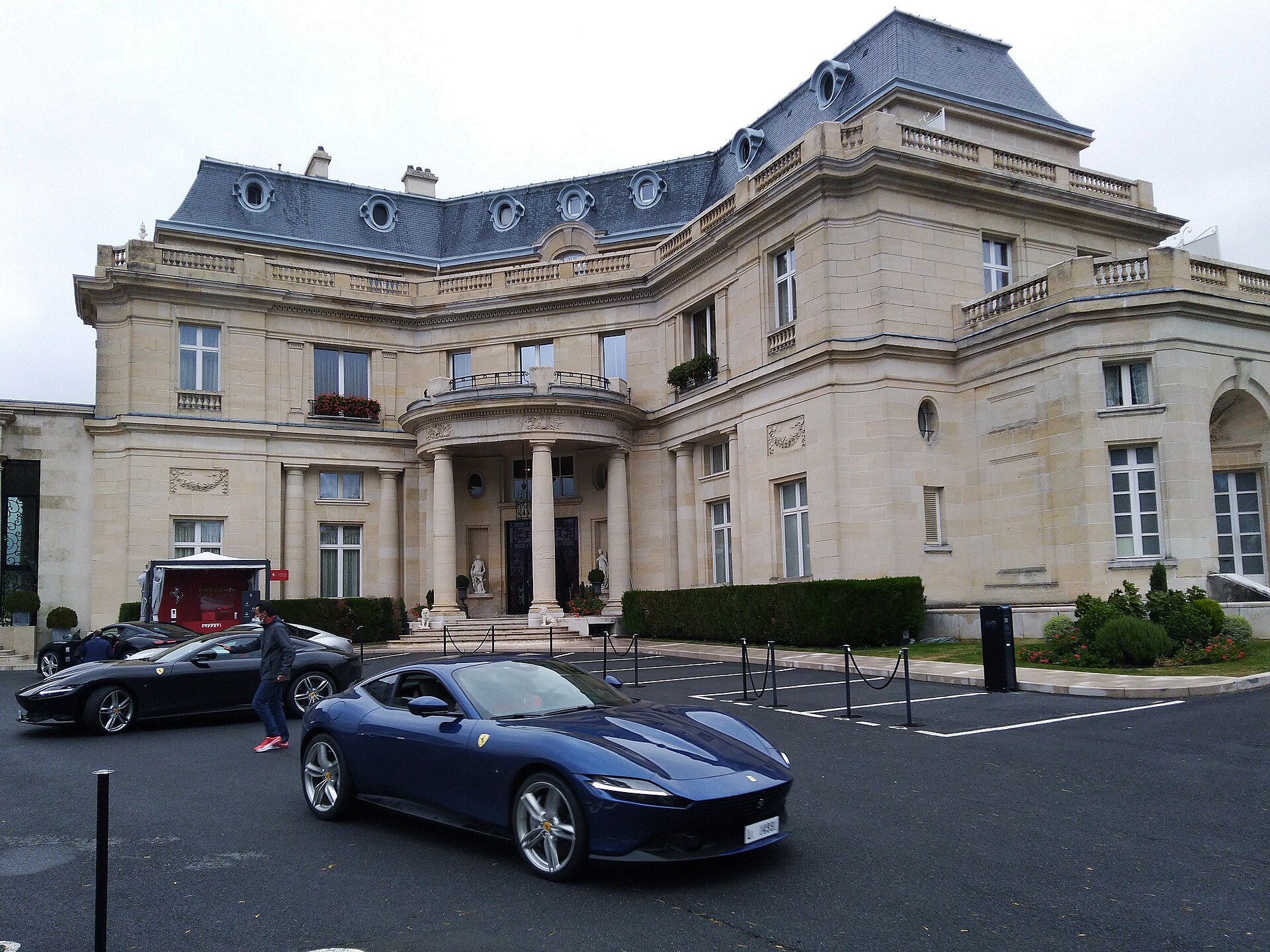
The Roma is a design statement — a neo-retro coupe that recalls the 1940s 166 Inter with its low-slung roofline, muscular haunches, and dramatic proportions. Its fixed roof is purpose-built for aero and structure. The Roma doesn't pretend to be a convertible; it's a fixed-roof grand tourer that prioritizes presence and performance over flexibility. Every line communicates aggression and elegance simultaneously.
From a presence standpoint, they're equally dramatic. The Portofino turns heads with its grace. The Roma turns heads with its aggression. Neither car blends in. At a Cars and Coffee event, both will attract crowds. But the Roma commands attention through sheer visual intensity, while the Portofino invites appreciation through refined proportions.
Daily Driveability and Usability: Can You Actually Live With These?
Both cars have genuine claims to being daily-driveable — but for different reasons.
The Portofino M excels as a daily driver. Ground clearance is adequate for most parking lots and speed bumps. The retractable hardtop means you're not constantly dealing with canvas or convertible logistics. The luggage space is surprisingly practical — 17.7 cubic feet behind the passenger compartment, plus an additional 9 cubic feet under the front hood. You can load groceries, carry luggage, and navigate real-world requirements. The cabin is comfortable on long drives. The seats provide good support without being track-focused. The infotainment system is modern and intuitive.
The Roma, by contrast, is a harder car to live with daily. Ground clearance is lower than the Portofino, making it slightly more challenging in tight parking situations. Luggage space is compromised by the fixed roof — you get a smaller trunk and zero underfloor storage. The cabin is equally comfortable on long drives, but the commitment to a coupe means there's less practical flexibility. The Roma is genuinely usable as a daily driver, but it requires more precision parking and luggage planning than the Portofino.
Both cars feature electronic power steering that's responsive but requires adjustment at low speeds. Both have surprisingly good visibility for supercars. Both will attract attention at traffic lights. The Portofino's convertible top operation is smooth and quick enough to use regularly, even in stop-and-go traffic.
The Portofino M is the Ferrari that doesn't require compromise. The Roma is the Ferrari that rewards commitment. Choose the Portofino if you want to maintain flexibility. Choose the Roma if you want a car that makes a statement with every decision.
Interior, Technology, and Comfort: Where Modern Luxury Meets Performance
Both cars feature nearly identical interiors because they share the same platform. You get a 10.25-inch infotainment touchscreen with Apple CarPlay and Android Auto. The instrument cluster displays driver-selectable information. Climate control is dual-zone automatic. Navigation is standard on both.
What differs is the experience of those features. In the Portofino, you're surrounded by convertible practicality. The interior feels lighter and more open with the top down. Seats are wrapped in premium leather with Alcantara accents. The steering wheel is supple and responsive. Wind noise with the top down is reasonable at highway speeds.
In the Roma, the fixed roof creates a more intimate and coupe-focused experience. The interior feels more sculpted and intentional. The same leather and Alcantara materials feel more integrated into a cohesive design. The acoustic environment is quieter with the roof in place, creating a more serene driving experience at highway speeds.
Both cars offer optional carbon fiber trim, upgraded leather packages, and customization options that let you personalize the experience. Neither car compromises on material quality. The difference is psychological: one feels like a convertible grand tourer, and the other feels like a fixed-roof coupe. Your preference here depends entirely on whether you prioritize the sensation of open air or the sensation of automotive occasion.
Pricing and Cost of Ownership: What You'll Actually Spend
Purchase prices in the used market (2024-2025 models) for both cars are surprisingly competitive:
Ferrari Portofino M (2018-2023): $180,000-$220,000 for low-mileage examples. You'll find 2018-2019 models at the lower end ($165,000-$185,000) and 2022-2023 models at the higher end ($210,000+). The retractable hardtop adds to the used pricing compared to a comparably-aged coupe.
Ferrari Roma (2020-2023): $220,000-$280,000 for low-mileage examples. Because it's newer and hasn't been in production as long, supply is tighter, pushing prices upward. Earlier 2020-2021 models start around $200,000-$230,000, while 2022-2023 examples command $250,000-$280,000.
Annual maintenance costs are nearly identical. Both cars use the same engine, transmission, and brake system. You're looking at $4,000-$6,000 annually for routine maintenance at an authorized Ferrari dealer. Tire replacements run $3,000-$5,000 per set every 15,000-20,000 miles. Insurance runs $3,500-$7,000 annually depending on coverage and location. Fuel costs are similar — expect 16-18 mpg combined driving, requiring premium (91+) fuel.
Where costs diverge: the Portofino's retractable hardtop is a complex mechanical system that, if damaged, can cost $15,000-$25,000 to fully replace. The Roma's fixed roof eliminates this risk entirely. If you're parking outdoors or in sketchy conditions, this is a meaningful consideration.

Depreciation and Value Retention: Which Car Holds Value Better?
This is where the comparison gets interesting because Ferrari's model cycle and market positioning create very different depreciation curves for these two cars.
The Portofino M has depreciated from an MSRP of approximately $230,000 (2019 model) to current used prices of $180,000-$200,000. That's roughly 15-20% depreciation over 5 years, which is actually quite good for an exotic car. The convertible market for Ferrari remains stable because open-air driving appeals to a specific buyer segment that refuses to compromise on that experience.
The Roma, being newer, has less depreciation history to reference. Early 2020 examples purchased at MSRP of approximately $220,000 are currently valued at $200,000-$220,000 — effectively holding their value in a 5-year window. However, Ferrari has not discontinued the Roma (unlike the Portofino, which was recently replaced by the SP51). This means future depreciation will depend on how the broader Ferrari GT market evolves as new models are introduced.
The critical difference: the Portofino is out of production. Its final model year (2023) was recently built, making it the last naturally-aspirated V8 convertible Ferrari is likely to produce. This scarcity creates a floor under its value. As turbocharged and hybrid powertrains dominate future Ferrari lineups, the Portofino M's position as a last-of-its-kind convertible becomes more significant. Low-mileage examples in desirable colors (Rosso Corsa, Verde Mantis) are already commanding premiums.
The Roma remains in production and faces no announced discontinuation. This means it's subject to typical depreciation curves as newer models dilute its appeal. However, the Roma's fixed-roof design and fixed-roofline philosophy mean it will age differently than the Portofino — it's not subject to the same nostalgia premium or "last of its kind" narrative.
Depreciation Winner: Portofino M — due to production ending and convertible rarity. Stability Winner: Roma — due to ongoing production and stable market positioning.
The Convertible vs. Coupe Debate: Understanding What You're Really Choosing
This is the core decision that determines which car is right for you. Both are valid choices, but they appeal to fundamentally different driving philosophies.
If you value the sensation of open-air driving and want a car that transforms based on weather and mood, the Portofino is uncompromising. Dropping the hardtop takes 19 seconds. No canvas roofs. No folding roofs that take 30+ seconds. No worrying about water leaks. The Portofino's engineering is so solid that convertible ownership feels like choosing a driving mode rather than accepting a compromise. For drivers who want the joy of open-air motoring, this is the only acceptable answer.
If you value the visual drama of a proper fixed-roof coupe and want the most refined grand touring experience, the Roma is your car. There's something irreplaceable about the sense of occasion you get from a low-slung, sculptural coupe. The Roma's fixed roof contributes to its identity in a way that matters. It's not a convertible that happens to have a roof — it's a purpose-built coupe that never had any other option.
Practically speaking: if you live in a warm climate and want to drive with the top down regularly, the Portofino makes sense. If you live in a variable climate and want a car that offers occasional open-air driving without committing to convertible logistics, the Portofino still makes sense due to its quick roof operation. If you never want a convertible and value coupe purity, the Roma is correct.
Which Car Should You Actually Buy? The Automonitor Recommendation
This comes down to three key questions:
Question 1: Do you want open-air driving as a regular experience? If yes, the Portofino M is the answer. Its retractable hardtop is genuinely usable, and the flexibility it provides is unmatched. The Portofino lets you choose between convertible and coupe depending on your mood, weather, and driving situation. This flexibility is worth the $40,000-$60,000 price premium over a similarly-aged Roma.
Question 2: Do you prioritize maximum performance and the sensation of aggressive driving? If yes, the Roma has a slight edge. The additional 21 horsepower, 0.3-second acceleration advantage, and 10 mph higher top speed are real. More importantly, the Roma's fixed-roof design contributes to its overall performance identity in a way that's perceptible. The Roma feels more aggressive and purposeful.
Question 3: What's your parking situation? If you have secure covered parking, either car works. If you're parking outdoors or in variable conditions, the Portofino's retractable hardtop eliminates the canvas-roof concerns that come with convertible ownership. The Portofino is the more practical choice for real-world conditions.
For most buyers, we recommend the Ferrari Portofino M — not because it's faster, but because it's more flexible. You get 90% of the Roma's performance in a package that offers convertible driving when you want it and coupe practicality when you don't. The Portofino is the Ferrari for buyers who want options. The Roma is the Ferrari for buyers who want to make a statement and commit to that statement fully.
If you find a low-mileage Portofino in a desirable color (anything other than white, black, or gray), we'd lean toward that. Convertible Ferraris with production ended are becoming increasingly collectible, and the Portofino M represents the last generation of naturally-aspirated open-top Ferrari grand tourers.
Comparing Interior Space and Luggage: The Practical Difference
One area where the Portofino distinctly wins: luggage space.
The Portofino offers 17.7 cubic feet behind the rear seats and an additional 9 cubic feet in the front trunk — total of approximately 26.7 cubic feet. This is legitimately usable space. You can pack a weekend trip, carry luggage for two people, and still have room for groceries and daily essentials. This is why the Portofino gets props as a genuine daily-driveable grand tourer.
The Roma offers approximately 15 cubic feet in the trunk. No front storage. The fixed roof and coupe design mean there's less overall volume. For weekend driving, it's adequate. For extended trips, it becomes a limitation. If you're considering a Ferrari as a primary transportation vehicle, the Portofino's flexibility matters.
Passenger space is similar in both cars — plenty of room for driver and passenger, tight quarters for rear passengers (though neither car is designed for regular rear-seat use). Headroom with the Portofino's roof up is good; with the roof down, you get the openness that convertible drivers crave.
Reliability and Maintenance: What Could Go Wrong?
Both cars use the same 3.9L twin-turbo V8 engine, which has proven to be one of Ferrari's most reliable powertrains. Timing is taken care of by a chain (not a belt), reducing maintenance burden. The dual-clutch transmission is smooth and responsive, though like all DCTs, it can develop shuddering under certain conditions — this is not specific to Ferrari.
Known issues to watch for: On the Portofino, the retractable hardtop system can develop slow response times as seals age. A few owners have reported occasional hesitation in roof operation, though this hasn't been widespread. The motor that operates the roof mechanism is engineered to be durable, but it's still a complex system. Budget $3,000-$8,000 if seal replacement becomes necessary.
On the Roma, early models had occasional infotainment software glitches that Ferrari addressed through updates. Current examples are generally smooth. The fixed roof means fewer mechanical components to fail compared to the Portofino.
Both cars are turbocharged, which means higher boost pressure and thermal stress compared to naturally-aspirated engines. This is offset by modern cooling systems and robust engineering. Maintaining these cars at authorized Ferrari dealers is non-negotiable — expect $4,000-$6,000 annually for routine maintenance.
Track Performance and Driving Dynamics: Which Is More Fun?
On a proper race track, the Roma's additional performance and fixed-roof structural rigidity give it the edge. The extra 21 horsepower and lower aerodynamic drag contribute to measurably faster lap times. The Roma feels more aggressive on a circuit and rewards committed driving.
The Portofino M is fully capable on a track, and the retractable hardtop actually helps with rollover protection — the top automatically deploys in a crash scenario, adding structural support. Drivers report that track performance is very similar to the Roma for any driver not at professional levels. The Portofino doesn't feel slow on track; it just feels slightly more refined and less aggressive.
For real-world road driving (canyon roads, spirited backroad driving), both cars are equally engaging. The Portofino's convertible character actually enhances the sensory experience — the sound, the wind, the visceral connection to your surroundings. With the top down, the Portofino becomes a more immersive driving experience than the Roma, despite being slightly slower.
Frequently Asked Questions
Is the Portofino reliable for daily driving?
Yes. The Portofino M is genuinely one of the most daily-driveable Ferraris ever produced. Ground clearance is adequate, the retractable hardtop is fast and reliable, luggage space is practical, and the suspension in Strada mode is comfortable for highway driving. Many owners use their Portofinos as secondary cars driven 3-4 times weekly, and it handles this role well. Just remember: service at an authorized Ferrari dealer is mandatory, not optional.
Will the Portofino's convertible top cause water leaks?
The Portofino M's retractable hardtop is engineered to be water-tight. It's not a canvas roof prone to leaks. Owners report no significant water intrusion issues. The seals are engineered to handle highway-speed driving, and the roof deploys down to the window frame to create a complete seal. However, like all convertibles, you should ensure seals are maintained during regular service visits.
How much faster is the Roma compared to the Portofino?
The Roma is 0.3 seconds faster to 60 mph (3.2 vs. 3.5 seconds) and 10 mph faster in top speed (209 vs. 199 mph). The Roma produces 21 additional horsepower. In real-world driving at legal speeds, you will not notice this difference. The Portofino is perfectly adequate performance-wise. On a track with a professional driver, the Roma pulls ahead. For road driving, both cars are absurdly fast.
Is the Portofino going to depreciate faster now that production has ended?
Likely the opposite. Historic Ferrari models that are out of production (like the 599 GTB, 458 Italia) have appreciated or held value exceptionally well. The Portofino M's status as the last naturally-aspirated convertible grand tourer Ferrari will likely create a collector's premium over time. Current Portofino M values may hold better than Roma values in the long term due to production ending and rarity.
Can I use either car as a primary vehicle?
The Portofino M is more feasible as a primary vehicle due to luggage space and open-air flexibility. The Roma can be a primary vehicle, but luggage limitations become more noticeable. Both cars require regular service at authorized dealers and have higher fuel costs than conventional vehicles. Neither car is ideal as a sole vehicle if you need maximum practicality, but the Portofino handles this role better.
Get Expert Guidance Before Buying
Let Automonitor's team of Ferrari specialists help you navigate the Portofino vs. Roma decision. We'll connect you with inspectors, negotiate on your behalf, and ensure you drive home in the right car.
Get Expert Help →The Final Verdict
Both the Ferrari Portofino M and Roma are exceptional grand tourers that represent the best of what Ferrari offers in the sub-$250,000 segment (used market). Neither car is wrong. The decision comes down to whether you want the freedom of a convertible or the commitment of a fixed-roof coupe.
Choose the Portofino M if: you want open-air driving flexibility, you value luggage space and daily usability, you want a car that was the last of its kind (naturally-aspirated convertible Ferrari), and you're willing to maintain a more complex roof mechanism. The Portofino is the Ferrari for buyers who want options.
Choose the Roma if: you prioritize maximum performance and aggression, you want a simplified mechanical system (no retractable roof), you love the dramatic proportions of a proper fixed-roof coupe, and you can live with compromised luggage space. The Roma is the Ferrari for buyers who want purity of purpose.
For most buyers, we recommend the Portofino M — not because it's better, but because it's more versatile. You get nearly identical performance with the added flexibility of convertible driving. However, if you find a low-mileage Roma in an interesting color at the right price, it's an equally compelling choice.
Either way, you're getting a Ferrari — and that means you're getting a piece of automotive history, a machine engineered to deliver thrills, and a car that will turn every drive into an occasion. The Portofino and Roma deliver this promise in different ways. Choose the one that aligns with how you actually want to drive.
Ready to Find Your Perfect Ferrari?
Automonitor sources from 200+ verified luxury dealers and provides expert inspection and market guidance. We handle the negotiation so you can focus on the joy of ownership.
Start Your Search →