
Best Year Audi R8 to Buy in 2026
The Audi R8 is one of the most underrated supercars of the last two decades. But not every R8 is worth the same money. This guide walks you through every generation, variant, transmission type, and model year to identify exactly which R8 makes sense for your budget and priorities.
The Best Year to Buy: Your Quick Answer
If you want the single best R8 to buy in 2026, look for a 2017-2019 second-generation (Gen 2) V10 with S-tronic transmission, fewer than 25,000 miles, and full service records. You'll pay $90,000-$120,000 and get a car that combines the V10 naturally aspirated engine with modern refinement, bulletproof transmission technology, and strong future value as these are the last NA V10 Audis ever produced.
If budget is tighter, the 2013-2015 generation one (Gen 1) V10 Plus offers nearly identical driving experience for $55,000-$75,000, though you'll inherit older electronics and the problematic R-tronic transmission if you're not careful. The sweet spot for value hunters is a 2014 Gen 1 V10 that's been retrofitted to S-tronic, but these are rare.
Want the full story? Keep reading. The R8 timeline is complex, but understanding it will save you tens of thousands of dollars.
The R8 Timeline: Four Generations of V10 Excellence
The Audi R8 launched in 2008 as a mid-engine supercar that shared its foundational platform with the Lamborghini Gallardo. That platform-sharing continued even into the current era — the 2017+ Gen 2 R8 and the final Lamborghini Huracan share the same underlying architecture, which explains the performance parity and similar depreciation curves between the two marques.
Understanding the R8 means understanding four distinct generations and multiple powertrain variations:
Generation 1: 2008-2015 (Platform: Gallardo-based)
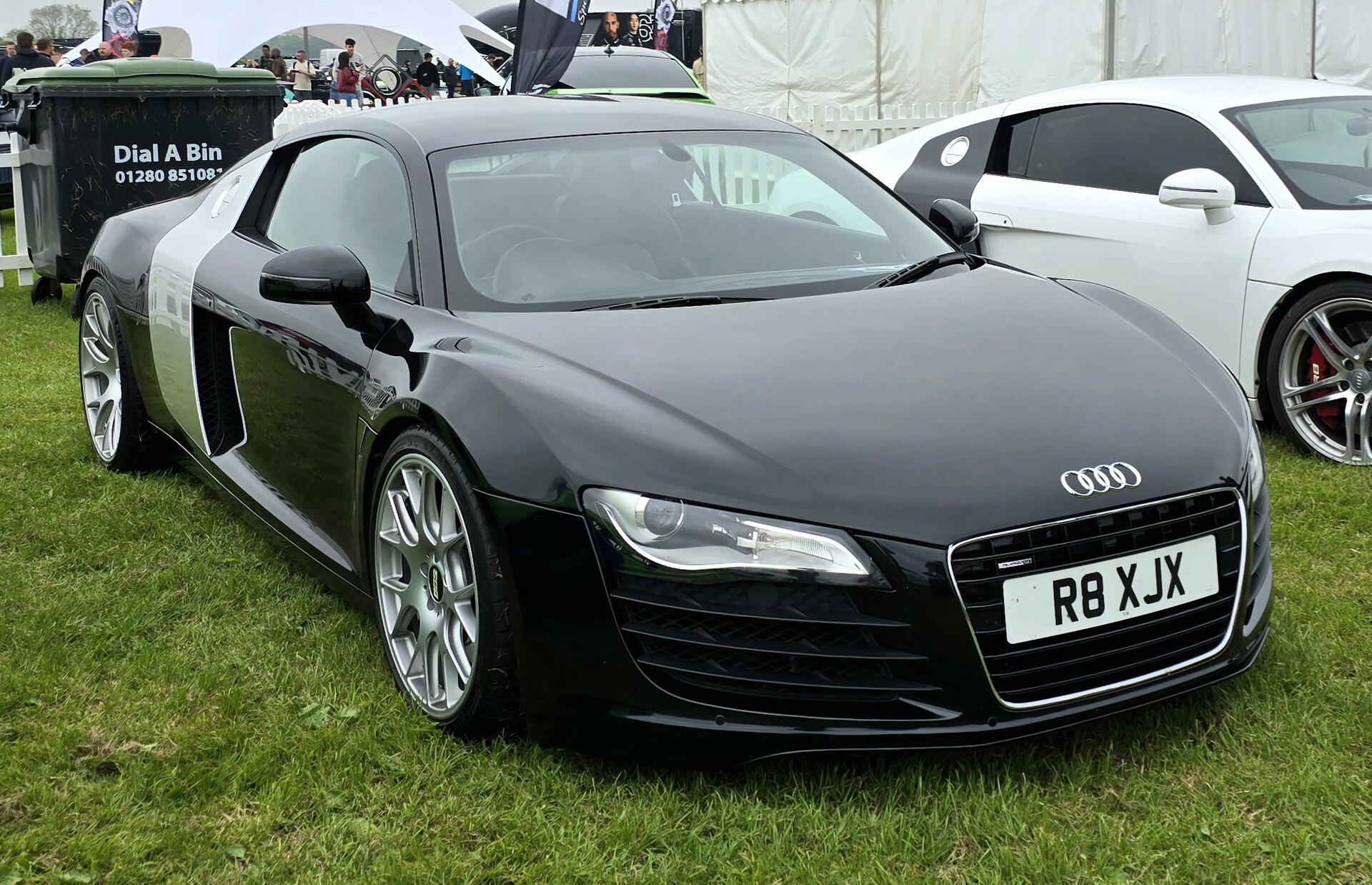
2008-2012 V8 Generation: The original R8 used a 4.2L naturally aspirated V8 producing 420 hp. It's the rarest and least desirable R8 variant today, with prices starting at $35,000-$50,000 for higher-mileage examples. The V8 has legitimate issues: heavier weight without sufficient power advantage, aluminum engine block prone to carbon buildup on direct injection systems, and R-tronic transmissions that are notoriously troublesome.
The V8 R8 represents the road not taken. It's quick, beautiful, and largely forgotten — which means pricing reflects tremendous value if you can find a well-maintained example without transmission gremlins.
2010-2015 V10 Plus Generation: Audi switched the V10 engine from the Lamborghini Gallardo (5.2L, 550 hp) into the R8 chassis in 2010, creating the R8 V10 Plus. This variant coexisted with the V8 until 2012. The V10 Plus is substantially more refined than the V8 — better weight distribution, superior sound, and genuine supercar performance (3.2-second 0-60). Prices range $60,000-$85,000, and it's one of the best V10 supercars to buy at this price point.
2012-2015 R8 GT / GT Spyder: This track-focused variant offered carbon brakes, lighter weight, wider fenders, and up to 570 hp. Only sold for a single model year in most markets. Highly collectible today, with prices starting at $100,000 for lower-mileage examples. Only serious track enthusiasts should consider the GT unless you're buying for investment.
Generation 2: 2017-2023 (Platform: Shared with final Huracan)
2017-2019 V10 (Pre-Facelift): The all-new Gen 2 R8 replaced the Gallardo-based design with a completely new platform shared with the final Huracan. The 5.2L V10 was retuned to produce 540 hp in early models and up to 570 hp in later years. The S-tronic transmission replaced R-tronic entirely, eliminating 80% of the reliability concerns from Gen 1. This is arguably the best R8 generation — modern enough for today's standards, but analog enough to feel connected to the car.
2017-2023 V10 Performance Edition: Audi upped output to 611 hp and added aggressive styling, revised suspension, and variable engine oil distribution that improves cold-start reliability. Performance models command $15,000-$30,000 premiums over standard V10 models. They're worth it if you can find one under 20,000 miles.
2020-2023 RWD Variant: A rare rear-wheel-drive only variant emerged mid-cycle, dropping to 532 hp but offering sharper steering feel. Only 1,258 RWD R8s were built, making them increasingly collectible. Prices are comparable to AWD models with similar mileage.
2019-2023 Facelift: The final R8 generation received updated electronics, new lighting, and refined infotainment. No significant mechanical changes, but the latest cars are the most modern. Depreciation is steepest here due to lower age.
Transmission Wars: R-tronic vs. S-tronic
The single most important factor in R8 value and reliability is the transmission type. Understanding this distinction will prevent catastrophic mistakes.
R-tronic (2008-2015): This single-clutch automated manual transmission is an engineering compromise that failed in real-world ownership. It's slow to shift, jerky in stop-and-go traffic, and prone to catastrophic failure (converter bearing problems, mechatronic unit failures). The 2008-2012 models are the worst; 2013+ cars received software updates that improved (but didn't solve) reliability. A failed R-tronic rebuild costs $12,000-$18,000. If you're buying a Gen 1 R8, verify the transmission has been replaced with a modern S-tronic conversion ($15,000-$20,000 retrofit) or budget for major repairs.
S-tronic (2017-2023): This dual-clutch transmission is shared with modern Audi supercars and the Lamborghini Huracan. It's bulletproof by comparison, with lightning-fast shifts, smooth low-speed driving, and unprecedented durability. Only handful of reported failures in 2017-2023 models. If you're buying an R8 for reliability, S-tronic is a non-negotiable requirement.
The Lamborghini Connection: Why R8 and Huracan Pricing Diverges
The final Audi R8 (2017-2023) and the Lamborghini Huracan (2014-2024) share the same basic platform, engine family, and transmission. Yet the Huracan commands price premiums of $30,000-$60,000 over the R8. Why?
The Lamborghini badge carries cultural weight that Audi simply doesn't. Lamborghinis are visually aggressive — wide body, extreme stance, theatrical proportions. The R8 is proportionally conservative by comparison. From a technical standpoint, they're nearly equals; from a prestige standpoint, the Huracan wins decisively.
This creates an opportunity: the R8 delivers 90% of Huracan experience for 60-70% of the price. If you can live without the Lamborghini identity, the R8 represents superior value.
Common Issues by Generation: What to Inspect Before Buying
Generation 1 (2008-2015) Problem Areas
- R-tronic Transmission Failure: The #1 reason to avoid 2008-2015 models unless transmission has been replaced. Symptoms include harsh shifts, whining sounds, slow gear changes, and complete failure. A diagnosis costs $500-$1,000; full replacement costs $15,000-$18,000.
- Carbon Buildup on V8 Models: Direct injection engines accumulate carbon on intake valves after 40,000+ miles. Early warning signs are rough idle and reduced fuel economy. Cleaning costs $2,000-$4,000.
- Magnetic Ride Control Failures: The optional adjustable suspension can develop electromagnetic actuator problems, resulting in sagging suspension on one corner or complete loss of ride height control. Repair is $8,000-$12,000 per corner.
- Carbon Cooler Leaks: V10 models can develop oil leaks from the carbon cooler assembly. Not immediately dangerous but requires prompt repair. DIY fix is possible for $500 in parts; dealer repair is $2,500-$3,500.
- Mechatronic Unit Failures: Related to R-tronic issues. The electronic control module can fail, leaving the car in neutral. Pre-purchase diagnostic scan is essential.
Generation 2 (2017-2023) Problem Areas
- Magnetic Damper Drift: Early Gen 2 models (2017-2018) can experience drift in the optional adjustable suspension tuning. This was corrected in 2019+. Check alignment reports and test drive through varied road surfaces.
- Carbon Buildup (Lesser issue): Still present but less severe than Gen 1 due to updated fuel systems. First service around 40,000 miles typically addressed this.
- Infotainment Glitches: The MMI system in 2017-2019 models occasionally freezes or becomes unresponsive. Software updates from Audi dealers usually resolve this.
- Oil Consumption: Some 2017-2019 V10s developed elevated oil consumption (1 quart per 1,000-2,000 miles). This was a known variance in Lamborghini Huracan production as well, suggesting shared engine root cause. Warranty coverage available; out-of-warranty repairs are $3,000-$6,000.
The Value Sweet Spot: 2017-2019 Gen 2 V10
If you're asking Automonitor analysts which single R8 model year to target, we consistently recommend 2017-2019 first-generation V10 models for the following reasons:
- Modern enough: S-tronic transmission, modern suspension, updated electronics, and 540-570 hp of turbulent performance.
- No major recalls: Unlike 2008-2015 models, no systemic transmission problems or major design flaws discovered post-launch.
- Naturally aspirated future value: As the supercar industry electrifies, the naturally aspirated V10 increasingly becomes historically significant. These cars are likely to appreciate or hold value better than newer electric/hybrid alternatives.
- Pricing sweet spot: $90,000-$120,000 range puts them below entry-level modern supercars but above affordable sports cars. Good liquidity when it's time to sell.
- Service availability: Every Audi dealer can service these cars. Parts availability is excellent. Long-term support is assured.
Get Expert R8 Evaluation Before Buying
Automonitor connects you with Audi-certified pre-purchase inspectors who know exactly what to check on every R8 generation. Transmission, suspension, service history — nothing gets missed.
Schedule Inspection →
Complete R8 Comparison Table: All Major Variants Side-by-Side
| Model/Year | Engine | HP | 0-60 | Transmission | Used Price Range | Key Pros | Key Cons |
|---|---|---|---|---|---|---|---|
| 2008-2012 V8 | 4.2L NA V8 | 420 | 4.1s | R-tronic | $35K-$50K | Cheap entry, rare | R-tronic risk, carbon buildup |
| 2010-2015 V10 Plus | 5.2L NA V10 | 550 | 3.2s | R-tronic | $60K-$85K | V10 sound, good speed | R-tronic issues, older electronics |
| 2012-2015 GT/GT Spyder | 5.2L NA V10 | 570 | 3.1s | R-tronic | $100K-$145K | Track-focused, rare, collectible | R-tronic, track-only for most |
| 2017-2019 V10 | 5.2L NA V10 | 540 | 3.2s | S-tronic | $90K-$120K | Reliable, modern, great value | Older styling vs. 2019+ facelift |
| 2017-2023 V10 Performance | 5.2L NA V10 | 611 | 3.0s | S-tronic | $110K-$150K | Most powerful, aggressive looks | Higher running costs, limited variants |
| 2020-2023 RWD V10 | 5.2L NA V10 | 532 | 3.3s | S-tronic | $95K-$130K | Rare, driver-focused, collectible | Less all-weather capability |
| 2019-2023 Facelift | 5.2L NA V10 | 540-611 | 3.0-3.2s | S-tronic | $110K-$160K | Latest tech, freshest styling | Steep depreciation, limited used stock |
Depreciation Reality: How R8s Hold Value
R8 depreciation varies significantly by generation. Gen 1 models have stabilized near the bottom of their depreciation curve — a $60,000 purchase today will likely be worth $55,000-$58,000 in five years. Meanwhile, Gen 2 models are still depreciating, losing roughly 8-12% annually until they stabilize around the 2025+ timeframe.
The exception: collectible variants. The R8 GT, limited production Performance models, and the rare RWD variant all show appreciation potential or at minimum flattened depreciation curves. These cars are unlikely to lose significant value provided maintenance is documented.
The naturally aspirated V10 status is crucial here. As supercar engines go turbocharged and hybrid, the NA V10 increasingly becomes historically significant. Used R8s today are priced as used supercars; in 10 years, they might price as collector cars. This dynamic favors Gen 2 buyers who can document everything.
Annual Ownership Costs: R8 vs. Competitors
| Expense Category | Annual Cost | Notes |
|---|---|---|
| Insurance | $2,000-$4,500 | Varies by age, location, driving record |
| Routine Maintenance | $1,500-$2,500 | Oil changes, inspections, basic service |
| Fuel | $2,500-$4,000 | 14-17 mpg; premium fuel required |
| Tires (amortized) | $1,200-$2,000 | Replacements every 12K-18K miles |
| Brakes (amortized) | $800-$1,500 | Carbon ceramic: $8K+ when due |
| Registration & Taxes | $600-$2,000 | State-dependent |
| Total Annual Running Cost | $8,600-$16,500 | Excludes major repairs & depreciation |
R8 ownership is measurably cheaper than Lamborghini Huracan ownership, partially due to insurance differentials and partially because independent shops can service R8s in addition to Audi dealers. A Huracan service might cost $3,500; the same service on an R8 might run $2,200 at an independent exotic specialist.
Which R8 Years to Avoid
Avoid 2008-2009 models: First-year production runs of any supercar typically contain undiscovered issues. These early R8s are now 15+ years old with questionable service histories. Unless you find an extremely low-mileage example with complete service records, skip them.
Avoid 2011-2012 models: The R-tronic transmission reaches its nadir of reliability in these years, with multiple documented converter bearing failures and mechatronic unit catastrophes. Many owners subsequently replaced transmissions, adding significant repair cost history to the Carfax.
Avoid 2016 models: The final year of Gen 1 before the redesign. Most of these cars were driven harder and maintained worse as owners prepared for the new model. You'll find better service histories in 2010-2015 models.
Approach 2023+ models with caution: As the final R8 models, production volumes were low and depreciation accelerates as awareness spreads that no more R8s will be made. Better deals exist in 2019-2022 models where used supply is higher but production had finished.
R8 Buying Checklist: What to Verify Before Purchase
For Gen 1 Models (2008-2015)
- Request complete transmission service history. If R-tronic, get pre-purchase diagnostic. If S-tronic retrofit exists, verify installation documentation.
- Get carbon cleaning service records or budget $2,000-$4,000 for cleaning if not done recently.
- Verify magnetic ride control is functioning smoothly through both comfort and dynamic modes. Sagging on one corner is a dealbreaker.
- Check service records for any transmission mechatronic unit issues or software updates.
- Inspect exhaust for modifications (common on track-driven cars) and verify stock components if originality matters to you.
- Test the infotainment and navigation systems — repair/replacement is expensive on these older models.
For Gen 2 Models (2017-2023)
- Verify full service history at Audi dealer or certified independent shop. Do not buy unserviced cars.
- Check oil consumption reports from previous owner. Request receipts for any top-offs between services.
- Test the adjustable suspension in all modes (Comfort, Auto, Dynamic) for consistent response and ride quality.
- Verify infotainment software is current. Audi pushes periodic updates that improve functionality.
- If Performance variant, check service records for any fuel system work (some early units had carbon buildup issues).
- Request dyno testing at an independent shop to verify output matches claimed horsepower (R8 Performance specifically).
Frequently Asked Questions: Expert Answers to Your Top R8 Questions
Is the Audi R8 more reliable than a Lamborghini Huracan?
Yes. While they share the same platform and engine family for 2017-2023 models, the Audi's engineering approach prioritizes durability. Audi dealers and independent shops have deeper expertise diagnosing and repairing R8s. Insurance data shows R8 repair costs are measurably lower than Huracan. The R8 is the more reliable car, though reliability between them is comparable post-2017.
Should I buy a Gen 1 V8 or a Gen 1 V10?
Gen 1 V10 every single time. The V8 has no advantages: heavier, slower, fewer hp, and identical R-tronic transmission problems. V10s sound better, drive better, and hold value better. V8 prices are lower, but the gap doesn't justify the performance sacrifice.
What's the real difference between 2017-2019 and 2019-2023 R8 models?
Styling only. 2019+ received updated front-end design, new lighting, and refreshed interior materials. Mechanical underpinnings are identical. The 2017-2019 models cost significantly less and offer identical performance. Get the newer styling if budget allows; the older models are better value.
Is the R8 GT worth the premium?
Only if you track the car or collect limited-edition variants. The GT's carbon brakes, wider body, and lighter weight are track-focused enhancements with marginal benefit on the street. But the GT is rare (fewer than 350 worldwide), becoming increasingly collectible. If investment potential matters, GT pricing seems reasonable.
Can I use an independent shop for R8 maintenance?
Yes, and you should. Audi dealers charge $200-$250 per hour; independent exotic specialists charge $120-$160. Quality varies, but reputable shops like Miller Motorsports and regional Audi specialists deliver equal service at better pricing. Warranty implications exist only for extended coverage; basic maintenance at independents is safe.
Is the R8 practical as a daily driver?
Somewhat. Ground clearance is minimal, parking is stressful, and fuel economy is terrible. But unlike track-focused versions, the R8 is genuinely livable. Smooth transmission, reasonable ride quality in Comfort mode, and functional trunk storage. You can daily drive an R8; you'll just be hyperaware of every pothole and speed bump.
The Final Verdict: Your R8 Buying Decision
The Audi R8 is one of the most intelligently engineered supercars ever produced. It combines Lamborghini Gallardo/Huracan levels of performance with Audi's engineering reliability, delivering a driving experience that justifies its existence 18+ years after launch.
The best year to buy is 2017-2019 for modern reliability without steep depreciation. The best value is 2013-2015 Gen 1 V10 with documented S-tronic conversion. The best investment is a 2012-2015 R8 GT if you can find sub-20,000-mile example.
Most importantly: get a pre-purchase inspection, verify service history obsessively, and understand that Gen 1 transmission fate determines everything about ownership happiness.
Ready to find your R8? Automonitor's concierge service specializes in exotic car purchases. We'll locate the right R8, arrange inspections, negotiate pricing, and handle logistics. You just show up and drive.
Find Your Next Audi R8
Automonitor connects you with certified exotic dealers, handles inspections, and provides market data so you buy with confidence.
Start Your R8 Search →